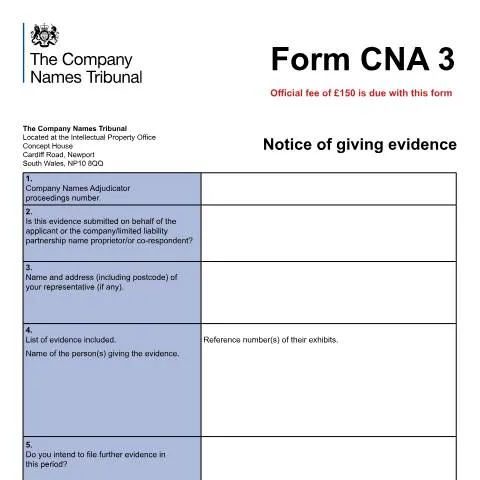
Navigating the CNA 3: A Guide to Understanding the Notice of Giving Evidence
In the intricate world of company name disputes, the Notice of Giving Evidence (CNA 3) issued by the Company Names Tribunal serves as a critical document for parties involved in adjudication processes. It is essential for individuals to grasp the nuances of this notice, as it not only facilitates the presentation of evidence but also shapes the outcome of disputes regarding company names.
Key Elements of the CNA 3 Document
The CNA 3 is more than just a procedural document; it embodies multiple components that require clear understanding and careful handling. Here are some key elements that the document covers:
- Proceedings Number: An identifier crucial for tracking the case within the Tribunal.
- Representation Details: Information regarding legal representatives, if applicable.
- Evidence Submission: A list of evidence, including references needed for validation.
- Further Evidence: Indication of intent to submit additional evidence.
- Signature Section: A personal affirmation of the document's accuracy.
Understanding the Evidence Submission
One of the most significant aspects of the CNA 3 is the section dedicated to submitting evidence. This is where parties outline the evidence they are presenting and its relevance to the case at hand.
In this context, it is vital to:
- Clearly list all evidence being submitted.
- Include reference numbers for each exhibit, facilitating easy tracking and referencing.
- Identify the individuals providing the evidence, establishing credibility and accountability.
How the CNA 3 Relates to Other Documents in the Tribunal Process
The CNA 3 is typically part of a larger framework of documentation required for navigating disputes through the Company Names Tribunal. Understanding its relationship with other documents enhances clarity in legal proceedings.
- Initial Application: The CNA 3 often follows an initial application or complaint regarding a company's name.
- Response Documents: It can be in response to submissions made by the other parties involved in the dispute.
- Final Decision Documents: After the evidence has been processed, the outcomes may refer back to the points raised in the CNA 3.
Interlinking Evidence with Other Submissions
When filing a CNA 3, it is essential to have a cohesive strategy that connects the evidence with initial applications or responses. This ensures a holistic view during the Tribunal's evaluation process.
Consider the following:
- Ensure that your evidence aligns with the claims or defenses presented in earlier submissions.
- Cite specific paragraphs or sections from previous documents to strengthen your argument.
Common Misinterpretations of the CNA 3
While the CNA 3 serves a clear purpose, there are several common interpretations and misinterpretations that can jeopardize the integrity of the submission. Awareness of these pitfalls can save time and resources.
- Assuming Evidence Sufficiency: Just listing evidence without explaining its relevance can lead to dismissals.
- Neglecting Signatures: Failing to sign the document can invalidate the submission altogether.
- Overlooking Payment Requirements: An official fee of £150 is required, which must be addressed during the submission process.
Clarifying the Need for Detailed Evidence
It is not sufficient to present evidence without context. Legal representatives often overlook the necessity of connecting the evidence to specific legal arguments. Providing a brief explanation for each piece of evidence can significantly enhance its weight and relevance.
Strategizing the Use of CNA 3 in Company Name Disputes
To effectively leverage the CNA 3 in a dispute, consider the following steps:
- Gather Comprehensive Evidence: Collect documents, witness statements, and other forms of evidence that substantiate your claims.
- Organize Your Submission: Create a structured submission that presents evidence logically and coherently.
- Engage Legal Counsel: Consulting with a legal expert can provide valuable insights into maximizing the effectiveness of your submission.
Tips for Effective Evidence Presentation
When preparing your evidence for submission, keep in mind:
- Clarity and precision in language can prevent misunderstandings.
- Visual aids or charts can help illustrate complex arguments.
Scope and Limitations of the CNA 3 Document
While the CNA 3 is a powerful tool in the realm of company name disputes, it is essential to recognize its limitations. Understanding what the document does not cover can prevent reliance on it for irrelevant aspects of a dispute.
- No Legal Representation: The CNA 3 does not provide legal advice; it is merely a format for presenting evidence.
- Specificity to Name Disputes: The document is strictly focused on issues surrounding company names and does not extend to other corporate matters.
Understanding the Implications of Non-Compliance
Failure to adhere to the requirements laid out in the CNA 3 can result in significant setbacks:
- Your evidence may be disregarded, impacting the effectiveness of your claims.
- Legal penalties or additional fees may be incurred if the submission does not comply with Tribunal guidelines.
Identifying the Audience and Scenarios Necessitating the CNA 3
The CNA 3 is designed for a specific audience involved in company name disputes. Understanding who this document is tailored for can optimize its use.
- Business Owners: Individuals or entities contesting a company name or defending against such a dispute.
- Legal Representatives: Solicitors or legal advisors tasked with filing evidence on behalf of clients.
- Limited Liability Partnerships: Entities needing to establish their rights to a company name.
Situational Use Cases for the CNA 3
Here are some scenarios where filing a CNA 3 becomes essential:
- A company is being challenged on the grounds of name similarity.
- A new venture wishes to defend its right to a chosen name against claims made by an established entity.
- A partnership is involved in a dispute over name usage rights and must present evidence to the Tribunal.
Final Thoughts on the CNA 3: Preparing for Submission
As you prepare to submit a CNA 3, it is vital to approach the process with thoroughness and attention to detail. Familiarity with the nuances of the document and a strategic mindset can significantly influence the outcome of your case.
Remember, engaging with the Tribunal process is not merely about adhering to procedural requirements; it is about effectively communicating your position and supporting it with compelling evidence. The CNA 3 serves as a vital tool in this journey, guiding you through the complexities of company name disputes.
Understanding the Structure of a Notice of Giving Evidence
The Notice of Giving Evidence (CNA 3) is a critical document within the UK legal framework, primarily utilized in civil proceedings. It serves as a formal notification to the court and the parties involved regarding the intention to present evidence in a case. Understanding its structure is essential for any party involved to ensure proper compliance with legal standards and timeframes.
The structure of a CNA 3 typically includes:
- Header Information: This includes the name of the court, the case number, and the title of the proceedings. It is essential that this information is accurate to avoid any administrative issues.
- Details of the Evidence: A clear outline of what evidence is being presented must be included. This should specify whether the evidence consists of documents, witness statements, or expert testimonies, along with a brief description of each item.
- Parties Involved: The notice must specify all parties involved in the case, along with the roles they play (claimant, defendant, etc.). Accurate identification helps streamline the process and ensures all parties receive the pertinent information.
- Deadline for Submission: The document must clearly state the timeline for when the evidence is to be submitted to the court. Adhering to these deadlines is crucial for maintaining the integrity of the case and preventing any unnecessary delays.
- Signature and Date: Finally, the notice must be signed by the party or their legal representative, along with the date of submission. This affirms the authenticity of the document.
Each section of the CNA 3 is designed to provide transparency and clarity to all parties involved in legal proceedings. Failure to adhere to the prescribed format can result in challenges that may delay the progress of a case or cast doubt on the admissibility of evidence.
Common Mistakes When Submitting a CNA 3
Filing a Notice of Giving Evidence is not without its pitfalls. Some common mistakes can lead to complications in legal proceedings. Being aware of these can help parties avoid costly errors:
- Incomplete Information: One of the most prevalent mistakes is submitting a notice with incomplete or vague descriptions of the evidence. Each item should be detailed sufficiently so that the court and other parties understand its relevance and context.
- Incorrect Timelines: Each court has specific deadlines for the submission of evidence. Failing to align with these timelines can result in the evidence being rendered inadmissible, severely impacting the party's position in the trial.
- Improper Formatting: Legal documents must adhere to specific formatting rules, including font size and citation styles. Neglecting these guidelines may result in the notice being rejected by the court clerk.
- Failing to Notify All Parties: It is crucial that all relevant parties, including witnesses and experts, are notified of the filing of the CNA 3. Failure to do so could lead to challenges regarding the credibility of the evidence presented.
- Neglecting to Keep Copies: Always retain copies of submitted documents. This is essential not only for your records but also in the event that the court seeks clarification or if disputes arise regarding what was submitted.
By being vigilant about these common issues, parties can better position themselves during legal proceedings and ensure the effective presentation of their evidence.
Impact of the Data Protection Act on CNA 3 Submissions
The Data Protection Act 2018 and the UK GDPR significantly influence the handling of personal data within legal documents, including the Notice of Giving Evidence. Any sensitive information included in a CNA 3 must be processed in compliance with these regulations.
When preparing a CNA 3, consider the following aspects related to data protection:
- Personal Data Minimization: Only include personal data that is necessary for the case. This principle of minimization is vital to comply with data protection laws.
- Explicit Consent: If the evidence involves sharing personal data of witnesses or other involved parties, ensure that proper consent has been obtained. This helps prevent potential legal repercussions down the line.
- Anonymization: In some cases, it may be advisable to anonymize data to protect the identities of individuals involved, particularly if this data is not crucial to the case's outcome. Anonymization can reduce risks associated with data breaches.
- Data Retention Policies: Be mindful of how long personal data will be retained. Once the legal proceedings are concluded, any unnecessary personal data should be securely disposed of to comply with the data protection regulations.
- Right to Access: Parties involved have the right to request access to their personal data included in legal documents. Ensure that your submission complies with these rights to avoid potential conflicts.
Adhering to data protection principles when submitting a CNA 3 will not only ensure compliance with legal requirements but also help safeguard the privacy of all parties involved, reinforcing the integrity of the legal process.