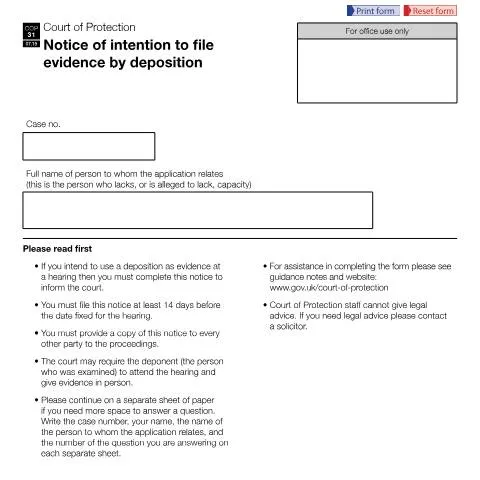
Understanding Form COP31: A Vital Tool for Evidence Submission
The Court of Protection plays a pivotal role in safeguarding the rights of individuals who may lack the capacity to make decisions for themselves. Within this framework, Form COP31, titled Notice of Intention to File Evidence by Deposition, is an essential document for applicants wishing to submit deposition evidence at a hearing. This guide explores the intricacies of this form, its significance, and how to effectively navigate the requirements surrounding it.
Importance of Timeliness: Filing COP31
When engaging with the Court of Protection, timing is crucial. The COP31 must be filed with the court at least 14 days prior to the scheduled hearing. This timeline allows the court to adequately prepare for the proceedings and ensures all parties are informed ahead of time. Failure to adhere to this deadline could lead to delays or even dismissal of the evidence.
Key Deadlines
- File COP31: Minimum 14 days before the hearing
- Notify other parties: Ensure copies are distributed concurrently
Engaging with Other Proceedings: Interconnections with COP Forms
Form COP31 does not exist in isolation; it is part of a series of forms utilized throughout the Court of Protection process. Understanding how COP31 interacts with related documents can enhance your approach to filing evidence.
Related Forms
| Form Code | Title | Purpose |
|---|---|---|
| COP1 | Application to the Court of Protection | Initiates proceedings for individuals lacking capacity |
| COP9 | Application for a Deputy | Requests the appointment of a deputy to make decisions |
| COP14 | Notice of Hearing | Informs parties of the hearing details |
Steps to Effectively Submit a Notice Using COP31
Completing Form COP31 requires careful attention to detail. Here's a step-by-step breakdown of how to navigate the submission process effectively:
Step-by-Step Guide
- Identify your role: Clearly state your role in the proceedings (applicant, respondent, etc.).
- Complete your details: Fill in your full name, address, and telephone number accurately.
- Specify the deposition: Indicate the name of the deponent and the scheduled hearing date.
- Sign the form: Ensure that your signature is included to authenticate the notice.
- Distribution: Provide copies of the completed COP31 to all other parties involved in the proceedings.
Understanding the Role of the Deponent
The deponent, the individual who provides deposition evidence, plays a critical role in the context of Form COP31. Their testimony can significantly impact the outcome of the hearing. It's important to note that the court may require the deponent to appear in person to give evidence, reinforcing the significance of their testimony.
Implications for the Deponent
- The deponent may need to prepare for questioning and cross-examination.
- Testimony must be truthful and relevant to the case at hand.
- Support may be necessary for the deponent to understand the legal implications of their evidence.
Limits of Form COP31: Understanding Its Scope
While COP31 is instrumental in the evidence submission process, it is not without its limitations. Understanding what this form covers can prevent misunderstandings and ensure that all parties are adequately prepared for the hearing.
Scope and Limitations
- Only applicable for evidence by deposition; other evidence types require different forms.
- Does not encompass the full legal representation; legal advice should be sought separately.
- Does not guarantee acceptance of evidence; the court retains discretion over the admissibility.
Common Misinterpretations: Navigating Potential Pitfalls
When dealing with legal documents, misinterpretations can lead to complications. Here are some common pitfalls that individuals may encounter when filing Form COP31:
Potential Misinterpretations
- Filing Timeline: Some applicants underestimate the importance of the 14-day notice period.
- Assuming Automatic Acceptance: Filing COP31 does not guarantee that the deposition will be accepted by the court.
- Neglecting to Notify Other Parties: Failure to share the notice could result in procedural delays.
Additional Support: Resources for Applicants
While the Court of Protection staff cannot provide legal advice, there are resources available to assist you in navigating the requirements associated with Form COP31. The official website offers guidance notes that can clarify various aspects of the process, making it easier for applicants to comply.
Resources for Assistance
- Guidance Notes: Available on the official government website, offering detailed help.
- Legal Professionals: Consider consulting a solicitor for tailored legal advice specific to your case.
- Support Groups: Various organizations provide support for individuals navigating capacity issues.
Final Thoughts on COP31: A Key Element of Court Proceedings
Understanding Form COP31 and its implications within the Court of Protection proceedings can significantly influence the outcome of a case involving individuals who may lack capacity. By adhering to the timelines, accurately completing the form, and engaging with the necessary parties, applicants can enhance their chances of a successful hearing. Always remember that timely and informed actions are pivotal in legal proceedings.
Understanding Form COP31: Its Purpose and Importance
Form COP31, officially known as the Notice of Intention to File Evidence by Deposition, is a critical document within the civil litigation process in the UK. This form is utilized primarily in cases where witnesses are unable to attend court hearings in person, thereby necessitating the presentation of their evidence through deposition.
The importance of Form COP31 lies in its ability to facilitate justice by ensuring that testimonies from key witnesses are available for consideration, even if they cannot be physically present due to reasons such as health issues, geographical distance, or other compelling circumstances. It allows legal representatives to prepare adequately for hearings by outlining the intention to file such evidence, which must be approved by the court.
Understanding the nuances of this form is essential for legal practitioners and parties involved in litigation. The form must be completed with precise details, including the identity of the witness, the nature of the evidence to be presented, and the proposed timeline for the deposition. Failing to adhere to proper procedures when filing Form COP31 can result in delays or even the exclusion of the evidence intended to be presented through deposition.
Completing Form COP31: Step-by-Step Guide
Completing Form COP31 requires careful attention to detail to ensure that all necessary information is accurately reported. Below is a step-by-step guide to assist individuals preparing to file this form.
- Gather Required Information: Before beginning the form, collect all pertinent information related to the witness and the evidence you wish to present. This includes the witness's full name, address, and contact details, as well as a summary of the evidence they will provide.
- Detail the Evidence: Clearly describe the nature of the evidence to be submitted through deposition. This may include statements, documents, or any other materials that can substantiate your case.
- Timeline for Filing: Indicate the proposed timeline for the deposition. It's important to coordinate with the witness's availability and any other logistical considerations that might affect this schedule.
- Review Legal Requirements: Ensure compliance with applicable rules of civil procedure regarding the filing of evidence. It's advisable to refer to the Civil Procedure Rules (CPR) Part 32, which governs the use of witness statements and depositions.
- Sign and Date the Form: Once all necessary information has been filled out, sign and date the form. If someone is filing on behalf of another party, they will need to include their details and the authority under which they are acting.
- Submit the Form: File the completed Form COP31 with the appropriate court, ensuring that you keep copies for your records. Consider checking with the court’s website or contacting them directly for any specific submission requirements, especially regarding electronic submissions or filing fees.
Common Pitfalls When Filing Form COP31
Filing Form COP31 is a procedural task that can have significant implications for the outcome of a case. However, common mistakes can hinder the process. Below are some pitfalls to avoid when filing this form:
- Incomplete Information: One of the most frequent errors is providing incomplete or insufficient information about the witness or the evidence. Ensure that every section of the form is filled out completely, as omissions can lead to complications or even rejection of the filing.
- Failure to Comply with Deadlines: It is crucial to be aware of any deadlines related to the filing of Form COP31, particularly in relation to the court's timetable for hearings. Missing a deadline may result in the inability to present the deposition evidence.
- Not Consulting Legal Counsel: If you are unsure about how to proceed with Form COP31, it is prudent to seek advice from legal counsel. Navigating legal documentation can be complex, and professional guidance can help avoid costly mistakes.
- Neglecting Witness Availability: Ensure that the witness is prepared and available to provide their evidence as planned. Schedule the deposition sufficiently in advance to accommodate any potential conflicts that may arise.
- Ignoring Court Instructions: Each court may have its own specific requirements for the filing process. Always check for any guidelines or instructions provided by the court where you are filing Form COP31 and follow them diligently.