Understanding the N6 Claim Form Within the Housing Context
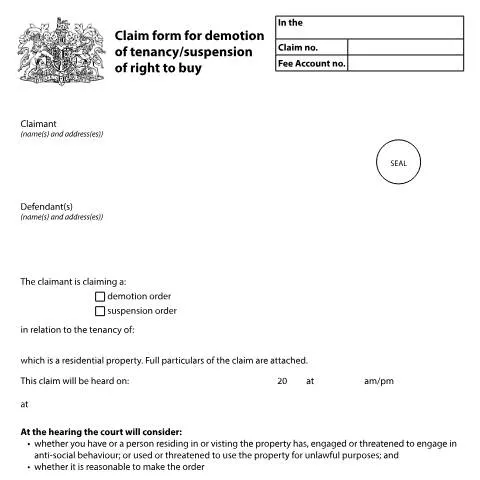
In the landscape of housing disputes in the UK, the N6 Claim Form serves as a critical document for landlords pursuing legal action against tenants. This form, officially titled "Claim for Demotion of Tenancy and Suspension of Right to Buy," is used predominantly by social landlords seeking to address issues related to anti-social behaviour or unlawful use of a residential property. The stakes involved in such claims are substantial, as they can lead to a demotion in tenancy status or suspension of the tenant's right to buy their property, thereby impacting their housing security.
Who Initiates the N6 Claim and Under What Circumstances?
The N6 form is typically submitted by social landlords, including local authorities and housing associations, when they believe a tenant has breached the terms of their tenancy agreement. Common scenarios prompting the use of the N6 include:
- Anti-social Behaviour: This can encompass a wide range of actions, from noise disturbances to harassment of neighbours.
- Unlawful Use of Property: Instances where the property is used for illegal activities, such as drug dealing or other criminal enterprises.
- Violation of Tenancy Conditions: This could include not adhering to specific clauses in the tenancy agreement related to maintenance, occupancy, or statutory requirements.
Understanding the context in which the N6 is used is crucial for tenants, as it illustrates the serious implications of such claims on their living situation.
Navigating the Process: Key Dates and Milestones
Successfully navigating the N6 claim process requires awareness of specific timelines that guide the proceedings:
- Filing the Claim: The claim is initiated by submitting the N6 form at the relevant county court, accompanied by any necessary fees.
- Notification of Hearing: Once filed, the court will set a date for the hearing, and both the claimant and defendant will receive notification.
- Preparation for Hearing: Parties involved must prepare their evidence and arguments, potentially seeking legal advice or representation.
- Hearing Date: The court will convene on the specified date to hear the claims and defences presented by both sides.
- Post-Hearing Judgement: After deliberation, the court issues its judgment, which may include orders for demotion or suspension, depending on the findings.
Each of these milestones is crucial and requires prompt action to ensure all parties can adequately prepare for their cases.
Decoding the N6 Form: A Guide to Completion
Completing the N6 form correctly is essential for the success of the claim. Each section of the form must be filled out with precision, as errors or omissions can lead to delays or even dismissal of the case. Below is a breakdown of significant sections of the form:
| Section | Purpose | Common Pitfalls |
|---|---|---|
| Claimant Information | Identifies the social landlord pursuing the claim. | Inaccurate or incomplete contact details can hinder communication. |
| Defendant Information | Details of the tenant against whom the claim is made. | Filing incorrect names or addresses can invalidate the claim. |
| Claim Details | Specifies the nature of the claim, whether for demotion or suspension. | Ambiguous descriptions may lead to confusion in proceedings. |
| Statement of Truth | A declaration ensuring the accuracy of the information provided. | Failure to sign can render the submission incomplete. |
By meticulously filling out each section, claimants can avoid common errors that could jeopardize their case.
Exploring Channels for Submission: Online vs Paper
The N6 form can be submitted through various channels, each with distinct advantages and considerations:
- Online Submission: Many courts now offer online filing, which can expedite the process and provide immediate confirmation of receipt.
- Paper Submission: Submitting a physical copy remains an option; however, it may be slower, and tracking the submission can be more challenging.
- In-Person Filing: For those preferring to hand-deliver their documents, this option allows for immediate feedback from court staff regarding any missing information.
Each method has its pros and cons, and claimants should choose based on their specific circumstances and access to technology.
Responding to Outcomes: What If Your Claim is Rejected?
In situations where the court denies the claims made in an N6 application, it is vital to understand the potential paths forward. Tenants and landlords alike may face challenging decisions:
- Appealing the Decision: If the claimant believes there are grounds for an appeal, they must act promptly, adhering to the court's rules regarding time limits and submission protocols.
- Addressing Underlying Issues: For tenants, a rejected claim may highlight areas for improvement in their behaviour or adherence to the tenancy agreement.
- Re-filing with Additional Evidence: Should further evidence become available, claimants may consider submitting a new claim if circumstances change substantially.
Being proactive and informed about these next steps is critical to navigating the complexities of housing law and ensuring compliance with court procedures.
The Legal Framework Supporting the N6 Claim Form
The N6 form operates within a broader legal framework designed to balance tenants' rights with landlords' needs to maintain order and safety in their properties. Key regulations and legislation that influence the application of the N6 include:
- Housing Act 1985: Provides the statutory basis for demotion and suspension claims, outlining the rights and responsibilities of both parties.
- Human Rights Act 1998: Ensures that claims respect individual rights, necessitating that landlords can adequately justify any action taken against a tenant.
- Common Law Principles: Established legal precedents shape how courts interpret cases involving tenancy disputes, influencing decisions on the N6 claims.
Understanding this legal backdrop is crucial for both landlords and tenants to appreciate their positions and the implications of pursuing or defending against such claims.
Monitoring the Progress of Your N6 Claim
Once the N6 form has been submitted, claimants must stay informed about the claim's progress. Here are several key actions to undertake:
- Direct Contact with the Court: Claimants can call or email the court to inquire about their case status, especially if there are delays.
- Review Court Notices: Courts will send notices regarding hearings or decisions; ensuring these are read promptly can help avoid missing crucial deadlines.
- Legal Representation: Engaging a solicitor can provide peace of mind, as they can manage communications and represent the claimant in court.
A proactive approach to monitoring the claim will improve the chances of a smooth process and successful outcome.
Fill in your form directly online
No printing: type your details into the boxes of the official form, tick, then download the PDF ready to send.
- 1Type into the form boxes
- 2Tick in one click
- 3Save and download the PDF
Understanding the Grounds for Demotion of Tenancy
When considering a claim for demotion of tenancy under Form N6, it’s essential to understand the various grounds that can justify such a request. The most common grounds include:
- Anti-social behaviour: A tenant may be demoted if they have engaged in behaviour that is deemed disruptive or harmful to the community. This includes issues like noise complaints, substance abuse, or harassment of neighbours. Tenants should note that the housing authority must provide evidence of such claims.
- Breach of tenancy agreement: If a tenant consistently fails to adhere to the terms of their tenancy agreement—such as failing to pay rent on time or causing damage to the property—a demotion may be warranted. It’s crucial for landlords to document any breaches thoroughly.
- Non-compliance with property maintenance: Tenants have a responsibility to maintain their rented properties in a reasonable condition. Failure to do so can lead to a demotion if it is found that the tenant has neglected necessary upkeep that affects the property’s habitability.
It’s important to note that the landlord must follow proper procedures when initiating a demotion, including providing the tenant with a notice that details the grounds for the claim and allowing the tenant an opportunity to respond. Understanding these grounds helps tenants prepare a robust defence if they find themselves facing a demotion claim.
Implications of Tenancy Demotion on Future Housing Rights
A demotion of tenancy can have significant long-term effects on a tenant’s housing rights, particularly with regard to the right to buy. When a tenant’s tenancy is demoted, it can lead to the suspension of their right to buy their council property. Here’s how this can unfold:
- Loss of eligibility: Once a tenancy is demoted, the tenant may no longer meet the eligibility criteria for the right to buy scheme. Generally, a tenant must be in a secure tenancy position to qualify, and a demotion alters their status.
- Impact on future applications: A tenant who has had their right to buy suspended may find it challenging to regain that right. Following a demotion, they may need to wait for a specified period before becoming eligible again, often contingent upon demonstrating good behaviour and compliance with tenancy agreements.
- Potential for increased rent: In some cases, a demoted tenancy can lead to increased rental charges, as tenants may be moved to a different housing category that comes with a higher financial obligation.
For tenants facing demotion, it is crucial to fully understand these implications and seek advice on how to maintain their housing status while effectively addressing any grievances that may arise in this process.
Appealing a Demotion Decision: Your Rights and Options
If a demotion of tenancy decision is made, tenants have the right to appeal. Understanding the appeals process is vital to safeguarding one’s housing rights. Here’s what tenants should know:
- Grounds for appeal: Tenants can appeal a demotion on several grounds, including lack of evidence, improper procedure followed by the landlord, or failure to consider mitigating circumstances. It is important for tenants to gather all relevant documentation and evidence to support their claim.
- Timeframe for appeal: Typically, tenants must submit their appeal within a specific timeframe—often within a few weeks of receiving the demotion notice. Prompt action is essential to ensure that the appeal is considered.
- Formal appeal process: Depending on the housing authority, the appeal may be heard by a tribunal or an internal review panel. Tenants should prepare to present their case clearly and succinctly, possibly with legal representation if necessary.
Throughout this process, tenants should be aware of the Data Protection Act 2018 and UK GDPR, which govern how their personal data is processed during the appeals procedure. Maintaining privacy and being informed about rights under data protection laws can significantly impact the outcome of an appeal.