Understanding the Official Court Form for Demotion of Tenancy in the UK
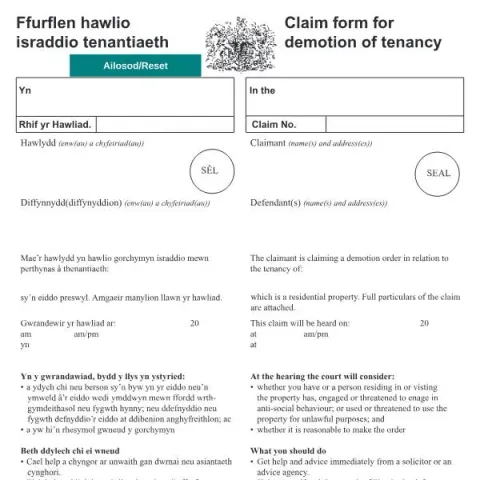
The Claim form for demotion of tenancy, identified by the code N6, is an official legal document issued by The Court Service in the United Kingdom. This form is used within the context of tenancy law, specifically when a landlord seeks to request the court to reduce or demote the terms of a tenant’s agreement, often in cases involving anti-social behaviour or unlawful use of the property.
What is the purpose of this form?
This form serves as a formal application by a landlord or a relevant authority to the court, requesting a demotion order for a residential tenancy. Such an order might be sought if there are concerns about anti-social behaviour, threats, or illegal activities associated with the tenancy. The court will review the application and decide whether it is reasonable to impose a demotion, which could involve restricting or modifying the tenant’s rights under the existing agreement.
When should this form be used?
The form should be completed and submitted when a landlord believes that the tenancy has been or will be used for anti-social or unlawful purposes. It is particularly relevant in situations where:
- The tenant or visitors have engaged or threatened to engage in anti-social behaviour.
- The property has been used or threatened to be used for illegal activities.
- The landlord wants the court to consider whether a demotion order is appropriate to prevent further issues.
It is important to note that this is a legal process, and the application should be supported by evidence and legal advice.
Key information required on the form
The form gathers essential details to facilitate the court’s consideration:
- Claim number: Unique reference for the case.
- Claimant’s details: Name(s) and address(es) of the person or organisation initiating the claim.
- Defendant’s details: Name(s) and address(es) of the tenant or individual against whom the claim is made.
- Property details: Description of the residential property involved.
- Nature of the claim: Indication that the claim involves anti-social behaviour or unlawful use.
- Hearing details: Date and time when the court will hear the case, along with the location.
What does the court consider during the hearing?
During the hearing, the court will evaluate:
- Whether the defendant or visitors have engaged in anti-social behaviour or threatened such behaviour.
- Whether the property has been used for unlawful purposes or threats thereof.
- Whether it is reasonable to make a demotion order to address these issues.
Points of advice for applicants
Applicants are strongly advised to:
- Seek immediate legal advice from a solicitor or an advice agency experienced in housing law.
- Complete the defence form if applicable, to help clarify the case and support the court’s decision-making process.
- Attend the hearing in person to present all relevant facts and evidence.
Financial considerations and submission details
The form includes sections for the court fee, solicitor’s costs, and total amount payable, which must be paid upon submission. The applicant should ensure all amounts are accurate and paid according to the court’s instructions.
Fill in your form directly online
No printing: type your details into the boxes of the official form, tick, then download the PDF ready to send.
- 1Type into the form boxes
- 2Tick in one click
- 3Save and download the PDF
Declaration and signature
The applicant or their solicitor must sign a Statement of Truth, affirming that the information provided is accurate. This declaration is crucial, as false statements can have legal consequences.
Final notes
This N6 form is a formal legal document that initiates a court process for addressing tenancy issues related to anti-social behaviour or unlawful activity. Proper completion, timely submission, and legal advice are essential to ensure the case proceeds effectively and that the court’s decision is based on accurate and comprehensive information.