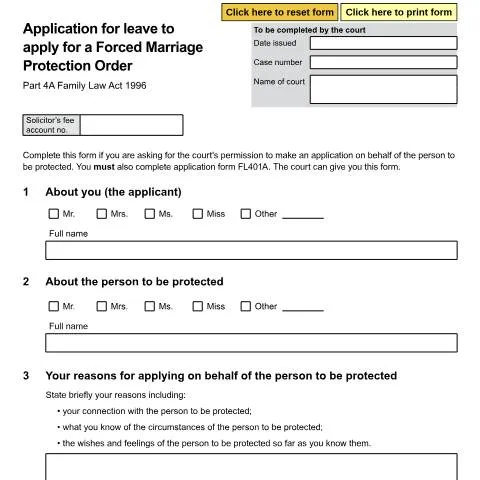
Navigating the Path to Safety: The Role of the FL430 Form
In the landscape of family law, the Application for Leave to Apply for a Forced Marriage Protection Order, known as Form FL430, serves as a crucial tool for individuals seeking to protect vulnerable persons from the threat of forced marriages. When someone fears for their safety due to familial or societal pressure, this form acts as a gateway to legal protection. It is essential that applicants understand not only how to fill out this form but also the implications and responsibilities that come with it.
The Personal Stakes: Understanding Who is Affected
The FL430 is designed for individuals who have a direct connection to someone at risk of a forced marriage, typically referred to as the “person to be protected.” This includes but is not limited to:
- Family Members: Parents, siblings, or other relatives who witness signs of coercion.
- Friends and Support Networks: Close friends or community members who are aware of the circumstances.
- Professionals: Social workers, teachers, or healthcare providers who may have concerns regarding a person's safety.
Each case is unique, with specific nuances that may dictate the course of action. For example, a minor might require a guardian or designated adult to file the application on their behalf, emphasizing the sensitivity and urgency often surrounding these situations.
Subcases and Exceptions
It’s pivotal to recognize that not every individual or scenario fits neatly into standard categories. Special circumstances come into play:
- Minors: Special provisions exist to safeguard minors, impacting who may apply and how.
- International Cases: If the individual is located abroad or is a foreign national, the jurisdictional complexities can complicate the application process.
- Urgent Situations: Cases that require immediate intervention may have expedited processes, requiring careful explanation and documentation.
Briefing the Court: The Application Process
Submitting Form FL430 is just the initial step. The applicant must also complete Form FL401A, which details the full application for the Forced Marriage Protection Order. The court essentially needs a comprehensive picture of the situation, which includes:
- Your relationship to the person needing protection.
- A detailed account of the circumstances that lead to the fear of a forced marriage.
- The feelings and wishes of the person to be protected, as you understand them.
Each element plays a vital role in convincing the court that there is a genuine need for protection. A well-documented application helps to establish credibility and urgency.
Documentation: Equipping Your Application
While filling out Form FL430 is essential, supporting documentation is equally critical. Applicants should prepare the following materials:
| Document Type | Justification |
|---|---|
| Identification Documents | Proof of identity of both the applicant and the person to be protected, such as passports or driver’s licenses. |
| Evidence of Threat | Any correspondence, witnesses, or other evidence that illustrates the risks involved. |
| Personal Statements | Written accounts from the applicant and potentially others who can substantiate the claims made in the application. |
This documentation not only strengthens the case but also provides the court with the necessary information to make informed decisions.
From Submission to Decision: A Chronological Overview
The journey to securing a Forced Marriage Protection Order through the FL430 form unfolds in several key phases:
- Preparation: Gathering documentation and completing Form FL430 and FL401A.
- Submission: Filing the completed forms with the court, ensuring that all necessary documents are included.
- Initial Review: The court will review the application to determine if there are sufficient grounds to proceed.
- Court Hearing: If the case is accepted, a hearing date is set where the applicant may need to present their case before a judge.
- Decision: The court will issue a decision, which could grant or deny the protection order. If granted, specific measures will be outlined.
Preparing for the Court Hearing
For those who reach the hearing stage, preparation is vital. Applicants may want to:
- Rehearse their statements and arguments.
- Gather supportive witnesses who can attend the hearing.
- Consult legal advice if possible, as having a solicitor can significantly impact the proceedings.
Obligations and Responsibilities: What Happens Next?
Upon lodging your application, it is crucial to understand the legal obligations and responsibilities that arise:
- Responsibility to Report: Should any new evidence or developments arise regarding the person’s situation, the applicant has a duty to report these to the court.
- Compliance with Court Orders: If a Forced Marriage Protection Order is granted, the applicant must comply with its terms and assist the person to be protected in understanding their rights and responsibilities.
Failing to comply with these requirements could have legal repercussions and undermine the effectiveness of the protection order.
Handling Rejections, Errors, and Missing Information
Applications for leave to apply for a Forced Marriage Protection Order can face rejection for various reasons, including incomplete forms or insufficient grounds. If your application is turned away, consider the following steps:
- Request Feedback: Understand the reasons for rejection to inform your next steps.
- Revise and Resubmit: Address any deficiencies in your application and consider submitting a revised form.
- Seek Legal Assistance: A solicitor can provide guidance on how to strengthen your case for reapplication.
Potential Issues with Documentation
Missing or incorrect documentation can derail your application. If you find you’ve submitted an incomplete application, follow these steps:
- Contact the court to understand what specific documents are required.
- Gather the necessary information as quickly as possible to avoid delays in the process.
- Document all communication with the court for record-keeping purposes.
Post-Decision Protocols: Following Through
Once a decision is made, whether it’s favorable or not, applicants should be prepared for the next steps:
- Understanding the Order: If granted, familiarize yourself with the terms and conditions set forth in the Forced Marriage Protection Order.
- Monitoring Compliance: It is vital to ensure that the order is being followed by all parties involved. If violations occur, report them to the appropriate authorities immediately.
- Long-term Support: Consider connecting the protected individual with support services, which may include counseling or community resources.
Unique Scenarios: Navigating Complex Situations
Every case that involves the FL430 form brings its unique challenges, especially in complex situations like:
- Involvement of Multiple Jurisdictions: If the parties involved reside in different countries, understanding the interaction between UK law and international law becomes critical.
- Emergency Situations: Where immediate threats are present, expedited processes may be available, but these require thorough documentation to justify the urgency.
- Involvement of Minors: Protecting minors requires additional considerations, such as parental consent or the need for a guardian ad litem.
Immediate Action Steps in Case of Danger
If immediate danger is present, one must:
- Contact local authorities for protection.
- Utilize emergency shelters or support organizations.
- Gather evidence swiftly to present in court if needed.
Conclusion: Stepping Gently Yet Firmly Towards Protection
The FL430 form stands as a pivotal instrument within the legal framework designed to shield individuals from forced marriages. Understanding its proper use and the process surrounding it can empower applicants to take significant steps toward ensuring safety and securing justice for those at risk. Each completed application not only represents a plea for personal safety but also echoes the collective voice advocating against the violation of individual rights.
Understanding the Legal Framework for Forced Marriage Protection Orders
The Forced Marriage Protection Order (FMPO) is a significant legal measure in the UK designed to safeguard individuals at risk of being forced into marriage without their consent. It is important to understand the laws that underpin these orders, primarily outlined in the Anti-social Behaviour, Crime and Policing Act 2014. The FMPO allows the court to provide protection to individuals who may be pressured or coerced into a marriage against their will.
When applying for a FMPO using Form FL430, it is crucial to understand that the court will consider various factors, including the applicant's age, mental capacity, and the potential risks they face. The application process is intended to be sensitive to these issues, ensuring that the applicant is protected while navigating the legal landscape. Additionally, the court has a duty to consider the best interests of any children involved. Legal representation is highly recommended, particularly for vulnerable applicants, as the nuances of forced marriage case law can be complex.
Fill in your form directly online
No printing: type your details into the boxes of the official form, tick, then download the PDF ready to send.
- 1Type into the form boxes
- 2Tick in one click
- 3Save and download the PDF
The Application Process: Step-by-Step Guidance
Applying for a Forced Marriage Protection Order using Form FL430 involves several steps that should be followed carefully to ensure a successful application:
- Gather Necessary Information: Before completing Form FL430, collect all relevant details about yourself, the individual from whom you seek protection, and any other parties involved. This includes evidence of threats, previous incidents, or any correspondence that illustrates the risk of forced marriage.
- Complete Form FL430: Fill out the application form thoroughly. This includes providing personal details, the nature of your relationship with the person who may be forcing the marriage, and specific reasons for seeking the order. Be honest and precise; any inaccuracies can delay proceedings.
- Submit Your Application: File your completed Form FL430 with the appropriate family court. You may need to pay a fee unless you qualify for a fee exemption. If you are unsure about your eligibility for exemptions, consult the court or a legal advisor.
- Attend the Court Hearing: After submitting your application, you may be required to appear in court for a hearing. During this session, the judge will assess your application and any evidence presented. You may also have the opportunity to provide oral testimony. Ensure you have legal representation during this pivotal stage.
- Await the Court's Decision: Following the hearing, the court will provide a ruling. If the FMPO is granted, it will outline specific conditions for the protection of the applicant. Understand the implications of the order and adhere to its stipulations to ensure ongoing safety.
This step-by-step approach emphasises the importance of preparation and legal support throughout the FMPO application process, helping applicants navigate their way through potentially daunting legal proceedings.
Support Services and Resources Available
For individuals applying for a Forced Marriage Protection Order, numerous support services exist to provide assistance throughout the process. These can be invaluable, especially considering the emotional and psychological toll that the circumstances surrounding forced marriage can impose.
1. Legal Aid: Individuals in financial hardship may be eligible for legal aid to cover the costs associated with legal representation and advice when applying for a FMPO. It is essential to check the eligibility criteria and seek advice from local legal aid providers.
2. Charitable Organisations: Several charities and NGOs focus on preventing forced marriages and supporting victims. Organisations such as the Karma Nirvana and the Foreign, Commonwealth & Development Office offer resources, support hotlines, and advocacy services to guide individuals through the process of obtaining a FMPO.
3. Crisis Support Services: If you are in immediate danger or feel threatened, contacting local authorities or emergency services is crucial. You can also reach out to domestic violence helplines for urgent support. Many of these services operate confidentially, ensuring your safety while providing the necessary assistance.
4. Counselling and Emotional Support: The traumatic experience of facing a forced marriage may require psychological support. Counselling services can help individuals process their feelings and regain a sense of control. Most local health services provide mental health resources that may be accessible without a referral.
Accessing these resources not only aids in the legal process but also contributes to holistic recovery and empowerment for individuals who have faced the threat of forced marriages. Engaging with these services can significantly enhance the likelihood of a successful application and improved personal well-being.