Understanding the Significance of Form FGM006 in Protecting Vulnerable Individuals
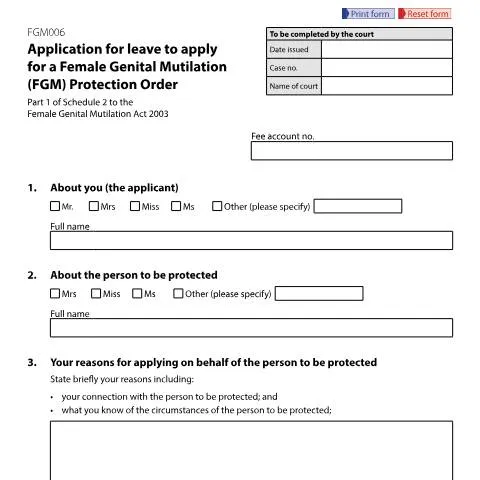
In the context of safeguarding and legal protection against Female Genital Mutilation (FGM), Form FGM006 plays a crucial role within the UK's legal framework. This application for leave to apply for an FGM Protection Order is designed to provide legal recourse for individuals at risk of FGM, particularly minors or those unable to protect themselves. By understanding the nuances of completing and submitting this form, applicants can take an essential step towards securing protection for those who may be facing significant harm.Navigating the Practicalities of Form FGM006 Submission
Completing Form FGM006 involves several critical steps and requires careful attention to detail. Each section must be filled out accurately to ensure that the application is considered valid and legitimate. The form typically includes the following sections:Applicant Information
The first part of the form pertains to the individual submitting the application. This includes:- Full name
- Contact information
- Relationship to the person to be protected
Details of the Person to be Protected
In this section, you will provide similar details for the individual at risk, ensuring that the court understands the gravity of the situation and the necessity for the protection order.Reasons for Application
Here, articulating your reasons for seeking the protection order is paramount. You must clearly outline:- Your connection to the person at risk
- The specific circumstances or threats they face
Statement of Truth
The final part requires a declaration confirming the truthfulness of the information provided. This statement carries legal weight, and false declarations can lead to serious consequences, including contempt of court.Submission Channels: Online vs. Paper Applications
When it comes to submitting Form FGM006, there are multiple channels available, each with its own advantages and considerations.Paper Submissions
Submitting a paper form involves printing the document, completing it by hand, and posting it to the relevant court. While this method may seem straightforward, it often results in longer processing times due to postal delays. Here are key steps for paper submissions:- Print the completed form.
- Sign the Statement of Truth.
- Send the form to the appropriate court, ensuring you have the correct court address.
Online Submissions
If you choose to file online, ensure that you have access to the official court website, where you may find a digital version of Form FGM006. The online process generally allows for quicker processing times, but ensure you follow these steps:- Complete the form electronically.
- Submit the application through the online portal.
- Retain any confirmation number for your records.
Following Up on Your Application: What to Expect Next
Once Form FGM006 has been submitted, applicants often have questions about the next steps. Understanding the court's process and how to follow up on your application can alleviate uncertainty.Processing Timeframes
After submission, the court will review the application to determine whether to grant leave for an FGM Protection Order. The timeframe can vary significantly based on the court’s workload, the complexity of the case, and whether any additional information is required. Generally, expect a decision within several weeks, but be prepared for potential delays.Keeping Track of Your Application
To stay informed about the status of your application:- Keep a copy of your application and any correspondence.
- Contact the court directly if you have not received updates after a reasonable timeframe.
- Use any reference numbers provided during the submission process for quicker inquiries.
Understanding the Broader Legal Context: FGM Protection Orders
The importance of Form FGM006 must be viewed through the lens of the legal framework established by the Female Genital Mutilation Act 2003. This legislation provides the foundation for the granting of FGM Protection Orders, aimed at preventing individuals from undergoing FGM or being forced into situations that could lead to such harm.What is an FGM Protection Order?
An FGM Protection Order is a civil order designed to protect individuals from FGM. It can impose restrictions on individuals or institutions that may facilitate or condone such practices. Orders may include:- Prohibiting a person from taking a child abroad where there is a risk of FGM.
- Restricting contact with individuals who pose a risk of facilitating FGM.
Legal Representation: The Role of Solicitors and Advocacy Groups
Navigating the complexities of applying for an FGM Protection Order through Form FGM006 can be daunting. Seeking legal advice can greatly enhance the effectiveness of the application.Why Consider Legal Assistance?
Legal representatives can provide critical support in several ways:- Clarifying legal terminology and implications of the application.
- Assisting in articulating the reasons for the application effectively.
- Representing the applicant in court hearings if necessary.
Special Considerations: Vulnerable Individuals and Urgent Applications
Certain circumstances may necessitate a more tailored approach when filing Form FGM006. Applicants must be aware of specific considerations based on the profile of the individual being protected.Applications for Minors
When the person at risk is a minor, the application process assumes additional significance. The court will take into account the welfare of the child as a paramount concern. In these cases:- The applicant must clearly demonstrate the urgency and the potential risks involved.
- Engaging with child protection services may be advisable.
Addressing Complex Cases
Some applications may involve unique factors, such as cases involving individuals with disabilities or those from different cultural backgrounds. Being sensitive to these dynamics is crucial:- Consider cultural awareness in framing your application.
- Be prepared to provide additional documentation that highlights the specific threats faced.
Consequences of Inaction: The Risks Involved
Neglecting to submit or improperly filling out Form FGM006 can lead to serious repercussions, both for the applicant and the individual in need of protection.Legal and Emotional Ramifications
Should the application be postponed or incorrectly handled:- The individual at risk remains unprotected from potential harm.
- The applicant might face legal consequences for failing to act appropriately.
Final Notes on Protecting Those at Risk
Form FGM006 is not merely a bureaucratic requirement but a vital tool to safeguard individuals against a harmful practice. Understanding the process, legal implications, and the significance of timely submissions can be the difference between safety and vulnerability. In navigating the complexities surrounding FGM Protection Orders, applicants are urged to remain diligent, informed, and proactive. Engaging with legal representatives and advocacy groups can enhance the application process, ensuring that the rights and safety of those at risk are adequately addressed.Understanding the Process of Applying for an FGM Protection Order
Applying for a Female Genital Mutilation (FGM) Protection Order involves several critical steps, and understanding this process is essential for individuals who may be at risk or are concerned about a loved one. The process begins with completing Form FGM006, which can be obtained from the HM Courts & Tribunals Service website or directly from the court dealing with family matters.
When filling out Form FGM006, you need to provide comprehensive details about the reasons for your application. This includes any evidence that supports your claim, such as medical records, testimonies, or any prior incidents of FGM that may have occurred or been threatened. The more detailed and substantiated your application is, the higher the chances it has of being approved by the court.
Once the form is completed and submitted, the court will review your application. A hearing may be scheduled where you will need to present your case, and both you and any involved parties will have the opportunity to express their views. It’s crucial to prepare thoroughly for this hearing; legal representation can be beneficial during this stage to ensure that your rights and best interests are fully represented.
After the hearing, the judge will make a determination based on the evidence presented. If the order is granted, it provides legal protection against the practice of FGM, which can include various prohibitive measures against the individuals believed to pose a risk.
Legal Considerations and Safeguards in FGM Cases
When dealing with applications for FGM Protection Orders, there are several legal considerations that applicants must be aware of. The court's primary goal is to ensure the safety and protection of the individual who is at risk. Under the Children Act 1989, the welfare of the child is paramount, and any application for an FGM Protection Order is viewed through this lens.
One vital safeguard in these proceedings is the confidentiality of the application. Under the Data Protection Act 2018 and UK GDPR, personal data must be handled securely, ensuring that the identities of applicants and affected individuals are protected throughout the process. Therefore, details of the case are generally not made public, reducing the risk of further harm or stigma to the individuals involved.
Moreover, individuals applying for an FGM Protection Order can request that the court issues an interim order, which can provide immediate protection while the application is being considered. This is particularly important if there is an imminent threat of FGM being carried out. The court may also consider the involvement of social services to assess the broader welfare of the child, ensuring that all potential risks are adequately addressed.
The Role of Support Services and Resources for Applicants
In addition to navigating the legal framework surrounding FGM Protection Orders, applicants should be aware of the various support services available to assist them throughout the process. Various organizations are dedicated to providing support, information, and resources for individuals facing the threat of FGM. These organizations often offer emotional support, legal advice, and even advocacy during court proceedings.
Fill in your form directly online
No printing: type your details into the boxes of the official form, tick, then download the PDF ready to send.
- 1Type into the form boxes
- 2Tick in one click
- 3Save and download the PDF
It’s advisable for applicants to reach out to local charities or support groups that specialize in FGM issues. These organizations can provide critical assistance by offering consultations and connecting individuals with legal professionals who are experienced in handling FGM-related cases. They can also guide applicants on how to compile necessary evidence, which is pivotal in gaining a successful outcome.
Furthermore, educational resources, such as workshops and training sessions on FGM and its implications, can empower applicants and their families with knowledge. This understanding not only helps in making informed decisions but also fosters community awareness and prevention of FGM practices.
In summary, leveraging the available support services and resources can significantly enhance the experience of those applying for an FGM Protection Order, providing them with the necessary tools and confidence to navigate the legal landscape effectively.