The Significance of N244E in Protecting Your Privacy in Debt Management
In the realm of debt management, confidentiality can be paramount, particularly for individuals navigating the Debt Respite Scheme, commonly known as the Breathing Space Scheme. The N244E form serves as a crucial tool for applicants wishing to maintain their address confidentiality within the official Breathing Space register. Understanding the implications of this document is vital for anyone seeking to safeguard their personal information while managing their debts.
Understanding the Breathing Space Scheme
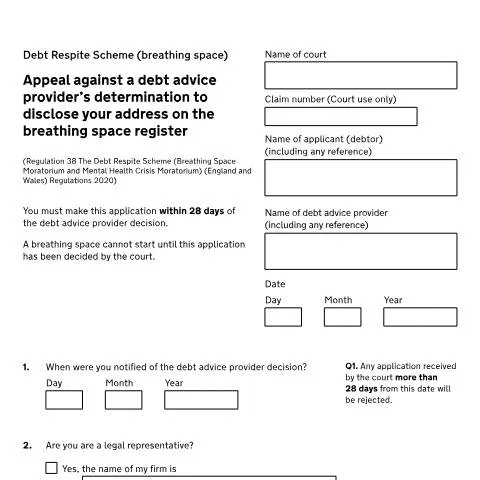
The Debt Respite Scheme was introduced under the Debt Respite Scheme (Breathing Space Moratorium and Mental Health Crisis Moratorium) (England and Wales) Regulations 2020. This scheme provides individuals experiencing financial difficulties with a temporary reprieve from creditor action. The N244E form specifically addresses situations where a debt advice provider has decided to disclose a debtor's address on the Breathing Space register.
This decision can have significant consequences, as being listed could expose individuals to potential harassment from creditors. Therefore, the ability to appeal against such determinations via the N244E form is not just procedural; it is a fundamental right to protect personal security and privacy.
Who Is Required to Submit the N244E?
Submitting the N244E form is typically necessary for individuals who have received notification from their debt advice provider stating that their address will be disclosed on the Breathing Space register. The form can also be used by legal representatives acting on behalf of a debtor.
To ensure eligibility, applicants must adhere to the following timeline:
- The application must be submitted within 28 days of receiving the debt advice provider's decision. Late applications will be rejected, which may lead to further complications in the debtor's financial management.
Completing the N244E: Key Sections and Details
Filling out the N244E form requires careful attention to detail. Here are the essential sections to focus on:
- Notification Date: It’s crucial to provide the exact date of notification from the debt advice provider, as this establishes the timeline for your application.
- Legal Representation: If you are represented by a legal professional, you must indicate this and provide their details.
- Reason for Address Confidentiality: This is arguably the most significant section, where you must articulate compelling reasons why your address should remain undisclosed. This could include threats to your safety, instances of domestic violence, or other personal circumstances that warrant confidentiality.
- Payment of Court Fees: The N244E form requires applicants to include the appropriate court fee, unless a fee waiver application is submitted simultaneously. Understanding the fee structure is essential to avoid delays.
Submitting the N244E: The Process Ahead
Once the N244E has been meticulously completed, it must be submitted to the appropriate local court. Applicants can find their local court through the official HM Courts & Tribunals Service website. This submission initiates the court’s review process, determining whether the applicant's request for confidentiality will be granted.
Upon submission, you can anticipate the following:
- Acknowledgment of Receipt: Usually, the court will confirm receipt of your application.
- Court Hearing: Depending on the circumstances, a court hearing may be scheduled to allow both parties to present their case.
- Decision Notification: The court will issue a decision regarding your application. If approved, your address will remain confidential on the Breathing Space register.
How the N244E Empowers Debtors and Protects Their Rights
Navigating debt can often evoke feelings of vulnerability and helplessness. The N244E form is not merely a document; it empowers debtors to take control of their circumstances and protect their rights. By allowing individuals to appeal against the disclosure of their address, the form plays a pivotal role in ensuring that those undergoing financial hardship can do so without unnecessary fear of harassment or exposure.
Legal Protections Offered by the Debt Respite Scheme
The Debt Respite Scheme is underpinned by various legal frameworks designed to protect the rights of individuals in financial distress. Key elements include:
- Protection from Creditor Action: During the breathing space period, creditors cannot initiate any legal action to recover debts. This provides a necessary pause for individuals to plan their next steps without the immediate pressure of creditor demands.
- Mental Health Considerations: The scheme is particularly considerate of individuals suffering from mental health issues. Specific provisions exist to tailor protections based on the applicant's mental well-being.
This legal backing makes the N244E form a fundamental piece of documentation for safeguarding not just privacy, but overall mental health during a financially tumultuous time.
Special Considerations: Unique Situations and Vulnerable Populations
While the N244E form is generally applicable to a wide range of individuals facing debt issues, certain unique situations may require additional consideration:
- Minors and Protected Parties: If the debtor is a minor or a protected party, the form must be completed by a litigation friend or legal representative. It is imperative to provide clarity on who is acting on behalf of the debtor.
- Non-UK Residents: Foreign nationals residing in the UK may find themselves navigating additional complexities, particularly regarding legal status and rights to appeal. It's advisable to seek legal advice tailored to these specific circumstances.
Understanding these nuances is crucial, as failing to address them may jeopardize the application process or overall effectiveness of the appeal.
Tracking Your Application: Staying Informed Post-Submission
Once the N244E form has been submitted, ongoing communication with the court is vital to ensure that your application is progressing as expected. Here are some practical tips for tracking your application:
- Keep Records: Maintain a copy of the submitted N244E form along with any correspondence with the court.
- Follow Up: If you haven’t received an acknowledgment within a reasonable timeframe, it’s prudent to contact the court to confirm receipt.
- Be Prepared for a Hearing: In cases where hearings are conducted, have all relevant information and documentation readily available to support your case.
Potential Outcomes and Next Steps
The court's decision will dictate the subsequent steps. If the confidentiality request is granted, the applicant can breathe a sigh of relief, knowing their address will remain secure. However, if the request is denied, the applicant must consider:
- Reasons for Denial: Understanding why the application was unsuccessful can provide insights for a potential re-application or alternative measures.
- Seeking Further Legal Aid: If faced with complications, it may be beneficial to consult a legal expert familiar with debt management and privacy issues.
Empowerment Through Knowledge: Navigating the Debt Respite Scheme
Completing the N244E form is a significant step for individuals seeking to manage their debt while protecting their personal information. Understanding the intricacies of this document, alongside the broader context of the Debt Respite Scheme, empowers debtors to navigate their financial challenges with confidence.
As debtors engage with this process, it’s essential to remain informed, prepared, and proactive. The protections afforded by the Breathing Space Scheme are designed to offer respite, allowing individuals to regain control over their finances without the additional burden of privacy concerns.
Strong awareness of one's rights and the mechanisms in place for protection can make a substantial difference in the trajectory of debt management, fostering a pathway toward stability and peace of mind.
Fill in your form directly online
No printing: type your details into the boxes of the official form, tick, then download the PDF ready to send.
- 1Type into the form boxes
- 2Tick in one click
- 3Save and download the PDF
Understanding the Debt Respite Scheme (Breathing Space)
The Debt Respite Scheme, commonly referred to as Breathing Space, provides individuals struggling with debt the opportunity to pause enforcement action by creditors while they seek professional debt advice. This scheme is crucial for those facing financial difficulties, as it allows for a period of reflection without the immediate pressures of repayment. The scheme offers two types of breathing space: the standard breathing space aimed at individuals and the mental health crisis breathing space specifically designed for those receiving mental health treatment. It's essential to understand the eligibility criteria for both types and the implications of applying for this scheme.
To qualify for the standard breathing space, applicants must be individuals experiencing debt issues, including individuals who are self-employed. The mental health crisis breathing space requires proof of mental health treatment, as certified by a mental health professional. Both types of breathing space aim to provide protection from creditor pressure, allowing individuals to explore potential solutions to their debt without the threat of court action, including bailiff activity.
The Process of Applying for Confidentiality Under the Debt Respite Scheme
If you are concerned about your address being publicly available due to the Debt Respite Scheme, you may apply for your address to be kept confidential. This is particularly significant for individuals who may face threats or harassment from creditors or who have experienced domestic abuse. The application involves filling out the N244E form, specifically designed to request that your contact details remain private during the breathing space period.
To begin the process, you need to gather relevant documentation that may support your need for confidentiality. This could include evidence of domestic violence or harassment, such as police reports or court orders. Your application should be detailed and compelling, explaining why confidentiality is essential for your safety and well-being. This aspect is critical, as the courts will assess your application based on the information provided.
After submitting the N244E form, the court will review your request. You may be required to attend a hearing, which typically is not more formal than a standard court proceeding. It’s advisable to engage with a legal advisor, especially if you are uncertain about the process or the documentation required. If your request is granted, the register will reflect your breathing space without disclosing your personal address, ensuring that your financial situation and safety remain safeguarded.
Potential Outcomes and What to Expect After Your Application
If your application is refused, you will receive a detailed explanation regarding the decision. This provides an opportunity to understand the court's reasoning and possibly address any shortcomings in your initial application. It is essential to take this feedback seriously; if there are additional grounds on which you can appeal, consider gathering further evidence and resubmitting your request.
Following a successful application, you can then move forward in the breathing space period, knowing your address is protected. During this time, focus on the advice and support you receive to address your debt issues. Utilize free debt advice services available across the UK, which can offer tailored guidance based on your specific situation. Remember that the breathing space lasts for 60 days, during which time you should take proactive steps towards resolving your financial difficulties.