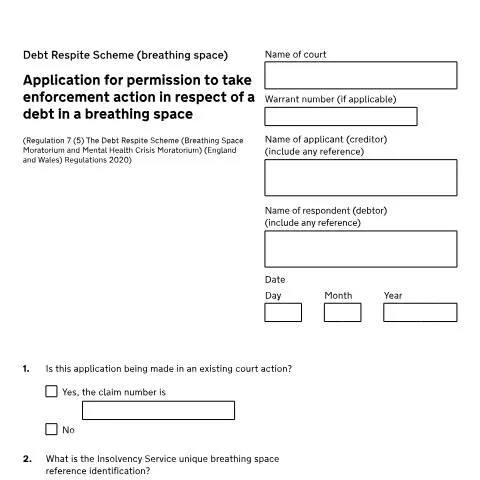
Understanding the Breathing Space Scheme and Creditor Rights
When debtors face overwhelming financial pressure, the Debt Respite Scheme provides crucial breathing room through a moratorium that temporarily halts enforcement action. However, creditors aren't left entirely powerless during these protected periods. Form N244C represents a vital legal mechanism allowing creditors to challenge breathing space protections or seek permission to continue with specific debt recovery actions.
The breathing space scheme, introduced under the Debt Respite Scheme (Breathing Space Moratorium and Mental Health Crisis Moratorium) (England and Wales) Regulations 2020, creates two distinct types of protection. A standard breathing space lasts 60 days, whilst a Mental Health Crisis Moratorium continues indefinitely until the debtor's mental health crisis treatment concludes. During these periods, creditors face strict limitations on their ability to pursue debts, but exceptional circumstances may justify intervention through the courts.
Form N244C serves as the gateway for creditors who believe they have compelling grounds to either review the validity of a breathing space or obtain judicial permission to proceed with enforcement despite the moratorium. This application requires careful preparation, substantial justification, and adherence to specific procedural requirements that vary depending on whether you're dealing with an existing court action or initiating fresh proceedings.
Creditor Categories and Qualification Criteria
Not every creditor can simply file form N244C whenever they disagree with a breathing space notification. The regulations establish specific grounds that must be satisfied, and understanding your position as a creditor is fundamental to determining whether your application stands a reasonable prospect of success.
Secured creditors occupy a different position from unsecured creditors. If you hold security over the debtor's property, certain enforcement rights may continue even during breathing space periods, particularly where the debt wasn't included in the original breathing space notification or where the security interest predates the moratorium.
Priority creditors—those owed taxes, National Insurance contributions, or court fines—face particular restrictions during breathing space periods. However, HMRC and other public bodies may have grounds to challenge breathing space protections where ongoing compliance obligations continue or where the breathing space appears to be used inappropriately to delay legitimate enforcement.
Commercial creditors and trade creditors must demonstrate exceptional circumstances to succeed with form N244C applications. The courts typically require evidence that the breathing space is being used improperly, that essential ongoing services are affected, or that the debtor's circumstances have fundamentally changed since the breathing space commenced.
Joint creditors face additional complexity, as form N244C applications affect all named joint debtors. The notification requirements ensure that all parties understand the proceedings, but this can complicate cases where only one joint debtor is experiencing genuine financial difficulty whilst others maintain their ability to pay.
Navigating the Application Process Step by Step
The form N244C application process demands meticulous attention to detail, beginning with the fundamental question of whether you're applying within an existing court action or initiating fresh proceedings. This distinction affects court fees, procedural timelines, and the specific evidence required to support your case.
If you're operating within existing proceedings, you must provide the claim number and ensure your application connects properly with the ongoing case. The court will consider your application within the context of the existing litigation, which may strengthen your position if you can demonstrate that the breathing space interferes with established court orders or scheduled hearings.
For fresh applications, you're essentially asking the court to intervene in a breathing space without prior judicial involvement. This requires more extensive justification and typically faces higher evidential thresholds. You must establish not only grounds for intervention but also why immediate action is necessary rather than waiting for the breathing space to expire naturally.
| Application Type | Required Information | Typical Processing Time | Court Fee Category |
|---|---|---|---|
| Within existing proceedings | Claim number, case history, specific interference | 14-28 days | Application within proceedings fee |
| Fresh application | Full debt details, breathing space notification, exceptional circumstances | 28-42 days | General application fee |
| Mental Health Moratorium | Evidence of changed circumstances or improper use | 28-56 days | General application fee |
The Insolvency Service unique breathing space reference is absolutely critical to your application. This reference, beginning with "BRS-", connects your application to the specific breathing space notification and enables the court to verify the current status and scope of the moratorium. Without this reference, your application will likely be rejected or significantly delayed whilst the court seeks clarification.
Building Your Case: Evidence and Justification Requirements
Question 8 of form N244C demands comprehensive explanation of your grounds for seeking permission to take enforcement action. This section determines the success or failure of your application, and generic or poorly supported arguments almost invariably fail. The courts expect detailed, specific evidence rather than general assertions about inconvenience or commercial impact.
Improper use arguments require evidence that the debtor has misrepresented their circumstances to obtain breathing space protection. This might include evidence of asset disposal, continued trading activities that generate income, or failure to engage meaningfully with debt advice. However, you must distinguish between legitimate financial difficulty and deliberate abuse of the system.
Change of circumstances applications focus on developments since the breathing space commenced that fundamentally alter the debtor's position. Inheritance, employment changes, or asset recovery might justify intervention, but you must demonstrate that these changes are both substantial and verified rather than speculative.
Essential service arguments apply where continued enforcement is necessary to maintain critical supplies or services. Utility companies, landlords, and suppliers of essential business services may have grounds to seek permission for limited enforcement action, particularly where the breathing space prevents necessary maintenance or safety work.
When preparing your evidence, consider the debt advice provider's perspective and likely response. They will receive copies of your application and have opportunities to oppose your request. Strong applications anticipate potential counterarguments and address them proactively rather than leaving obvious gaps in the reasoning.
Court Fees and Financial Assistance Options
Form N244C applications incur court fees that vary depending on the type of application and your circumstances. The fee structure reflects the court's recognition that breathing space challenges require judicial time and resources, whilst also ensuring that frivolous applications face appropriate financial barriers.
Standard application fees apply to most form N244C submissions, but specific circumstances may attract different charging structures. Legal professionals using Payment by Account (PBA) systems can streamline the payment process, whilst individual creditors must navigate the various payment options available through HM Courts & Tribunals Service.
The Help with Fees scheme provides potential relief for creditors with limited financial resources, though this situation is relatively uncommon in breathing space challenges. Form EX160 applications require detailed financial disclosure and processing time that may delay your main application, so early consideration of fee payment options is advisable.
Payment methods include online card payments, telephone payments, postal orders, and counter payments at court offices. Each method has different processing times and verification requirements that can affect your application's progress. Rejected or delayed payments may result in your application being returned unprocessed, potentially missing critical deadlines.
Professional account holders must ensure their PBA balances can cover both the initial application fee and any additional costs that might arise if the court requires further hearings or evidence. Insufficient account balances can cause embarrassing delays and may prejudice your client's position in time-sensitive breathing space challenges.
Procedural Complexities and Legal Representation Considerations
The form specifically addresses whether you're acting as a legal representative, reflecting the complex procedural requirements that govern breathing space challenges. Legal representatives face additional obligations regarding service of documents, statement of truth responsibilities, and ongoing case management that individual creditors may not fully appreciate.
Solicitors and barristers filing form N244C applications must ensure their authority to act is properly documented and that their professional indemnity arrangements cover breathing space litigation. The relatively new nature of these proceedings means that precedent is still developing, and legal representatives should consider whether their expertise adequately covers this specialized area.
Unrepresented creditors face significant challenges in navigating form N244C applications effectively. Court staff cannot provide legal advice about the merits of your case or appropriate grounds for challenge. The warning on the form acknowledges this limitation and suggests seeking legal advice, which many creditors may find essential for complex cases.
The statement of truth requirements carry serious consequences for false or misleading information. Both represented and unrepresented applicants face potential contempt proceedings if their applications contain material inaccuracies or deliberate misstatements. This emphasizes the importance of thorough preparation and honest assessment of your grounds for challenge.
Fill in your form directly online
No printing: type your details into the boxes of the official form, tick, then download the PDF ready to send.
- 1Type into the form boxes
- 2Tick in one click
- 3Save and download the PDF
Service requirements ensure that all affected parties receive copies of your application, but this can create strategic considerations about timing and approach. Debt advice providers may use the notification period to strengthen their client's position or gather additional evidence to oppose your application.
Court Processing and Decision-Making Framework
Once submitted to the debtor's local court, form N244C applications enter a judicial process that balances creditor rights against debtor protection principles. Understanding how courts approach these decisions can help you present more effective applications and set realistic expectations about likely outcomes.
Judges considering breathing space challenges apply established legal principles whilst interpreting relatively new regulations. The court's primary consideration is whether the breathing space serves its intended purpose of providing genuine respite for debtors facing financial difficulty, or whether it's being used inappropriately to delay legitimate creditor action.
The judicial approach typically involves examining the original breathing space notification, assessing the creditor's specific grounds for challenge, and considering any response from the debtor or their debt advice provider. This process may involve paper-based decisions for straightforward cases or full hearings where substantial disputes arise about facts or law.
Court decisions can range from outright rejection of the application to full permission for enforcement action, with various intermediate options including limited permission for specific actions or conditional orders that allow enforcement subject to particular requirements. Understanding these potential outcomes helps creditors prepare appropriate enforcement strategies.
Appeal rights exist for unsuccessful applications, but the time-sensitive nature of breathing space periods means that appeals may have limited practical value. Most standard breathing spaces expire within 60 days, making lengthy appeal processes potentially counterproductive unless dealing with Mental Health Crisis Moratoriums or particularly valuable enforcement actions.
Strategic Timing and Post-Decision Actions
The timing of form N244C applications can significantly impact their success and practical value. Filing too early may result in rejection for insufficient evidence of problems, whilst filing too late may mean the breathing space expires before any meaningful enforcement can occur.
For standard breathing spaces, creditors typically have most success with applications filed between weeks 3-6 of the 60-day period. This timing allows sufficient evidence of any problems to emerge whilst leaving adequate time for court processing and potential enforcement if permission is granted. Earlier applications may lack substance, whilst later applications may face practical time constraints.
Mental Health Crisis Moratoriums present different strategic considerations given their indefinite duration. These cases may justify more measured approaches to application timing, particularly where the debtor's treatment is ongoing and premature enforcement could be counterproductive even if legally permissible.
Successful form N244C applications don't automatically restore all pre-breathing space enforcement rights. Court orders typically specify the scope of permitted action, whether it applies to all debts or specific obligations, and any conditions that must be observed during enforcement. Creditors must carefully review court orders to ensure compliance and avoid potential sanctions.
Where applications are refused, creditors must decide whether to appeal, wait for the breathing space to expire naturally, or explore alternative approaches to debt recovery. Each option involves different costs, timescales, and prospects of success that require careful evaluation based on the specific debt amount, debtor circumstances, and broader commercial considerations.
Monitoring the debtor's ongoing compliance with breathing space requirements continues throughout the process. New evidence of non-compliance or changed circumstances may justify fresh applications even after initial refusals, provided the grounds are genuinely different from those previously considered by the court.