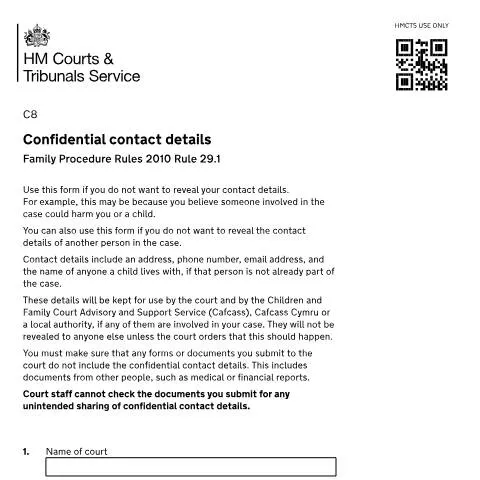
Understanding the Application to Keep Your Contact Details Confidential: Form C8
The Form C8 is an official document issued by the HM Courts & Tribunals Service in the United Kingdom. It serves as a vital tool for individuals involved in family court proceedings who wish to restrict the disclosure of their personal contact details. This guide provides an overview of the purpose, scope, and key considerations associated with submitting a Form C8.
Purpose and Scope of Form C8
The primary objective of Form C8 is to enable parties in family court cases to request that their contact information remains confidential. This is particularly relevant in situations where revealing personal details could pose risks to safety or well-being, such as cases involving domestic abuse, harassment, or other sensitive circumstances.
Specifically, the form allows individuals to specify which contact details—such as address, telephone number, email address, or details of children they are responsible for—they wish to keep private from other parties involved in the case. The court then considers these requests during proceedings, with the aim of protecting vulnerable individuals while ensuring the court has the necessary information to administer justice.
Who Can Use Form C8 and When?
Any party involved in a family court case can apply to keep their contact details confidential by submitting a Form C8. This includes applicants, respondents, or legal representatives acting on behalf of a party. The form is typically used at the early stages of proceedings but can be submitted at any point where confidentiality concerns arise.
It is important to note that the form is only applicable to contact details that the applicant believes are not already known to the other parties. The court will evaluate the reasons provided for confidentiality and decide whether to grant the request based on the information presented.
Key Considerations and Procedures
Completing the Form
When filling out Form C8, applicants must include:
- The court case number
- The full names of all children involved
- The full name of the applicant or respondent
- Details of any refuge residence, if applicable
- The contact details they wish to keep private
Applicants should ensure that any documents or evidence submitted to the court do not inadvertently disclose the contact details they seek to keep confidential. The form requires a clear listing of the specific contact information to be protected.
Legal and Confidentiality Considerations
Submitting Form C8 is a formal legal process, and all statements made must be truthful. The form includes a declaration of truth, emphasizing that making false statements may result in contempt of court proceedings. It is crucial that the applicant or their legal representative signs the form, confirming the accuracy of the information provided.
The court will consider the confidentiality request and may impose conditions or restrictions to balance the protection of personal details with the needs of the case. The court's decision is final and aims to safeguard vulnerable individuals while maintaining the integrity of the judicial process.
Fill in your form directly online
No printing: type your details into the boxes of the official form, tick, then download the PDF ready to send.
- 1Type into the form boxes
- 2Tick in one click
- 3Save and download the PDF
Impact on Court Proceedings and Privacy
Once approved, the confidentiality of the specified contact details will be maintained by the court and the Children and Family Court Advisory and Support Service (Cafcass). These details will not be shared with other parties unless ordered by the court, thereby offering a layer of protection for individuals at risk.
However, applicants should be aware that all documents submitted to the court, including medical reports or financial statements, must not contain the contact details they wish to keep private. The court staff are not responsible for checking documents for inadvertent disclosures, so careful review is advised.
Conclusion
Form C8 is a crucial mechanism within the family court system for individuals seeking to protect their personal contact details during legal proceedings. By understanding its purpose, proper completion, and the legal obligations involved, applicants can better navigate the process of safeguarding their privacy while ensuring their case is effectively managed within the judicial framework.