When Special Educational Needs Decisions Go Wrong: The Appeal Permission Gateway
The Special Educational Needs and Disability Tribunal operates as the final arbiter for disputes between families and local authorities over educational provision for children with special needs. Yet even this specialist tribunal can make errors in law, leaving parents and authorities with nowhere else to turn. Form SEND20A represents the crucial gateway to challenging these decisions - but it's a gateway with strict conditions and exacting requirements that catch many applicants off guard.
Unlike standard appeals which focus on the merits of a case, applications for permission to appeal target legal errors in the tribunal's decision-making process. This distinction fundamentally shapes how the form must be completed and what evidence carries weight. The 28-day time limit from receiving the tribunal's decision creates additional pressure, particularly for families already exhausted by lengthy SEND proceedings.
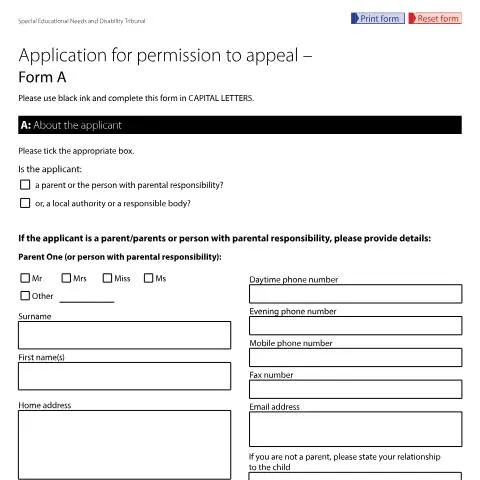
The form serves dual purposes: it acts as both an application for permission and, if permission is granted, becomes the formal notice of appeal to the Upper Tribunal. This dual function means every section requires careful consideration, as rushed or incomplete submissions rarely receive second chances.
Navigating the Applicant Landscape: Who Can Challenge Tribunal Decisions
Form SEND20A accommodates two distinct categories of applicants, each with different legal standings and procedural requirements. The form's structure reflects this division through separate pathways that determine how subsequent proceedings unfold.
Parents and Those with Parental Responsibility
The most common applicants are parents or individuals with parental responsibility seeking to overturn tribunal decisions they believe contain legal errors. The form requires comprehensive contact details for up to two parents, recognising that SEND cases often involve separated or divorced parents with shared responsibilities.
A critical consideration emerges when completing the representative section. Parents may engage solicitors, barristers, or specialist SEND advocates, but the form permits correspondence with only one designated recipient. This seemingly administrative detail has significant implications - choose incorrectly, and vital communications may reach the wrong person at crucial moments.
The relationship field requires particular attention for non-parent applicants. Step-parents, grandparents with parental responsibility, or local authority-appointed guardians must clearly establish their legal standing, as the tribunal will scrutinise their right to bring proceedings.
Local Authorities and Responsible Bodies
Local authorities face different challenges when completing SEND20A. The designated official handling the case must have appropriate authority to commit the organisation to legal proceedings. Educational settings like academies, free schools, or further education colleges fall under the "responsible body" category, each with specific governance structures affecting who can sign the form.
For authorities, the choice between internal handling and external legal representation often depends on the complexity of the legal error alleged. Straightforward procedural mistakes might warrant internal management, while constitutional or human rights issues typically require specialist legal input.
Dissecting Tribunal Decisions: The Foundation of Section B
Section B demands precise identification of the challenged decision, but tribunal decisions come in various forms that applicants often struggle to distinguish. Understanding these differences proves crucial for accurate completion.
| Decision Type | Typical Timing | Key Identifiers |
|---|---|---|
| Final substantive decision | After full hearing | Detailed reasoning, formal tribunal heading |
| Case management decision | Pre-hearing | Procedural directions, limited reasoning |
| Strike-out decision | Various stages | Dismissal without substantive consideration |
| Refusal to admit late evidence | During proceedings | Specific reference to evidence excluded |
The appeal or claim number serves as the unique identifier linking the application to the original proceedings. This alphanumeric code, typically found at the top of tribunal correspondence, must be transcribed exactly - even minor errors can delay processing significantly.
Dating requirements create particular challenges. The "date of hearing" refers to the substantive hearing that produced the challenged decision, not preliminary or case management hearings. For decisions made following written submissions without an oral hearing, this field should indicate "paper hearing" or similar notation.
The crucial "date the decision was sent to you" triggers the 28-day time limit. Tribunals typically send decisions by first-class post, and the date shown on the decision letter generally establishes when time begins running. However, disputes over actual receipt can arise, particularly where postal delays occur or addresses have changed during proceedings.
Late Applications and the Burden of Explanation
Applications submitted beyond the 28-day limit face additional scrutiny through the delay explanation section. Acceptable reasons typically involve circumstances beyond the applicant's control: serious illness, postal strikes, or fundamental misunderstandings about appeal rights following inadequate tribunal guidance.
Unacceptable reasons include: difficulty finding legal representation, dissatisfaction with the decision's merits rather than legal errors, or simple oversight. The tribunal expects applicants to act promptly once they identify potential legal errors, regardless of their emotional state following an adverse decision.
Constructing Legal Arguments: The Heart of Section C
Section C represents the application's substantive core, where applicants must demonstrate that the tribunal made an error in law rather than simply reaching an unwelcome conclusion on the facts. This distinction proves challenging for many applicants, particularly parents without legal training who focus on outcome dissatisfaction rather than procedural or legal failings.
Identifying Errors in Law
Legal errors fall into several recognised categories, each requiring different approaches in Section C. Procedural errors involve failures to follow proper procedures: inadequate case management, refusal to admit relevant evidence without proper reasons, or conducting hearings unfairly.
Errors of legal interpretation occur when tribunals misunderstand or misapply relevant legislation, regulations, or case law. These might involve incorrect interpretation of Education, Health and Care Plan requirements, misapplication of disability discrimination principles, or failure to consider relevant statutory duties.
Inadequate reasoning errors arise when tribunal decisions lack sufficient explanation for their conclusions, making it impossible to understand how they reached their findings. The reasoning must be adequate to allow parties to understand why they won or lost and whether grounds for appeal exist.
Evidence and Argumentation Strategy
Effective Section C completion requires specific reference to the tribunal's decision text, highlighting exactly where the alleged error occurred. Vague assertions like "the tribunal got it wrong" provide no basis for granting permission. Instead, applicants must pinpoint specific paragraphs, quote relevant passages, and explain precisely why the tribunal's approach was legally flawed.
Reference to relevant legal authorities strengthens applications significantly. This might include citing specific sections of the Children and Families Act 2014, relevant statutory guidance, or established case law principles. However, simply listing legal provisions without explaining their relevance to the alleged error adds little value.
The space limitation on the form necessitates concise, focused arguments. Continuation sheets are permitted but should be used judiciously - lengthy submissions often indicate unfocused argumentation rather than complex legal points.
Remedies and Realistic Expectations: Completing Section D
Section D requires applicants to specify their desired outcome, but the available remedies are more limited than many expect. The Upper Tribunal cannot simply substitute its own view of what should have happened; it can only address legal errors in the original decision.
The most common remedy involves remitting the case back to the First-tier Tribunal for fresh consideration, either by the same or a different tribunal panel. This outcome requires the original proceedings to be heard again, potentially extending resolution timescales significantly.
Alternatively, the Upper Tribunal might remake the decision itself where the facts are sufficiently clear and no further fact-finding is required. This faster resolution is only possible in straightforward cases where the legal error's correction leads inevitably to a particular outcome.
Some applicants mistakenly seek remedies beyond the tribunal's jurisdiction, such as compensation for distress or orders directing specific educational provision. These fall outside the appeal system's scope and should not be included in Section D.
Submission Pathways and Strategic Considerations
Form SEND20A offers two submission routes, each with distinct advantages and risks that applicants must weigh carefully against their circumstances.
Postal Submission Process
Postal submission to the Darlington office remains the most reliable method, particularly for applications approaching the 28-day deadline. The form specifically recommends obtaining proof of posting - this advice proves crucial where timing disputes arise, as postal delays can affect whether applications are considered timely.
Recorded delivery or special delivery provides stronger evidence of timely submission, though standard first-class post with proof of posting certificate offers a reasonable compromise between cost and security. Applications should include all required attachments securely fastened, with the appeal number clearly marked on every page.
Fax Transmission Considerations
Fax submission offers speed advantages but carries technical risks that have caught many applicants unprepared. Poor-quality transmissions can render crucial sections illegible, while fax machine failures at either end can prevent successful delivery without clear indication to the sender.
The provided fax number (0870 739 4017) operates during standard business hours, and transmission reports should be retained as evidence of successful submission. However, fax transmission of supporting documents can produce poor-quality copies that hamper the tribunal's review process.
Essential Supporting Documentation
Every application must include a copy of the challenged tribunal decision - failure to provide this fundamental document typically results in immediate rejection. The decision copy should be complete, including any separate documents like agreed facts or case management directions that formed part of the final determination.
Additional supporting documentation varies by case but might include relevant case law extracts, statutory provisions, or expert reports that demonstrate the alleged legal error. However, applicants should resist the temptation to submit extensive background material that duplicates the original tribunal file.
After Submission: Understanding the Permission Process
Once submitted, SEND20A applications follow a structured review process that operates differently from the original tribunal proceedings. Understanding these stages helps applicants maintain realistic expectations and respond appropriately to tribunal communications.
Initial administrative checks verify completeness and timeliness before legal assessment begins. Applications failing basic requirements may be returned for correction, though this process consumes valuable time where deadlines are tight.
The permission decision itself can take several weeks, during which the original tribunal decision remains in effect. Successful applications proceed to full Upper Tribunal appeal proceedings, while refused applications typically mark the end of the legal road unless exceptional circumstances apply.
Permission refusal requires careful consideration of the reasoning provided. The Upper Tribunal must explain why permission was refused, and this explanation often reveals whether the application failed due to inadequate argumentation, absence of legal error, or procedural deficiencies.
Successful applicants face additional procedural requirements as their case progresses to full appeal, including potential case management directions and further evidence submission deadlines. The permission grant represents the beginning rather than the end of Upper Tribunal proceedings, with resolution potentially taking many more months.
Form SEND20A thus serves as both a gateway and a filter, separating meritorious legal challenges from dissatisfaction with tribunal outcomes. Its successful completion requires understanding not just what happened in the original case, but why the tribunal's legal approach was flawed - a distinction that proves decisive in determining whether families and authorities can obtain the justice they seek through the appeal system.
Common Scenarios Requiring Form SEND20A Appeals
Understanding when Form SEND20A becomes necessary requires examining the typical circumstances that lead families to this appeals process. The most frequent scenario involves disagreements over the level of support specified in an Education, Health and Care (EHC) plan, particularly when local authorities propose mainstream school placements without adequate provision for children with complex needs.
Parents often find themselves needing to appeal when their child's autism spectrum disorder requires specialist teaching methods, but the local authority's assessment concludes that standard classroom support suffices. In such cases, the First-tier Tribunal may have upheld the local authority's decision, leaving families to pursue the Upper Tribunal route via Form SEND20A. The key legal test centres on whether the proposed provision meets the child's needs as defined in the Children and Families Act 2014, section 37.
Fill in your form directly online
No printing: type your details into the boxes of the official form, tick, then download the PDF ready to send.
- 1Type into the form boxes
- 2Tick in one click
- 3Save and download the PDF
Another common trigger involves disputes over independent school placements. When parents seek funding for specialist independent schools citing inadequate local provision, initial tribunal decisions sometimes favour local authority arguments about cost-effectiveness. The Upper Tribunal may then need to examine whether the First-tier Tribunal properly applied the legal tests for independent school funding, particularly the requirement that mainstream provision cannot meet the child's needs.
Speech and language therapy disputes frequently generate appeals requiring Form SEND20A. Local authorities may specify minimal therapy hours in EHC plans, arguing that school-based interventions provide sufficient support. Parents challenging such decisions must demonstrate that the First-tier Tribunal made errors in law when assessing the child's therapy needs against professional recommendations from speech and language therapists.
Transition planning failures represent another significant category. When young people with SEND approach school-leaving age, local authorities must ensure appropriate post-16 provision. Disputes arise when proposed college placements lack necessary support structures, or when authorities fail to arrange suitable work-based learning opportunities. The Upper Tribunal examines whether transition assessments comply with statutory requirements and whether proposed provisions genuinely prepare young people for adulthood.
Transport provision disputes also generate appeals, particularly for children attending specialist schools. Local authorities may refuse to fund transport to distant specialist placements, arguing that local schools could meet the child's needs. The legal framework requires authorities to provide free transport when children cannot reasonably be expected to attend nearer schools, but interpretation of "reasonableness" often becomes contentious.
Strategic Considerations for Legal Representation
While legal representation isn't mandatory for Upper Tribunal appeals, the complexity of SEND law makes professional support increasingly valuable as cases progress through the system. Solicitors specialising in education law bring detailed knowledge of statutory frameworks, case precedents, and procedural requirements that can significantly impact appeal outcomes.
The decision to engage legal representation often depends on the case's complexity and the family's resources. Simple procedural errors by the First-tier Tribunal might be addressable by experienced parents familiar with SEND legislation, particularly those who have navigated previous appeals. However, cases involving complex legal interpretations, such as disputes over the meaning of "appropriate" provision under section 33 of the Children and Families Act 2014, typically benefit from professional legal analysis.
Barristers with education law expertise offer particular advantages in Upper Tribunal hearings. Their advocacy skills become crucial when cases involve detailed statutory interpretation or require examination of complex expert evidence. The Upper Tribunal's judicial composition—typically including specialist members with education backgrounds—means that legal arguments must be precisely crafted and supported by relevant case law.
Cost considerations significantly influence representation decisions. Unlike First-tier Tribunal proceedings, Upper Tribunal cases may involve cost orders against unsuccessful parties in certain circumstances. This risk factor requires careful assessment, particularly when challenging well-resourced local authorities with experienced legal teams. The Upper Tribunal can make protective costs orders in appropriate cases, but these require specific applications and aren't automatically granted.
Legal aid availability for SEND appeals remains extremely limited, meaning most families must fund representation privately or seek pro bono assistance. Some solicitors offer conditional fee arrangements or after-the-event insurance, but these options require careful consideration of terms and potential liabilities. Charitable organisations occasionally provide legal support for cases with wider implications, particularly those likely to establish important precedents.
The timing of legal engagement affects case preparation quality. Early involvement allows solicitors to review First-tier Tribunal decisions systematically, identifying potential grounds for appeal before the strict time limits expire. Late engagement may limit strategic options, particularly if key deadlines approach or if additional evidence needs gathering to support legal arguments.
Communication between legal representatives and families requires particular attention in SEND cases. Children's needs and family circumstances often change during lengthy appeal processes, requiring regular updates to legal strategies. Effective representation involves translating complex legal concepts into accessible language while ensuring parents understand both the strengths and limitations of their cases.
Post-Decision Procedures and Implementation Challenges
Successfully obtaining permission to appeal through Form SEND20A represents only the beginning of Upper Tribunal proceedings. The substantive appeal process involves detailed case preparation, evidence gathering, and potentially complex hearings that can extend over several months. Understanding post-permission procedures helps families prepare for the journey ahead.
Once permission is granted, the Upper Tribunal issues directions for case management, typically requiring both parties to file detailed statements of case within specified timeframes. These documents must set out legal arguments with precision, referencing relevant statutory provisions and case law. The quality of legal submissions often determines whether cases succeed, making thorough preparation essential.
Evidence gathering for Upper Tribunal appeals requires strategic consideration of what additional material might strengthen legal arguments. Unlike First-tier Tribunals, which focus primarily on children's needs and appropriate provision, Upper Tribunal appeals examine whether legal errors occurred in lower tribunal decisions. This distinction affects the type of evidence required and how it should be presented.
Expert witness involvement may become necessary when appeals involve complex technical issues or require specialist knowledge beyond the tribunal's expertise. Educational psychologists, speech and language therapists, or occupational therapists might provide expert reports addressing specific legal questions rather than general assessments of children's needs. The Upper Tribunal's approach to expert evidence differs from First-tier proceedings, requiring witnesses to address legal standards and statutory requirements explicitly.
Implementation challenges frequently arise when Upper Tribunal decisions favour families. Local authorities may interpret tribunal orders narrowly, requiring further enforcement action to ensure proper compliance. The Upper Tribunal lacks direct enforcement powers, meaning families might need to pursue separate proceedings if authorities fail to implement decisions appropriately.
Monitoring implementation becomes particularly important when appeals result in orders for specific educational placements or support levels. Local authorities must arrange new provision within reasonable timeframes, but interpretation of "reasonable" often varies. Parents may need to maintain detailed records of implementation progress, documenting any delays or inadequate arrangements that might require further legal intervention.
The impact of successful appeals extends beyond individual cases, potentially influencing local authority policies and practices. Significant Upper Tribunal decisions may establish precedents affecting how authorities interpret statutory duties or assess children's needs. Families should consider whether their cases might have broader implications, particularly when challenging systemic issues or novel legal interpretations.
Financial implications of successful appeals require careful consideration. While the Upper Tribunal cannot award compensation for past failures, successful appeals may result in authorities funding expensive provisions, such as independent school placements or intensive therapy programmes. These financial commitments can affect local authority attitudes towards settlement negotiations and future case management approaches.