A Deeper Dive into the Collision Statement of Case: Form ADM3
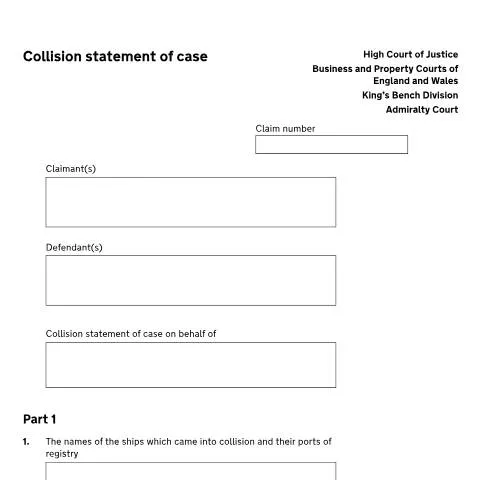
The Collision Statement of Case, known as Form ADM3, serves a pivotal role in maritime law within the jurisdiction of the High Court of Justice, specifically its Admiralty Court. In the event of a maritime collision, this document is essential for asserting claims and establishing accountability. It allows claimants and defendants to outline the details surrounding the incident, making it a fundamental aspect of maritime litigation.
Understanding the Key Elements of Form ADM3
Detailed Breakdown of Information Required
The ADM3 form requires comprehensive information about the incident, which is crucial for judges to assess liability and damages. Here are its main components:
- Identification of Vessels: Details of ships involved, including their names and registration ports.
- Technical Specifications: The form requests particulars such as dimensions, tonnage, and cargo details, all of which are necessary for understanding the vessels' capabilities and limitations.
- Collision Circumstances: The date, time, weather conditions, and navigational details surrounding the incident must be documented, providing a contextual understanding of the collision.
- Actions Taken: Descriptions of any maneuvers or signals made prior to the collision contribute to determining fault.
Sectional Overview of the Form
The ADM3 is structured in two distinct parts, each serving a critical function:
- Part 1: Primarily focused on the factual account of the collision.
- Part 2: Expands upon the facts by detailing the sequence of events leading to the collision, allegations of negligence, and the relief sought by the claimant.
This bifurcation ensures a clear distinction between factual narration and legal assertion, thereby facilitating better analysis by the court.
The Profile of Users: Who Needs to Complete Form ADM3?
Form ADM3 is typically completed by parties directly involved in the collision, which may include the claimants (often vessel owners or operators) and defendants (the parties they are claiming against). However, understanding the nuances is crucial:
- Claimants: Usually the owners or operators of a vessel that has suffered damage due to another vessel’s actions.
- Defendants: Generally the owners or operators of the vessel alleged to be at fault.
- Legal Representatives: Often, both parties will enlist the help of solicitors or legal firms to ensure proper completion of the form, considering the complexities involved in maritime law.
Each party must accurately represent their position and ensure that their claims or defenses are backed by substantial evidence, which often necessitates rigorous legal support.
Comparative Analysis: ADM3 Versus Other Maritime Forms
It's essential to distinguish Form ADM3 from other maritime documents. While it may seem similar to general claim forms or other procedural filings, specific attributes set it apart:
| Form | Purpose | Specificity to Maritime Law |
|---|---|---|
| ADM3 | Statement of Case for collision incidents | Yes, specifically for collisions |
| Form N1 | General civil claim form | No, covers a wide range of claims |
| Form ADM1 | Application for admiralty jurisdiction | Yes, but pertains to jurisdiction, not specific incidents |
This comparative view highlights the unique role of Form ADM3 in the legal landscape, ensuring that maritime collisions are documented with the specificity they require.
The Procedures for Submission: Navigating the Filing Process
Filing Form ADM3 entails navigating a structured process, critical for ensuring that your submission is deemed valid by the HM Courts & Tribunals Service. Here's a step-by-step overview:
- Completion: Ensure all relevant data is accurately filled in, as inaccuracies can lead to delays or rejections.
- Review: Have the submission reviewed by a legal professional to confirm compliance with procedural norms.
- Submission Channels:
- Online: Submitted through the HM Courts & Tribunals Service online portal, which may provide faster processing.
- Paper Submission: Alternatively, you can mail the completed form to the designated court document office.
- In-Person: Some courts allow submission at the counter, providing an opportunity to confirm receipt and address any immediate queries.
- Await Confirmation: Once submitted, await confirmation from the court to ensure your statement has been filed correctly.
Historical Context: The Evolution of Maritime Law and Form ADM3
The formulation of the Collision Statement of Case aligns with the evolution of maritime law, particularly in response to increasing complexities surrounding international shipping and maritime navigation. Historically, as shipping grew in scope and technology advanced, so did the legal frameworks governing these activities.
The ADM3 form is influenced by various legislative acts and conventions that aim to standardize practices across jurisdictions, ensuring clarity and consistency. The combination of common law and statutory instruments has shaped the current requirements of Form ADM3 and its role in ensuring just resolutions in maritime disputes.
The Legal Implications Surrounding False Statements
Completing Form ADM3 carries significant legal responsibilities. The statement of truth included in the filing underscores the importance of honesty in the declaration of facts. Misrepresentation can lead to severe consequences, including:
- Contempt of Court: A false statement can lead to proceedings for contempt, which may result in legal penalties.
- Invalidation of Claims: Incorrect information may nullify the claims being made, leaving the party without recourse.
It's imperative for all parties involved to ensure accuracy in their submission, protecting not only their interests but also the integrity of the judicial process.
Concluding Insights on the Role of Form ADM3 in Maritime Disputes
Form ADM3, serving as a critical instrument in maritime litigation, encapsulates the complexities of maritime law while ensuring that the specific details of each collision are adequately documented. Its precise requirements and legal implications demand careful attention from all involved parties, ultimately aiming for just resolutions in what can often be intricate cases.
By fostering a thorough understanding of this crucial document, claimants and defendants can navigate their maritime disputes with clarity and confidence, ensuring that they are well-prepared to present their cases in court.
Understanding the Collision Statement of Case: Form ADM3
The Collision Statement of Case, commonly referred to as Form ADM3, is a crucial document within the UK legal framework concerning civil disputes. It is particularly relevant in cases where individuals or businesses are involved in accidents leading to claims against them. This form serves to outline the circumstances surrounding the incident, the parties involved, and the initial points of contention. Understanding the nuances of this form is imperative for those navigating the complexities of civil litigation.
When filling out Form ADM3, it's essential to provide detailed and precise information. The form requires specifics about the collision, including the date, time, and location of the incident, as well as the nature of the claims being made. This includes information about damages sustained, injuries reported, and any relevant witnesses. Providing exhaustive details aids in the efficient processing of the case by the HM Courts and Tribunals Service (HMCTS).
It's also worth noting that the form must be submitted in accordance with strict timelines. The procedural rules governing the submission of such statements are delineated in the Civil Procedure Rules (CPR). Understanding these timelines can be pivotal; for example, late submissions can lead to the forfeiture of claims or defenses. Therefore, those completing the ADM3 should be cognizant of the deadlines that apply to their specific case.
The Role of Evidence in Supporting a Collision Statement of Case
In any legal dispute, particularly those involving collisions, the weight of your statement largely rests on the supporting evidence you can provide. The Collision Statement of Case requires you to reference any evidence that substantiates your assertions. This can include photographs of the incident scene, medical reports detailing injuries, witness statements, and police reports, among others.
Fill in your form directly online
No printing: type your details into the boxes of the official form, tick, then download the PDF ready to send.
- 1Type into the form boxes
- 2Tick in one click
- 3Save and download the PDF
Moreover, each piece of evidence should be meticulously documented and referenced within the Form ADM3. For example, if you have photographs, you might reference them as "Photograph 1 – Scene of the Collision". This clear referencing helps the court easily navigate through your evidence, bolstering your position within the statement.
In addition to physical evidence, it may also be beneficial to include expert opinions, such as those from accident reconstruction specialists or medical professionals. These experts can provide insight that may clarify the circumstances of the collision or the extent of injuries, adding further credibility to your claims.
Remember that the weight of evidence is assessed based on its relevance and reliability. Therefore, ensuring that your evidence is both applicable and credible is crucial. A well-supported Collision Statement of Case not only improves your chances of a favorable outcome but also streamlines the court's processes by providing a clear, concise, and factual basis for your claims or defenses.
Common Pitfalls When Completing Form ADM3
While completing the Collision Statement of Case (Form ADM3) seems straightforward, there are common pitfalls that can hinder your case. Awareness of these issues can significantly improve your submission and the overall effectiveness of your statement.
One common mistake is providing vague or ambiguous language. The courts require precise and unambiguous statements, so when detailing the events surrounding the collision, use clear language. Instead of stating "I was driving fast," specify the speed you were traveling, as per the conditions at the time. This level of detail can make a substantial difference in how your statement is perceived.
Another frequent issue is the omission of critical information. Ensure that all relevant details are included, such as previous incidents involving the same parties or vehicles, if applicable. Your statement should present a complete picture to avoid any discrepancies that could be exploited by the opposing party.
Additionally, be mindful of the legal terminology used in your statement. While a degree of formality is appropriate, ensure that your statement remains accessible. Overuse of legal jargon can alienate those not familiar with the terminology, including judges or jury members who may not have a legal background. The goal should be to convey your points clearly and effectively without sacrificing professionalism.
Finally, double-check for compliance with the Data Protection Act 2018 and UK GDPR when submitting personal data. Ensure that any sensitive information is handled appropriately to avoid legal repercussions. Failure to comply with data protection regulations can result in severe penalties, complicating your case further.