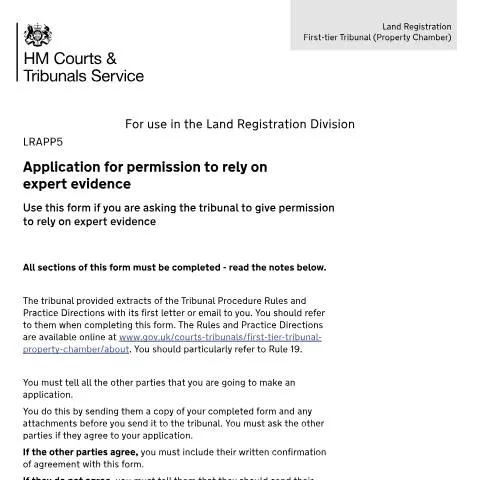
Understanding Form LRAPP5: A Vital Step in Land Registration Cases
When navigating the complexities of land registration disputes in the UK, presenting expert evidence can be a game-changer. However, before you can rely on such evidence during tribunal proceedings, you must obtain permission through a specific application—Form LRAPP5. This document is not merely a formality; it plays a critical role in shaping the outcome of your case.
What Triggers the Use of LRAPP5?
The use of the LRAPP5 form typically arises in situations where a party believes that expert testimony is essential to support their case in front of the First-tier Tribunal (Property Chamber). This requirement might stem from technical details, property valuation disputes, or other specialized areas where laypersons might lack sufficient knowledge to present a compelling argument. Therefore, having the backing of an expert can substantiate claims and add credibility to your position.
Scenarios that Call for Expert Evidence
- Property Valuation Disputes: If you're contesting the value of a property, an expert's analysis can provide a robust foundation for your argument.
- Technical Assessments: In cases involving structural integrity or land usage, expert insights can clarify complex issues.
- Boundary Disputes: Experts can provide surveys or analyses that help delineate property lines.
Filling in the Details: A Step-by-Step Guide
Completing Form LRAPP5 is a meticulous process that requires attention to detail. Each section of the form serves a specific purpose and should be filled out with precision to avoid delays or rejections.
Section Breakdown
- Tribunal Case Reference Number: Enter your case reference number accurately, as this links your application to your existing case.
- Applicant's Identity: Clearly specify whether you're the applicant, a representative, or the respondent. Accurate identification is crucial for proper processing.
- Name of Person or Firm: Provide the full name of the person or company completing the form. Discrepancies here can lead to confusion.
- Previous Permission: Indicate if the tribunal has previously granted permission for expert evidence. This aids the tribunal in assessing any past decisions.
- Future Hearing Dates: If applicable, provide upcoming hearing dates. This information helps the tribunal manage its schedule more efficiently.
- Expert's Opinion: Describe why you believe an expert’s opinion is necessary and what specific matters they will address. Be concise yet comprehensive.
- Joint Expert Instruction: The tribunal usually prefers a single expert. If you oppose this, justify your reasoning compellingly.
- Proposed Expert's Details: Name your chosen expert along with their qualifications and address. Ensure that the expert is relevant to your case to strengthen your application.
- Supporting Evidence: Attach any relevant documentation to bolster your case. This might include previous reports or testimonials.
- Notification to Other Parties: Confirm whether you’ve sent copies of the application to other involved parties to ensure transparency.
- Agreement from Other Parties: If other parties agree to your expert evidence application, secure their written confirmation. If they disagree, they must also be informed.
- Statement of Truth: Sign and date this section to affirm the truthfulness of your application. This is a legal requirement.
Submission Process: From Form Completion to Tribunal Review
Once you have meticulously filled out the form, the next step is submitting it to the tribunal. However, understanding the submission process and how to ensure your application gets the attention it deserves is equally important.
Method of Submission
| Submission Method | Description |
|---|---|
| The primary method is to send your completed form and attachments via email to [email protected], ensuring that all other parties are CC'd to confirm notification. | |
| Postal Submission | While less common, you can also choose to send your form by post to the appropriate tribunal address, though this may result in longer processing times. |
Anticipating Outcomes: What Happens Next?
After submission, the tribunal will review your application. Understanding what to expect during this phase is crucial for managing your case effectively.
Timeline and Notification
Typically, the tribunal will respond to your application regarding permission to rely on expert evidence within a few weeks. However, processing times can vary based on the tribunal's workload and the specifics of your case. You should monitor your email and any provided contact means for updates.
Possible Outcomes
- Permission Granted: If your application is successful, you'll receive confirmation, allowing you to proceed with your expert's involvement.
- Permission Denied: In this case, you will receive a written explanation. You may consider appealing this decision, but ensure you consult the tribunal's practice directions on how to do so.
When Things Don’t Go to Plan: Handling Refusals and Missing Information
Receiving a refusal or facing issues with your application can be disheartening. However, knowing how to respond can make a significant difference.
Responding to a Refusal
If your application for expert evidence is refused, carefully review the reasons provided. The tribunal often outlines specific areas that led to the denial. Your response may involve:
- Clarifying Misunderstandings: If there was a misunderstanding about the necessity of expert evidence, provide additional documentation or statements that clarify this.
- Consulting Legal Counsel: If the refusal seems unjust, seek advice from a legal professional who specializes in property law.
- Reapplying: You can submit a revised application addressing the tribunal's concerns, ensuring that all requisite details are robustly covered.
Dealing with Missing Information
Sometimes, applications are delayed due to missing sections or documentation. To mitigate this:
- Double-Check Requirements: Before submitting, cross-reference your form with the tribunal’s guidelines to ensure all required fields are completed.
- Contact the Tribunal: If you're uncertain about any part of your application, do not hesitate to reach out to the tribunal for clarification.
The Bigger Picture: LRAPP5 within the Tribunal Framework
The LRAPP5 form does not exist in isolation; it plays a part in the broader context of tribunal procedures and property law. Understanding its place in this hierarchy can provide clearer insight into its significance.
Relation to Tribunal Procedure Rules
By referencing the Tribunal Procedure Rules and Practice Directions, which accompany your initial correspondence, applicants will find guidance on the procedural strengths of their case. Rule 19 is especially pertinent, as it covers the use of expert evidence in tribunal settings.
The Role of Expert Evidence in Tribunal Decisions
Expert testimony often serves as the backbone for determining complex issues within property disputes. Its reliability and relevance can significantly influence a tribunal's final judgement, making the LRAPP5 application an essential step.
Final Tips for a Successful Application
The intricacies of legal procedures can be overwhelming, but a well-prepared application using Form LRAPP5 can pave the way for a smoother experience with the tribunal. Here are a few final tips to keep in mind:
- Stay Informed: Familiarize yourself with the tribunal’s practice directions and relevant rules.
- Communicate Clearly: When informing other parties about your application, be straightforward to avoid misunderstandings.
- Document Everything: Keep copies of all communications and submissions related to your application for future reference.
- Be Patient but Proactive: While waiting for a response, prepare any further documentation that may help substantiate your case.
In conclusion, navigating the realm of expert evidence and tribunal applications, particularly with Form LRAPP5, requires diligence and a keen understanding of the procedural landscape. By adhering to the guidance outlined here, you'll be better positioned to make compelling arguments that can sway tribunal decisions in your favor.
Fill in your form directly online
No printing: type your details into the boxes of the official form, tick, then download the PDF ready to send.
- 1Type into the form boxes
- 2Tick in one click
- 3Save and download the PDF
Understanding the Role of Expert Evidence in Legal Proceedings
Expert evidence plays a pivotal role in many legal cases, particularly those involving complex issues that require specialist knowledge beyond the court's general understanding. This might involve fields such as medicine, engineering, finance, or other technical disciplines. In the UK legal framework, expert witnesses are appointed to provide their expertise to assist judges in making informed decisions. Understanding the nuances of expert evidence is essential for parties involved in legal proceedings, as it can significantly impact the outcome of a case.
When applying for permission to rely on expert evidence through Form LRAPP5, parties must first demonstrate the necessity of such evidence. This involves outlining the specific issues at hand that require specialist input and justifying why an expert's testimony is essential. The court seeks to avoid unnecessary complexity; therefore, presenting a clear rationale is crucial. Moreover, it is important to be aware of the requirements set out in the Civil Procedure Rules (CPR) that govern the submission of expert evidence, such as the need for the evidence to be independent, impartial, and relevant.
The Process of Filing Form LRAPP5: Step-by-Step Guidance
Filing Form LRAPP5 to seek permission for expert evidence is a structured process that demands attention to detail. Below is a step-by-step guide to help applicants navigate this procedure effectively:
- Identify the Need for Expert Evidence: Assess whether the case presents issues that truly require expert testimony. This can involve consultation with legal advisors or reviewing similar cases.
- Choose a Suitable Expert: Select an expert whose qualifications and experience align with the specific issues in your case. The expert should be able to communicate their findings clearly and succinctly.
- Compile Necessary Documentation: Gather all relevant information and documents that will support your application. This includes any preliminary opinions from the expert, the expert’s CV, and an outline of the anticipated evidence.
- Fill Out Form LRAPP5: Complete the form meticulously, ensuring all fields are addressed. Pay particular attention to the sections where you must justify the need for expert testimony and outline the expert's anticipated contribution.
- Submit the Application: File the completed Form LRAPP5 with the relevant court or tribunal, adhering to any specific submission guidelines. Ensure that you do this within the appropriate timelines established by the court.
- Prepare for a Possible Hearing: In some cases, the court may schedule a hearing to discuss your application. Be prepared to present your arguments clearly and succinctly, demonstrating the necessity of the expert evidence.
Each step in this process is vital and should not be overlooked. Any deficiencies in the application could result in a refusal, which may jeopardize the case's overall viability.
Common Challenges When Applying for LRAPP5 and How to Overcome Them
While the application process for Form LRAPP5 is straightforward, applicants often face challenges that can complicate their efforts. Recognizing these challenges and having strategies to mitigate them can significantly enhance the likelihood of a successful application.
- Insufficient Justification: One common mistake is failing to adequately justify the need for expert evidence. To overcome this, outline specific case issues that necessitate expert intervention, and provide references to similar cases where expert evidence has proven crucial.
- Expert Availability: Securing the right expert within the timeframe can be challenging. It is advisable to start the search early and maintain open lines of communication with potential experts to ensure their availability when you need them.
- Understanding Court Expectations: Different judges may have varying expectations regarding expert evidence. It is beneficial to review any previous rulings or guidelines provided by the presiding judge or court to understand their perspective on expert testimony.
- Cost Implications: Engaging expert witnesses can be costly. Consider discussing fee arrangements with the expert upfront, and explore options such as legal aid if financial constraints are an issue.
By anticipating these challenges and developing a proactive approach, applicants can enhance their chances of success when applying for permission to rely on expert evidence using Form LRAPP5.