Understanding the Litigator Fee Review Process
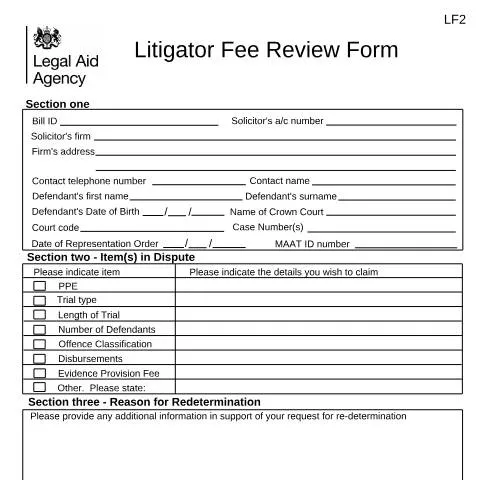
The LF2 form, also known as the Litigator Fee Review Form, serves an essential function within the UK's legal aid framework. When legal representatives believe that the fees they have been paid for their work do not adequately reflect the work performed, this form becomes a vital tool for seeking a review. It is a mechanism that allows solicitors to challenge payment decisions made by the Legal Aid Agency (LAA) regarding their litigator fees. This process is crucial for solicitors to ensure they are compensated fairly for their efforts in representing clients.
Timing and Deadlines: The Calendar of the Application Process
The timeline for submitting the LF2 form is critical. Once a decision regarding payment has been made by the Litigator Fee Team, a solicitor has specific timeframes within which to act. Understanding these deadlines is crucial for maintaining eligibility to appeal decisions.
Key Dates to Keep in Mind
- Submission Period: Solicitors typically have 28 days from the date they receive notification of the fee decision to submit the LF2 form.
- Processing Time: After submitting the form, the LAA aims to process requests within six weeks. However, this may vary based on the complexity of the case.
- Review Notification: Once a decision has been made following the review, solicitors will receive a notification from the LAA detailing the outcome.
Failure to submit the LF2 form within the specified 28-day timeframe may result in the loss of the right to challenge the fee decision, underscoring the importance of timely action.
The Anatomy of the LF2 Form: A Detailed Breakdown
Completing the LF2 form requires careful attention to detail. Each section serves a specific purpose in the review process. Understanding the requirements of each section can help avoid common pitfalls.
Section One: Applicant Information
- Name of Crown Court: Clearly indicate the court where the representation took place.
- Case Number(s): Enter the relevant case numbers accurately to ensure that the request corresponds with the correct records.
- Solicitor's A/C Number: This unique identifier is crucial for linking the application to the right financial account.
- Date of Representation Order: Ensure this date is correct as it establishes the context of the representation.
- Defendant's Details: Fill in the defendant’s first name and date of birth; inaccuracies can create significant delays.
Provide complete and accurate information in this section to prevent administrative errors that could hinder the review process.
Section Two: Items in Dispute
This section is pivotal as it outlines the specific elements of the fee that the solicitor is contesting. Each item must be clearly stated and justified.
- PPE (Preparation and Presentation of Evidence): Specify the amount disputed for preparation time.
- Length of Trial: Include the total duration, as this may affect the fee determination.
- Number of Defendants: Clearly state how many defendants were involved in the representation.
- Offence Classification: Classify the offence correctly, as the nature of the offence can influence fee structures.
- Disbursements: Detail any expenses incurred during the representation that you seek reimbursement for.
Being thorough and transparent in this section will bolster the case for a fee review and provide the LAA with the necessary context for their decision.
Section Three: Justification for Redetermination
This segment is where the solicitor can make a compelling case for why the initial fee determination should be reconsidered. It’s essential to provide detailed reasoning and evidence supporting the request.
- Supporting Information: Include any additional context that could affect the review outcome, such as exceptional circumstances or complexities of the case.
- Additional Documents: Clearly list all documents submitted alongside the LF2 to support the claim. This not only aids the caseworker but also ensures completeness of the application.
Articulating a strong rationale in this section is key to persuading the LAA to reconsider their initial decision.
Navigating the Administrative Process: From Submission to Decision
Once the LF2 form is completed and submitted, the administrative process begins. Understanding how the LAA processes these applications can help solicitors navigate potential challenges.
Submission Methods and What to Expect
- Online Submission: While the LF2 can be submitted online, it is imperative to ensure that all documents are uploaded correctly. Check for confirmation of receipt.
- Paper Submission: If opting for a paper version, send it to the designated address, ensuring to obtain proof of posting.
- Tracking Progress: After submission, solicitors should track the progress of their application. Contacting the LAA directly may be necessary if there are delays.
Timely follow-up can be crucial in avoiding further delays and ensuring that the application is addressed promptly.
Understanding the Outcome of the Review
Once the LAA has processed the application, the outcome will be communicated to the solicitor. It is essential to carefully interpret the results.
- Paid in Full: If the request is approved, the solicitor will receive the additional payment they sought.
- Paid in Part: In some cases, the LAA may only grant a portion of the requested amount. Understanding the reasoning behind this decision is crucial for future applications.
- Refused: If the request is denied, the LAA will provide reasons for this decision. It’s important to thoroughly review this feedback to understand the basis of their ruling.
Each outcome presents different implications for the solicitor’s practice and future fee structures.
Responding to Outcomes: Addressing Refusals and Errors
Should a request for review be refused, solicitors must know their options for recourse. Understanding how to navigate this aspect of the process is vital for maintaining effective legal practice.
What to Do in Case of Refusal
- Review the Reasons: Carefully analyze the decision letter from the LAA. Identifying any specific concerns raised will be critical in formulating a response.
- New Information: If new evidence or information arises that could affect the decision, solicitors can submit this to the LAA as part of an appeal.
- Appeal Processes: In some cases, there may be an option to appeal the decision. Familiarity with the appeal process, along with its timelines and requirements, is essential.
Acting quickly and decisively in these situations is crucial to mitigating losses from the initial fee decision.
Common Errors and How to Avoid Them
Submitting an LF2 form is not without its challenges, and errors can lead to unnecessary delays or even refusals.
- Incomplete Information: Ensure that all required fields are filled out completely. Missing information can result in the application being returned for correction.
- Incorrect Case Numbers: Double-check all case references against court records to avoid mismatches.
- Failure to Attach Evidence: Ensure that all supporting documents are included with the application. Missing documents are a common reason for refusals.
By being meticulous and thorough in the preparation of the LF2 form, solicitors can significantly enhance their chances of a favourable review outcome.
Final Thoughts on the Litigator Fee Review
The Litigator Fee Review process encapsulated in the LF2 form is a vital aspect of the legal aid framework, ensuring that solicitors can seek fair remuneration for their services. By understanding the nuances of the form, the associated timelines, and the administrative processes involved, solicitors can navigate the complexities of fee reviews more effectively.
Engaging with the Legal Aid Agency, understanding the criteria for challenges, and being proactive in submitting thorough applications can make a significant difference in the outcomes solicitors experience. This process is not merely administrative; it reflects the ongoing commitment to fair access to justice, ensuring that those who represent vulnerable clients are compensated appropriately for their efforts.
Understanding the Litigator Fee Review Process
The litigator fee review process is designed to ensure that legal fees charged by solicitors in publicly funded cases, such as those funded through Legal Aid, are fair and reflect the complexity and nature of the work undertaken. This review is critical, particularly for those navigating the legal system without the means to fund representation entirely out of pocket. Understanding this process can empower you as a client or litigator, providing insight into how fees are assessed and potentially contested.
When initiating a litigator fee review, you must first ensure that all the necessary documentation is prepared. This includes:
Detailed Billing Statements: A clear breakdown of the work performed, including hours worked, tasks completed, and corresponding charges.
Case Files and Evidence: Documentation supporting the complexity of the case, which may justify higher fees. This could include court documents, correspondence, and other relevant papers.
Legal Aid Certificates: Proof of eligibility for Legal Aid, which outlines the extent of funding authorized for your case.
Submitting a request involves completing the appropriate form, typically the "Application for Review of Litigator Fees," which must be sent to the Legal Aid Agency (LAA). Ensure that your application is submitted within the statutory time limits, generally within 28 days of receiving the final bill.
It’s important to note that the review process may involve a panel of assessors. They will evaluate the provided documentation against the context of your case, the nature of the legal work undertaken, and the prevailing rates for similar cases.
Common Challenges and How to Address Them
Navigating the litigator fee review process can present various challenges, both for solicitors and clients. Here we will explore some common issues and how to effectively address them.
Fill in your form directly online
No printing: type your details into the boxes of the official form, tick, then download the PDF ready to send.
- 1Type into the form boxes
- 2Tick in one click
- 3Save and download the PDF
Disputed Fees: One of the most common challenges arises when there is a disagreement between the solicitor and the client regarding the fees charged. If you find yourself in this situation, it is essential to maintain open lines of communication with your solicitor. Discuss your concerns directly and seek a breakdown of the charges, which can clarify misunderstandings.
Inadequate Supporting Documentation: Often, reviews fail due to insufficient evidence. Ensure that all submissions are thorough and well-organized. If you are unsure about what constitutes adequate documentation, consider consulting with a legal professional who can guide you through the requirements tailored to your specific case.
Timeliness of Application: Missing deadlines can severely hinder your chances of a successful review. Set reminders for key dates, and if possible, submit your review application well ahead of the deadline to avoid last-minute complications.
Complexity of Legal Work: As the landscape of legal cases can be exceptionally intricate, it’s crucial to communicate effectively the complexity of your case during the review. If your case involved significant legal hurdles or required expert testimony, ensure that these aspects are communicated clearly in your documentation.
Uncertainty About Outcome: Many clients fear the unpredictability of the review outcome. Engaging with a solicitor who understands the fee review process can alleviate some of this stress. They can provide insights into potential outcomes based on previous cases and help manage your expectations.
Appealing a Fee Review Decision
If you find that the outcome of your litigator fee review is unsatisfactory, you may be considering an appeal. The process of appealing a fee decision can be complex, but understanding the steps involved will help you navigate this further challenge effectively.
Grounds for Appeal: To initiate an appeal, you must establish valid grounds. It is not enough to simply disagree with the decision; you need to identify specific errors in the assessment process or provide new evidence that was not considered in the original review.
Filing an Appeal: Appeals typically require submitting a formal request to the Legal Aid Agency, often using the specific form designated for appeals. This form will require you to articulate the reasons for your appeal clearly and provide supporting documentation.
Time Limits: Just as with the original review, appealing a fee decision is subject to strict time limits. Ensure that you submit your appeal within the stipulated timeframe, usually within 28 days from the receipt of the decision you seek to contest.
Awaiting the Outcome: Once your appeal is submitted, it may take several weeks to receive a decision. During this time, it may be beneficial to seek advice from legal aid specialists or solicitors who have experience in fee review appeals. They can offer guidance on the most effective arguments to present to the review panel.
Representation: If the stakes are high, consider obtaining representation for your appeal. A solicitor experienced in fee reviews can significantly enhance your chances of a favorable outcome by ensuring the appeal is thoroughly argued and supported by the necessary documentation.
By understanding the process, addressing common challenges effectively, and knowing how to appeal a decision, you can better navigate the litigator fee review landscape in the UK, ensuring that your rights and interests are protected throughout the legal funding process.