Understanding the LF3 Form: An Essential Tool for Legal Aid Claims
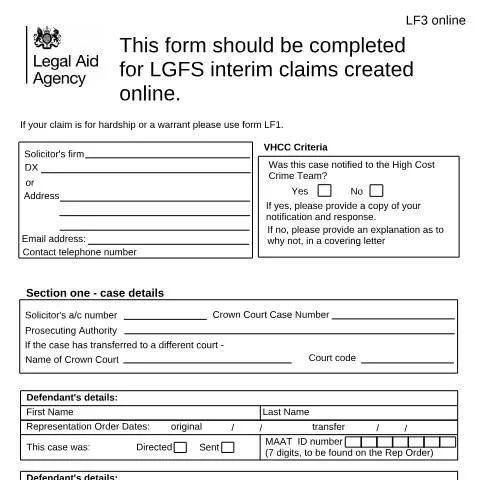
In the complex world of legal aid, the LF3 form plays a pivotal role, particularly for solicitors managing interim claims related to litigator fees. This document is essential for legal professionals seeking to recover costs incurred while representing clients in Crown Court cases. The nuances of this form, its specific applications, and the procedural requirements surrounding it can significantly impact the financial viability of legal representation.
The Unique Position of the LF3 Form in Legal Aid Procedures
Unlike other legal aid forms, the LF3 form is specifically tailored for interim claims under the Graduated Fees Scheme (LGFS). Its primary function is to facilitate claims for payments due prior to the conclusion of a trial. This distinguishes it from the LF1 form, which is utilized for hardship claims related to legal aid. The LF3 can only be used when a representation order is in place, and the case falls within specific parameters defined by the Legal Aid Agency (LAA).
Key Terminology and Context
- Litigator Fee: The amount that a solicitor can claim for representing a client in a criminal case.
- Interim Claim: A request for payment made before the final resolution of the case.
- Representation Order: A court order that allows a legal aid client to receive representation funded by the LAA.
A Step-by-Step Guide to Completing the LF3 Form
Filling out the LF3 form requires attention to detail and accuracy. The process begins with gathering necessary information about the case and the client.
Preparation Before Filling Out the Form
Before you start completing the LF3, ensure you have collected the following:
- The Crown Court case number.
- The MAAT ID number, which can be found on the representation order.
- Details of the prosecuting authority.
- Any required vouchers for disbursements exceeding £20, excluding VAT and mileage.
Navigating the Form Sections
The LF3 form is divided into several key sections:
- Case Details: Provide comprehensive information about the Crown Court case, including case numbers and the involved parties.
- Claim Details: Specify whether this is an interim payment for a trial or retrial, along with estimated trial lengths.
- Declarations: Confirm that you have included all necessary supporting documents and evidence.
- Claim Outcome: This section is completed by LAA staff to indicate the status of the claim.
The Submission Process: Where and How to File the LF3
After the LF3 form is completed, submitting it is the next crucial step in the process. The LAA provides specific guidelines on submission channels that must be adhered to.
Available Submission Channels
You can submit the completed LF3 form through various channels:
- Online: If the claim was initiated online, you should complete and submit the form electronically through the LAA's online portal.
- Paper Submission: For those preferring traditional methods, printed forms can be sent via post to the relevant LAA office. Ensure to keep a copy for your records.
- In-Person Submission: Some solicitors might choose to deliver the form directly to an LAA local office. This can be beneficial for immediate validation and addressing any queries.
Timelines and Expectations: From Submission to Payment
Understanding the timeline associated with the LF3 form is critical for managing client expectations. The following outlines the key milestones:
| Event | Date/Timeframe | Notes |
|---|---|---|
| Submission Deadline | Ongoing during the trial | Claims can be submitted as expenses occur. |
| Processing Time | Typically within 28 days | May vary based on case complexity. |
| Payment Disbursement | After processing | Funds are usually transferred electronically. |
What Happens if Your Claim is Rejected or Incomplete?
Receiving a rejection for an LF3 claim can be a setback. Understanding the common reasons for rejection can help you prevent mistakes.
Common Rejection Scenarios
Claims may be rejected for various reasons, including:
- Incomplete Documentation: Failing to provide all required supporting documents can lead to outright rejection.
- Ineligible Claims: Claims that do not meet the LAA's criteria or guidelines may be dismissed.
- Errors in Information: Incorrect case numbers or MAAT IDs can also result in rejection.
Steps to Take After a Rejection
If your claim is rejected, you have the right to appeal or request further clarification. It's advisable to:
- Review the rejection notice carefully to understand the reasons.
- Gather any additional documentation that may strengthen your case.
- Submit a revised claim or an appeal letter outlining your position.
The Consequences of Missing Deadlines and Submissions
Timeliness is crucial in the legal aid process. Missing key deadlines can have serious implications for both solicitors and clients.
Impact of Late Submissions
Submitting the LF3 form late can lead to:
- Loss of Funding: Clients may need to cover their legal costs if claims are not submitted in time.
- Increased Financial Strain: Solicitors may face cash flow issues if interim claims are delayed.
- Impact on Client Representation: Delays in payment can hinder a solicitor's ability to effectively represent their client.
Who is Directly Affected by the LF3 Form?
The LF3 form is primarily relevant to solicitors working on Crown Court cases under a representation order. However, various profiles may find themselves navigating this requirement.
Solicitors and Their Clients
Solicitors representing clients in serious criminal cases can significantly benefit from the LF3 form. Some situations include:
- High-cost cases: Where legal expenses are substantial, and interim payments are necessary to maintain representation.
- Cases with multiple hearings: Clients facing a series of court appearances can incur significant costs, making interim payments critical.
Exceptional Circumstances
In certain exceptional scenarios, such as cases involving vulnerable defendants or complex legal issues, the LF3 form may become even more crucial. Understanding the full scope of its applications can enhance legal strategy and client support.
Fill in your form directly online
No printing: type your details into the boxes of the official form, tick, then download the PDF ready to send.
- 1Type into the form boxes
- 2Tick in one click
- 3Save and download the PDF
In conclusion, the LF3 form is not just a piece of paperwork; it is a fundamental component of the legal aid system that can have far-reaching implications for both clients and their representatives. Adequate knowledge of its structure, submission process, and the potential consequences of delays or errors is essential for ensuring that justice is accessible and efficiently delivered.
Understanding the Eligibility Criteria for Interim Litigator Fee Claims
Before applying for an interim litigator fee claim, it’s crucial to understand the eligibility criteria established by the Legal Aid Agency. Generally, these claims are intended for cases where legal representation is necessary to safeguard the interests of clients, particularly in areas such as family law, housing disputes, and public law. However, to qualify for an interim payment, the following conditions must be met:
- Type of Case: The case must fall within the scope of legally aided work and involve significant legal costs that are likely to be incurred before the case is concluded.
- Legal Aid Certificate: You should have a valid Legal Aid Certificate to cover the type of services provided. This certification must be in place before you can seek interim payments.
- Detailed Cost Breakdown: Applicants must provide a reliable estimation of costs incurred and justify why an interim payment is necessary. This includes a detailed breakdown of hours worked and expenses.
- Outcome Justification: You should be able to demonstrate how the interim fees will assist in progressing the case effectively and expeditiously.
Understanding these criteria is vital to ensure that your application is successful and that you receive the financial support needed for legal representation.
Navigating the Application Process: Steps and Best Practices
The application process for an interim litigator fee claim can be complex, but breaking it down into manageable steps can simplify your experience. Here’s a structured approach to ensure you navigate the system effectively:
- Gather Necessary Documentation: Before you commence your application, ensure that you have all relevant documentation at hand. This includes your Legal Aid Certificate, a detailed account of work conducted so far, and any correspondence related to the case. Keeping these documents organised will save time and facilitate a smoother application process.
- Complete the Appropriate Form: To apply for the interim fee claim, you will likely need to complete the form CLA2. This form requires information regarding your client, case details, and the legal work performed. Be thorough and precise as inaccuracies or omissions could lead to delays or rejections.
- Detail Your Costs: In the application, clearly outline the costs you are requesting. You will need to justify each charge, including the hours worked and the nature of the legal services provided. Providing supporting evidence, such as invoices or time sheets, can enhance the credibility of your application.
- Submit Your Application: Applications can typically be submitted electronically via the relevant Legal Aid Agency online portal. Ensure that you retain a copy of your submission for your records. If submitting by post, consider using a recorded delivery service to confirm receipt.
- Follow Up: After submission, it is advisable to follow up with the Legal Aid Agency to confirm that your application is being processed. Keeping communication lines open can help address any potential issues early on.
By adhering to these steps and best practices, applicants can significantly enhance their chances of a successful interim litigator fee claim.
Common Challenges Faced in the Interim Fee Claim Process
While the interim fee claim process is designed to provide necessary financial assistance, applicants often encounter several challenges. Understanding these challenges can help you prepare and potentially avoid pitfalls:
- Delays in Processing: One of the most common challenges is delays in processing applications. If the Legal Aid Agency requires additional information or clarification, this can prolong the approval process. To mitigate this, ensure all documentation is complete and accurate upon submission.
- Disputes over Costs: There may be disagreements regarding the amount claimed. The Legal Aid Agency holds the authority to amend or reject costs deemed inappropriate or excessive. Keeping detailed records and justifications for your costs is essential in these situations.
- Lack of Clarity in Criteria: Some applicants may find the criteria for interim claims unclear, potentially leading to misunderstandings about eligibility. Seeking guidance from colleagues or legal advisors familiar with the process can be beneficial.
- Insufficient Evidence: A common reason for application rejections is insufficient evidence to substantiate the claimed fees. Ensure that all costs are backed up with relevant documentation, such as timesheets or correspondence. Providing clear and well-organised evidence can significantly strengthen your claim.
Being aware of these challenges can empower applicants to develop strategies that ensure a smoother interim fee claim journey.