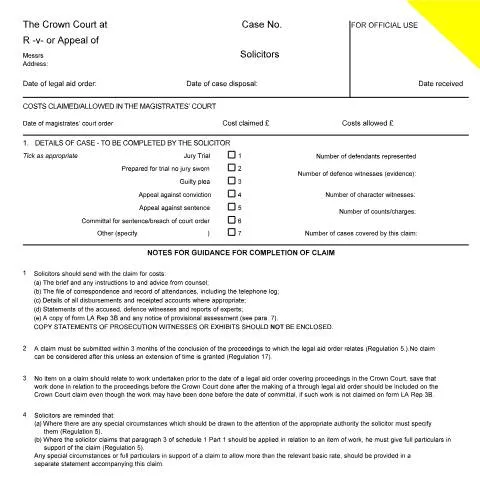
Navigating the Terrain of Form 5144: A Litigator's Guide
As a litigator, the complexities of legal proceedings extend beyond courtrooms into the intricate world of cost recovery. The Criminal Court Costs: Claim Back Costs as a Litigator (Form 5144) serves as a vital instrument in reclaiming costs associated with criminal legal aid. Understanding its purpose, the necessary steps for completion, and the implications of successful or unsuccessful claims can significantly affect a litigator's financial landscape.
Understanding the Purpose of Form 5144
Form 5144 is specifically designed for solicitors and advocates who represent clients in criminal cases funded by legal aid. This document is pivotal for reclaiming costs incurred during the legal process, enabling practitioners to maintain financial viability while providing essential legal support. The Legal Aid Agency requires this form to ensure transparency and appropriateness of claims made under legal aid provisions.
Who is Required to Submit Form 5144?
Individuals who need to submit Form 5144 typically include:
- Solicitors directly involved in a client's criminal case.
- Advocates representing clients in court under legal aid contracts.
- Legal firms that have incurred costs relating to the representation of a client funded by legal aid.
It is crucial that all claimants meet the legal criteria outlined by the Legal Aid Agency, and those who fail to comply may find their claims rejected.
Breaking Down Form 5144: A Step-by-Step Approach
Completing Form 5144 is a meticulous process that requires attention to detail. Below, we dissect each section of the form, highlighting essential considerations and common pitfalls.
Section 1: Claimant Details
This section necessitates accurate identification of the solicitor or advocate making the claim. The claimant must provide:
- Name and Contact Information: Ensure that all contact information is current and correct.
- National Insurance Number: This key identifier is essential for processing the claim.
Watch out for typographical errors that could delay processing.
Section 2: Case Details
Here, the specifics of the case for which costs are being claimed must be detailed, including:
- Case Reference Number: This unique identifier is crucial for linking the claim to the appropriate case file.
- Date of Proceedings: Accurate dates are necessary to validate the costs claimed—any discrepancies may raise red flags.
Section 3: Breakdown of Costs
The heart of Form 5144 lies in detailing the costs incurred. Claimants must provide:
- Hourly Rates: Specify the rates applicable for the work performed and ensure they align with legal aid guidelines.
- Descriptions of Work Done: Clearly outline the nature of the work for which costs are being claimed, such as court appearances or case preparation.
It's crucial to be transparent and itemized; vague descriptions or inflated rates can lead to rejection.
Section 4: Declaration and Signature
The final section of Form 5144 mandates that the claimant declares the accuracy of the provided information. Signatures should be clear and include the date of submission. Keep in mind:
- Legal Liability: Falsification of claims could lead to legal repercussions.
- Retention of a Copy: Always keep a copy of the submitted form for your records.
Following Up: Tracking Your Claim
Once Form 5144 has been submitted, it's not the end of the road. The Legal Aid Agency may take time to process claims. Following up is essential to ensure your claim is on track. Here’s how to do so effectively:
- Keep Records: Maintain a log of submission dates and any correspondence with the agency.
- Contacting the Agency: If you have not received a response within a reasonable timeframe, reach out to the Legal Aid Agency for updates.
What Happens After Submission?
The outcome of your claim will determine the next steps. There are generally two scenarios:
- Claim Approved: If successful, expect reimbursement of the claimed costs, which can take several weeks to process.
- Claim Denied: If your claim is rejected, you will receive a notification detailing the reasons for denial.
Responding to a Denial
In case of a denied claim, understanding your options is critical:
- Review the Reasoning: Carefully read the denial notice to understand the basis of the rejection.
- Request a Reconsideration: You may appeal the decision or provide additional documentation to support your claim.
Taking swift action can sometimes salvage your claim.
The Regulatory Framework Surrounding Form 5144
The necessity of Form 5144 stems from the broader framework of legal aid in the UK, governed by stringent regulations designed to ensure responsible use of public funds. The Legal Aid, Sentencing and Punishment of Offenders Act 2012 (LASPO) outlines the criteria for eligibility and the scope of legal assistance available.
Furthermore, the agency's policies emphasize fairness, ensuring that funds are allocated appropriately while safeguarding against potential fraud. Compliance with these regulations is non-negotiable for those submitting claims.
Special Cases and Considerations
Certain scenarios may arise that impact the submission of Form 5144:
- Multiple Cases: If handling multiple cases for the same client, separate claims may be necessary for each.
- Complex Cases: For cases involving lengthy trials or multiple court appearances, providing detailed logs of work done can support higher cost claims.
- Change in Representation: If a new solicitor takes over, ensure a smooth transition by properly documenting the handover process in the claim.
Final Thoughts on the Importance of Accuracy
Form 5144 is not merely a bureaucratic requirement; it plays a critical role in ensuring that litigators are compensated for the essential work they do in our justice system. Attention to detail, accuracy in reporting, and thorough documentation can make the difference between a successful claim and a rejected one.
As a litigator, your ability to navigate this process effectively not only impacts your financial health but also reflects your commitment to your clients and the integrity of the legal profession. Embrace the nuances of Form 5144 with diligence, and you’ll find the path to reimbursement a more manageable journey.
Understanding the Types of Costs You Can Claim
When navigating the intricacies of criminal court costs as a litigator, it's vital to grasp the various types of costs that may be claimable under the Criminal Procedure Rules (CPR). The costs that can be claimed back typically fall into three primary categories.
Preparation Costs: These include the expenses incurred while preparing for the case. This can involve time spent on research, drafting documents, and strategizing the approach to the case. The key is to maintain detailed records of the time invested and the associated hourly rate that reflects your expertise and the complexity of the case.
Court Fees: These are the fees associated with the actual legal proceedings. This can encompass costs for filing claims, any associated hearing fees, and other charges that may arise during the court process. Maintaining a log of these fees is crucial as they are straightforwardly claimable when submitting Form 5144.
Miscellaneous Costs: This category can include a range of additional expenses, such as expert witness fees, travel expenses to attend court, and even accommodation if overnight stays are necessary. When claiming these costs, it's imperative to provide evidence, such as receipts or invoices, to substantiate your claims.
Understanding the nuances of these categories and being meticulous with your documentation will significantly enhance your chances of a successful claim.
Documenting Your Claim: Best Practices
The process of claiming costs back through the legal system can often feel overwhelming, especially for those who are unfamiliar with the procedural nuances. However, adhering to best practices in documentation can streamline this process and enhance the overall effectiveness of your claim.
Maintain Comprehensive Records: From the outset of your case, maintain a detailed log of all activities related to the litigation process. This includes hours worked, meetings held, and activities undertaken. Use legal billing software when possible to track your time and expenses efficiently, ensuring accuracy and ease of reporting.
Fill in your form directly online
No printing: type your details into the boxes of the official form, tick, then download the PDF ready to send.
- 1Type into the form boxes
- 2Tick in one click
- 3Save and download the PDF
Gather Supporting Evidence: For each claim you wish to submit, gather all necessary supporting documentation. This often includes invoices from third-party services, receipts for travel and accommodation, as well as any administrative costs incurred during the case preparation. Ensure that all documents are organized chronologically and are easily accessible.
Use Clear and Concise Language: When filling out Form 5144, articulate your claims clearly and succinctly. Use plain English to explain the nature of the costs and their relevance to the case. Avoid jargon where possible, as the evaluating authority may not be familiar with legal terminology. The clearer your explanations, the stronger your claim will be.
Consult Legal Precedents: Familiarize yourself with previous successful claims, as they can provide valuable insight into what is considered reasonable and necessary by the courts. This can also help you to benchmark your own costs against those that have been accepted in the past, which could serve to reinforce the legitimacy of your claim.
Timing is Key: Submitting your claims promptly after the conclusion of proceedings can be beneficial. The longer you wait, the more difficult it may become to recall specific details or to gather supporting documents. Timely submissions also demonstrate to the court that you are organized and professional in your dealings.
By following these best practices in documentation, you can significantly increase the likelihood of your costs being approved, thus providing a much-needed financial relief in the aftermath of litigation.
The Importance of Legal Advice When Claiming Costs
While many litigators may feel confident in their ability to navigate the claims process independently, seeking legal advice can prove invaluable. Understanding the complexity of the legal system and the specific rules surrounding cost recovery can make a substantial difference in the outcome of your claim.
Navigating Complex Regulations: The rules surrounding the recovery of costs in criminal cases can be complex and subject to change. A legal advisor can provide up-to-date information about any recent amendments to the Criminal Procedure Rules or relevant case law that could affect your claim.
Tailored Advice: Every case is unique, and the costs associated with each will vary. A solicitor or legal expert can analyze the specifics of your situation and provide tailored advice on what costs are likely to be recoverable. They can help you identify any potential issues in your claim that might impede success.
Representation in Disputes: Should there be any disputes regarding the costs you are claiming, having a legal professional to represent you can be critical. They will understand the formal procedures for contesting any refusals or challenges and can advocate on your behalf, ensuring your interests are upheld.
Advisory on Reasonableness: A legal expert can offer insights into what constitutes reasonable costs in the context of your case. They can assist you in ensuring that your claimed costs align with established norms, increasing the likelihood of acceptance.
Stress Reduction: The process of claiming costs can be stressful, particularly when navigating a complex legal environment. Engaging a legal advisor allows you to focus on your core responsibilities while having the assurance that your claim is in capable hands.
In summary, seeking legal advice when claiming back costs can not only enhance the effectiveness of your claim but also alleviate some of the pressure associated with the process. By leveraging their expertise, you can approach your claim with greater confidence and clarity.