When Judgment Enforcement Hits a Wall: The Strategic Role of Form N316
Securing a county court judgment represents only the first step in debt recovery. The real challenge often begins when judgment debtors appear to have vanished into thin air or claim they cannot meet their obligations. For creditors facing this predicament, Form N316 serves as a crucial enforcement tool, compelling judgment debtors to attend court and reveal their true financial position under oath.
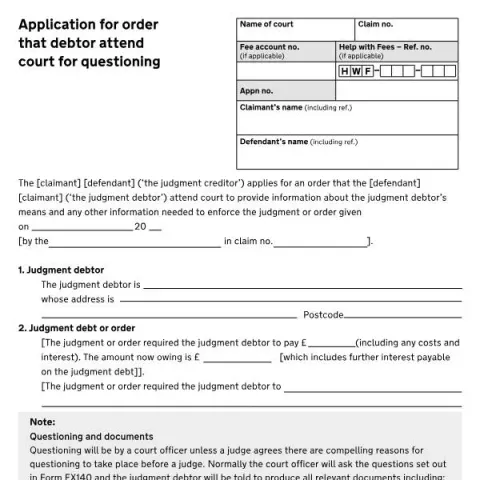
This application form enables judgment creditors to obtain a court order requiring debtors to undergo detailed questioning about their assets, income, and financial circumstances. The process, known as an oral examination or examination as to means, can uncover hidden assets, undisclosed income streams, and provide the intelligence needed to pursue effective enforcement action.
The power behind Form N316 lies in its compulsory nature. Once the court grants the order, failure to attend without reasonable excuse constitutes contempt of court, potentially resulting in committal to prison. This legal weight often proves more persuasive than previous demands for payment.
Eligibility Criteria and Timing Considerations for Creditor Applications
Not every judgment creditor can immediately resort to Form N316. The application requires specific preconditions to be met, and timing plays a crucial role in its effectiveness.
Prerequisites for Application
Judgment creditors must demonstrate they hold an unsatisfied judgment or court order for a monetary sum or specific performance. The judgment debt need not be the full original amount – partial payments are acceptable, provided a balance remains outstanding. Importantly, the judgment must be enforceable, meaning any stay of execution has been lifted or expired.
County court judgments, High Court judgments transferred down for enforcement, and tribunal awards registered as county court judgments all qualify. However, magistrates' court fines and family maintenance orders follow different procedures and cannot use Form N316.
Strategic Timing and Sequencing
Experienced practitioners often deploy Form N316 strategically within their enforcement sequence. While legally permissible immediately after judgment, practical considerations suggest different approaches:
- Early deployment: When debtors have ignored payment demands and their financial circumstances remain unknown
- Following failed enforcement: After bailiff returns or charging order applications reveal insufficient readily available assets
- Asset investigation phase: When creditors suspect hidden assets or undisclosed income sources
- Pre-bankruptcy intelligence: Before initiating bankruptcy proceedings to assess the debtor's true financial position
The six-year limitation period for enforcement provides ample time for strategic deployment, though earlier action typically proves more effective before debtors restructure their affairs.
Dissecting the Application Process: Beyond Basic Form Completion
Form N316 demands precise completion, with each section serving specific legal and practical purposes. Understanding these nuances significantly impacts the examination's effectiveness.
Essential Information Requirements
Section 1 requires comprehensive judgment debtor identification. Beyond basic name and address details, creditors should provide any known alternative names, trading styles, or previous addresses. This information proves crucial when debtors claim mistaken identity or attempt to avoid service.
Section 2 details the underlying judgment or order. Creditors must specify the exact amount owing, including any accrued interest calculated to the application date. For non-monetary orders, precise description of the required performance is essential.
Tailoring the Examination Through Optional Sections
Sections 3, 4, and 5 transform a standard examination into a targeted investigation tool:
| Section | Purpose | Strategic Application |
|---|---|---|
| Section 3 | Additional questions beyond Form EX140 | Probe specific suspected assets or income sources |
| Section 4 | Additional document production orders | Target specific financial records or agreements |
| Section 5 | Request for judge-conducted examination | Complex cases requiring judicial intervention |
Section 3 customisation allows creditors to probe beyond standard questions. Examples include inquiries about specific business interests, property transactions within the previous five years, or offshore accounts. However, questions must relate to the debtor's ability to satisfy the judgment – fishing expeditions risk judicial criticism.
Section 4 document requests should target specific intelligence gaps. Standard requirements cover basic financial documentation, but additional requests might include property deeds, trust documentation, or correspondence with financial advisors.
The Judge-Conducted Examination Option
Section 5 requests require compelling reasons for judicial rather than court officer questioning. Acceptable justifications include:
- Complex corporate structures requiring immediate legal rulings
- Suspected contempt or perjury during previous examinations
- Professional privilege claims over documentation
- Cross-examination of witnesses beyond the judgment debtor
Courts scrutinise these requests carefully, balancing judicial resources against case complexity. Weak justifications often result in standard court officer examination orders.
Navigating Court Fees and Financial Support Mechanisms
Form N316 applications incur court fees that can impact enforcement strategy, particularly for smaller judgment debts or creditors with limited resources.
The current application fee reflects the administrative burden of scheduling examinations and court officer time. However, successful applications may result in the debtor bearing these costs as part of the enforcement process, provided the original judgment included provisions for enforcement expenses.
Help with Fees Applications
Creditors experiencing financial hardship can apply for fee remission using the Help with Fees scheme. The reference number space on Form N316 accommodates these applications, though processing times may delay the examination scheduling.
Remission eligibility depends on income, capital, and essential expenditure calculations. Importantly, companies and partnerships cannot access Help with Fees – only individual creditors qualify for this support.
Fee account holders benefit from streamlined processing, with costs debited directly from pre-funded accounts. This mechanism particularly suits legal practitioners handling multiple enforcement cases.
Understanding the Examination Process and Debtor Obligations
Once the court grants an N316 application, the resulting order creates binding legal obligations for judgment debtors, with serious consequences for non-compliance.
Service Requirements and Timing
Court orders typically require at least 14 days' notice before the examination date, though courts may vary this period depending on circumstances. Service must follow prescribed methods, usually personal service or alternative methods the court deems appropriate.
Debtors receive comprehensive documentation including the examination order, standard question list (Form EX140), and document production requirements. This advance notice allows proper preparation while preventing claims of procedural unfairness.
Standard Examination Scope
Court officers conduct most examinations using Form EX140, which covers:
- Employment details and income sources
- Bank accounts and financial institutions
- Property ownership and rental agreements
- Vehicle ownership and hire purchase agreements
- Outstanding debts and financial commitments
- Business interests and directorships
For business debtors, additional scrutiny focuses on trading accounts, management information, and outstanding receivables. The two-year accounts requirement provides historical context for current financial position assessment.
Debtor Rights and Protections
While examinations are compulsory, debtors retain important procedural rights. They can request examination postponement for reasonable cause, such as serious illness or unavoidable business commitments. However, convenience or reluctance to attend do not constitute reasonable grounds.
Debtors may also claim legal professional privilege over certain communications, though this protection is narrow and rarely applies to financial records required for examination.
Enforcement Consequences and Follow-up Strategies
The intelligence gathered through N316 examinations often proves more valuable than the examination process itself, opening new enforcement avenues previously unavailable to creditors.
Immediate Enforcement Opportunities
Successful examinations frequently reveal assets suitable for immediate enforcement action:
- Bank account details enabling third-party debt order applications
- Employment information facilitating attachment of earnings orders
- Property interests supporting charging order applications
- Vehicle ownership enabling bailiff enforcement against specific assets
The examination transcript provides evidential support for subsequent enforcement applications, demonstrating the debtor's financial capacity and asset ownership.
Contempt Proceedings for Non-Attendance
Debtors who fail to attend without reasonable excuse face contempt of court proceedings. The creditor must apply for a committal order, supported by evidence of proper service and non-attendance.
Courts take examination order breaches seriously, recognising their fundamental importance to the enforcement system. Successful committal applications can result in imprisonment for up to 14 days, though courts often suspend sentences to encourage future compliance.
The threat of committal proceedings frequently proves more effective than the proceedings themselves, with many debtors attending rescheduled examinations rather than face potential imprisonment.
Tactical Considerations and Common Pitfalls in Application Strategy
Successful N316 deployment requires careful strategic planning, avoiding common tactical errors that can undermine the examination's effectiveness.
Information Gathering Before Application
Creditors should conduct preliminary asset searches before filing Form N316. Basic checks against the electoral register, Companies House records, and Land Registry searches provide foundation intelligence for targeted questioning.
This preparation enables more focused additional questions in Section 3, increasing the likelihood of uncovering actionable intelligence. Generic questioning often produces limited results, particularly with sophisticated or advised debtors.
Managing Debtor Expectations and Behaviour
The psychological impact of examination orders often exceeds their practical enforcement value. Many debtors contact creditors immediately after service, seeking to negotiate settlement before the examination date.
Experienced practitioners use this pressure strategically, offering reduced settlement sums in exchange for examination cancellation. However, creditors must balance immediate recovery against longer-term enforcement intelligence needs.
Dealing with Corporate Debtors and Officers
Company examinations present unique challenges, as the order typically requires attendance by a nominated officer with knowledge of the company's financial affairs. Directors may attempt to avoid personal attendance by nominating junior employees without relevant knowledge.
Creditors should specify in Section 3 that attendance must be by a director or senior officer with comprehensive financial knowledge. Courts generally support these requirements when properly justified in the application.
Long-term Enforcement Strategy and Case Management
Form N316 examinations should form part of comprehensive enforcement strategies rather than isolated recovery attempts. The information obtained often has long-term value extending beyond immediate debt recovery.
Building Intelligence Databases
Examination transcripts provide valuable intelligence for future enforcement actions, particularly against repeat defaulters or connected entities. This information proves especially useful when debtors attempt to restructure their affairs to avoid future judgment enforcement.
Creditors dealing with multiple judgments against the same debtor can use previous examination evidence to challenge claims of changed circumstances or asset disposal.
Coordination with Other Enforcement Methods
The most effective enforcement strategies combine N316 examinations with complementary enforcement tools. For example, examination evidence often supports successful charging order applications by demonstrating the debtor's beneficial interest in apparently jointly-owned property.
Similarly, employment details obtained through examination enable attachment of earnings applications, while business asset information supports targeted bailiff enforcement actions.
Professional creditors increasingly view Form N316 as an intelligence-gathering tool rather than a direct enforcement mechanism, using the obtained information to support more effective subsequent enforcement actions. This strategic approach often produces better recovery rates than relying on single enforcement methods in isolation.
Fill in your form directly online
No printing: type your details into the boxes of the official form, tick, then download the PDF ready to send.
- 1Type into the form boxes
- 2Tick in one click
- 3Save and download the PDF
Understanding Different Types of Debtor Attendance Orders
The N316 application can result in several distinct types of court orders, each designed for specific circumstances and enforcement needs. Understanding these variations is crucial for creditors seeking the most appropriate remedy for their situation.
Standard Oral Examination Orders represent the most common outcome of an N316 application. These require the debtor to attend court for questioning about their financial circumstances, including income, assets, and expenditure. The examination typically lasts between 30 minutes to two hours, depending on the complexity of the debtor's financial situation and the thoroughness of their responses.
For debtors who fail to comply with initial orders, the court may issue a Suspended Committal Order. This carries the threat of imprisonment—typically 14 to 28 days—should the debtor continue to ignore court directions. However, the sentence remains suspended provided the debtor complies with specific conditions, such as attending a rearranged examination or making agreed payments.
Production Orders can be sought alongside or following oral examinations, compelling debtors to bring specific documents to court. These might include bank statements covering the previous six months, employment contracts, benefit award letters, or documentation relating to assets mentioned during questioning. The court expects creditors to be specific about which documents they require and to justify their relevance to enforcement proceedings.
In cases involving business debtors or complex financial arrangements, courts may grant Extended Examination Orders. These allow for multiple examination sessions or longer questioning periods, particularly where the debtor operates through multiple entities or has international financial interests that require detailed exploration.
For debtors who repeatedly fail to attend examinations, the court may consider Immediate Committal Orders. These result in immediate arrest and detention, though such orders are reserved for cases demonstrating clear contempt of court rather than mere inability to attend due to genuine circumstances.
Tactical Considerations for Different Debtor Profiles
Successful N316 applications require careful consideration of the debtor's profile and circumstances. Different types of debtors present unique challenges and opportunities that should influence both the application strategy and the examination approach.
Employed Debtors often represent the most straightforward cases for oral examination. Their regular income streams are typically easier to identify and attach through earnings orders. When dealing with employed debtors, creditors should focus their questioning on salary details, overtime payments, bonus structures, and any additional income sources. PAYE employees must provide P60 certificates upon request, offering concrete evidence of annual earnings that can support subsequent attachment of earnings applications.
Self-Employed Debtors and Business Owners present more complex examination scenarios. These individuals may have legitimate business expenses that reduce their available income, but they might also attempt to obscure assets through business structures. Effective questioning should explore business turnover, profit margins, business asset ownership, and the distinction between personal and business finances. Creditors should be prepared to request production of business accounts, VAT returns, and Companies House filings where applicable.
Benefit Recipients require a different approach entirely. While most state benefits enjoy protection from enforcement action, debtors may have other income sources or assets that weren't apparent from initial investigations. Universal Credit recipients might have part-time employment or savings that could support payment arrangements. However, creditors must be mindful that aggressive pursuit of benefit-dependent debtors may prove counterproductive and could attract court criticism.
Property Owners merit particular attention during oral examinations. Even where primary residences cannot be immediately seized, understanding property ownership, mortgage arrangements, and equity levels provides valuable intelligence for potential charging orders. Debtors who own multiple properties or have recently transferred property ownership should face detailed questioning about these transactions, as they may indicate attempts to defeat creditor claims.
Elderly or Vulnerable Debtors require sensitive handling while maintaining enforcement objectives. Courts expect creditors to demonstrate awareness of potential vulnerability and to adjust their approach accordingly. This might involve shorter examination periods, clearer questioning, or allowances for support persons to attend. However, age or declared vulnerability doesn't automatically exempt debtors from examination requirements.
For Debtors with Irregular Income—such as seasonal workers, contractors, or those in commission-based roles—examinations should focus on identifying income patterns and peak earning periods. Understanding these cycles enables creditors to time enforcement actions more effectively and propose realistic payment arrangements that align with the debtor's financial rhythm.
Post-Examination Enforcement Strategy and Follow-Up Actions
The information gathered through oral examination forms the foundation for subsequent enforcement actions. Effective creditors use examination outcomes strategically, translating revelations into concrete enforcement measures that maximise debt recovery prospects.
Immediate Payment Arrangements often emerge from successful examinations. When debtors reveal previously undisclosed income or assets, courts frequently encourage immediate settlement discussions. Creditors should be prepared to negotiate realistic payment terms on the spot, considering both the debtor's demonstrated means and the costs of continued enforcement action. Payment arrangements agreed in court carry additional weight and can be more easily enforced if breached.
Third Party Debt Orders become viable when examinations reveal bank account details or funds held by third parties. Debtors must disclose bank account information when questioned, providing creditors with targets for freezing orders. However, creditors should act quickly on this information, as debtors may attempt to move funds following examination disclosure. Joint accounts require careful consideration, as only the debtor's beneficial share can typically be attached.
Attachment of Earnings Orders represent the most reliable ongoing enforcement method for employed debtors. Examination evidence of employment details, salary levels, and employer information enables creditors to apply for these orders with confidence. The court requires specific employer information and evidence of regular earnings, both typically obtained through oral examination processes.
Charging Orders against property become feasible when examinations confirm property ownership and equity levels. Debtors must disclose property interests when questioned, including jointly owned properties and beneficial interests in trust arrangements. However, creditors should verify examination evidence through Land Registry searches before proceeding with charging order applications.
Warrant of Control applications may be appropriate where examinations reveal valuable goods or assets at the debtor's address. Debtors often disclose asset ownership during questioning, providing enforcement agents with specific targets for seizure. However, creditors should balance potential recovery against warrant costs, particularly for lower-value debts.
When examinations reveal Preferential Payments or Asset Transfers, creditors may need to consider more complex legal remedies. Debtors who have transferred assets to family members or made suspicious payments shortly before judgment may face applications to set aside transactions under the Insolvency Act 1986. Such actions require specialist legal advice but can prove highly effective in appropriate cases.
Bankruptcy Petitions sometimes emerge as the most appropriate remedy following unsuccessful examinations. Where debtors demonstrate clear inability or unwillingness to pay despite having means, bankruptcy proceedings may provide better recovery prospects than continued enforcement attempts. The examination evidence supports the petition by demonstrating the debtor's financial position and any attempts to avoid payment.
For cases involving Multiple Creditors, examination outcomes should inform decisions about individual enforcement versus collective insolvency procedures. Where examinations reveal that the debtor faces multiple significant debts, creditors may achieve better outcomes through supporting administration or liquidation proceedings rather than competing individually for limited assets.
Ongoing Monitoring represents a crucial but often overlooked aspect of post-examination strategy. Debtor circumstances change over time, and information gathered through examination provides a baseline for future assessment. Creditors should maintain periodic contact with debtors and monitor for changes in employment, residence, or financial circumstances that might create new enforcement opportunities.