When Court Orders Follow You: The Critical Role of Settlement Certificates
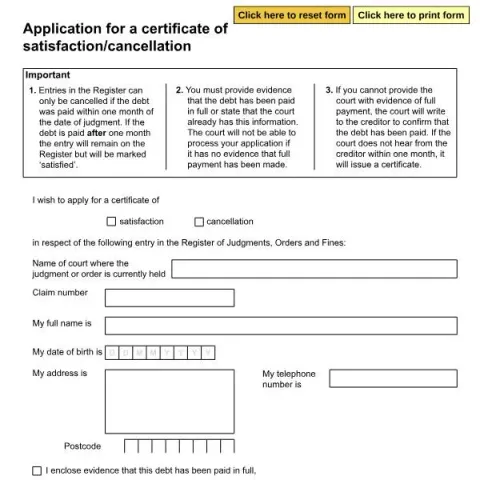
A County Court judgment can shadow your financial reputation for years, appearing on credit reports and affecting everything from mortgage applications to mobile phone contracts. Yet many individuals who have fully settled their court-ordered debts remain unaware that this black mark continues to impact their creditworthiness. Form N443 represents the formal pathway to clear your name once you've honoured a court order, providing official documentation that transforms a lingering liability into proof of responsible debt management.
The Register of Judgments, Orders and Fines maintains a comprehensive record of all County Court judgments, and entries don't simply disappear upon payment. Without proper certification through the N443 process, satisfied debts remain visible to credit reference agencies and potential lenders indefinitely, creating ongoing barriers to financial opportunities despite your compliance with the court's original order.
Understanding the Distinction: Cancellation Versus Satisfaction Certificates
The N443 application encompasses two fundamentally different outcomes, each carrying distinct implications for your credit profile and public record. Understanding this distinction proves crucial before submitting your application, as the timing of your debt settlement determines which type of certificate you'll receive.
Cancellation Certificates: The Gold Standard
Complete removal from the Register occurs only when debts are settled within one calendar month of the judgment date. This narrow window allows for full cancellation, effectively erasing the court order from public records as if it never existed. The cancellation process requires meticulous timing—the one-month period begins from the date judgment was entered, not from when you received notification or when enforcement action commenced.
Cancellation certificates carry significant advantages beyond mere record-keeping. Credit reference agencies treat cancelled judgments differently from satisfied ones, with many removing cancelled entries from credit reports entirely rather than marking them as resolved. This distinction can prove vital when applying for premium financial products or professional roles requiring enhanced financial vetting.
Satisfaction Certificates: Permanent but Positive Markers
When settlement occurs beyond the one-month cancellation window, the Registry entry remains permanently visible but receives a 'satisfied' marking. While the judgment cannot be removed, the satisfaction certificate demonstrates responsible debt resolution, potentially mitigating negative credit impacts over time.
Satisfaction certificates serve as valuable evidence in future financial applications, showing potential lenders that while you experienced difficulties, you ultimately fulfilled your legal obligations. Many lenders view satisfied judgments more favourably than outstanding ones, particularly when accompanied by official court certification.
| Certificate Type | Payment Timing | Registry Impact | Credit Report Effect |
|---|---|---|---|
| Cancellation | Within 1 month of judgment | Complete removal | Entry typically deleted |
| Satisfaction | After 1 month of judgment | Marked as 'satisfied' | Remains visible but shows resolution |
Navigating the Evidence Requirements: Proving Payment Completion
The N443 application hinges on demonstrating full debt settlement, yet the court's evidence requirements often catch applicants unprepared. HM Courts & Tribunals Service cannot process applications without clear proof of complete payment, making evidence gathering the most critical aspect of your submission.
Direct Court Payments: The Straightforward Path
When payments were made directly to the court, your application becomes significantly streamlined. Court records maintain comprehensive payment histories, allowing staff to verify settlement without external documentation. Simply indicate on the N443 form that "Full payment has been made to the court," and the processing team can access internal records to confirm your claim.
This route typically applies when you arranged payment plans through the court or made lump-sum settlements via the court's payment processing system. Direct court payments offer the strongest evidence foundation, as they eliminate potential disputes about payment timing or amounts.
Third-Party Payment Evidence: Building Your Case
Settlements made directly to creditors require robust documentation to satisfy court requirements. Acceptable evidence includes:
- Bank statements showing payment transfers with clear payee identification
- Creditor receipts acknowledging full settlement and debt closure
- Email confirmations from creditors accepting final payments
- Cancelled cheques with endorsement evidence
- Building society payment confirmations for electronic transfers
The court requires evidence demonstrating not just payment amount, but also confirmation that creditors accepted these payments as full settlement. Partial payment evidence, even when totalling the judgment amount, may prove insufficient without creditor acknowledgment of debt closure.
When Evidence Proves Elusive: The Creditor Verification Process
Recognising that payment documentation sometimes becomes unavailable, the N443 process includes provisions for cases where direct evidence cannot be provided. When selecting this option, you must detail specific steps taken to obtain payment proof and explain why documentation remains unavailable.
Common scenarios include creditor business closures, lost records due to system changes, or informal cash settlements without proper receipt procedures. In these situations, the court initiates direct creditor contact, allowing one month for response before issuing certificates based on non-contradiction.
Strategic Timing: When to Submit Your N443 Application
The timing of your N443 submission can significantly impact both processing efficiency and your broader financial strategy. While no statutory deadline exists for applying, several factors influence the optimal submission timing beyond simple payment completion.
Immediate Post-Payment Applications
Submitting your N443 immediately after debt settlement offers several advantages. Payment evidence remains readily accessible, creditor contact details stay current, and your case details remain fresh in relevant parties' memories. This approach particularly benefits those seeking cancellation certificates, where timing precision proves critical.
However, immediate applications sometimes face processing delays when creditors haven't updated their internal systems to reflect recent payments. Allowing a brief buffer period—typically one to two weeks—can prevent unnecessary verification complications while maintaining prompt certificate acquisition.
Delayed Applications: Managing Expectations
Some applicants delay N443 submissions until specific financial needs arise, such as mortgage applications or employment background checks. While this approach remains valid, delayed applications often encounter increased evidence requirements as payment trails grow cold and creditor systems evolve.
The court's creditor verification process becomes more complex with time, as businesses relocate, merge, or cease trading. Staff turnover at creditor organisations can also complicate verification efforts, potentially extending processing timeframes beyond the standard administrative periods.
The Application Process: Step-by-Step Completion Guide
Form N443's deceptively simple layout masks several critical completion requirements that determine processing success. Understanding each section's specific expectations prevents common submission errors that trigger delays or rejections.
Essential Identification Information
The court requires precise identification details matching original judgment records. Your full legal name must correspond exactly to the name appearing on the court order, including any middle names or initials used during the original proceedings. Discrepancies between your N443 application and registry records can halt processing until clarification is provided.
Date of birth serves as a secondary verification measure, particularly important when multiple individuals share similar names within court records. Ensure this matches any date of birth information provided during original proceedings, as administrative systems use these details for record matching.
Court and Claim Number Precision
Accurate court identification and claim number entry proves essential for efficient processing. The court name should reflect the current location where judgment records are held, which may differ from the original hearing venue due to administrative transfers or court restructuring.
Claim numbers follow specific formatting conventions and must be transcribed precisely from your court documents. Even minor transcription errors can prevent automated record retrieval, forcing manual verification processes that extend processing timeframes significantly.
Address Requirements and Communication Preferences
Your current address enables the court to send certificate documentation and any necessary correspondence during processing. This address need not match the address held during original proceedings, but you should ensure reliable mail delivery to prevent certificate delays.
Including telephone contact information, while not mandatory, facilitates rapid resolution of any processing queries. Court staff may call to clarify evidence details or confirm payment information rather than initiating formal correspondence cycles.
Processing Timelines and Administrative Considerations
Understanding N443 processing timelines helps manage expectations and plan for certificate availability when needed for specific purposes. Standard processing typically requires four to six weeks, though this varies considerably based on evidence complexity and creditor responsiveness.
Expedited Processing Scenarios
Applications with complete court payment records often process within two to three weeks, as verification occurs entirely within HM Courts & Tribunals Service systems. These cases bypass external creditor contact requirements, streamlining administrative procedures significantly.
Clear third-party payment evidence with comprehensive documentation similarly accelerates processing, as court staff can verify settlement without additional correspondence. Complete evidence packages demonstrate preparation and facilitate rapid certificate issuance.
Extended Processing Circumstances
Applications requiring creditor verification face extended timelines due to the mandatory one-month creditor response period. This timeline begins when the court contacts creditors, not when you submit your N443 application, potentially adding six to eight weeks to overall processing duration.
Complex cases involving multiple creditors, disputed payment amounts, or unclear settlement terms may require additional investigation periods. The court maintains discretion to extend verification periods when circumstances warrant thorough examination of payment claims.
Certificate Authority and Legal Standing
N443 certificates carry significant legal weight beyond their credit reporting implications. These documents represent formal court recognition of debt satisfaction, establishing official records that can prove crucial in various legal and financial contexts.
Evidentiary Value in Legal Proceedings
Satisfaction certificates serve as definitive proof of court order compliance in subsequent legal proceedings. They establish timeline evidence for debt resolution and demonstrate good faith compliance with judicial directives, factors that courts consider when assessing character or financial responsibility in related matters.
Professional licensing bodies, employment background checkers, and financial institutions treat court-issued certificates as authoritative documentation, often accepting them without additional verification requirements. This authority stems from the court's role as the original judgment issuer, creating a complete administrative circle of debt creation and resolution.
Limitations and Scope Boundaries
While N443 certificates provide powerful documentation, they address only the specific court order referenced in your application. Multiple judgments require separate certificate applications, and the certificates don't extend to related debts or obligations not covered by the original court order.
The certificates also don't guarantee immediate credit report corrections, as credit reference agencies maintain independent update procedures. However, they provide compelling evidence for dispute resolution processes when credit reports fail to reflect accurate judgment status.
Beyond Certification: Long-term Credit Recovery Strategies
Obtaining your N443 certificate represents a crucial step in financial rehabilitation, but effective credit recovery requires coordinated action across multiple fronts. The certificate provides foundation documentation for broader credit repair initiatives that can restore your financial standing over time.
Proactive credit report monitoring becomes essential following certificate acquisition, as agencies don't automatically update records upon court certification. Contact major credit reference agencies directly with your certificate documentation, requesting specific updates to judgment entries and providing official court documentation to support your claims.
The certificate also supports applications for specialist financial products designed for individuals with previous court judgments. Many lenders offer graduated credit rebuilding programmes that consider satisfied judgments differently from outstanding ones, particularly when supported by official court certification of responsible debt resolution.
Your N443 certificate transforms a negative credit marker into evidence of financial responsibility, demonstrating to future lenders that while you experienced difficulties, you ultimately fulfilled your legal obligations through proper court procedures. This documentation can prove invaluable when explaining credit history complexities during mortgage applications, employment screening, or professional licensing reviews, providing official validation of your commitment to financial rehabilitation and legal compliance.
Understanding Different Types of Court Orders and Certificate Requirements
The certificate application process varies significantly depending on the type of court order you've satisfied. County Court judgments (CCJs) represent the most common scenario, where creditors have successfully obtained judgment for unpaid debts. Once you've cleared the outstanding amount plus any accrued interest and costs, Form N443 enables you to obtain formal confirmation that removes the satisfied judgment from your credit file within one month.
Fill in your form directly online
No printing: type your details into the boxes of the official form, tick, then download the PDF ready to send.
- 1Type into the form boxes
- 2Tick in one click
- 3Save and download the PDF
High Court enforcement orders follow a different pathway, particularly when County Court judgments have been transferred up for enforcement by High Court Enforcement Officers (HCEOs). In these cases, you'll need to ensure your certificate application references both the original County Court case number and any subsequent High Court proceedings. The documentation requirements become more complex, as you may need to provide evidence of payments made to enforcement agents rather than directly to the court.
Charging orders present another distinct category, where creditors have secured their debt against your property. Successfully discharging these requires not only full payment but also formal application to remove the charge from the Land Registry. Your Form N443 certificate becomes crucial evidence in this secondary process, demonstrating that the underlying debt has been satisfied in full.
Attachment of earnings orders create unique complications for certificate applications. These orders deduct money directly from your salary until the debt is cleared. However, there can be significant delays between your final payment through your employer and the court's records being updated. You may need to provide additional evidence, such as final payslips showing the deductions have ceased, alongside your employer's confirmation that no further amounts are owed.
Third party debt orders (previously known as garnishee orders) freeze and then transfer money from your bank accounts to satisfy court judgments. The certificate process here requires careful attention to timing, as banks may take several working days to process the final transfer. Premature applications may be rejected if the court hasn't yet received confirmation that all funds have been successfully collected.
Warrant of control situations involve bailiffs seizing and selling your possessions. The certificate application becomes more complex because you need to account not only for the original debt but also for all enforcement costs, bailiff fees, storage charges, and any removal expenses. These additional costs aren't always immediately apparent and can accumulate daily until the matter is fully resolved.
Common Complications and How to Address Them
Payment timing discrepancies frequently cause certificate application delays. Courts typically process payments within 2-3 working days, but this can extend to a week during busy periods or around bank holidays. If you've made payment by cheque, allow an additional 3-4 working days for clearance before submitting Form N443. Electronic payments through the Court Service generally process faster, but weekend and bank holiday payments may not appear on court systems until the next working day.
Interest calculations present another common stumbling block. Court judgments typically accrue interest at 8% per annum from the date of judgment until full payment. However, this interest is calculated daily, meaning the exact amount owed changes constantly. If you're planning to settle a judgment, contact the court or creditor immediately before making payment to obtain the precise figure including interest up to your intended payment date. Underpayment by even a few pounds due to interest accrual will prevent your certificate application from succeeding.
Multiple creditor scenarios create additional complexity when several parties have obtained judgments against you. Each judgment requires a separate certificate application, even if you've negotiated a single settlement figure covering multiple debts. Ensure you obtain detailed breakdowns showing how your payment has been allocated across different court orders, as this information will be essential for completing multiple Form N443 applications.
Enforcement agent complications arise when bailiffs have been instructed to collect debts. Even after you've paid the original creditor directly, enforcement action may continue unless properly cancelled. Always obtain written confirmation from both the creditor and the enforcement agency that all action has ceased before applying for your certificate. Failure to do so may result in continued enforcement despite your payment, making the certificate application premature.
Disputed payment allocations occasionally occur when creditors hold multiple judgments against the same debtor. Your payment may be allocated to the wrong case, leaving other judgments apparently unsatisfied. This requires immediate contact with the creditor's solicitors to correct the allocation, followed by updated court records before your certificate application can proceed.
Administrative errors within court systems can delay certificate processing. If the court's computer records don't accurately reflect your payment status, your application may be rejected despite valid payment. In such cases, you'll need to provide comprehensive evidence including bank statements, payment confirmations, and correspondence with creditors to support a manual review of your application.
Strategic Considerations for Credit File Management
The timing of your certificate application directly impacts your credit rehabilitation strategy. Satisfied judgments remain visible on credit files for six years from the judgment date, but obtaining a certificate ensures they're marked as "satisfied" within one month rather than remaining as "outstanding" indefinitely. This distinction significantly affects your creditworthiness, as satisfied judgments have considerably less negative impact on lending decisions.
Credit reference agencies - Experian, Equifax, and TransUnion - each maintain separate databases that may not update simultaneously. While the Registry Trust maintains the central register of judgments and forwards satisfaction certificates to all three agencies, processing times can vary between them. Monitor all three credit files separately after obtaining your certificate to ensure consistent updating across platforms.
Partial satisfaction certificates aren't available through Form N443. The system only recognises full satisfaction of court orders, meaning partial payments don't generate certificates that improve your credit status. This creates strategic considerations around settlement negotiations - accepting reduced settlement amounts from creditors prevents you from obtaining satisfaction certificates, leaving judgments marked as outstanding despite payment agreements.
County Court Judgment registers maintain permanent records regardless of satisfaction status. Even after obtaining certificates and credit file updates, the judgment details remain searchable through Registry Trust records. This affects certain employment sectors, professional licensing applications, and financial services roles where comprehensive background checks extend beyond standard credit file reviews.
Mortgage application strategies require careful consideration of certificate timing. While satisfied judgments improve your credit profile, mortgage lenders often require more detailed explanations of any court action, regardless of satisfaction status. Obtaining certificates well in advance of mortgage applications allows time for credit file updates and demonstrates proactive debt management to potential lenders.
Business credit implications extend beyond personal credit files when court orders relate to company debts. Company directors may find personal credit affected by business judgments, particularly in limited company situations where personal guarantees were provided. Certificate applications should consider both personal and business credit rehabilitation requirements, potentially requiring separate applications for different legal entities.
Insurance applications increasingly involve credit file checks, particularly for motor and home insurance policies. Satisfied judgments may still trigger additional questions or affect premium calculations, but certificates demonstrate financial responsibility and completed debt resolution. This can positively influence underwriting decisions compared to outstanding judgment markers.
Financial services regulatory requirements may necessitate disclosure of court orders regardless of satisfaction status. Certain professional roles, financial advisory positions, and regulated activities require disclosure of all court judgments within specified timeframes, typically extending beyond the standard six-year credit file retention period. Certificates provide essential evidence of debt resolution for such disclosure requirements.