Understanding the Certificate of Discharge from Bankruptcy: Your Official Proof of Financial Recovery
Emerging from bankruptcy represents a significant milestone in anyone's financial journey, yet proving this new status to creditors, employers, and financial institutions requires more than just personal testimony. The Certificate of Discharge from Bankruptcy, obtained through form LOC013, serves as your official documentation that the bankruptcy restrictions have been lifted and you've regained full financial autonomy.
This certificate carries substantial weight in the UK's financial and legal landscape. Banks scrutinise it when considering mortgage applications, employers may request it for certain positions involving financial responsibility, and landlords often demand sight of it before approving tenancy agreements. Without this tangible proof, formerly bankrupt individuals frequently find themselves in the frustrating position of being unable to demonstrate their restored financial standing, despite having completed all bankruptcy requirements.
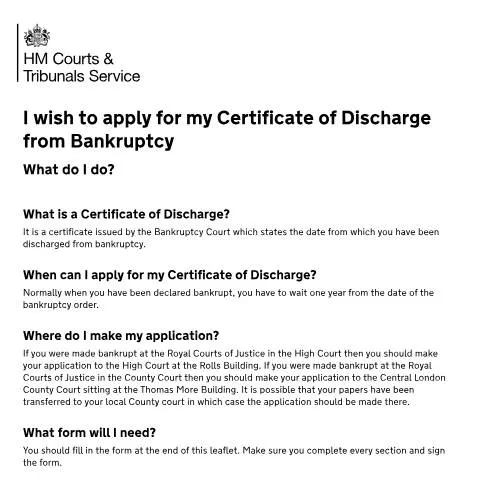
The process of obtaining this certificate through HM Courts & Tribunals Service involves specific procedures that vary depending on where your original bankruptcy order was issued. Understanding these nuances can mean the difference between a smooth application and months of administrative complications.
Eligibility Requirements and the One-Year Discharge Period
The fundamental requirement for applying for your Certificate of Discharge centres on the automatic discharge period that follows most bankruptcy orders. Under standard circumstances, bankruptcy restrictions lift exactly one year from the date your bankruptcy order was granted, regardless of whether this falls on a weekend or bank holiday.
However, this one-year timeline isn't universal. Certain circumstances can extend the discharge period significantly:
- Bankruptcy Restrictions Orders (BROs) can extend restrictions for 2-15 years if the court determines you acted dishonestly or irresponsibly
- Bankruptcy Restrictions Undertakings (BRUs) involve voluntary agreements to extend restrictions, typically lasting 2-5 years
- Income Payment Orders may require ongoing payments for up to three years, though discharge from bankruptcy itself still occurs after one year
- Suspended discharge orders prevent automatic discharge until specific conditions are met
Your eligibility also depends on maintaining compliance with all bankruptcy obligations throughout the restriction period. This includes cooperating fully with the Official Receiver, attending required interviews, providing requested documentation, and declaring any income changes promptly. Any failure to meet these obligations could result in your discharge being suspended or delayed.
Importantly, you cannot apply for the certificate before your official discharge date, even if you're approaching the one-year anniversary. The application must be submitted on or after the precise date when your bankruptcy restrictions ended.
Special Circumstances Affecting Discharge Timing
Certain situations require additional scrutiny before discharge can be confirmed. If you've been subject to a Bankruptcy Restrictions Order or Undertaking, the standard one-year period doesn't apply. Similarly, if your bankruptcy involved complex assets, overseas elements, or allegations of misconduct, the Official Receiver may have placed additional conditions on your discharge.
Business-related bankruptcies often involve more complex discharge procedures, particularly if you were a company director or held professional qualifications that were affected by the bankruptcy. These cases may require additional documentation or clearances before the Certificate of Discharge can be issued.
Navigating the Court System: Where to Submit Your Application
The destination for your LOC013 application depends entirely on which court issued your original bankruptcy order, and understanding this distinction is crucial for avoiding delays. The UK's court system handles bankruptcy cases through different venues, each with specific administrative procedures.
| Original Bankruptcy Court | Application Destination | Address/Location |
|---|---|---|
| Royal Courts of Justice (High Court) | High Court at Rolls Building | 7 Rolls Buildings, Fetter Lane, London EC4A 1NL |
| Royal Courts of Justice (County Court) | Central London County Court | Thomas More Building, Royal Courts of Justice |
| Regional County Court | Same regional court or transferred venue | Varies by location - check court records |
The complexity arises when files have been transferred between courts during your bankruptcy period. Regional county courts often handle the initial proceedings but may transfer files to other courts for administrative efficiency. If you're uncertain about your file's current location, contacting the court that originally made your bankruptcy order provides the most reliable guidance.
When bankruptcy proceedings began at a regional county court, your file might have been transferred to your local county court if you moved during the bankruptcy period. This transfer system aims to provide better local access for ongoing proceedings, but it can create confusion when applying for discharge certificates.
Identifying Your Correct Court Venue
Your bankruptcy order documentation should clearly identify the issuing court, but if you've misplaced these papers, several approaches can help locate the correct venue. The Insolvency Service maintains records of all bankruptcy orders, and the Individual Insolvency Register provides publicly accessible information about your case, including the court reference.
For cases that began in London courts, the distinction between High Court and County Court proceedings affects where you submit your certificate application. High Court bankruptcies typically involve larger debts or more complex circumstances, while County Court cases handle standard personal bankruptcies.
Completing Form LOC013: Essential Details and Common Oversights
The LOC013 application form appears deceptively straightforward, containing just a few key fields, yet accuracy in every detail proves crucial for smooth processing. The form requires your case name and number exactly as they appear on your original bankruptcy order, along with the precise date when bankruptcy restrictions commenced.
The case name typically follows the format "Re: [Your Full Name]" but may include additional identifiers if multiple individuals share similar names or if your case involved business elements. Using an abbreviated version of your name or a different format than appears on court records can cause processing delays while staff verify your identity.
Your case number represents a unique identifier assigned when your bankruptcy order was granted. This alphanumeric code varies between courts and time periods, but maintaining absolute accuracy is essential. Court staff use this number to locate your file and verify discharge eligibility.
Address information requires particular attention, especially if you've moved since your bankruptcy began. The form requests both current and previous addresses, allowing court staff to track your case history and ensure proper notification procedures were followed throughout your bankruptcy period.
Critical Information Requirements
The bankruptcy commencement date must match exactly with court records. Even a single day's discrepancy can trigger verification procedures that extend processing times. This date appears on your bankruptcy order and determines your eligibility for discharge, making accuracy paramount.
Your signature and the application date create a legal declaration that you believe yourself eligible for discharge. Signing before your actual discharge date, even by mistake, can invalidate the application and require resubmission with the full fee.
Address consistency throughout your application helps prevent administrative confusion. If you've used different name variations during your bankruptcy period, ensure the application reflects the exact name format used in court proceedings, even if this differs from your current preferred name format.
The £22 Fee Structure and Payment Processing
The Certificate of Discharge application requires a £22 fee, payable to 'HMCTS' through cheque or postal order. This fee covers administrative processing costs and court staff time required to verify your discharge eligibility and produce the official certificate.
Payment timing is crucial - the fee must accompany your application form. Applications submitted without payment or with incorrect payment amounts face immediate rejection, requiring resubmission with proper payment and potentially extending your waiting period for the certificate.
Cash payments are not accepted for postal applications, and personal cheques require sufficient funds to clear when presented. Bounced cheques result in additional bank charges and application rejection, creating unnecessary delays in obtaining your certificate.
Fee Exemptions and Reductions
Currently, no fee exemptions or reductions apply to Certificate of Discharge applications, regardless of your financial circumstances. This differs from many other court procedures where fee remission schemes assist those with limited means. The £22 charge applies universally to all applicants seeking discharge certificates.
Multiple certificate requests require separate applications and fees. If you need several copies of your certificate for different purposes, each application must include the full £22 payment, though you can submit multiple applications simultaneously.
Processing Timeline and Official Receiver Verification
Once your completed application reaches the appropriate court, a multi-stage verification process begins that typically spans three to four weeks. This timeline reflects the thorough checking procedures required to ensure discharge certificates are issued only to eligible individuals who have completed all bankruptcy obligations.
Initially, court staff examine your application for completeness and accuracy, cross-referencing the information against your bankruptcy file. This includes verifying that your discharge date has passed, confirming your identity matches court records, and ensuring no outstanding compliance issues exist.
The application then transfers to the Official Receiver's Department, where specialist staff conduct detailed reviews of your bankruptcy case. They examine whether you fulfilled all reporting requirements, cooperated appropriately with investigations, and complied with any specific conditions attached to your discharge.
Potential Delays and Additional Requirements
Several factors can extend the standard processing timeline beyond four weeks. Complex cases involving business assets, overseas elements, or compliance concerns may require additional verification steps. If the Official Receiver identifies any unresolved issues, they will contact you directly to explain what additional action is needed.
Fill in your form directly online
No printing: type your details into the boxes of the official form, tick, then download the PDF ready to send.
- 1Type into the form boxes
- 2Tick in one click
- 3Save and download the PDF
Cases where files have been transferred between courts may experience longer processing times while staff locate and review complete records. Similarly, applications where personal details have changed significantly since the bankruptcy order may require additional identity verification procedures.
Missing or incomplete information triggers correspondence from the court explaining what additional details are required. Responding promptly to these requests helps maintain processing momentum, while delayed responses can significantly extend the overall timeline.
Legal Weight and Practical Applications of Your Certificate
The Certificate of Discharge carries significant legal authority as an official court document confirming the end of your bankruptcy restrictions. This certificate serves as definitive proof that you've regained full legal capacity to enter contracts, obtain credit, serve as a company director, and engage in business activities previously restricted during bankruptcy.
Financial institutions treat this certificate as primary evidence when assessing credit applications. While your bankruptcy will remain visible on credit reports for six years from the order date, the certificate demonstrates that you're no longer subject to bankruptcy restrictions and can legally enter new credit agreements.
Employment applications increasingly require disclosure of recent bankruptcy, particularly for roles involving financial responsibility. Your certificate provides clear evidence of when restrictions ended, helping employers understand your current legal status rather than making assumptions based on incomplete information.
Professional and Business Applications
Many professional bodies and regulatory organisations require members to report bankruptcy and subsequent discharge. Your certificate provides the official documentation needed to update your status with professional registers and licensing authorities.
Company formation and directorship applications require disclosure of recent bankruptcy history. While the certificate doesn't erase the bankruptcy from your record, it confirms that legal restrictions preventing you from serving as a director have been lifted.
Property rental applications often involve credit checks that reveal bankruptcy history. Presenting your discharge certificate alongside rental applications demonstrates proactive transparency and confirms your current legal capacity to enter tenancy agreements.
Replacing Lost Certificates and Handling Administrative Issues
Losing your Certificate of Discharge doesn't diminish its legal effect - your discharge remains valid regardless of whether you possess the physical certificate. However, obtaining a replacement requires returning to the court system with a new application and fee.
Replacement certificates follow the same application process as original certificates, using form LOC013 and the £22 fee. Court records retain details of previously issued certificates, so staff can verify that you were legitimately discharged and issue replacement documentation.
If you discover errors on your certificate after receiving it, contact the issuing court immediately. Minor clerical errors, such as incorrect dates or misspelled names, can often be corrected through administrative procedures, though significant errors may require formal applications to amend court records.
Long-term Certificate Management
Maintaining secure copies of your discharge certificate proves wise for future reference. While the certificate doesn't expire, having readily available copies prevents delays when opportunities requiring proof of discharge arise unexpectedly.
Digital copies provide convenient backup options, though some organisations may require original certificates for verification purposes. Storing both physical and digital copies ensures you can respond promptly to various requirements without ordering replacement certificates.
Consider informing family members or trusted advisors about your certificate's location, particularly if health issues or other circumstances might affect your ability to locate important documents when needed. This forward planning helps ensure smooth access to discharge documentation when circumstances require it.