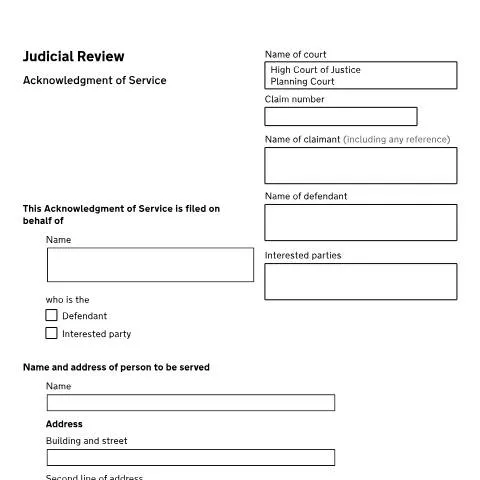
Navigating the Intricacies of Form N462PC: A Critical Component in Judicial Review
The journey through the judicial system can often feel daunting, particularly when faced with the complexities of judicial review. Among the various forms that need to be completed, the Form N462PC, titled "Acknowledgment of Service of a Judicial Review Claim," stands out as a pivotal document for defendants. Understanding this form is crucial for anyone involved in judicial review proceedings in the UK, especially those represented by HM Courts & Tribunals Service.
The Lifecycle of a Judicial Review Claim: How Form N462PC Fits In
When a claimant feels aggrieved by a decision made by a public body, they may initiate judicial review proceedings. This is where Form N462PC comes into play. It acts as a formal acknowledgment from the defendant regarding the claims made against them. The completion and submission of this form signal the defendant's recognition of the claim and set the stage for subsequent legal interactions.
- Initial Claim Submission: The claimant files a claim form, which initiates the judicial review process.
- Defendant's Acknowledgment: The defendant must file Form N462PC to acknowledge receipt of the claim, indicating whether they contest the claim.
- Further Proceedings: Depending on the responses in the form, further directions may be issued by the court.
Filling Out Form N462PC: Decoding Each Section
Properly filling out Form N462PC is vital for ensuring that the judicial review proceedings move forward smoothly. The form consists of several sections, each requiring careful attention. Below is a breakdown of the key sections:
| Section | Description | Common Pitfalls |
|---|---|---|
| Section A | Indicates whether the defendant contests the claim in full, in part, or not at all. | Failing to select the correct box can lead to delays. |
| Section B | Allows the defendant to list any interested parties who should be included. | Omitting interested parties may affect the case's outcome. |
| Section C | Requires a summary of the grounds for contesting the claim. | Providing insufficient detail can weaken the defense. |
| Section D | Asks for any directions the defendant wishes the court to consider. | Not stating relevant directions may limit court actions. |
| Section E | Addresses the Aarhus Convention claims and potential costs limits. | Misunderstanding Aarhus claims can lead to procedural errors. |
| Section F | Confirms the truthfulness of the information provided. | Signing without verification can lead to serious legal repercussions. |
Possible Outcomes After Submission: What to Expect
After submitting Form N462PC, the court will process the acknowledgment and determine the next steps. Depending on the defendant's responses, several scenarios can arise:
- If the claim is contested: The court will schedule a hearing, and both parties will need to prepare their arguments and evidence.
- If the claim is not contested: The court may issue a judgment in favour of the claimant without the need for a hearing.
- If the claim is partially contested: The court will require clarification on which elements are disputed, and proceedings will be tailored accordingly.
Submission Channels for Form N462PC: Online vs. Paper
Understanding the different channels for submitting Form N462PC can impact the efficiency of the process. Here’s a comparative overview:
| Channel | Benefits | Considerations |
|---|---|---|
| Online Submission | Faster processing, immediate confirmation of receipt. | Requires reliable internet access and compliance with digital formats. |
| Paper Submission | Traditional method, suitable for those uncomfortable with online processes. | Longer processing time, risk of postal delays. |
| In-Person Submission | Immediate confirmation from court staff. | Time-consuming, may require waiting in line. |
Essential Documents to Accompany Form N462PC: A Checklist
When submitting Form N462PC, certain documents may need to accompany the form to support the defendant’s position. Preparing these documents in advance can streamline the process:
- Claim Form: A copy of the original claim form that triggered the judicial review.
- Evidence Supporting Contestation: Any relevant documents or witness statements that substantiate the defendant's position.
- Legal Representation Details: Information regarding any legal representatives involved, if applicable.
- Contact Information: Up-to-date contact details for the defendant or their representative.
Timelines and Deadlines: The Clock is Ticking
Timeliness is crucial in judicial review proceedings. Here’s how the timeline generally unfolds following the submission of Form N462PC:
- Filing Deadline: The acknowledgment of service must typically be filed within 14 days of being served with the claim.
- Response Period: Following the acknowledgment, the defendant will have 28 days to file a detailed response if contesting the claim.
- Court Directions: The court will issue directions on how the case will proceed, including any hearings scheduled.
Challenges and Remedies: Addressing Errors or Omissions
Occasionally, issues may arise after submitting Form N462PC, such as an error in filling out the form or missing documentation. It’s crucial to understand how to resolve these challenges:
- Correction of Errors: If a mistake is identified post-submission, the defendant must notify the court as soon as possible, providing a corrected version of the form.
- Missing Documentation: If required documents were not included, it is advisable to submit them as soon as they are available, along with an explanation for the initial omission.
- Filing for Extensions: If the timelines are not feasible due to legitimate reasons, defendants may apply for extensions, although these are granted at the court’s discretion.
Final Remarks: The Importance of Accurate Completion
Form N462PC is not merely a procedural document; it is a critical component of the judicial review process that can influence the outcome of a case significantly. Accuracy and timeliness in filling out and submitting this form are paramount. Whether you are a defendant or a legal representative, understanding each section of the form and ensuring that all necessary information is provided can greatly impact the judicial proceedings ahead.
Understanding the Judicial Review Process in the UK
The judicial review process is a critical mechanism in the UK legal system, allowing individuals to challenge the legality of decisions made by public bodies. Understanding this process is paramount for anyone considering filing a claim. Typically, judicial reviews are concerned with the processes by which decisions are made rather than the actual decisions themselves. The process is governed by multiple rules, primarily set out in the Civil Procedure Rules (CPR), particularly Part 54, which lays down the procedures for these claims.
It’s important to note that the grounds for judicial review can relate to several issues, including illegality, irrationality, and procedural impropriety. For instance, if a public body exceeds its powers or fails to follow due process, such an action may be subject to review. Claimants must demonstrate that they have standing to bring the claim, which often requires showing a sufficient interest in the matter at hand. This is where understanding the nuances of the law becomes crucial.
Moreover, the timeframe for initiating a judicial review is stringent. Generally, the claim must be filed within three months of the decision being challenged, although this period can vary based on the specifics of the case. Proper legal guidance can help navigate these complexities effectively.
Fill in your form directly online
No printing: type your details into the boxes of the official form, tick, then download the PDF ready to send.
- 1Type into the form boxes
- 2Tick in one click
- 3Save and download the PDF
The Role of Legal Representation in Judicial Reviews
While it is possible to represent oneself in a judicial review, having legal representation can significantly enhance the prospect of a successful outcome. Legal representatives, particularly solicitors with experience in public law, can provide essential guidance on the merits of the case, the appropriate grounds for review, and the intricacies of procedural requirements. They can also assist in drafting the necessary documentation, including the claim form (Form N462PC) and supporting evidence.
Furthermore, legal representatives can help in understanding the implications of the Data Protection Act 2018 and UK GDPR as they relate to the collection of personal data during the judicial review process. These regulations necessitate careful consideration of how personal information is handled and disclosed, ensuring compliance while protecting the claimant’s interests.
In judicial review cases involving multiple public bodies or complex legal questions, the expertise of legal counsel becomes even more indispensable. They can help in identifying potential co-defendants or parties that may need to be involved in the litigation, and in devising a strategy that considers the various interests at stake.
Common Mistakes to Avoid When Acknowledging Service of Judicial Review Claims
Acknowledging service of a judicial review claim, particularly using Form N462PC, involves specific procedures that, if not followed correctly, can jeopardize the entire process. Here are some common pitfalls to avoid:
- Failing to Respond Timely: Once served with the claim, the respondent has a limited window to acknowledge receipt—usually within 14 days. Delays can lead to default judgments or further complications in the proceedings.
- Inaccurate Information: It's crucial that all information provided on the form is accurate and complete. Inaccurate or misleading information can undermine the credibility of the response and may lead to further legal complications.
- Neglecting to Seek Legal Advice: Respondents sometimes underestimate the complexity of judicial reviews. Seeking expert legal counsel can help in crafting a comprehensive acknowledgment that addresses the claim adequately while protecting the respondent's rights.
- Ignoring Pre-Action Protocols: Before a judicial review claim can be filed, the claimant must adhere to specific pre-action protocols, including providing the defendant with a letter detailing their grievances. Ignoring these protocols can affect the legitimacy of the claim.
Avoiding these mistakes can not only streamline the acknowledgment process but also bolster the overall effectiveness of the response to the judicial review claim.