The Crucial Role of Form N9(LCC) in Commercial Disputes
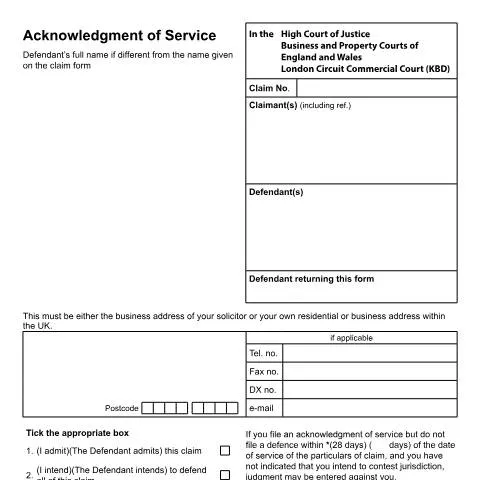
In the landscape of business and legal disputes, the Acknowledge service of a claim in the London Commercial Court: Form N9(LCC) holds significant importance. This document acts as a formal notification to the defendant regarding a claim made against them in the London Commercial Court. By acknowledging this claim, defendants navigate the procedural waters of the court system, which is critical for their rights and obligations in any commercial litigation.
Understanding the Context: Why This Form Matters
The Commercial Court in London is a key venue where business disputes are resolved. Form N9(LCC) primarily serves the purpose of acknowledging the service of court documents. When a claimant initiates legal proceedings, they must serve the claim on the defendant, and completing this form is the defendant's first step in responding to that claim.
Failure to return this form can have serious repercussions. If the defendant does not file a defence within the required timeframe, the court may enter a judgment against them without a hearing. Therefore, this document is more than just a formality; it is a gateway to the legal process, ensuring that the defendant's voice is heard and that they have the opportunity to defend their position.
Deciphering the Document: A Step-by-Step Breakdown
Completing the N9(LCC) form requires careful attention to detail. Below is a breakdown of the essential sections of the form and what is required:
-
Defendant’s Information:
- Full name of the defendant must be provided, especially if it differs from the name on the claim form.
- Contact details such as telephone number, email, and mailing address are crucial for further correspondence.
-
Response to the Claim:
- The defendant must indicate their stance regarding the claim by ticking the appropriate boxes, which may include admitting the claim, intending to defend the full or part of the claim, or contesting the jurisdiction of the court.
-
Date of Birth:
- This is required for identification purposes, mainly when the defendant is not a corporate entity.
-
Signature:
- Only a defendant or their solicitor can sign the form, and it must be dated correctly to affirm its validity.
Timeline of Events: From Service to Resolution
The journey from the moment a claim is served to its eventual resolution involves several key steps, each governed by legal timelines. Here’s how the process typically unfolds once the claim is served:
- Service of Claim: The claimant serves the claim form on the defendant.
- Filing the Acknowledgment: The defendant completes and returns Form N9(LCC) within 14 days of being served to acknowledge receipt of the claim.
- Opening the Defence: After acknowledging receipt, the defendant has a further 14 days (total of 28 days) to file a defence if they opt to contest the claim.
- Failure to Respond: If the defendant fails to respond appropriately, a default judgment may be entered against them.
- Court Hearing: If a defence is filed, a hearing date may be set, allowing both parties to present their cases.
Ways to Submit Form N9(LCC): Exploring Your Options
Submitting Form N9(LCC) can be done through various channels, each with its own advantages:
| Submission Method | Advantages | Considerations |
|---|---|---|
| Online Submission | Quick and efficient. | Requires access to the official online portal. |
| Postal Submission | Traditional method; can provide a physical record. | May incur delays in postal service. |
| In-Person Submission | Immediate confirmation of receipt. | May require travel to the court and adherence to opening hours. |
Critical Implications for Defendants: Rights and Responsibilities
Filing Form N9(LCC) not only acknowledges the claim but also opens the door to several rights and responsibilities for the defendant:
- Right to a Fair Hearing: By acknowledging the claim, the defendant ensures their right to contest the case in court.
- Obligation to Respond: Failing to file a defence within the stipulated time frame can result in a default judgment against the defendant.
- Potential for Mediation: Acknowledging the claim can also open up opportunities for alternative dispute resolution before the matter goes to trial.
Historical Context: Legal Framework Surrounding Form N9(LCC)
The creation and use of Form N9(LCC) stems from the procedural rules set forth in the Civil Procedure Rules (CPR). Understanding the framework behind these rules helps to highlight the importance of the N9(LCC) form:
The CPR governs the conduct of civil litigation in England and Wales, ensuring that disputes are resolved fairly and efficiently. Form N9(LCC) aligns with the principles of procedural fairness, giving defendants a structured way to respond to claims. The rules dictate the timelines and procedures surrounding the acknowledgment and defence of claims, reflecting the importance of due process in commercial litigation.
Special Considerations: Navigating Complex Scenarios
Certain circumstances may complicate the use of Form N9(LCC). Here are some special situations to consider:
- International Defendants: If the defendant is based outside the UK, there are additional considerations regarding the jurisdiction and service of the claim, which may often involve international treaties.
- Corporate Entities: For companies or organizations, the form must be signed by an appropriate representative, and additional documentation may be required to clarify the individual's authority.
- Minors: When a minor is involved as a defendant, special rules apply regarding who can act on their behalf and how claims are served.
- Urgent Claims: In cases where time is of the essence, expedited procedures may be available, and the form's submission must be handled with urgency.
Insights into Common Pitfalls: Navigating the Form with Care
Completing Form N9(LCC) is straightforward; however, certain issues can arise that may hinder a defendant's ability to effectively respond:
- Incomplete Information: Ensure that all required fields are filled completely to avoid delays in processing.
- Misaddressed Submission: Double-check that the form is being sent to the correct court address to prevent misdirection.
- Missing Signatures: Failing to sign the document or providing a signature from an unauthorized individual can lead to complications.
- Failure to Meet Deadlines: Adhering to deadlines is crucial, as missing them can result in significant consequences for the defendant.
The completion and submission of Form N9(LCC) is a pivotal action in the commercial dispute process, acting as both a shield and a sword for defendants navigating the complex legal landscape. By understanding its role, importance, and the intricacies involved in its completion, defendants can fortify their position and ensure their rights are preserved in the face of a claim.
Understanding the Importance of Acknowledging Service in the London Commercial Court
When facing a claim in the London Commercial Court, the process of acknowledging service is not merely a procedural formality; it is a critical component of the litigation process. Acknowledging service of a claim signifies the defendant’s awareness of the legal proceedings initiated against them. Failure to acknowledge service can have significant consequences, including the potential for a default judgment being entered against the defendant. In this section, we will explore the implications of acknowledging service, the potential pitfalls of inaction, and the benefits of timely compliance.
The acknowledgment of service must be made through Form N9(LCC), which serves as an official record that the defendant has received the claim. This form requires the defendant to either accept or deny the claims made against them, effectively setting the stage for how the case will proceed. It is crucial to respond to the claim promptly, typically within 14 days of service, to avoid any adverse outcomes. If the defendant fails to respond within this timeframe, they may lose the right to dispute the claim and face a ruling in favor of the claimant.
In cases where the defendant requires additional time to prepare their response, the N9 form provides an option to request an extension. The defendant must state the reasons for the request, and it is at the discretion of the court whether to grant this extension. This aspect of the process underscores the importance of being proactive and understanding the timing and legal expectations associated with acknowledging service.
Navigating the Acknowledgment Process: Common Challenges and Solutions
The process of acknowledging service of a claim using Form N9(LCC) may seem straightforward, yet various challenges can arise that require careful navigation. This section will discuss common difficulties defendants might encounter and provide practical solutions.
One common challenge is the confusion regarding the court deadlines. Given that the form must be returned within 14 days, any delays can lead to serious implications. Defendants may miscalculate the timeline, especially if there are bank holidays or weekends involved. To mitigate this risk, it is advisable to mark the deadlines clearly on a calendar and to submit the form well in advance of the due date.
Fill in your form directly online
No printing: type your details into the boxes of the official form, tick, then download the PDF ready to send.
- 1Type into the form boxes
- 2Tick in one click
- 3Save and download the PDF
Another issue often arises from improper completion of the N9(LCC) form. Defendants can inadvertently miss crucial sections or provide insufficient information, leading to complications. To avoid this, it is recommended to review guidance notes available on the official court website or seek legal advice if there is any uncertainty about what to include. Thoroughly checking the form before submission can save time and prevent unnecessary delays.
For defendants who may be abroad or cannot respond in person, they might face logistical issues with returning the form. In such cases, exploring options for electronic submission or seeking assistance from legal representatives familiar with the court’s procedures can help facilitate the acknowledgment process.
The Role of Legal Representation in the Acknowledgment of Service
While individuals have the right to represent themselves in legal matters, involving legal representation when acknowledging service of a claim can significantly enhance the effectiveness of the response. In this section, we will examine the benefits of hiring a solicitor or barrister during this phase of litigation.
Firstly, legal experts are well-versed in the complexities of commercial law and court procedures. They can provide tailored advice on the implications of the claims being made and help formulate an appropriate response. This includes strategic considerations on whether to acknowledge the claim, defend against it, or explore alternative dispute resolution methods.
Moreover, legal representation can assist with the accurate completion of Form N9(LCC). Solicitors can ensure that all necessary details are included, thus reducing the risk of errors that might lead to adverse judgments. Their expertise can also extend to advising on any potential grounds for contesting the claim or requesting extensions, ensuring that the defendant's rights are protected.
Furthermore, having a legal representative can facilitate communication with the court and the claimant. They can manage the submission of documents, respond to further inquiries from the court, and negotiate terms if settlement discussions arise. This professional assistance can be invaluable, particularly for those unfamiliar with the legal process or stressed by the impending litigation.
In conclusion, while acknowledging service might seem like a simple task, the nuances involved highlight the need for careful consideration. Whether it involves understanding the importance of the acknowledgment, navigating the potential challenges, or appreciating the role of legal representation, each aspect plays a vital part in the management of a claim in the London Commercial Court.