When Medical Conditions Meet Driving Privileges: Understanding the DG1 Declaration Process
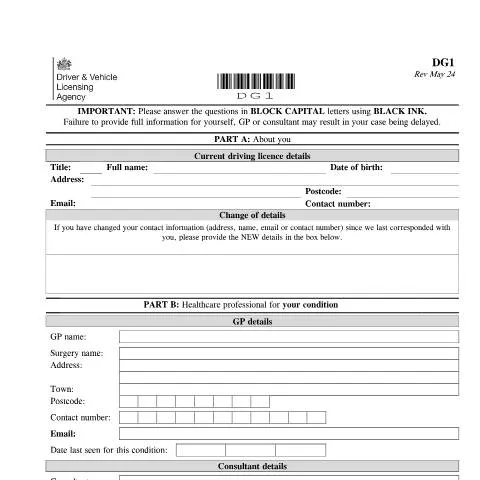
For millions of UK drivers, the relationship between health and driving privileges remains largely unexamined until a medical diagnosis forces a crucial conversation with the Driver and Vehicle Licensing Agency. The DG1 form represents one of the most sensitive interactions between citizen and state, where personal medical information becomes the determining factor in maintaining the freedom to drive. This document serves as the official gateway for declaring substance misuse issues that could impact road safety, creating a legal obligation that many drivers discover only when their circumstances change dramatically.
The complexity of the DG1 process reflects the delicate balance between individual privacy rights and public safety considerations. Unlike routine licence renewals, this declaration triggers a comprehensive medical assessment that can result in licence restrictions, suspensions, or in some cases, complete revocation. Understanding the nuances of this process becomes essential for anyone facing substance-related medical conditions, whether through prescribed medication dependencies or recreational drug use that has developed into problematic patterns.
The Legal Framework Behind Medical Fitness Declarations
The requirement to report medical conditions stems from the Road Traffic Act 1988, which establishes the Secretary of State's responsibility to ensure all licence holders meet minimum fitness standards. The DVLA operates under strict guidelines that recognise substance misuse as a notifiable condition, meaning drivers have a legal duty to report relevant circumstances regardless of whether they believe it affects their driving ability.
This legal framework creates several layers of obligation. Drivers must report conditions as soon as they become aware of their potential impact on driving safety, not when they feel ready to address the issue. The three-year lookback period specified in the DG1 form reflects evidence-based research on substance recovery patterns and relapse risks, establishing a temporal boundary that captures relevant medical history while acknowledging that distant past use may have limited predictive value.
The criminal offence provisions outlined in the form's declaration section carry genuine legal weight. False declarations can result in prosecution under fraud statutes, with penalties including fines up to £1,000 and potential licence revocation extending beyond the original medical concerns.
The Data Protection Act 2018 and UK GDPR create additional complexity, as the form requires explicit consent for medical information sharing across multiple healthcare providers and assessment panels. This consent mechanism extends beyond the immediate application, potentially authorising information sharing for future medical examinations and practical driving assessments that may be required during the evaluation process.
Navigating the Substance Categories and Disclosure Requirements
The DG1's medical questionnaire divides substances into carefully defined categories that reflect both legal classifications and clinical risk assessments. Understanding these distinctions proves crucial for accurate completion, as the DVLA's response varies significantly based on the specific substances involved and the patterns of use reported.
Opioid-Based Substances and Treatment Programmes
The form's treatment of heroin, morphine, and non-prescribed methadone reflects the particular risks associated with opioid dependency. The distinction between prescribed morphine and illicit use acknowledges that legitimate pain management creates different risk profiles compared to recreational opioid use. However, even prescribed opioid therapy may trigger licence restrictions if the dosage or administration pattern suggests impairment risks.
The specific questions about drug treatment programmes recognise that structured recovery support often indicates reduced risk compared to unmanaged dependency. Methadone maintenance programmes, buprenorphine therapy, and naltrexone treatment all represent evidence-based interventions that the DVLA considers when evaluating fitness to drive. The requirement to provide treatment programme details enables medical assessors to verify compliance and evaluate the stability of recovery efforts.
Stimulants and Hallucinogens: Risk Assessment Variations
Cocaine, methamphetamine, and amphetamine use trigger different assessment protocols than opioids, reflecting distinct impairment patterns and recovery trajectories. The form's request for frequency and quantity information enables risk stratification between occasional recreational use and patterns suggesting dependency or regular impairment.
| Substance Category | Primary Concern | Typical Assessment Period | Common Restrictions |
|---|---|---|---|
| Cocaine/Crack | Cardiovascular effects, impulsivity | 6-12 months clean | Medical examination required |
| Amphetamines | Sleep disruption, psychosis risk | 3-6 months clean | Psychiatric assessment possible |
| Hallucinogens (LSD, Ketamine) | Perceptual disturbances, flashbacks | Variable, case-dependent | Specialist consultation required |
| Cannabis | Reaction time, attention deficits | 1-3 months clean | Depends on usage pattern |
The inclusion of prescribed cannabis as a separate category reflects the evolving legal landscape around medical marijuana. While recreational cannabis use typically requires cessation periods, prescribed cannabis products may be compatible with driving under specific medical supervision arrangements.
Benzodiazepines: The Prescription Paradox
Benzodiazepines present particular complexity because they straddle the line between legitimate medical treatment and potential impairment. Prescribed diazepam or temazepam for anxiety disorders creates different risk assessments than illicit benzodiazepine use, yet both can significantly impact driving safety through sedation and cognitive effects.
The form's request for prescription status enables the DVLA to coordinate with prescribing physicians to evaluate whether the medical benefits justify continued driving privileges. This often involves dosage adjustments, timing modifications, or alternative treatment approaches that maintain therapeutic effectiveness while reducing impairment risks.
Medical Professional Coordination and Information Sharing
The DG1 form's emphasis on healthcare professional details reflects the collaborative nature of medical fitness assessments. The DVLA relies heavily on clinical expertise to interpret substance use patterns and evaluate recovery progress, making accurate medical professional information essential for effective case management.
General Practitioner Involvement
GP details serve multiple functions beyond simple contact information. The date last seen field helps establish the recency and continuity of medical care, which influences the DVLA's confidence in reported information. GPs often provide the most comprehensive view of a patient's overall health status and can contextualise substance use within broader medical conditions or treatment regimens.
The requirement for surgery contact details reflects practical necessities in medical record retrieval. Many GP practices operate complex appointment and communication systems, and providing complete contact information reduces delays in obtaining necessary medical reports. The email field, while optional, increasingly enables faster communication between the DVLA's medical advisors and healthcare providers.
Specialist Consultation Requirements
Consultant details become particularly important when substance use occurs alongside other medical conditions or when specialised treatment programmes are involved. Addiction specialists, psychiatrists, and pain management consultants often provide crucial insights into treatment compliance, relapse risks, and functional capacity that general practitioners may not be equipped to assess.
The form's request for consultant speciality and department information enables the DVLA to direct inquiries to the most appropriate medical experts. This specificity proves essential when complex cases require input from multiple specialists or when treatment involves experimental or uncommon therapeutic approaches.
Seizure Complications and Neurological Assessments
The specific attention to drug-related seizures within the DG1 form reflects a critical safety concern that can permanently alter driving privileges. Seizure activity, whether caused by substance withdrawal, intoxication, or underlying neurological damage from drug use, creates immediate and potentially ongoing fitness concerns that require careful evaluation.
The three-year seizure inquiry period aligns with standard neurological assessment protocols, as seizure disorders typically require extended observation periods to establish patterns and evaluate treatment effectiveness. A single drug-related seizure may result in temporary licence suspension, while multiple episodes or ongoing seizure risks can lead to permanent driving restrictions.
The requirement to identify healthcare professionals involved in seizure management enables comprehensive neurological assessment. Neurologists, emergency department physicians, and addiction specialists may all contribute relevant information about seizure triggers, frequency, and treatment responses that influence driving safety evaluations.
The Authorization Framework and Medical Information Sharing
The DG1's authorization section creates a comprehensive consent framework that extends well beyond the initial application. Understanding the scope of this authorization proves crucial for applicants concerned about medical privacy, as the consent enables information sharing across multiple healthcare providers and assessment contexts.
Secretary of State's Honorary Medical Advisory Panels
The reference to Honorary Medical Advisory Panels reflects the serious nature of complex fitness assessments. These panels consist of senior medical professionals who volunteer their expertise to evaluate challenging cases where standard protocols may not provide clear guidance. Panel involvement typically occurs in cases involving multiple medical conditions, experimental treatments, or situations where driving restrictions could have severe vocational or personal consequences.
The confidentiality provisions surrounding panel consultations provide important privacy protections while enabling access to specialised medical expertise. Panel members operate under strict professional obligations that mirror those of treating physicians, ensuring that medical information sharing serves legitimate assessment purposes without compromising patient privacy unnecessarily.
Communication Preferences and Digital Correspondence
The form's communication preference options reflect the DVLA's modernisation efforts while acknowledging security and accessibility concerns. Email correspondence can significantly reduce processing times, particularly for routine updates or additional information requests. However, the optional nature of digital communication recognises that some medical information may be too sensitive for electronic transmission or that some applicants may lack reliable digital access.
The SMS notification option serves primarily for appointment scheduling and basic status updates rather than detailed medical communications. This distinction helps applicants understand what types of information they might receive through different communication channels, enabling informed decisions about communication preferences.
Processing Implications and Assessment Outcomes
Submitting a completed DG1 form initiates a complex assessment process that can result in various outcomes depending on the specific circumstances reported and the medical evidence available. Understanding potential outcomes helps applicants prepare for different scenarios and plan accordingly for possible driving restrictions.
Medical Examination Requirements
Many DG1 submissions trigger requirements for independent medical examinations conducted by DVLA-approved physicians. These examinations go beyond routine medical consultations, focusing specifically on driving-related functional capacities such as reaction times, visual processing, and decision-making abilities under stress.
The examination process often includes coordination with existing healthcare providers to ensure comprehensive assessment while avoiding duplication of medical testing. Applicants may need to provide additional medical records, laboratory results, or treatment documentation to support the examination process.
Practical Driving Assessments
Some cases require practical driving assessments conducted at specialised centres equipped to evaluate driving skills in controlled environments. These assessments typically occur when medical evidence suggests possible impairment but the extent of functional impact remains unclear through medical examination alone.
Driving assessment centres employ occupational therapists and driving instructors trained in disability evaluation, creating comprehensive assessments that consider both medical limitations and compensatory strategies. The results of these assessments can support applications for restricted licences that maintain some driving privileges while acknowledging specific limitations.
Licence Restriction Categories
The DVLA operates several licence restriction categories that enable continued driving under specific conditions. These might include geographical limitations, time-of-day restrictions, vehicle modification requirements, or periodic medical review obligations. Understanding these restriction options helps applicants work constructively with medical assessors to identify solutions that balance safety concerns with mobility needs.
Temporary restrictions often apply during active treatment or early recovery periods, with provisions for restriction removal once stability is demonstrated through medical follow-up and compliance verification. This approach recognises that substance-related fitness concerns may be transitional rather than permanent, providing pathways for licence restoration when appropriate.
Strategic Considerations for Complex Cases
Certain circumstances require particularly careful consideration when completing the DG1 form, as incomplete or inaccurate information can result in more restrictive outcomes than honest, comprehensive disclosure supported by appropriate medical documentation.
Cases involving multiple substances require detailed chronological information that demonstrates understanding of interaction effects and recovery complexity. The DVLA's medical advisors recognise that polydrug use creates different risk profiles than single substance dependencies, often requiring extended assessment periods and more comprehensive treatment verification.
Vocational drivers face additional scrutiny due to the enhanced safety responsibilities associated with commercial driving. Group 2 licence holders (lorries, buses, and passenger-carrying vehicles) typically encounter more restrictive assessment criteria and longer prohibition periods compared to standard car drivers. Understanding these enhanced requirements proves essential for professional drivers whose livelihoods depend on maintaining driving privileges.
The intersection between substance use and other medical conditions creates particularly complex assessment scenarios. Mental health conditions, chronic pain syndromes, and neurological disorders may all interact with substance use in ways that compound driving safety concerns. Comprehensive medical documentation that addresses these interactions enables more nuanced assessment outcomes that consider the full medical picture rather than focusing solely on substance use issues.