Understanding Your Legal Duty to Report Mental Health Conditions to DVLA
When mental health conditions emerge or evolve, many drivers remain unaware of their statutory obligation to inform the Driver and Vehicle Licensing Agency. The M1 form represents a critical gateway between medical diagnosis and driving licence retention, yet its completion often catches applicants off-guard during what may already be a challenging period in their lives.
Form M1 serves as DVLA's primary tool for assessing whether individuals with mental health diagnoses can continue driving safely. Unlike routine licence renewals, this medical questionnaire triggers a comprehensive fitness-to-drive evaluation that can result in licence restrictions, medical examinations, or complete revocation. The process reflects DVLA's balance between public safety obligations and individual mobility rights under current road traffic legislation.
The form's deceptively straightforward appearance masks complex medical and legal implications. Each tick box carries weight in determining not just immediate driving privileges, but potentially long-term insurance implications, employment consequences for professional drivers, and family logistics. Understanding when, how, and why to complete form M1 becomes essential for anyone navigating mental health challenges whilst maintaining their independence on Britain's roads.
Triggering Events: When Form M1 Becomes Mandatory
The legal requirement to complete form M1 activates under specific circumstances that extend beyond initial diagnosis. Primary triggers include receiving a formal mental health diagnosis from qualified healthcare professionals, experiencing significant changes in existing conditions, or having medication adjustments that could affect driving ability.
DVLA's notification requirements operate on a continuous basis rather than one-time reporting. Drivers must inform the agency if their condition deteriorates, new symptoms emerge, or treatment approaches change substantially. This includes scenarios where previously stable conditions become unstable, requiring hospitalisation or emergency interventions.
| Condition Category | Mandatory Reporting Trigger | Typical Assessment Timeline |
|---|---|---|
| Anxiety/Depression (mild) | Impaired concentration or suicidal thoughts | 6-8 weeks |
| Bipolar Disorder | Any formal diagnosis | 8-12 weeks |
| Psychotic Disorders | Initial diagnosis or relapse | 12-16 weeks |
| Personality Disorders | Diagnosis affecting judgement | Variable assessment |
Professional drivers face enhanced obligations under Group 2 licensing standards. Conditions that might permit continued car driving could disqualify lorry, bus, or taxi drivers entirely. The M1 form captures these distinctions through specific questioning about licence categories held.
Navigating the Medical Questionnaire Section by Section
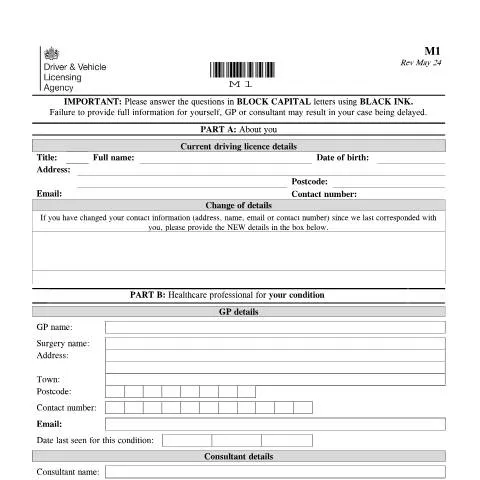
Part A demands absolute precision in personal details, as discrepancies between form data and DVLA records trigger automatic delays. The "change of details" section proves particularly crucial for individuals whose mental health conditions coincide with housing instability or relationship breakdowns affecting their registered address.
Block capital letters using black ink remain mandatory requirements, reflecting DVLA's document scanning systems. Handwriting clarity directly impacts processing speed, with illegible forms requiring manual intervention that extends assessment timelines significantly.
Healthcare Professional Details: The Foundation of Assessment
Part B's healthcare professional sections carry exceptional importance in determining assessment outcomes. GP details must reflect current registration, not previous practices, as DVLA medical teams require active professional relationships for meaningful consultation.
The consultant details section applies when specialist mental health services are involved. Community Mental Health Teams, private psychiatrists, and hospital-based services all qualify as relevant consultants. Missing or incorrect contact details for specialists can delay cases by weeks whilst DVLA attempts verification through alternative channels.
Date fields for "last seen" appointments must reflect condition-specific consultations rather than routine check-ups. A GP appointment for physical ailments doesn't constitute relevant contact for mental health assessment purposes, potentially misleading DVLA medical advisers about ongoing care levels.
Mental Health Condition Categories: Precision Matters
Question 2's checkbox system requires careful consideration, as each category triggers different assessment protocols. Anxiety/depression without impairment typically permits continued driving with periodic review, whilst the same conditions with impairment mandate comprehensive medical examination.
The distinction between suicidal thoughts and concentration problems proves particularly significant. Drivers experiencing either symptom must tick the appropriate box, as underreporting constitutes a criminal offence whilst over-reporting unnecessarily complicates assessment processes.
- Eating disorders encompass both anorexia nervosa and bulimia, with assessment focusing on cognitive impairment rather than physical symptoms
- PTSD and OCD share assessment pathways despite different underlying mechanisms
- Personality disorder categories require specification of type, as some variants pose greater driving risks than others
- Psychotic spectrum disorders trigger immediate licence suspension pending comprehensive evaluation
The Declaration Process: Legal Implications and Medical Consent
Form M1's declaration section establishes binding legal consent for medical information sharing between healthcare providers and DVLA. This authorisation extends beyond initial assessment to ongoing monitoring throughout licence validity periods.
The Secretary of State's Honorary Medical Advisory Panels represent specialist tribunals reviewing complex cases. Panel members include consultant psychiatrists, neurologists, and other specialists who assess fitness to drive based on submitted medical evidence. Their recommendations carry significant weight in final licensing decisions.
Electronic communication preferences affect both convenience and confidentiality. Choosing email correspondence expedites communication but requires secure email systems. Healthcare professionals may decline electronic communication for confidentiality reasons, potentially extending assessment timelines.
Understanding Information Sharing Boundaries
DVLA's data sharing operates under strict relevance criteria, focusing solely on driving-related medical information. Personal therapy notes, family history unrelated to driving safety, and non-relevant medical conditions remain protected under standard confidentiality protocols.
Medical examination requirements vary significantly based on declared conditions and supporting evidence. Simple cases may require only GP reports, whilst complex situations mandate specialist driving assessments at approved centres. These assessments can include cognitive testing, reaction time measurement, and practical driving evaluation.
Submission Pathways and Processing Expectations
DVLA accepts M1 submissions through postal and electronic channels, each offering distinct advantages. Email submission to [email protected] provides delivery confirmation and faster initial processing, whilst postal submission to the Drivers Medical Group in Swansea offers traditional documentation trails.
Processing timelines vary considerably based on condition complexity and supporting evidence availability. Straightforward anxiety cases with good GP support typically resolve within 6-8 weeks, whilst complex psychotic disorders requiring specialist panel review can extend beyond 16 weeks.
Managing the Interim Period
Drivers retain legal driving privileges during M1 assessment periods unless specifically instructed otherwise by DVLA. However, continued driving during assessment carries personal responsibility for safety judgements, with potential legal consequences if accidents occur due to undisclosed medical impairment.
Insurance implications during assessment periods require careful consideration. Insurers may void policies if medical conditions affecting driving safety remain undisclosed, regardless of DVLA assessment outcomes. Proactive insurer notification often proves beneficial for maintaining coverage continuity.
Assessment Outcomes and Long-term Implications
DVLA medical assessments produce several potential outcomes beyond simple licence retention or revocation. Conditional licensing may impose restrictions such as periodic medical reviews, geographical limitations, or requirement for annual specialist assessments.
Licence revocation doesn't necessarily represent permanent disqualification. Many mental health conditions improve with treatment, allowing future licence restoration through fresh medical assessment. The M1 form establishes baseline documentation for future comparison during reapplication processes.
| Assessment Outcome | Typical Duration | Review Requirements |
|---|---|---|
| Unconditional retention | Until normal renewal | Self-reporting changes only |
| Annual medical review | 12 months | GP report required |
| Specialist review | 6-24 months | Consultant assessment |
| Temporary revocation | Variable | Reapplication when stable |
Professional drivers face additional considerations regarding vocational licence categories. Group 2 standards often require complete symptom resolution for extended periods before licence restoration, reflecting higher safety thresholds for commercial vehicle operation.
Special Circumstances and Complex Cases
Drivers with multiple mental health diagnoses require careful form completion to ensure all conditions receive appropriate assessment. The M1 form's structure accommodates primary diagnosis reporting but may necessitate supplementary documentation for complex presentations involving comorbid conditions.
Emergency situations where immediate driving cessation becomes medically necessary require direct DVLA contact rather than routine M1 submission. Healthcare professionals can trigger urgent licence reviews when patient safety or public safety demands immediate intervention.
Medication changes during M1 assessment periods must be reported promptly, as new treatments can significantly alter fitness-to-drive evaluations. Antipsychotic medications, mood stabilisers, and anxiolytics all carry different implications for driving safety assessment.
International Drivers and Temporary Residents
Non-UK residents holding British driving licences remain subject to M1 reporting requirements whilst resident in Britain. However, medical evidence from overseas healthcare providers may require additional verification processes, potentially extending assessment timelines.
European Union medical qualifications generally receive recognition for M1 assessment purposes, whilst medical evidence from other jurisdictions may require independent verification or supplementary UK-based medical examination.
The M1 process represents more than bureaucratic compliance—it embodies society's commitment to balancing individual freedom with collective safety. Completing this form thoroughly and honestly protects not only the applicant but all road users who share Britain's increasingly busy transport networks. Understanding its requirements, implications, and processes empowers drivers to navigate mental health challenges whilst maintaining the mobility that modern life demands.
Supporting Medical Evidence and Documentation Requirements
The strength of your M1 form submission largely depends on the quality and comprehensiveness of your supporting medical evidence. The DWP requires specific types of documentation to substantiate your claim, and understanding what constitutes acceptable evidence can significantly impact your application's success rate.
Primary medical evidence should come from your registered GP, consultant, or specialist treating your condition. A standard GP letter outlining your diagnosis, treatment history, and functional limitations carries substantial weight. However, ensure your GP includes specific details about how your condition affects your daily activities rather than merely stating the medical diagnosis. For instance, rather than simply noting "chronic back pain," effective evidence would describe "severe lumbar spine deterioration preventing standing for more than 10 minutes or lifting objects exceeding 2kg."
Hospital discharge summaries, consultant reports, and specialist assessments provide crucial supporting documentation. If you've undergone recent diagnostic procedures such as MRI scans, blood tests, or psychological assessments, include copies of the results with your M1 form. Mental health conditions require particular attention to documentation—psychiatric reports, care coordinator assessments, and evidence of ongoing therapy or counselling sessions strengthen your application considerably.
Occupational health reports from your employer, if available, offer valuable third-party validation of how your condition impacts your work capability. These reports often contain detailed functional assessments conducted by qualified occupational health professionals, providing objective evidence of your limitations in a workplace context.
Prescription records and medication lists demonstrate ongoing treatment and can indicate the severity of your condition. If you're taking strong pain medication, antidepressants, or other significant treatments, this evidence supports your claim about the condition's impact on your daily functioning.
Consider obtaining a letter from any care providers, such as district nurses, physiotherapists, or support workers who regularly assist you. Their observations about your functional limitations and care needs provide practical evidence of your condition's real-world impact.
When submitting medical evidence, ensure all documents are clearly legible and include your full name and date of birth for identification purposes. If original documents are required, send certified copies rather than originals, as the DWP cannot guarantee the return of submitted paperwork.
Understanding Assessment Timeframes and Potential Delays
The M1 form processing timeline varies significantly depending on multiple factors, and understanding these variables helps set realistic expectations for your application journey. Standard processing times typically range from 8 to 26 weeks from submission to decision, though complex cases may extend beyond this timeframe.
Initial administrative processing usually takes 2-4 weeks, during which the DWP reviews your form for completeness and requests any missing information or documentation. If additional evidence is required, this can add 4-6 weeks to your processing time, particularly if medical professionals need time to prepare detailed reports.
The type of assessment required significantly impacts timeframes. Face-to-face assessments, conducted by healthcare professionals contracted by the DWP, typically occur 6-12 weeks after your initial application. However, current demand for assessments means appointments may be scheduled several weeks in advance, potentially extending your overall waiting time.
Paper-based assessments, where decisions are made solely on submitted evidence without requiring a face-to-face meeting, generally process faster but are only suitable for straightforward cases with comprehensive medical documentation. The DWP determines assessment type based on your condition's nature and the quality of supporting evidence provided.
Certain factors can cause significant delays in processing. Incomplete applications requiring additional information, difficulty scheduling assessment appointments, or requests for further medical evidence from treating professionals can extend timelines considerably. Mental health assessments often take longer due to the complexity of evaluating psychological conditions and the need for specialist assessment expertise.
Seasonal variations affect processing times, with applications submitted during peak periods (typically autumn and winter months) experiencing longer delays due to increased application volumes. Holiday periods, particularly around Christmas and New Year, can also impact processing schedules.
If your application exceeds standard processing timeframes, you can contact the relevant benefit office for updates. However, routine enquiries within normal processing times are generally discouraged, as they can paradoxically slow down the overall process by diverting administrative resources.
Emergency or urgent cases, such as terminal illness diagnoses under the Special Rules provisions, receive priority processing and typically conclude within 2-3 weeks. If your condition has deteriorated significantly since submission, inform the assessment team immediately, as this may qualify for expedited handling.
Rights, Appeals, and Dispute Resolution Procedures
Understanding your rights throughout the M1 form process and subsequent assessment procedures ensures you can effectively navigate potential disputes and exercise available remedies if disagreements arise with DWP decisions.
Following your assessment, you'll receive a decision letter outlining the outcome and explaining the reasoning behind the determination. This letter includes crucial information about your assessed capability score, the specific descriptors applied to your case, and details of any benefit entitlements awarded. Review this document carefully, as it forms the basis for any potential appeals.
If you disagree with the assessment decision, you have the right to request a mandatory reconsideration before proceeding to formal appeal. This reconsideration request must be submitted within one month of receiving your decision letter, though late applications may be accepted in exceptional circumstances if you can demonstrate good reason for the delay.
The mandatory reconsideration process involves a different DWP decision-maker reviewing your case afresh, considering any additional evidence you provide alongside your original application materials. This stage offers an opportunity to submit new medical evidence, clarify misunderstandings from your assessment, or highlight aspects of your condition that may have been inadequately considered initially.
When requesting mandatory reconsideration, provide specific details about why you believe the decision is incorrect rather than simply expressing general disagreement. Focus on particular assessment descriptors where you believe insufficient points were awarded, citing specific examples of how your condition affects the activities in question.
If the mandatory reconsideration upholds the original decision and you continue to disagree, you can appeal to an independent tribunal administered by HM Courts & Tribunals Service. Tribunal appeals must be submitted within one month of receiving the mandatory reconsideration decision.
Tribunal hearings are conducted by a panel including a legally qualified tribunal judge and medical professionals with expertise relevant to your condition. These proceedings are less formal than court hearings but follow structured procedures designed to ensure fair consideration of your case.
You have the right to attend your tribunal hearing and present your case personally, though you can also choose to have the tribunal consider your case based solely on written evidence. If you attend, you may bring a representative, such as a welfare rights adviser, Citizens Advice representative, or friend, to support you during the hearing.
Preparation for tribunal hearings involves gathering comprehensive evidence supporting your position, including any new medical documentation obtained since your original application. Focus on demonstrating how the original assessment failed to accurately reflect your condition's impact on the specific activities outlined in the assessment criteria.
Tribunal decisions are binding on the DWP, and successful appeals result in backdated benefit payments to your original application date. If you remain dissatisfied with the tribunal decision, further appeal rights to the Upper Tribunal are available, though these are limited to cases involving points of law rather than disputes over factual determinations.
Throughout this process, consider seeking independent advice from organisations such as Citizens Advice, local welfare rights services, or disability advocacy groups. These organisations often provide free support with applications, mandatory reconsiderations, and tribunal appeals, significantly improving your chances of achieving a positive outcome.