When Memory Concerns Meet Road Safety: The Critical Role of Medical Disclosure
A driving licence represents more than just legal permission to operate a vehicle—it symbolises independence, mobility, and connection to community life. Yet when cognitive changes begin to emerge, whether subtle forgetfulness or more pronounced memory difficulties, the intersection between personal autonomy and public safety becomes a delicate balance that the Driver and Vehicle Licensing Agency must carefully navigate.
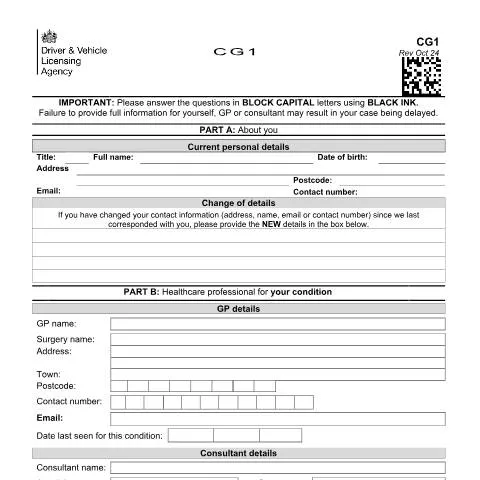
The CG1 form sits at the heart of this complex equation, serving as a mandatory reporting mechanism for cognitive impairment and memory-related conditions that could potentially affect driving ability. Unlike many administrative documents that deal with straightforward factual matters, this particular form requires individuals to engage in honest self-reflection about deeply personal aspects of their cognitive function whilst simultaneously authorising healthcare professionals to share sensitive medical information.
From early-stage dementia diagnoses to mild cognitive impairment awaiting further investigation, the CG1 captures a broad spectrum of conditions where the ability to safely operate a motor vehicle may be compromised. The form's design reflects the DVLA's understanding that cognitive decline rarely follows a linear path, and that driving ability can fluctuate significantly even within the same condition category.
Navigating the Disclosure Obligation: Who Must Complete Form CG1
The legal framework surrounding medical condition reporting creates specific obligations for drivers experiencing cognitive symptoms. Any licence holder who has been diagnosed with, or is suspected of having, conditions affecting memory and cognitive function must notify the DVLA using the CG1 form within specified timeframes.
This encompasses individuals who have received formal diagnoses of dementia, Alzheimer's disease, or other forms of cognitive impairment, as well as those currently undergoing diagnostic processes where memory concerns have been identified. Importantly, the obligation extends beyond formal medical diagnoses to include situations where family members, healthcare professionals, or the individual themselves have noticed concerning changes in memory function.
The Self-Assessment Challenge
One of the form's most complex aspects lies in its requirement for self-assessment of cognitive symptoms. Individuals must evaluate whether they need assistance with daily living activities due to memory problems, including managing household appliances, paying bills, or remembering medication schedules. This self-evaluation becomes particularly challenging when the very condition being assessed may affect one's ability to accurately judge their own limitations.
The form also requires honest reporting about driving-specific assistance needs, such as help with parking, operating vehicle controls, gear selection, navigation in familiar areas, understanding road signs, or remembering parking locations. These questions aim to capture the functional impact of cognitive changes rather than relying solely on medical diagnoses.
Healthcare Professional Coordination and Medical Information Sharing
The CG1 form establishes a triangular relationship between the licence holder, their healthcare providers, and the DVLA. This coordination proves essential because cognitive impairment assessment requires input from multiple medical perspectives, often involving general practitioners, consultant specialists, nurses, and dementia specialists working collaboratively.
| Healthcare Provider Type | Typical Role in Assessment | Information Required on Form |
|---|---|---|
| General Practitioner | Primary care coordination, initial assessment | Full contact details, date of last consultation |
| Specialist Consultant | Detailed diagnosis, treatment planning | Department, specialty, hospital details |
| Nurse/Dementia Specialist | Ongoing monitoring, practical assessment | Contact information, appointment scheduling |
The form requires comprehensive contact information for all relevant healthcare professionals, including names, addresses, telephone numbers, email addresses, and dates of recent consultations. This level of detail enables the DVLA to directly contact medical professionals for additional information or clarification when assessing fitness to drive.
Appointment Scheduling and Future Medical Contact
Beyond historical medical contact, the CG1 form captures forward-looking information about planned medical appointments. This proves particularly valuable because cognitive conditions often require ongoing monitoring, and the DVLA may need to coordinate their assessment timeline with existing medical care schedules.
The inclusion of next appointment dates allows the DVLA to potentially time their own medical examinations or driving assessments to complement rather than duplicate existing healthcare provider evaluations, creating a more efficient and less burdensome process for the licence holder.
The Voluntary Surrender Option: Understanding Early Exit Pathways
Embedded within the CG1 form lies a significant decision point that many applicants may not fully appreciate: the opportunity to voluntarily surrender their driving licence rather than undergo the full medical assessment process. This option reflects the DVLA's recognition that some individuals, upon reflection about their condition's impact on driving ability, may prefer to cease driving immediately rather than face potential uncertainty during the evaluation period.
Voluntary surrender carries immediate legal effect—once processed, the individual cannot legally drive and must return their physical licence document. However, this decision also provides closure and eliminates the stress associated with medical examinations, driving assessments, and the possibility of licence revocation following an adverse determination.
The form requires a signature and date for voluntary surrender, creating a formal legal record of the decision. Importantly, individuals choosing this path need not complete the remainder of the medical questionnaire, streamlining the process for those who have already decided to stop driving.
Reconsidering Driving Capability
For those who choose not to surrender their licence initially, the CG1 form serves as the gateway to the DVLA's medical assessment process. This decision commits the individual to providing comprehensive medical information and potentially undergoing additional examinations or practical driving assessments as determined necessary by the DVLA's medical advisers.
The form's structure acknowledges that this decision point may prompt individuals to consult with family members, healthcare providers, or other trusted advisers before proceeding, emphasising the recommendation to discuss the form's contents with healthcare professionals when uncertain about responses.
Practical Assessment Integration and On-Road Evaluation Requirements
The CG1 form specifically addresses previous on-road driving assessments conducted within the preceding twelve months, recognising that some individuals may have already undergone professional evaluation of their driving capabilities. These assessments, typically conducted by occupational therapists or driving instructors with specialist training, provide valuable objective data about functional driving ability that complements medical opinion.
When recent driving assessments exist, applicants must indicate this on the form and, where possible, provide copies of assessment reports. This information helps the DVLA determine whether additional practical evaluation is necessary or whether existing assessment data provides sufficient insight into current driving capability.
Clinical and Practical Assessment Coordination
The form prepares applicants for the possibility of future driving assessments, which combine clinical evaluation of cognitive function with practical demonstration of driving skills. These assessments typically occur at specialised centres where healthcare professionals can observe how cognitive impairment specifically impacts driving-related tasks such as hazard perception, decision-making under pressure, and multi-tasking while operating vehicle controls.
Understanding that such assessments may be required helps applicants prepare mentally and practically for this possibility, including arranging transportation to assessment centres and ensuring they bring necessary documentation such as current prescription medications or recent medical reports.
Medical Information Authorisation and Data Sharing Protocols
The CG1 form's authorisation section represents one of the most legally significant portions of the document, establishing comprehensive consent for medical information sharing between healthcare providers and the DVLA. This authorisation extends beyond simple permission, creating a framework for ongoing communication throughout the assessment process.
The authorisation specifically permits doctors, specialists, and appropriate healthcare professionals to disclose medical information relevant to fitness to drive. Importantly, this includes the ability for the initially authorised healthcare provider to delegate information-sharing responsibilities to other registered healthcare professionals who may have relevant knowledge about the applicant's condition.
Honorary Medical Advisory Panel Involvement
For complex cases, the form's authorisation extends to potential consideration by the Secretary of State's Honorary Medical Advisory Panels. These panels, composed of medical specialists with expertise in various conditions affecting driving ability, provide independent medical opinion when cases require specialist evaluation beyond standard assessment procedures.
The involvement of these panels ensures that decisions about fitness to drive benefit from the highest level of medical expertise available, particularly in cases involving rare conditions, unusual symptom presentations, or where standard assessment protocols may not adequately address the specific circumstances of an individual's condition.
Panel members operate under strict confidentiality principles, ensuring that sensitive medical information receives appropriate protection whilst enabling thorough medical evaluation of driving fitness.
Administrative Precision and Form Completion Requirements
The CG1 form demands exceptional attention to administrative detail, requiring completion in block capital letters using black ink—specifications that reflect the document's legal significance and the need for clear, unambiguous information processing. These requirements ensure that handwritten information can be accurately transcribed and processed within the DVLA's administrative systems.
Contact information updates receive particular emphasis, with dedicated sections for reporting changes to addresses, names, email addresses, or telephone numbers since previous DVLA correspondence. This reflects the critical importance of maintaining current contact details throughout what may be an extended assessment process involving multiple communications and potential appointments.
Documentation and Evidence Requirements
Beyond the form itself, applicants must consider supporting documentation that may strengthen their case or provide additional context for medical assessment. Recent medical reports, consultant letters, medication lists, or previous driving assessment reports all contribute to a comprehensive picture of the individual's current condition and its impact on driving ability.
The form's emphasis on providing complete information for both the applicant and their healthcare providers reflects the DVLA's experience that incomplete submissions often result in significant delays while additional information is sought. This administrative efficiency consideration becomes particularly important for individuals whose conditions may be progressive, where delays could affect the relevance of medical information.
Legal Implications and Ongoing Compliance Obligations
Completion of the CG1 form initiates a formal legal process that extends beyond simple form submission. The declaration section creates legally binding commitments regarding the accuracy of provided information and ongoing cooperation with the DVLA's assessment process. Individuals must understand that providing false or misleading information constitutes a serious offence that could result in prosecution and immediate licence revocation.
The form establishes ongoing obligations to notify the DVLA of any significant changes in medical condition, treatment, or functional ability that might affect the assessment outcome. This means that the relationship with the DVLA continues throughout the assessment period and potentially beyond, depending on the final determination regarding fitness to drive.
For individuals whose licences are ultimately retained subject to medical monitoring, the CG1 form may represent the first in a series of regular medical reporting requirements designed to ensure continued fitness to drive as their condition evolves over time. Understanding these potential ongoing obligations helps applicants make informed decisions about whether to proceed with the assessment process or choose voluntary licence surrender.
The intersection of medical privacy, public safety, and personal mobility rights creates a complex legal landscape that the CG1 form must navigate carefully. By establishing clear protocols for information sharing, assessment procedures, and decision-making processes, the form provides a structured approach to balancing these competing interests whilst ensuring that decisions about driving fitness rest on comprehensive medical evidence rather than assumption or generalisation about particular conditions.
Specific Medical Conditions and CG1 Requirements
Different medical conditions carry varying obligations under the DVLA notification system, with some requiring immediate reporting whilst others may be assessed on a case-by-case basis. Understanding these distinctions is crucial for maintaining your legal driving status.
Cardiovascular conditions represent one of the most scrutinised categories. Heart attacks, regardless of severity, must be reported immediately, with driving typically prohibited for at least four weeks following the incident. Angina sufferers may continue driving provided symptoms don't occur at rest or with emotion, though any deterioration requires fresh notification. Those with pacemakers or implantable cardioverter defibrillators face specific restrictions—driving is usually prohibited for one week after implantation for Group 1 vehicles, extending to six weeks for Group 2 licences.
Neurological conditions demand particularly careful consideration. Single seizures trigger automatic licence revocation, with a minimum 12-month seizure-free period required before reapplication. However, provoked seizures caused by specific triggers (such as alcohol withdrawal or sleep deprivation) may have shorter restriction periods if the underlying cause is addressed. Stroke survivors typically face a one-month driving ban, though this may extend significantly if cognitive or physical impairments persist.
Mental health conditions present unique challenges in CG1 reporting. Severe depression requiring hospitalisation, bipolar disorder with recent manic episodes, or psychotic conditions typically necessitate notification. However, mild anxiety or depression managed successfully with stable medication may not require reporting unless it significantly impairs driving ability. The DVLA considers factors including medication side effects, concentration levels, and decision-making capacity when assessing mental health notifications.
Diabetes management varies considerably between insulin and non-insulin dependent cases. Type 1 diabetics must notify the DVLA immediately upon diagnosis, whilst Type 2 diabetics only need to report if they're prescribed insulin or certain medications like sulphonylureas. Hypoglycaemic episodes while driving trigger mandatory reporting, particularly if awareness of low blood sugar is impaired. Recent changes allow some insulin-treated diabetics to hold Group 2 licences under strict monitoring conditions.
Vision-related conditions require immediate attention when they affect the legal visual standards. These include diabetic retinopathy, glaucoma, macular degeneration, or any condition causing visual field defects. Even temporary vision loss following eye surgery may require notification, though cataract operations typically don't necessitate DVLA contact unless complications arise.
The Medical Assessment Process: What Happens After Submission
Once your CG1 form reaches the DVLA's medical branch in Swansea, a structured assessment process begins that can take several weeks to complete. Understanding this timeline helps manage expectations and plan accordingly.
Initial processing typically takes 2-3 weeks, during which administrative staff verify your details and allocate your case to an appropriate medical advisor. The DVLA employs qualified doctors who specialise in assessing fitness to drive, though they may not be specialists in your particular condition. Your case complexity determines whether it's handled by a general medical advisor or referred to a specialist consultant.
Medical evidence gathering forms the cornerstone of assessment. The DVLA will contact your GP, consultant, or specialist directly, requesting detailed medical reports. These reports must be provided at no cost to you under NHS regulations, though private healthcare providers may charge fees. The medical advisor examines recent test results, treatment responses, medication effects, and prognosis to determine your driving fitness.
Some cases require additional assessments beyond standard medical reports. Driving assessments may be arranged through occupational therapy services, particularly for physical disabilities or cognitive impairments. These practical evaluations test your ability to operate vehicle controls safely and make appropriate driving decisions. Vision assessments might be conducted at approved optometry practices if standard eye tests prove insufficient.
The decision-making process considers multiple factors beyond your medical condition itself. These include your driving history, previous DVLA interactions, medication compliance, and lifestyle factors affecting your condition management. For progressive conditions like dementia or Parkinson's disease, the DVLA might issue shorter licence periods requiring regular medical updates rather than permanent revocation.
Communication during assessment typically occurs through postal correspondence, though urgent cases may receive telephone contact. The DVLA doesn't routinely provide progress updates, but you can contact their medical enquiries line for status updates if your case exceeds normal processing times. Remember that driving while your case is under review may be prohibited depending on your specific condition and circumstances.
Appeal processes exist for unfavourable decisions, involving independent medical panels and potentially magistrates' courts. However, these procedures are lengthy and complex, making accurate initial reporting and comprehensive medical evidence submission crucial for achieving satisfactory outcomes.
Managing Your Licence During Medical Reviews
The period between reporting your medical condition and receiving the DVLA's decision creates practical challenges requiring careful navigation to maintain legal compliance whilst preserving mobility where possible.
Immediate driving restrictions apply to certain conditions regardless of your submission timing. Heart attacks, seizures, sudden vision loss, or severe psychiatric episodes typically require immediate driving cessation. Continuing to drive in these circumstances constitutes an offence, potentially invalidating insurance and creating liability for any incidents. However, many conditions allow continued driving pending DVLA assessment, provided you remain confident in your driving ability.
Insurance implications during medical reviews require proactive management. Most insurers must be notified of medical conditions that could affect driving, separate from DVLA requirements. Failure to disclose relevant conditions may invalidate policies, leaving you personally liable for accident costs. Some insurers offer specific support for drivers with medical conditions, though premiums may increase depending on perceived risk levels.
Provisional arrangements might be necessary for some licence holders. If your condition requires periodic assessment, the DVLA may issue licences valid for shorter periods—perhaps one, two, or three years instead of the standard ten-year validity. These arrangements require regular medical updates but allow continued driving under monitored conditions.
Employment considerations become particularly relevant for professional drivers or those whose jobs require driving. Group 2 licence holders face stricter medical standards, with some conditions automatically disqualifying drivers from commercial vehicle operation whilst permitting private car use. Understanding these distinctions helps in career planning and ensures appropriate alternative arrangements are made when necessary.
Family and support network involvement often becomes important during medical reviews, particularly for conditions affecting cognitive function or awareness. Relatives may need to understand the legal implications of allowing someone to drive with unreported conditions, as they could face liability issues. Constructive family discussions about mobility alternatives and support arrangements often prove beneficial during assessment periods.
Documentation management throughout the review process requires systematic organisation. Keep copies of all correspondence with the DVLA, medical reports, and assessment results. Maintain records of any driving restrictions you've imposed on yourself and evidence of condition management through medication compliance or lifestyle modifications. This documentation proves valuable if appeals become necessary or for future licence renewals.
Alternative transport planning should begin immediately upon reporting serious conditions. Investigate local public transport options, community transport services, or family support arrangements. Many areas offer specialised transport for people with medical conditions, though waiting lists may apply. Early planning prevents isolation and maintains independence even if driving restrictions are imposed.