When Your Medical History Requires DVLA Notification: Understanding DR1 Form Requirements
Thousands of UK drivers face the challenging moment when their medical condition requires formal declaration to the Driver and Vehicle Licensing Agency. The DR1 form represents a critical junction where personal health circumstances intersect with legal driving privileges, particularly for those dealing with alcohol-related disorders. This isn't merely administrative paperwork—it's a comprehensive assessment tool that determines whether someone can safely remain behind the wheel whilst managing their medical condition.
The DR1 form specifically addresses alcohol disorders, a category that encompasses everything from controlled drinking patterns to severe dependency requiring medical intervention. Unlike other DVLA medical declarations, this form requires detailed disclosure about treatment history, current consumption patterns, and potential high-risk factors that could compromise road safety. The stakes are considerable: incomplete or inaccurate submissions can result in licence suspension, whilst honest disclosure may lead to conditional licensing with regular review requirements.
Identifying Who Must Complete This Declaration
The DR1 form isn't required for every driver who occasionally drinks alcohol—it specifically targets those whose relationship with alcohol has required medical intervention or reached levels that could impair driving safety. Current licence holders must submit this form when they've experienced alcohol withdrawal seizures, undergone medically-assisted alcohol withdrawal (detoxification), or been diagnosed with an alcohol disorder by a healthcare professional.
The definition of alcohol disorder extends beyond obvious dependency cases. It includes individuals who've required prescribed medication to stop drinking, those who've experienced blackouts or memory loss related to alcohol consumption, and people whose drinking patterns have necessitated medical supervision during cessation attempts. Even drivers who've completed alcohol treatment programmes may need to declare their condition if they're applying for licence renewal or following up on previous medical declarations.
High-Risk Categories Requiring Extended Abstinence
The DVLA distinguishes between standard alcohol disorders and high-risk features that trigger more stringent licensing requirements. High-risk features specifically include alcohol withdrawal seizures and situations where medication-assisted withdrawal was necessary. These circumstances require a minimum one-year abstinence period before licensing consideration, followed by ongoing abstinence monitoring for at least three years post-licensing.
For standard alcohol disorders without these high-risk elements, the requirement reduces to six months of demonstrated abstinence or controlled drinking within recommended limits. However, controlled drinking means adhering strictly to the UK Chief Medical Officers' guideline of no more than 14 units weekly, spread across at least three days with alcohol-free periods.
Navigating the Healthcare Professional Requirements
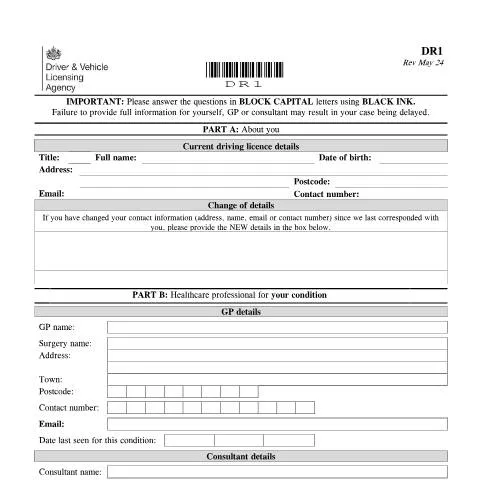
Part B of the DR1 form demands comprehensive details about both GP and consultant involvement in your alcohol-related care. This isn't optional—incomplete healthcare professional information frequently causes processing delays. The DVLA requires current contact details for your GP surgery, including the specific doctor's name who's familiar with your condition, full surgery address, and direct contact numbers.
If you've seen a consultant for alcohol-related treatment, their details become equally crucial. This includes specialists in addiction medicine, psychiatrists who've provided alcohol disorder treatment, or hospital consultants who've overseen detoxification programmes. The form specifically asks for the date you last consulted each professional regarding your alcohol condition—not general health appointments, but consultations specifically related to your alcohol disorder.
When Multiple Healthcare Providers Are Involved
Many individuals with alcohol disorders receive care from multiple professionals: their GP for ongoing monitoring, addiction specialists for treatment programmes, and hospital consultants for acute interventions. The DR1 form accommodates this complexity by requesting details for both GP and consultant care, but you must prioritise the most relevant recent contact for your alcohol condition.
If you've changed healthcare providers during treatment, provide details for the professional who has the most comprehensive understanding of your current condition and treatment progress. The DVLA may contact multiple healthcare providers if necessary, but they need one primary contact who can coordinate information sharing.
Decoding the Medical Standards and Abstinence Requirements
The DR1 form's medical questionnaire section requires precise answers about your alcohol consumption patterns and treatment history. Question 1 addresses whether you've required prescribed medication for alcohol cessation—this includes both inpatient detoxification programmes and outpatient medication-assisted treatment. The distinction matters because medically-assisted withdrawal automatically places you in the high-risk category requiring extended abstinence.
The alcohol withdrawal seizure question (Question 2) specifically refers to seizures caused by alcohol withdrawal, not seizures that occurred whilst under the influence. This medical distinction is crucial—alcohol withdrawal seizures indicate severe physical dependency and automatically trigger the one-year abstinence requirement plus ongoing monitoring.
| Risk Category | Required Abstinence Period | Post-Licensing Monitoring |
|---|---|---|
| Standard alcohol disorder | 6 months abstinence or controlled drinking | Regular review as determined |
| High-risk features present | 1 year complete abstinence | 3 years ongoing abstinence |
| Multiple high-risk episodes | Extended periods as assessed | Indefinite monitoring |
Understanding Alcohol Unit Calculations
Questions 4 and 5 require honest assessment of current drinking patterns using standardised alcohol units. The form provides detailed unit calculations, but many people underestimate their actual consumption. A standard 250ml glass of 12% wine contains 3 units—not the single unit many assume. Similarly, a pint of premium strength lager can contain 3 units rather than the 2 units of regular strength beer.
The DVLA's unit reference guide helps ensure accurate reporting, but remember that pub measures often exceed standard units, and home pours typically contain more alcohol than calculated portions. If you're declaring controlled drinking rather than complete abstinence, accurate unit calculation becomes essential for meeting licensing requirements.
Submission Process and Documentation Requirements
The DR1 form must be completed in black ink using block capital letters—this isn't merely preference but a processing requirement. Handwritten forms in other colours or cursive writing can cause scanning difficulties and processing delays. Each section requires complete information; partially completed forms are automatically returned, adding weeks to the assessment timeline.
Before submission, verify that all healthcare professional details are current and complete. The DVLA will contact these professionals directly, and outdated contact information creates immediate delays. If you've recently changed address, GP surgery, or contact details, use the change of details section in Part A to ensure correspondence reaches you promptly.
The signed declaration at the end isn't merely formality—it's a legal statement confirming the accuracy of all provided information. False declarations can result in prosecution under the Road Traffic Act 1988, potentially leading to fines up to £1,000 and licence revocation.
Supporting Medical Evidence
While the DR1 form doesn't explicitly request additional documentation, the DVLA may require supporting medical evidence depending on your responses. This could include discharge summaries from detoxification programmes, consultant letters confirming treatment completion, or ongoing monitoring reports from addiction services. Gathering these documents proactively can expedite the assessment process if requested.
Processing Timeline and DVLA Decision Outcomes
DVLA medical assessments for alcohol disorders typically take 6-12 weeks, though complex cases involving multiple healthcare providers or incomplete information can extend significantly longer. The timeline begins when DVLA receives your complete DR1 form and supporting documentation—not when you post it.
During assessment, DVLA medical advisors review your form responses against current medical standards for driving. They may request additional information from your healthcare providers, arrange for independent medical examinations, or require practical driving assessments. Each additional requirement extends the processing timeline, emphasising the importance of complete initial submissions.
Potential Decision Outcomes
DVLA decisions on alcohol disorder cases fall into several categories. Unconditional licensing occurs when you meet all medical standards with no ongoing concerns. More commonly, conditional licensing involves regular review periods—typically annually for the first three years—with requirements for ongoing medical monitoring.
Some decisions result in licence refusal until specific conditions are met, such as completing extended abstinence periods or undergoing specialist treatment programmes. In severe cases, particularly those involving repeated high-risk episodes, licences may be revoked indefinitely pending comprehensive medical reassessment.
Managing Ongoing Compliance and Review Requirements
If granted conditional licensing following DR1 submission, you'll receive specific requirements for ongoing compliance. These typically include regular medical reviews with your GP or specialist, periodic completion of follow-up questionnaires, and immediate notification of any changes in your alcohol consumption patterns or medical treatment.
Review periods commonly occur at 1, 2, and 3-year intervals, with the frequency decreasing as you demonstrate sustained compliance with licensing conditions. However, any new alcohol-related medical episodes, treatment requirements, or consumption increases must be reported immediately regardless of scheduled review dates.
Understanding the DR1 form's role in this broader monitoring framework helps set realistic expectations about the ongoing relationship between your medical condition and driving privileges. The form represents the beginning of a structured assessment process designed to balance individual mobility needs with public road safety requirements—a balance that continues throughout your driving career when managing alcohol-related medical conditions.
Managing Your DR1 Application During Medical Treatment
When you're undergoing active medical treatment, managing your DR1 form submission requires careful coordination with your healthcare timeline. The DVLA recognises that medical conditions often involve ongoing treatment phases, and your driving entitlement may need to be reviewed at different stages of your care journey.
If you're currently receiving treatment that could affect your condition's impact on driving, you should indicate this clearly in Section 4 of the DR1 form. For instance, if you're undergoing chemotherapy for cancer, your driving ability might be temporarily impaired during treatment cycles but could improve during recovery periods. Similarly, if you're taking new medication for a heart condition, the initial adjustment period might affect your driving differently than once the medication is stabilised.
The DVLA may issue a short-period licence (typically 1, 2, or 3 years) rather than the standard licence validity period when your medical condition is being actively managed. This allows for regular review as your treatment progresses. You'll receive a renewal notice before your short-period licence expires, but it's advisable to maintain regular contact with your GP or specialist to ensure any significant changes in your condition are reported promptly.
For conditions requiring surgical intervention, timing your DR1 submission strategically can prevent unnecessary licence restrictions. If you're scheduled for surgery that's expected to resolve or significantly improve your condition (such as cataract surgery or cardiac procedures), you might discuss with your doctor whether to submit the form before or after the procedure, depending on your current driving ability and the expected recovery timeline.
Keep detailed records of your treatment schedule, medication changes, and any side effects that might affect driving. This information becomes crucial if the DVLA requests additional medical evidence or if your condition changes after submitting your initial DR1 form. Some applicants find it helpful to maintain a simple diary noting good and bad days, particularly for fluctuating conditions like multiple sclerosis or epilepsy.
Special Considerations for Different Licence Categories
The DR1 form applies to all UK driving licence categories, but the medical standards vary significantly between ordinary Group 1 licences (cars and motorcycles) and Group 2 licences (lorries and buses). Understanding these distinctions is crucial because a condition that allows you to retain a car licence might disqualify you from holding an HGV or PCV entitlement.
For Group 1 licences, the DVLA applies a more lenient standard, recognising that private car use is often essential for daily life, employment, and independence. Many conditions that would prevent Group 2 licensing are compatible with continued car driving, provided you can demonstrate safe control of the vehicle. For example, someone with well-controlled diabetes using insulin might retain their car licence with regular medical reviews but would lose Group 2 entitlements.
Group 2 licence holders face stricter medical standards due to the greater responsibility of driving larger vehicles carrying passengers or freight. Professional drivers submitting DR1 forms should be particularly aware that even minor medical conditions might affect their vocational entitlement while leaving their car licence unaffected. Conditions affecting concentration, reaction time, or physical control capabilities are scrutinised more rigorously for professional drivers.
If you hold both Group 1 and Group 2 entitlements, clearly indicate in your DR1 form which categories you're reporting about. The DVLA may remove only the affected categories while preserving others. For instance, if you develop a heart condition that disqualifies you from driving buses but not cars, you might retain categories A, B, and BE while losing D and D1 entitlements.
Motorcycle riders should note that certain conditions affecting balance, coordination, or limb function may specifically impact motorcycle safety even if car driving remains possible. The DR1 form allows you to specify which vehicle types you feel your condition affects, helping the DVLA make appropriate licensing decisions for each category you hold.
Remember that surrendering higher categories voluntarily through the DR1 process doesn't prevent you from reapplying later if your medical condition improves. However, you'll need to meet the medical standards current at the time of reapplication, which may have changed since your original entitlement was granted.
Understanding DVLA Decision Timelines and Review Processes
The DVLA's decision-making process for DR1 applications involves multiple stages, and understanding these can help you plan accordingly and manage expectations. Initial processing typically takes 6-8 weeks from receipt of your completed form, though this can extend significantly if additional medical evidence is required or if your case requires specialist medical panel review.
Simple cases where the medical evidence clearly supports continued driving might be resolved more quickly, potentially within 3-4 weeks. These often involve well-documented conditions with established DVLA guidance, such as controlled diabetes or stable heart conditions where your doctor has provided comprehensive supporting evidence. Conversely, complex cases involving rare conditions, multiple medical issues, or conflicting medical opinions may take several months to resolve.
The DVLA operates a three-tier medical review system. Initial assessment by medical staff handles straightforward cases using established guidelines. More complex applications are referred to Senior Medical Advisers who have additional expertise in specific medical areas. The most challenging cases may go to a Medical Advisory Panel comprising specialists in relevant fields, which meets periodically to review difficult decisions.
During the review process, you may receive additional questionnaires or requests for updated medical reports. Responding promptly to these requests prevents further delays. If the DVLA requests an independent medical examination, this typically indicates they need more detailed assessment of your functional abilities rather than just medical history. These examinations are conducted by DVLA-appointed doctors and focus specifically on driving-related capabilities.
If your application is refused or restrictions are imposed that you consider inappropriate, you have the right to appeal. The appeals process involves an independent review of your case, often including consideration of additional medical evidence you provide. However, appeals can take several months to resolve, so it's often more effective to work collaboratively with the DVLA initially by providing comprehensive medical evidence with your DR1 form.
For urgent cases where you need a quick decision due to employment requirements or essential travel needs, you can contact the DVLA's medical enquiry line to explain your circumstances. While this won't guarantee faster processing, it may help prioritise your application if genuine urgency can be demonstrated. However, the DVLA maintains that thorough medical assessment cannot be rushed without compromising road safety standards.