Understanding the Gastrointestinal Bacteria Food and Environmental Sample Referral Form
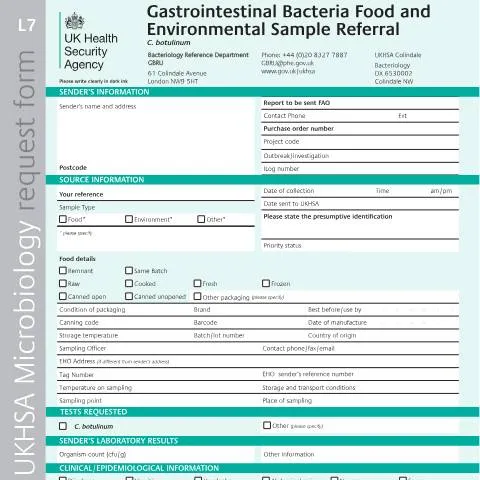
The Gastrointestinal Bacteria Food and Environmental Sample Referral Form serves as a critical tool in the realm of public health management. This document falls under the jurisdiction of the UK Health Security Agency (UKHSA), designed to facilitate the referral of samples suspected of containing harmful gastrointestinal bacteria. As food safety becomes an increasingly pressing concern, understanding the proper use and completion of this form is essential for healthcare professionals and environmental health officers alike.
Who Needs to Engage with This Form?
This form is primarily utilized by professionals in health and environmental sectors, particularly:
- Environmental Health Officers (EHOs): These individuals often collect samples from food establishments, public spaces, or other environments where contamination might occur.
- Laboratory Technicians: Those working in labs that analyze food and environmental samples also need to understand how to fill this form accurately.
- Healthcare Providers: Clinicians or public health officials may initiate the referral process when they suspect a link between symptoms in patients and potential foodborne pathogens.
The form may also be relevant for:
- Food Business Operators: They may need to complete the form in cases of outbreaks linked to their establishments.
- Public Health Investigators: Engagement in outbreak investigations can necessitate the use of this referral form to gather pertinent samples for testing.
Delving into the Form's Sections
The Gastrointestinal Bacteria Food and Environmental Sample Referral Form is structured to capture a wide range of information that is crucial for the analysis and tracking of gastrointestinal pathogens. Let's examine the various sections of the form in detail.
Date and Symptom Information
Within the initial section, you will find space to document key information:
- Date of onset: This should reflect the first date symptoms were noted, formatted as DD/MM/YYYY.
- Duration of symptoms: Provide a brief account of how long the symptoms persisted.
- Number of symptomatic individuals: It is important to quantify how many people are affected, which aids in determining the scale of a potential outbreak.
Clinical Symptoms
Detailed symptoms are vital for appropriate testing. This section includes boxes to indicate symptoms such as:
- Diarrhoea
- Vomiting
- Fever
- Headache
- Abdominal pain
- Nausea
Each symptom must be marked clearly. Omitting details could lead to misdiagnosis or mismanagement of the outbreak.
Sample Information
The form requires specifics about the samples being referred:
- Sample Type: Indicate whether the sample is from food, the environment, or other sources by ticking the appropriate box.
- Presumptive Identification: If any preliminary testing has occurred, document any presumptive identification of pathogens, such as C. botulinum.
It is crucial to fill in this section accurately, as it determines the priority status and subsequent tests requested.
Sender's Information
Completing the sender's information accurately is paramount for communication. The sender’s name, address, and contact phone number should be noted clearly:
- Sender’s Laboratory Results: Any results from tests conducted by the sender should also be included.
- Contact Phone: A direct line is necessary for follow-up queries or clarifications from UKHSA.
Navigating Common Pitfalls
Completing the referral form accurately is non-negotiable, as errors can lead to significant delays or improper testing. Here are common pitfalls to watch out for:
- Illegibility: Always write clearly in dark ink. Illegible handwriting can complicate communication and processing.
- Incomplete Information: Ensure that all required fields are filled; leaving sections blank can lead to forms being rejected or returned.
- Incorrect Format: Dates should be in the correct format (DD/MM/YYYY) to prevent confusion.
Understanding the Processing Timeline
In the interest of public health, the referral process has specific timelines that need to be adhered to. Here’s a general overview:
- Sample Collection: The first step is the collection of samples, which should be done promptly following the identification of symptoms.
- Form Submission: Once the form is filled out, it should be sent to UKHSA without delay. The date of sending should be noted on the form.
- Processing Time: Upon receipt, the UKHSA will initiate testing. While specific processing times can vary, stakeholders should expect results typically within a week.
- Reporting: The results will be sent to the contact person specified on the form, ensuring that the relevant authorities can take swift action.
Legal and Ethical Considerations
When handling this form, several legal frameworks come into play, particularly regarding data protection. The Data Protection Act 2018 and UK GDPR stipulate that personal data must be processed fairly, transparently, and for legitimate purposes.
Those filling out the form must ensure that:
- Personal data is kept confidential and shared only with authorized personnel.
- Individuals involved in submitting forms are informed of their rights regarding personal data.
Non-compliance with these standards can lead to severe legal ramifications for both individuals and organizations.
Tracking Sample Status and Following Up
Understanding how to track the status of submitted samples is vital. Here’s how to ensure you stay informed:
- Contacting UKHSA: Use the provided contact numbers to inquire about the status of your referral. Always reference your project code or submission details when following up.
- Documentation: Keep a copy of the completed referral form for your own records. This can help in tracking the process and addressing any issues that arise.
- Timely Follow-ups: If there is no response within the expected timeframe, do not hesitate to reach out for updates.
Consequences of Incomplete Submissions
Failing to provide complete and accurate information on the Gastrointestinal Bacteria Food and Environmental Sample Referral Form can have significant repercussions:
- Delayed Results: Incomplete submissions may lead to delays in processing and results, potentially worsening public health risks.
- Legal Ramifications: Poor record keeping and submission can lead to breaches of data protection laws.
- Missed Public Health Insights: Incomplete or inaccurate data can hinder the identification of outbreak sources, making it harder to implement necessary preventive measures.
Being diligent and thorough in completing the form can facilitate swift public health responses, ultimately protecting the community.
Conclusion: The Importance of Diligence and Accuracy
The Gastrointestinal Bacteria Food and Environmental Sample Referral Form is more than just a bureaucratic necessity; it is a critical component in safeguarding public health. By adhering to detailed guidelines and ensuring accurate completion, professionals can play their part in maintaining food safety standards and addressing potential outbreaks efficiently. Whether you are an EHO, lab technician, or healthcare provider, your diligence can make a significant difference in public health outcomes.