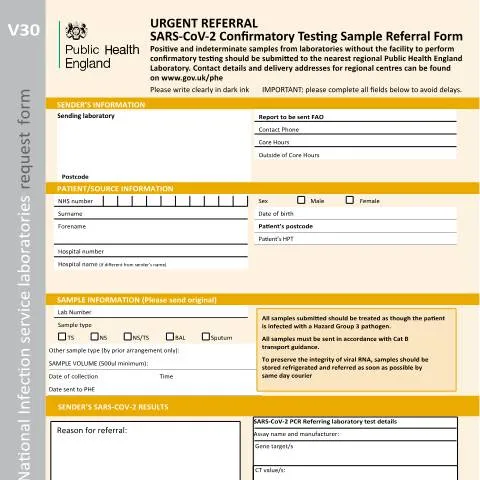
Navigating the V30 SARS-CoV-2 Confirmatory Testing Sample Referral Form
In the context of the ongoing global pandemic, the importance of proper testing and referral processes cannot be overstated. The V30 SARS-CoV-2 Confirmatory Testing Sample Referral Form issued by Public Health England (PHE) is a critical instrument designed to ensure accurate identification of COVID-19 cases. Understanding the intricacies of filling out and submitting this form is vital for healthcare professionals and laboratories involved in SARS-CoV-2 testing.
Triggering Events: When to Use the V30 Form
The circumstances prompting the use of the V30 form typically arise from laboratory results indicating a positive or indeterminate SARS-CoV-2 test result in facilities that lack the capability for confirmatory testing. In such cases, the referring laboratory must submit samples to a PHE regional laboratory for further analysis. The referral process fundamentally hinges on the urgency of obtaining reliable results to guide public health interventions.
- Positive Results: Samples that yield positive results but require confirmation.
- Indeterminate Results: Samples that do not provide a clear diagnosis and need further testing.
Identifying the Right Laboratory
Before completing the V30 form, it’s essential to determine the nearest PHE regional lab equipped to handle these samples. A comprehensive list of contact details and delivery addresses for these centres can be found on the GOV.UK website. This step is crucial to ensure timely processing and accurate reporting.
Dissecting the Form: Completing Each Section
Completing the V30 form requires meticulous attention to detail. Each section of the form must be filled out clearly, as incomplete submissions can lead to delays in processing.
Sender’s Information
The first section requests the sender's details, which should include the laboratory's name, address, and postcode. Additionally, contact information is vital:
- Contact Phone: To enable swift communication if any issues arise.
- Core Hours: Indicate the hours during which the laboratory operates.
- Outside of Core Hours: Provide contact details for emergency situations.
Patient/Source Information
This section captures essential demographic details about the patient, including:
- Date of Birth: To verify identity and ensure accurate record-keeping.
- Patient's Postcode: Important for geographical tracking and epidemiological analysis.
- NHS Number: A unique identifier for NHS services.
Sample Information
Correctly detailing the sample information is perhaps the most critical part of the form. This includes:
- Sample Type: Indicate if it’s a throat swab (TS), nasopharyngeal swab (NS), bronchoalveolar lavage (BAL), or another type.
- Sample Volume: Ensure that the minimum volume of 500µl is met to avoid rejection.
- Date of Collection: Record the exact date and time to maintain a clear timeline.
SARS-CoV-2 Results from Sending Laboratory
Documenting the sending laboratory's results can be pivotal. This section should include:
- Assay Name and Manufacturer: To specify the testing method used.
- CT Values: Details that may assist in determining the viral load.
- Limit of Detection: Worth mentioning as it provides additional context regarding the test's sensitivity.
Urgency and Compliance: The Importance of Timely Submission
The urgency of SARS-CoV-2 confirmatory testing cannot be overstated. All submissions must be sent according to the guidelines provided by PHE, which emphasise that samples should be treated as potentially infectious. Laboratories need to follow Category B transport guidance for the safe transit of samples.
- Refrigeration: Samples should be stored at appropriate temperatures to preserve the integrity of the viral RNA.
- Same-Day Courier: If possible, samples should be referred on the same day to minimise delays in testing.
Addressing Challenges: What to Do in Cases of Refusal or Errors
Given the critical nature of the referral process, it’s essential to be prepared for potential issues. Common challenges include:
- Refusal of Sample: If a laboratory refuses a sample, confirm if all fields were filled out correctly and if the sample met the volume requirements.
- Errors in Submission: If an error is identified post-submission, contact the receiving laboratory immediately to rectify the situation or provide additional information.
Missing Documentation
In cases where required documentation is missing, the sample may not be processed. It is advisable to double-check all fields before sending the form. In addition, keeping a copy of the submitted form can facilitate follow-ups if needed.
Monitoring Progress: How to Track Your Submission
Following the submission of the V30 form, it’s vital to keep abreast of the processing status. Contact the laboratory to confirm receipt of the sample and inquire about the expected timeline for results. It’s common for laboratories to have standard operating procedures for tracking submissions, which can provide reassurance and clarity.
Understanding the Reporting Process
Once testing is complete, the results will be reported back to the sender, typically to the individual whose contact information is provided in the sender’s section. Here’s how the reporting process generally works:
- Results are verified by the laboratory.
- A report is generated and sent to the designated contact person.
- Positive or indeterminate results may trigger further public health actions.
Timelines and Notifications: The Calendar of SARS-CoV-2 Testing
Understanding the timelines associated with the V30 form and testing is crucial for planning and response. Key dates include:
- Date of Collection: Documented on the form, serving as the starting point for the testing timeline.
- Date Sent to PHE: Marks when the sample was dispatched, which is essential for tracking how long results take.
- Expected Reporting Date: While this can vary, laboratories typically provide estimated turnaround times.
Subsequent Actions Post-Testing
Depending on the results, subsequent actions may include:
- Contacting the patient regarding their health status if positive.
- Implementing necessary public health measures if there is a confirmed case in the community.
- Documentation for epidemiological tracking purposes.
Profiles of Users: Who is Required to Submit the V30 Form?
The V30 form is predominantly used by healthcare professionals in laboratories, including:
- Public Health Laboratories: Responsible for community health monitoring and response.
- Private Testing Facilities: In cases where confirmatory testing is not possible.
- NHS Hospitals: For patients requiring confirmatory testing before treatment or isolation protocols.
Special Circumstances and Exceptions
There may be specific cases that necessitate special handling or expedited processing, including:
- High-Risk Patients: Individuals who have been in contact with confirmed cases may require priority testing.
- Outbreak Situations: In community or workplace outbreaks, rapid testing and confirmation may be essential.
Final Thoughts: Emphasising Accuracy and Compliance
In navigating the complexities of the V30 SARS-CoV-2 Confirmatory Testing Sample Referral Form, accuracy and attention to detail are paramount. Each section of the form plays a crucial role in ensuring that samples are correctly processed and results are reported in a timely manner. By adhering to the guidelines set forth by Public Health England and being vigilant about completing the form with care, healthcare professionals can significantly contribute to managing the COVID-19 response effectively.
Understanding the V30 SARS-CoV-2 Confirmatory Testing Sample Referral Form
In the context of the COVID-19 pandemic, the V30 SARS-CoV-2 Confirmatory Testing Sample Referral Form is an essential component of the UK's public health strategy. This form is primarily used to facilitate the referral of samples for confirmatory testing once a preliminary positive result for the virus has been recorded. Understanding the importance of this form and how to fill it correctly is crucial for healthcare professionals involved in the testing and diagnostic process.
The primary objective of the V30 form is to ensure that samples are accurately tracked and tested in a timely manner, thus aiding in effective disease management and outbreak control. Each section of the form is specifically designed to capture critical information, including the patient's details, the laboratory that conducted the initial test, and any relevant clinical information that may affect the interpretation of the confirmatory test results.
Healthcare professionals must be diligent in completing the V30 form, as inaccuracies can lead to delays in diagnosis and further spread of the virus. Moreover, adhering to data protection regulations outlined in the Data Protection Act 2018 is vital, ensuring that all personal data is handled correctly and securely throughout the referral process.
Specific Considerations When Completing the V30 Form
Completing the V30 SARS-CoV-2 Confirmatory Testing Sample Referral Form requires attention to detail to avoid common pitfalls. Each field on the form serves a distinct purpose and should be filled with accurate information. Here are some key considerations:
- Patient Identification: Always confirm the accuracy of the patient's name, date of birth, and National Health Service (NHS) number. Mistakes in this section can lead to sample mix-ups, complicating patient care.
- Initial Test Information: Clearly specify the details of the laboratory that conducted the preliminary test, including the lab's contact information and the test method used. Understanding the context of the initial result helps the confirmatory lab tailor its testing process.
- Sample Type and Collection Date: Indicate the type of sample being referred (e.g., nasopharyngeal swab, saliva) and the date it was collected. This information is vital for the laboratory to assess the viability of the sample and for interpreting the confirmatory test results accurately.
As public health guidance continues to evolve, it is essential for healthcare professionals to stay informed about any updates to the V30 form or associated procedures, ensuring best practices are followed to maintain patient safety and effective disease management.
The Role of Confirmatory Testing in Public Health Strategy
Confirmatory testing plays a critical role in the UK’s response to the COVID-19 pandemic. While initial tests, such as rapid antigen tests, provide quick results for screening purposes, confirmatory PCR tests are necessary to verify positive cases and ensure accurate reporting. This step is vital for several reasons:
- Accuracy of Data: Confirmatory testing enhances the reliability of COVID-19 statistics, which are essential for informing government policy and public health interventions. Accurate data helps in understanding the extent of the virus's spread and informs resource allocation.
- Guiding Treatment Decisions: For patients who test positive for SARS-CoV-2, confirmatory tests can provide critical information regarding the strain of the virus. This information can be pivotal in determining appropriate treatment plans and monitoring for potential complications.
- Public Health Surveillance: The data collected from confirmatory tests contributes to ongoing public health surveillance efforts. These efforts are essential for tracking variants, assessing the effectiveness of vaccines, and planning for future outbreaks.
The process of referral through the V30 form ensures that samples are directed to the appropriate laboratories equipped to handle confirmatory testing, thereby supporting the overall public health objective of controlling the virus's spread effectively.