When Clinical Suspicions Point to Specialist Gastrointestinal Pathogens
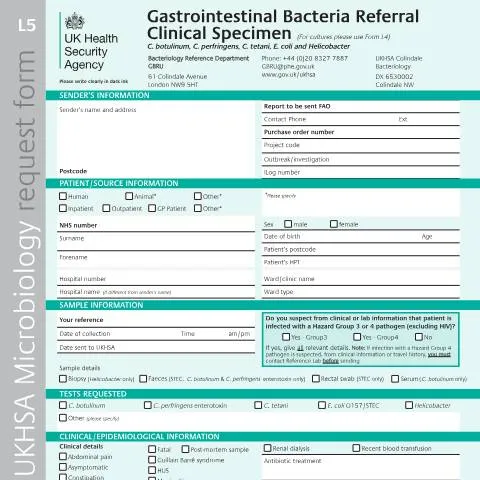
In the complex landscape of gastrointestinal infections, certain bacterial pathogens require specialist investigation beyond routine hospital microbiology. The Gastrointestinal bacteria clinical referral form (L5) from the UK Health Security Agency serves as the gateway for clinicians to access expert testing for five critical organisms: Clostridium botulinum, C. perfringens enterotoxin, C. tetani, E. coli O157/STEC, and Helicobacter species. This specialised referral pathway connects frontline healthcare with the Gastrointestinal Bacteria Reference Unit (GBRU) at UKHSA Colindale, where advanced diagnostic capabilities can definitively identify pathogens that might otherwise evade detection.
The form's significance extends beyond routine testing—it captures critical epidemiological data that feeds into national surveillance systems, outbreak investigations, and public health responses. Each submission potentially contributes to the broader understanding of foodborne illness patterns, antimicrobial resistance trends, and emerging threats to gastrointestinal health across the UK.
Navigating the Clinical Scenarios That Trigger Referral
The L5 form's clinical details section presents a comprehensive checklist of presentations that warrant specialist investigation. Understanding when to deploy this referral requires clinical judgement that balances symptom severity, epidemiological risk factors, and the limitations of local laboratory capabilities.
Gastrointestinal Presentations and Their Pathogen Associations
Bloody diarrhoea represents one of the most compelling indications for STEC (Shiga toxin-producing E. coli) testing, particularly when accompanied by abdominal pain and recent consumption of undercooked beef or contaminated vegetables. The form specifically accommodates watery diarrhoea as a separate category, reflecting the different pathogenic mechanisms and diagnostic approaches required for organisms like C. perfringens enterotoxin.
The inclusion of neurological symptoms acknowledges the systemic complications that can arise from gastrointestinal infections. Guillain-Barré syndrome, though more commonly associated with Campylobacter, may occasionally prompt investigation for other enteric pathogens. Encephalitis and meningitis options reflect the potential for certain gastrointestinal bacteria to cause extraintestinal manifestations.
Helicobacter referrals often arise in the context of asymptomatic patients undergoing investigation for peptic ulcer disease or gastric malignancy, where specialist typing or resistance testing may be required beyond routine clinical testing.
High-Stakes Clinical Scenarios
The form's provision for fatal post-mortem samples underscores its role in investigating deaths where gastrointestinal pathogens may have contributed. These cases demand meticulous documentation and rapid processing, as they may have medicolegal implications or indicate wider public health threats.
Haemolytic uraemic syndrome (HUS) represents a medical emergency where STEC investigation becomes critical for both patient management and family screening. The form's capture of this specific complication ensures appropriate prioritisation at the reference laboratory.
Decoding Sample Requirements and Collection Protocols
The L5 form's sample information section reveals the sophisticated diagnostic approaches employed for different pathogens. Each organism requires specific sample types and collection methods that reflect their biological characteristics and detection methodologies.
| Pathogen | Preferred Sample Type | Alternative Samples | Special Considerations |
|---|---|---|---|
| C. botulinum | Faeces, Serum | Clinical specimens | Serum essential for toxin detection |
| C. perfringens enterotoxin | Faeces | - | Enterotoxin-specific testing |
| STEC/E. coli O157 | Faeces, Rectal swab | - | Rectal swab for specific circumstances |
| Helicobacter | Biopsy | Clinical specimens | Tissue samples for culture/typing |
Critical Timing Considerations
The form captures both date of collection and date sent to UKHSA, recognising that transport delays can significantly impact diagnostic yield. For C. botulinum investigations, rapid processing of serum samples is crucial as botulinum toxin levels decline rapidly. STEC detection windows may also be limited, particularly if patients have received antimicrobial therapy.
The time of collection field, specified to include AM/PM designation, reflects the precision required for certain investigations. This granular timing data becomes particularly important in outbreak scenarios where exposure windows need precise definition.
Epidemiological Intelligence Gathering Through Form L5
Beyond individual patient diagnosis, the L5 form serves as a critical epidemiological surveillance tool. The travel history section, requesting countries visited in past 4 weeks, enables identification of imported infections and assessment of geographic risk patterns.
Outbreak Investigation Capabilities
The outbreak classification system distinguishes between sporadic cases, general outbreaks, and household outbreaks. This categorisation triggers different public health responses and determines the urgency of laboratory processing. Household outbreaks may indicate person-to-person transmission or shared exposure sources, while general outbreaks suggest wider community exposure requiring immediate public health intervention.
The number of symptomatic people field provides immediate insight into outbreak scale, while duration of symptoms helps characterise the clinical course and potential pathogen involved. These data points feed directly into UKHSA's national surveillance systems and outbreak response protocols.
Antimicrobial Treatment Documentation
Recording antibiotic treatment serves multiple purposes: it may explain negative culture results, influences interpretation of molecular testing, and contributes to antimicrobial resistance surveillance. For STEC infections, documenting antimicrobial exposure is particularly important as certain antibiotics may increase toxin production and worsen clinical outcomes.
Biosafety Protocols and Hazard Group Pathogen Considerations
The form's biosafety section addresses one of the most critical aspects of specialist referral—the potential presence of Hazard Group 3 or 4 pathogens. This classification system reflects the increasing containment requirements and potential for serious human disease or community spread.
When clinical or laboratory information suggests Hazard Group 4 pathogen involvement, the form mandates pre-contact with the reference laboratory. This requirement ensures appropriate biosafety preparations and may trigger alternative transport arrangements or processing protocols. Examples might include patients with viral haemorrhagic fever symptoms where gastrointestinal involvement is suspected, or exposures in laboratory workers handling dangerous pathogens.
The travel history becomes particularly relevant in this context, as certain geographic regions carry higher risks for exotic pathogens. Recent travel to areas with endemic viral haemorrhagic fevers, for instance, would necessitate enhanced precautions even for routine gastrointestinal investigations.
Administrative Pathways and Processing Infrastructure
The form's sender information section reflects the complex healthcare ecosystem involved in specialist referrals. Samples may originate from inpatients, outpatients, GP practices, or other healthcare settings, each with different urgency levels and communication requirements.
Reference Laboratory Contact Protocols
The Gastrointestinal Bacteria Reference Unit operates from UKHSA Colindale, with dedicated phone lines (+44 20 8327 7887) and email contact ([email protected]) for urgent consultations. The DX postal system (DX 6530002 Colindale NW) provides secure document transmission for sensitive clinical information.
The report destination field ensures results reach appropriate clinical teams promptly. For outbreak investigations, reports may need distribution to multiple recipients including local health protection teams, infection control specialists, and public health officials.
Financial and Administrative Tracking
Purchase order numbers and project codes reflect the funding mechanisms underlying specialist testing. NHS providers typically have established agreements with UKHSA for routine referrals, but research projects or unusual investigations may require specific financial arrangements.
The outbreak/investigation ILog number connects individual samples to broader surveillance activities, enabling tracking of related cases and coordination of public health responses across different healthcare providers.
Quality Assurance and Regulatory Framework
Form L5 operates under UKHSA's standard terms and conditions, with version control ensuring consistency across the national referral network. The current version (BRDW0143.07) effective from April 2025 reflects ongoing updates to testing methodologies, biosafety requirements, and regulatory standards.
The instruction to "write clearly in dark ink" may seem antiquated in the digital age, but reflects the critical importance of legible clinical information. Misread patient identifiers or clinical details can compromise both individual patient care and public health investigations.
Data Protection and Clinical Governance
Patient identifiers including NHS number, hospital number, and demographic data must comply with Data Protection Act 2018 and UK GDPR requirements. The form's structured approach to data collection ensures appropriate consent pathways and legitimate interests for public health surveillance.
Hospital postcode and health protection team (HPT) designation enable appropriate result distribution and follow-up actions. Local HPTs coordinate outbreak responses and may require immediate notification of certain findings before formal laboratory reports are issued.
Maximising Diagnostic Yield Through Strategic Form Completion
Effective use of Form L5 requires understanding the reference laboratory's capabilities and limitations. Each pathogen presents unique diagnostic challenges that influence sample selection, timing, and clinical information requirements.
For C. botulinum investigations, providing detailed clinical history including onset timing and neurological progression helps laboratory staff prioritise appropriate testing algorithms. Botulism diagnosis often relies on clinical correlation rather than positive cultures, making comprehensive clinical information essential.
Vaccination history becomes particularly relevant for tetanus investigations, where immunisation status influences both clinical presentation and diagnostic interpretation. Recent vaccination may alter serological findings and affect treatment decisions.
The "other comments" section provides opportunity to include crucial clinical context that doesn't fit standard categories. Details about food exposures, family member illnesses, or unusual clinical features can significantly influence laboratory testing strategies and result interpretation.
Optimising Outbreak Investigation Submissions
During outbreak investigations, coordinating multiple L5 submissions requires systematic approach to ensure comprehensive epidemiological data capture. Consistent completion of travel history, symptom onset timing, and exposure information across related cases enables sophisticated statistical analysis and source identification.
The reference laboratory may request additional samples or information based on initial findings, making accurate sender contact details and responsive communication pathways essential for successful outbreak resolution.
Supporting Documentation and Laboratory Requirements
When submitting a gastrointestinal bacteria clinical referral form, the completeness and quality of supporting documentation directly influences laboratory processing times and diagnostic accuracy. The UK Health Security Agency and NHS laboratory networks have established specific requirements that vary depending on the suspected pathogen and clinical presentation.
Specimen collection containers must meet strict standards. For routine bacterial culture, laboratories typically require fresh stool samples in leak-proof, sterile containers without preservatives. However, when Clostridium difficile is suspected, some laboratories accept samples in anaerobic transport medium, particularly for patients in remote locations where immediate processing isn't feasible. The referral form should clearly indicate if alternative collection methods were necessary due to clinical circumstances.
Critical documentation includes the antimicrobial history covering the 30 days preceding specimen collection. This encompasses not only prescribed antibiotics but also over-the-counter preparations, probiotics, and any traditional remedies that might influence bacterial flora. Laboratories use this information to interpret culture results and assess the likelihood of antimicrobial-resistant organisms or treatment-related complications like antibiotic-associated diarrhoea.
Travel documentation requires particular attention when patients have visited areas with endemic gastrointestinal pathogens. The form should specify exact destinations, duration of stay, and potential exposure risks such as consuming untreated water, street food, or contact with animals. For travellers returning from regions with known cholera outbreaks or multidrug-resistant Salmonella strains, laboratories may initiate enhanced testing protocols based solely on travel history documented in the referral.
When healthcare-associated infections are suspected, the referral must include detailed facility exposure information. This covers recent hospital admissions, care home residence, or contact with healthcare settings within 12 weeks of symptom onset. Such documentation triggers specific laboratory protocols for detecting healthcare-associated pathogens like C. difficile or vancomycin-resistant enterococci that require specialised culture conditions.
Immunocompromised patients require enhanced documentation detailing their underlying condition, current medications affecting immune function, and any recent procedures or treatments. Laboratories may extend incubation periods, use additional selective media, or perform molecular testing for opportunistic pathogens based on this clinical context. The referral should specify the degree of immunosuppression, as this influences both testing protocols and infection control measures.
Specialist Referral Pathways and Consultant Input
Complex gastrointestinal bacterial infections often require specialist gastroenterology or infectious diseases input beyond routine laboratory investigation. The clinical referral form serves as the initial gateway to these specialist pathways, with specific documentation requirements that differ from standard laboratory requests.
Gastroenterology referrals typically focus on patients with persistent symptoms, inflammatory complications, or suspected inflammatory bowel disease exacerbated by bacterial infections. The referral form should detail the chronological relationship between bacterial infection and underlying gastrointestinal conditions. For patients with known Crohn's disease or ulcerative colitis, documenting recent flare patterns, current medications, and response to standard bacterial infection treatments helps gastroenterologists assess whether specialist intervention is required.
When invasive bacterial infections are suspected, such as Salmonella bacteraemia or Campylobacter with systemic complications, the referral pathway may involve both gastroenterology and infectious diseases specialists. The form should clearly indicate systemic symptoms like fever patterns, blood culture results if available, and any evidence of complications such as reactive arthritis or Guillain-Barré syndrome that can follow certain gastrointestinal bacterial infections.
Paediatric considerations require age-specific documentation when referring children with suspected bacterial gastroenteritis. Growth parameters, feeding patterns, and developmental considerations must be included, as these influence both diagnostic approaches and treatment decisions. For infants under 12 months, the referral should specify feeding method (breast milk, formula, weaning foods) as this affects bacterial flora interpretation and infection risk assessment.
Public health referrals become necessary when bacterial infections have potential community transmission implications. The referral form should identify if the patient works in food preparation, healthcare, childcare, or other settings where transmission risks are elevated. Local Health Protection Teams use this information to initiate contact tracing and outbreak investigation procedures when indicated by laboratory results.
Specialist referrals for persistent or recurrent infections require documentation of previous treatment courses, including specific antimicrobials used, duration of therapy, and clinical response patterns. This helps specialists assess whether treatment failure represents antimicrobial resistance, inadequate dosing, patient compliance issues, or underlying immunological problems requiring further investigation.
Quality Assurance and Laboratory Communication Protocols
Effective communication between clinical teams and laboratory services depends on standardised quality assurance measures built into the gastrointestinal bacteria clinical referral process. These protocols ensure that critical results reach clinicians promptly while maintaining accuracy and appropriate clinical context.
Urgent result pathways are triggered by specific clinical scenarios documented on referral forms. Suspected Shigella infections in institutional settings, bloody diarrhoea in immunocompromised patients, or severe dehydration in elderly patients may qualify for expedited processing. Laboratories maintain 24-hour contact protocols for such cases, but clinicians must clearly indicate the clinical urgency and provide direct contact details on the referral form.
Critical value reporting follows established protocols when laboratories identify potentially life-threatening pathogens or antimicrobial resistance patterns. The referral form's clinical contact information becomes crucial during out-of-hours periods when primary teams may not be immediately available. Secondary contact details, including on-call services or specialist teams, should be provided for high-risk patients or complex clinical scenarios.
Laboratory feedback mechanisms allow clinicians to query results or request additional testing based on clinical developments after initial referral submission. Many NHS laboratory systems maintain electronic communication channels where clinicians can provide updated clinical information that might influence ongoing testing or result interpretation. The original referral form serves as the baseline reference for such communications.
Infection control notifications are automatically triggered by certain bacterial isolates identified through routine processing of clinical referrals. Clostridium difficile, MRSA, or carbapenem-resistant Enterobacteriaceae detection prompts immediate notification to infection control teams, who use referral form information to assess transmission risks and implement appropriate isolation measures.
Antimicrobial stewardship integration utilises referral form data to support hospital-wide antimicrobial optimisation programmes. Pharmacy teams review bacterial culture results alongside documented antimicrobial history from referral forms to identify opportunities for treatment streamlining or resistance prevention strategies. This systematic approach helps reduce unnecessary broad-spectrum antimicrobial use while ensuring appropriate targeted therapy.
Quality monitoring systems track referral form completeness and accuracy metrics, feeding back to clinical teams about documentation standards and their impact on laboratory efficiency. Regular audits assess whether missing information on referral forms contributes to diagnostic delays or inappropriate testing, supporting continuous improvement in the clinical referral process.