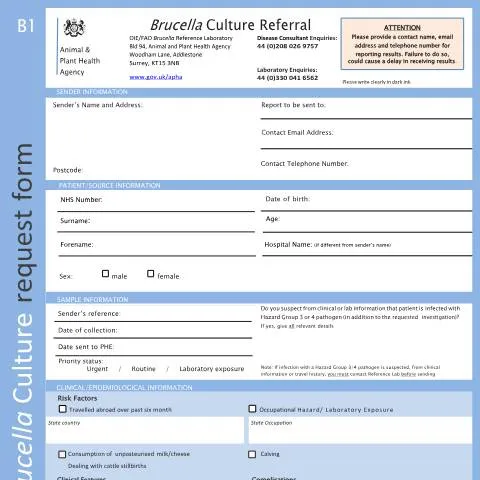
Navigating Brucella Culture Referral: A Critical Process for Health Professionals
For healthcare providers, the Brucella Culture Referral Form plays an essential role in diagnosing and managing potential cases of brucellosis. This zoonotic infection poses significant health risks, and accurate testing is paramount. Therefore, understanding the intricacies of this form, the process it entails, and the responsibilities of all parties involved is crucial for effective public health management.
Understanding the Context: When to Use the Brucella Culture Referral Form
Brucellosis is often linked to occupational hazards, especially for those working in agriculture or veterinary medicine. Not only does this infection threaten individual health, but it can also lead to wider outbreaks if not managed correctly. The UK Health Security Agency (UKHSA) has established this referral form to streamline the testing process for suspected cases, ensuring that samples are evaluated in a timely and efficient manner.
It is imperative for healthcare professionals to be aware of the conditions under which they should utilize this form:
- Clinical suspicion of brucellosis based on symptoms and patient history.
- Occupational exposure to potentially infected animals or environments.
- Travel history to endemic regions within the past six months.
Identifying Risk Factors and Clinical Signs
Before initiating the referral, healthcare providers must assess various risk factors that can indicate a brucellosis infection:
- Travel History: Recent travel to areas where brucellosis is endemic.
- Occupational Exposure: Work with livestock or in laboratories with potential exposure to Brucella species.
- Consumption of Unpasteurized Products: Eating or drinking unpasteurized dairy products can increase infection risk.
Common clinical features of brucellosis include:
- Acute onset of fever and headaches.
- Insidious weight loss and fatigue.
- Other symptoms may involve joint pain or complications like epididymo-orchitis.
The Role of the Referral Form in Patient Management
Once a potential case of brucellosis is identified, the Brucella Culture Referral Form must be completed accurately to ensure that samples are processed correctly. This document serves several critical functions:
- Facilitates communication between healthcare providers and the laboratory.
- Establishes a clear record of patient history and clinical findings.
- Indicates urgency levels, which can expedite testing and reporting.
Documenting Patient Information: A Detailed Breakdown
The completion of this form requires attention to detail, particularly when documenting patient information. The following aspects are critical:
- NHS Number: Essential for tracking the patient's health records.
- Date of Birth: Necessary for age-specific considerations in treatment and diagnosis.
- Contact Information: Ensure that a reliable contact name and telephone number are provided to facilitate prompt reporting of results.
Completing the Form: A Step-by-Step Guide
To ensure accurate submissions, healthcare professionals should adhere to the following guidelines when filling out the Brucella Culture Referral Form:
- Section Identification: Clearly fill out the sender and patient/source information sections. Use dark ink and print clearly.
- Clinical/Epidemiological Information: Detail any clinical signs or epidemiological factors that may indicate brucellosis.
- Sample Information: Indicate the date of sample collection and the date sent to the laboratory.
- Priority Status: Mark the urgency of the investigation to guide lab prioritization.
Common Pitfalls in Form Completion
While filling out the form, healthcare providers should be aware of common mistakes that may delay processing:
- Leaving sections incomplete or poorly written.
- Failing to provide a clear priority status.
- Omitting contact details for result reporting.
Submitting the Brucella Culture Referral Form: Channels and Procedures
Once the form is completed, the next step involves submission. The UKHSA has established various channels for returning this form:
- Online Submission: Some practices may offer electronic submission via secure portals.
- Postal Mail: The form can be sent directly to the OIE/FAO Brucella Reference Laboratory at the address provided on the form.
- In-Person Submission: For urgent cases, healthcare providers may choose to deliver the form in person.
Understanding the Impact of Submission Methods
| Submission Method | Time to Process | Convenience Level | Recommended Use |
|---|---|---|---|
| Online | Fastest | High | Routine cases |
| Postal Mail | Variable | Moderate | Standard submissions |
| In-Person | Immediate | Low | Urgent cases |
What Happens Next? Tracking Your Submission and Results
After the referral form is submitted, healthcare providers must monitor both the laboratory’s processing of the sample and the subsequent reporting of results. Understanding the timelines and follow-up procedures is essential for effective patient management:
- Lab processing times can vary; urgent requests are prioritized, but normal cases may take longer.
- Results are communicated to the specified contact on the form. Regular follow-ups can help in obtaining timely information.
- If results are not received within expected timeframes, it is crucial to contact the laboratory directly using the provided hotline.
Post-Test Procedures: What to Expect
Upon receiving results, healthcare providers should be prepared to take the following actions:
- Review and interpret results in the context of the patient’s clinical history.
- Notify the patient and arrange for any necessary treatment or follow-up tests.
- Report any confirmed cases of brucellosis to public health authorities as mandated.
Promoting Best Practices in Healthcare: The Importance of Compliance
Adhering to the procedures outlined when using the Brucella Culture Referral Form is not just about compliance; it’s about fostering better health outcomes in the community. By ensuring that all forms are completed accurately and submitted promptly, healthcare professionals contribute significantly to disease control and prevention efforts.
Furthermore, awareness of one’s obligations under the Data Protection Act 2018 and UK GDPR is vital. All patient information must be handled with confidentiality and respect to ensure patient rights are upheld throughout the testing process.
Finally, as the landscape of public health evolves, continuous education and engagement with the UKHSA resources can empower healthcare providers to excel in their roles, ensuring that cases of brucellosis and other public health threats are addressed swiftly and effectively.
Understanding the Brucella Culture Referral Process
The Brucella culture referral process is crucial for the effective identification and management of brucellosis, a zoonotic infection caused by Brucella species. When a patient is suspected of brucellosis, clinicians must collect relevant specimens that will be sent to a designated laboratory for culture testing. This section will provide a comprehensive outline of the steps involved in the referral process, including specimen collection, transportation, and what to expect during the laboratory phase.
Specimen Collection and Submission
The initial step in the Brucella culture referral process involves the collection of appropriate specimens. Typically, blood samples are the most common specimens, but other bodily fluids such as bone marrow, lymph fluid, or urine may also be collected depending on the clinical presentation. It is essential to follow the safety protocols while collecting specimens to prevent contamination and ensure accurate results.
Clinicians should fill out the Brucella culture referral form, providing accurate patient details, clinical history, and any previous treatment history, as these can greatly influence the interpretation of results. The referral form helps laboratories prioritize the processing of the sample based on the patient's clinical urgency.
Transporting Specimens
Once the specimens are collected and the referral form is filled, they must be transported to the respective laboratory under specific conditions. Keeping the specimens at the correct temperature (usually refrigerated) is vital to preserve the viability of the bacteria until testing can commence. Laboratories will inform healthcare providers about the specific transport requirements and any necessary documentation, including transport containers that meet biohazard safety standards.
Laboratory Testing and Results Interpretation
Upon arrival at the laboratory, the specimens undergo a series of tests to isolate and identify the Brucella species. This may involve various culture media and incubation conditions unique to Brucella, as it requires specialized handling due to its pathogenic nature. The laboratory will document the findings in a report that includes the species identified, antibiotic susceptibility, and any notes regarding the clinical implications of the results. This information is vital for guiding treatment and informing public health actions if an outbreak is suspected.
Legal and Ethical Considerations in Brucella Culture Referrals
When dealing with infectious diseases such as brucellosis, it is critical to consider the legal and ethical frameworks that govern patient privacy, data protection, and public health reporting. Understanding these frameworks will help healthcare professionals navigate the complexities of managing sensitive health information while ensuring compliance with the UK's legal requirements.
Data Protection and Patient Consent
The processing of personal health data is governed by the Data Protection Act 2018 and the UK GDPR. This means that healthcare providers must obtain explicit patient consent before submitting any personal health information, including specimens for Brucella testing. Patients should be informed about how their data will be used, retained, and shared with laboratories and public health authorities. This transparency is crucial for maintaining trust and ensuring ethical standards in patient care.
In certain scenarios where there is a significant public health risk, such as a suspected outbreak of brucellosis, the requirement for patient consent may be waived. However, healthcare providers must still ensure that any data shared is anonymized where possible, in compliance with the principles outlined in the Data Protection Act.
Reporting Requirements for Communicable Diseases
Under UK law, healthcare providers have a legal obligation to report specific communicable diseases, including brucellosis, to Public Health England (PHE) or local health authorities. This reporting is essential for tracking disease outbreaks and implementing public health interventions. Healthcare professionals must be aware of the reporting criteria and the necessary timeline for such notifications. Failure to comply with these regulations can result in legal ramifications and public health risks.
Furthermore, laboratories are also required to report certain findings related to Brucella cultures, ensuring a coordinated response from health authorities. This network of reporting helps to monitor disease trends and facilitates swift action to mitigate risks to public health.
Challenges in Brucella Culture Testing and Management
Despite the importance of Brucella culture testing, several challenges can complicate the referral and diagnostic process. Understanding these challenges allows clinicians and laboratory personnel to take proactive measures to mitigate risks and improve patient outcomes.
Delays in Testing and Result Turnaround
One of the primary challenges faced in the Brucella culture referral process is the delay in testing and turnaround time for results. Brucella species are slow-growing organisms that require specific culture conditions, often leading to extended incubation times ranging from one to several weeks. This delay can result in prolonged uncertainty for patients and clinicians alike, which may impede timely treatment decisions.
To address this, healthcare providers should balance the need for prompt diagnosis with the understanding that Brucella cultures may take longer than conventional tests. Additionally, utilizing serological testing as a preliminary diagnostic tool can help provide quicker results while waiting for cultures to confirm the diagnosis.
Risk of False Negatives and Misinterpretations
False negatives can occur during the culture process, particularly if the specimen is improperly collected or transported. Misinterpretations of the results may also arise due to the non-specific nature of certain clinical presentations. It is essential for healthcare providers to remain vigilant and consider brucellosis as a possible diagnosis, especially in patients with relevant exposure history, even if initial test results are negative.
Collaboration between clinicians and laboratory staff is critical in these situations. Clear communication regarding symptoms, exposure risks, and other diagnostic findings can guide appropriate testing and follow-up actions. Establishing protocols for re-testing or alternative diagnostic strategies can also help mitigate the implications of false negatives.