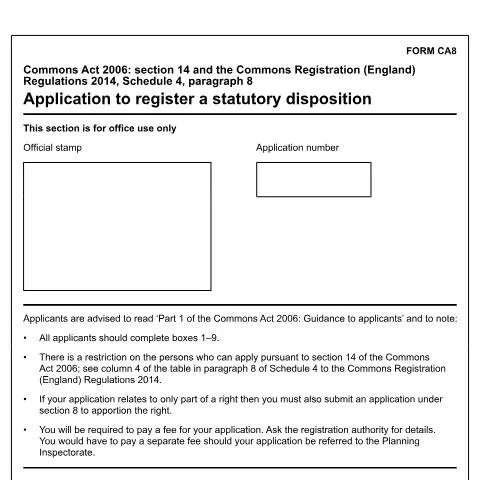
Understanding the Common Land and Greens: The Role of Form CA8
When it comes to the management and registration of common land and greens in England, the importance of documenting statutory dispositions cannot be overstated. This is where Form CA8 comes into play, acting as a critical instrument for applicants who seek to register changes concerning these pieces of land. Whether you are a land trust, local authority, or an individual representing a community group, understanding how to navigate this form is essential for effective land management.
The Journey Begins: When and Why to Use Form CA8
Before embarking on the application process, it’s crucial to understand when Form CA8 is necessary. This form is applicable under the Commons Act 2006, specifically section 14, and is primarily used to register statutory dispositions. Such dispositions can involve changes in rights associated with common land or new arrangements regarding its use. A typical scenario might include a local authority wishing to document a change in the ownership of a piece of common land, thereby ensuring that the records reflect current realities.
- Triggering Events: Changes in land ownership, alterations in rights of access, or resolutions made by community groups.
- Stakeholders: Local councils, community representatives, and landowners are typically the main applicants.
Differentiating Form CA8: Not Just Another Paperwork
Form CA8 can often be confused with other forms related to land registration. Understanding its unique position is vital. Unlike simple land transfer forms, CA8 is explicitly designed for statutory dispositions, meaning its use often involves legal complexities not found in other forms. For example, it requires applicants to demonstrate their eligibility under specific provisions of the Commons Registration (England) Regulations 2014.
This form serves a more specialized purpose, making it essential for applicants to pay close attention to its requirements. Misunderstanding its function could delay the registration process, potentially affecting community land use rights.
Clarifying the Registration Authority's Role
One of the first things to note when filling out Form CA8 is the necessity to identify the Commons Registration Authority. This authority oversees the registration process and determines the validity of the application. The authority will scrutinize the application to ensure it meets all legal requirements and guidelines set by the Commons Act 2006.
Identifying the appropriate authority is not merely a formality; it plays a critical role in determining the outcome of your application. Each authority may have specific procedures and timelines that differ, and being aware of these can significantly influence the efficiency of your application process.
Breaking Down Form CA8: Step by Step
Completing Form CA8 requires careful attention to detail. Each section of the form is designed to collect specific information necessary for the registration process. Let’s delve into the different sections of Form CA8 and what you need to keep in mind as you fill it out.
Section 1: Registration Authority Identification
The very first section asks for the name of the Commons Registration Authority. This is crucial as it dictates where the application will be sent for processing.
Section 2: Applicant Details
Providing accurate and clear details about the applicant is paramount. This section asks for the applicant’s name, address, and contact details. Misrepresentation or missing information could lead to delays or outright rejection of the application.
- Tip: Always double-check contact information to ensure you can receive communications promptly.
Section 3: Representative Information
If an applicant is using a representative, such as a solicitor, it’s necessary to complete this section. It ensures that all communications concerning the application will be directed to the representative, avoiding any potential miscommunication.
Section 4: Basis for Application
This section requires applicants to explain the basis of their application. You need to specify the relevant legal framework that justifies your request for registering a statutory disposition. Precise language is vital here, given the legal implications involved.
- Elements to Include:
- A clear description of the amendment required.
- The legal instrument that supports your application.
- Why you qualify as the applicant.
Section 5: Rights Affected by the Disposition
The next step involves specifying which rights are impacted by the statutory disposition. Here, clarity is essential as it directly relates to how the land can be utilized and who has rights to it.
If only part of a right is being altered, it’s necessary to indicate this in the application and potentially submit further documentation to apportion the rights accurately. Being thorough in this section can prevent administrative bottlenecks later.
Submission Channels: Where and How to Send Your Application
Once the form is completed, the next step is submission. Form CA8 can be submitted through various channels, each with its nuances:
- Online Submission: Some registration authorities may offer an online portal for submission. This method typically allows for quicker processing times and easier tracking of your application status.
- Paper Submission: If opting for a traditional approach, ensure that you send the completed form to the correct Commons Registration Authority. Always consider using a tracked delivery method to safeguard against any potential loss.
- In-Person Submission: Some applicants may prefer to deliver their application in person. This can provide an opportunity to ask any immediate questions and clarify any points directly with the registration staff.
Tracking the Progress of Your Application
After submission, staying informed about your application’s progress is crucial. Each Commons Registration Authority has different processing times and procedures. Contacting them after a certain period can provide you with updates and ensure your application is being processed as expected.
The Consequences of Non-Compliance
Failing to file Form CA8 or submitting an incomplete application can have significant repercussions. Not only could it delay the registration process, but it may also jeopardize rights to land usage that the applicant or their community depends upon.
- Potential Impacts:
- Loss of rights over local common lands.
- Legal disputes regarding land ownership.
- Financial costs related to rectifying errors.
Legal Rights and Obligations That Flow from Your Application
Completing Form CA8 isn’t just a procedural step; it has real implications for your rights and obligations concerning the common land in question. Once registered, your status as an interested party is officially recognized, providing you legal standing to voice concerns over changes that may affect the land.
Furthermore, compliance with registration laws can help prevent potential conflicts with other stakeholders, ensuring smoother land management practices.
Final Thoughts: Empowerment through Proper Registration
Form CA8 serves a vital purpose in the landscape of land management in the UK. By ensuring that statutory dispositions are properly documented, applicants not only protect their interests but also contribute to the broader goal of sustainable land use in their communities. Understanding the nuances of this form and the processes surrounding it will empower individuals and groups to navigate the complexities of land management more effectively.
In the often convoluted world of land registration, being informed and prepared can make all the difference. From completing the form accurately to understanding the implications of your application, staying proactive is crucial for safeguarding your community's land rights.
Understanding Common Land and Village Greens in the UK
Common land and village greens represent a unique aspect of land ownership and community rights in the UK. These areas are distinguished from other types of land due to their historical significance and the traditional rights they confer to local populations. Common land is often used for grazing livestock, while village greens are typically used for recreational purposes, such as picnics and community events. The legal framework governing these lands can be complex, involving various statutes and local regulations.
Under the Commons Act 2006, the definition and management of common land have evolved, emphasizing the need for proper stewardship and environmental protection. Local authorities are responsible for maintaining these lands, ensuring they are protected from inappropriate development and misuse. However, the specific regulations can vary significantly from one locality to another, making it essential for individuals and community groups to familiarize themselves with their rights and responsibilities regarding these communal spaces.
A pivotal aspect of common land is the rights of commoners—individuals who have historically held rights to graze animals, gather firewood, and engage in other activities on common land. These rights are often tied to specific properties and cannot be arbitrarily transferred. The establishment and protection of these rights are crucial for preserving the cultural and historical fabric of rural communities, especially in areas where common land has been declining due to urban development.
Application Process for Rights to Enclose Land
The process of claiming rights to common land or village greens, particularly the right to enclose land, is governed by specific statutory provisions. Those wishing to register these rights must submit an application to the appropriate local authority, often accompanied by evidence demonstrating their historical usage of the land. This can include testimonies from long-standing community members, historical documents, and maps indicating the use of the land over time.
It is important to note that enclosing common land is a sensitive issue and often requires the applicant to demonstrate that such a move is in the public interest. Local authorities are mandated to consider various factors, including the impact on the environment, community access, and the historical significance of the land. The application process may involve public consultation, where local residents can voice their opinions or concerns regarding the proposed enclosure. This ensures that decisions are made transparently and inclusively, reflecting the community's views.
Once the application is received, the local authority has a defined period to respond, typically outlined in the Commons Act 2006. If the application is granted, it may come with specific conditions designed to maintain public access and protect the land's ecological value. Conversely, if the application is denied, applicants can appeal the decision, often bringing their case before a tribunal with expertise in land law.
Challenges and Opportunities for Communities
As urban areas expand and rural populations evolve, the management of common land and village greens faces new challenges. Issues such as encroachment, misuse, and environmental degradation threaten the integrity of these communal spaces. Moreover, the rise of digital technology has transformed how communities engage with local governance, providing platforms for advocacy and awareness. Community groups can leverage social media and online campaigns to rally support for the preservation and better management of common land.
Opportunities also arise from these challenges. Increased public interest in environmental conservation has led to community-led initiatives aimed at restoring and enhancing common land. This can include rewilding projects, where communities work together to reintroduce native flora and fauna, or organize clean-up events to maintain the land's accessibility and beauty. Local authorities often support these initiatives by providing funding, resources, or expertise, facilitating partnerships between residents, conservationists, and local businesses.
Additionally, educational programs centered on the historical and ecological significance of common land can foster a deeper appreciation among younger generations. By engaging schools and community groups in activities related to common land, such as guided walks or workshops, individuals can develop a sense of ownership and responsibility towards these valuable resources.