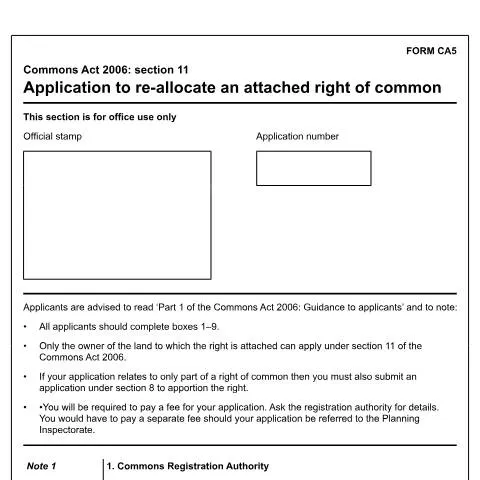
Understanding the Intricacies of the CA5 Form: A Vital Document for Common Land Rights
When it comes to managing land rights in the UK, the Common Land and Greens: Reallocating of a Right of Common (CA5) form plays a crucial role for landowners and stakeholders alike. Understanding how to properly complete and submit this form can greatly influence the management of common land rights.
Who Needs to Submit the CA5 Form?
The CA5 form is primarily intended for landowners who wish to reallocate a right of common associated with their land. This form applies specifically to those who hold rights attached to common land or village greens. If you are the sole owner of the land to which the right is attached, you are eligible to submit this application.
However, complexities may arise in various situations:
- Co-ownership: If multiple parties own the land, all owners must be listed in the application.
- Complex Rights: If the application pertains to only part of the right of common, a separate application must be submitted to apportion the right.
- Representatives: If you are using a representative, such as a solicitor, their details must be included in the form.
Preparing to Fill Out the CA5 Form
Before diving into the completion of the CA5 form, gather all necessary documents and information. This preparation will ensure a smoother process. Key items include:
- Details of the commons registration authority.
- The name and address of the applicant and any representative.
- A clear understanding of the land to which the right will be allocated.
- An Ordnance map of the land, clearly identifying boundaries.
- The appropriate application fee, which varies based on the specifics of your application.
The Significance of Accurate Mapping
One of the critical aspects of the CA5 form is the requirement for a detailed Ordnance map. This map must:
- Be at a scale of at least 1:10,560.
- Show the land in question, highlighting both the dominant tenement and the relevant part.
- Be submitted alongside the application to avoid any delays.
Failure to submit an accurate map can lead to complications in the application process, including potential refusals or the need for resubmission.
Step-by-Step Guide to Completing the CA5 Form
Filling out the CA5 form is not merely a matter of ticking boxes; each section is crucial for a successful application. Here’s a breakdown:
- Commons Registration Authority: Identify the authority that governs the common land.
- Name and Address of the Applicant: Provide full contact details. If more than one applicant is involved, include all names and addresses.
- Name and Address of Representative: If applicable, detail your representative’s information.
- Basis of Application: Specify relevant registration unit numbers and provide justification for the application.
- Identification of Land: Clearly name and describe the land to which the right will be attached.
Each part requires careful attention to detail to ensure compliance with the requirements set forth by the Department for Environment, Food & Rural Affairs.
Submission Channels: How to Submit Your CA5 Form
Submitting the CA5 form can be done through various channels, each with its benefits:
- Online Submission: Many authorities allow the CA5 form to be submitted electronically, which can expedite the process.
- Postal Submission: If you prefer traditional methods, you can mail the completed form to the relevant commons registration authority.
- In-Person Submission: Some applications may benefit from in-person discussions with authority staff, though this may depend on local policies.
It’s crucial to verify which submission methods are accepted by your commons registration authority to avoid delays.
What Happens After Submitting the CA5 Form?
Once you’ve submitted your CA5 form, the registration authority will process your application. Here’s what you can typically expect:
- Review Process: The authority will review your application against the relevant criteria.
- Potential Queries: Be prepared for the authority to reach out for further information or clarification.
- Decision Notification: You will receive a formal notification regarding the outcome of your application.
If your application is successful, the reallocation of the right of common will be officially registered, allowing you to exercise the rights associated with the land.
Handling Possible Refusals or Delays
In the event of a refusal, consider the following steps:
- Seek Further Information: Contact the registration authority to understand the reasons for refusal.
- Correct Errors: If the refusal was due to missing information or inaccuracies, rectify these issues and consider resubmitting.
- Appeal Process: If you believe the refusal was unjust, inquire about the appeal process available.
Consequences of Non-Compliance: The Importance of Timeliness
Completing and submitting the CA5 form in a timely manner is crucial. Delays or omissions can lead to significant consequences, including:
- Loss of Rights: Failure to act can result in the loss of the right of common.
- Legal Complications: Non-compliance with regulations may lead to disputes with other landowners or stakeholders.
- Financial Implications: Incurred fees for missed deadlines or reapplication could add up over time.
Revisiting and Modifying Your Application
Situations may change after you’ve submitted your application. If you need to make changes, it is essential to:
- Contact the Registration Authority: Inform them of your intention to modify the application.
- Provide Justification: Clearly state the reasons for any changes made.
- Follow Instructions: Adhere to the authority's guidelines regarding amendments.
Timely communication can prevent unnecessary complications and ensure your application remains valid.
Conclusion: Navigating the CA5 Form for Successful Land Management
By understanding the intricacies of the CA5 form and following the outlined steps diligently, landowners can navigate the complexities of common land rights. Whether you are reassigning a right of common or managing your landholdings, the CA5 form serves as a pivotal tool in ensuring your rights are recognized and upheld. Proper preparation, accurate completion, and timely submission are your keys to success in this essential administrative process.
Understanding Common Land and Greens in the UK
Common land and greens are unique features of the English landscape, deeply rooted in historical land use and community rights. Common land refers to land that is legally designated for the shared use and benefit of an identifiable group of people, known as commoners. This land can include meadows, forests, and pastures. Greens, on the other hand, are typically small areas of grassland within a village or town, often used for recreational purposes. Understanding the distinctions and legal frameworks around these types of land is crucial, especially when considering the reallocation of rights associated with them.
Historically, common land has provided communities with vital resources: grazing for livestock, firewood, and space for recreation, which are governed by specific rights of common, such as the right to graze animals or collect firewood. The management and rights of these lands can be complex because they often involve various stakeholders, including local authorities, environmental groups, and the commoners themselves.
The legal framework governing common land is primarily found in the Commons Act 2006, which introduced a registration system for common land rights, aiming to clarify who holds rights over the land and how those rights can be exercised. This has significant implications for any proposed reallocation of rights, as the Act sets out strict guidelines and procedures that must be followed to ensure that any changes are legally compliant and fair to all parties involved.
Fill in your form directly online
No printing: type your details into the boxes of the official form, tick, then download the PDF ready to send.
- 1Type into the form boxes
- 2Tick in one click
- 3Save and download the PDF
Reallocating Rights of Common: The Process Explained
The process of reallocating rights of common is not straightforward and is subject to strict legal regulations. If you are considering reallocating a right of common, it’s essential to understand the various steps involved. Firstly, you must determine the specific rights that are being considered for reallocation. This requires an examination of the rights registered under the Commons Act 2006, as well as any historical documents that may pertain to the land in question.
Once the relevant rights are identified, the next step is to seek the consent of those who currently hold these rights. This may involve formal negotiations with commoners and possibly other stakeholders, such as local councils or environmental organizations. It’s important to note that any reallocation cannot be made unilaterally; all parties with a vested interest must be consulted and their consent obtained for the process to proceed legally.
Following this, an application must be submitted to the Land Registry, which will assess the request based on existing legal frameworks. The application should include comprehensive documentation that illustrates the rationale behind the reallocation and how it benefits the community as a whole. The importance of transparency and community engagement cannot be overstated, as it significantly influences the acceptance of the proposal.
After submission, the registry will carry out a thorough review, which may involve public consultation. This is an opportunity for other stakeholders not directly involved in the negotiations to voice their opinions. The process can be lengthy, depending on the complexity of the rights involved and the level of community interest, so it is advisable to plan accordingly and manage expectations regarding timelines.
Challenges and Considerations in Common Land Reallocation
Reallocating rights to common land and greens poses several challenges that must be carefully navigated. One significant consideration is the historical significance of common land. Many communities have deep cultural ties to these lands, and any attempt to alter access rights can lead to disputes and resistance. It’s vital to engage with local history and community sentiments throughout the process to mitigate potential conflicts.
Moreover, there are practical challenges associated with monitoring and enforcing any new rights. Once rights are reallocated, clear guidelines must be established regarding usage, maintenance, and conflict resolution among users. Failure to do so can lead to overuse of the land, harming the environment and diminishing the resources available to all users.
Environmental considerations are also paramount. Common lands are often rich in biodiversity and can play a crucial role in local ecosystems. When considering reallocating rights, it is essential to assess the environmental impact of any proposed changes, ensuring that the reallocation does not inadvertently harm local habitats or species. Collaborating with environmental organizations during the planning phase can provide valuable insights into sustainable practices that protect these vital resources.
Finally, the legal framework must be thoroughly understood and adhered to. Non-compliance with the Commons Act 2006 or any other relevant legislation can result in costly legal challenges that can stall or entirely derail the reallocation process. Therefore, seeking legal advice from professionals experienced in land law and common rights is advisable to navigate the complexities involved.