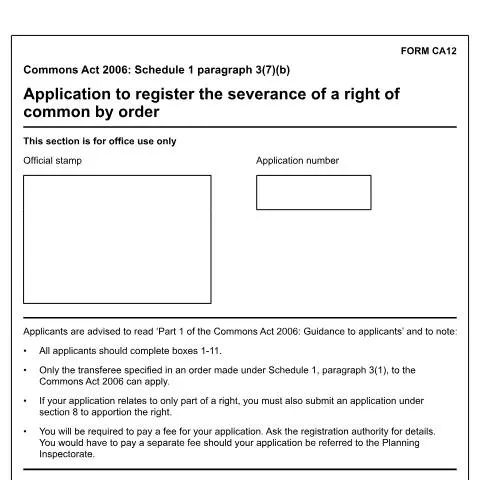
Navigating the CA12 Form: A Practical Guide
Understanding the intricacies of land rights in the UK can be daunting, especially when it comes to common land and greens. The CA12 form, essential for registering the severance of a right of common, is a key document in this process. This guide aims to demystify the CA12 application, outlining its significance, the workflow associated with it, and providing detailed instructions for successful completion.
The Importance of the CA12 Form in Land Management
The CA12 form plays a crucial role in the management of common lands as prescribed by the Commons Act 2006. This form must be completed to register a severance of common rights, which can have significant implications for both rights holders and landowners. Severance can lead to changes in usage rights, creating a need for clear documentation and appropriate applications.
Failure to properly register these changes can result in continued rights being exercised on land, leading to disputes and legal challenges. Therefore, understanding the repercussions of your application is vital.
Breaking Down the CA12: A Section-by-Section Analysis
Completing the CA12 form requires careful attention to detail. Each section must be filled out accurately to avoid delays or rejections. Below is a detailed breakdown of the form's structure and the specific requirements of each section.
1. Official Details
The initial part of the CA12 includes an area for official use only. This section records the application number and any official stamps. While applicants do not fill this out, it’s important to understand its purpose in tracking the application within the registration authority.
2. Applicant Information
In this section, the applicant must provide their name and address. Completeness is key here. If there are multiple applicants, all names and addresses need to be listed. If applicable, ensure that the full title of any corporate body is included. Providing an email address can facilitate communication, so think carefully about how you wish to receive correspondence.
- Tip: Double-check for spelling errors that could lead to miscommunication.
- Important: If representing an organization, ensure the details reflect the organization accurately to avoid issues of legitimacy.
3. Designated Representative
Should the applicant choose to appoint a representative, such as a solicitor, this section must be completed. All correspondence will be directed to the designated representative if filled out correctly. This can be particularly useful if the applicant may not be able to attend to all matters personally.
It is advisable to confirm that the representative is willing to accept this responsibility and that all contact details are accurate.
4. Basis for Application and Supporting Evidence
This section is critical as it outlines the legal basis for the severance. Applicants must reference the specific Statutory Instrument number as well as the details of any imposed requirements. This not only shows that the applicant understands the underpinning legislation but also provides necessary context for the registration authority.
- Ensure that any supporting documents are clearly labelled and referenced in the application.
- All requirements from the original order should be fulfilled and evidenced appropriately, as this may directly affect the approval of the application.
5. Identification of Rights
Here, the applicant specifies the unit number and the rights entry number related to the severance. This provides clarity on what specific rights are being affected by the application.
| Details Required | Importance |
|---|---|
| Registered Unit Number | Identifies the specific area of common land involved. |
| Registered Rights Entry Number | Clarifies the particular rights being severed. |
Timelines and Procedures: From Submission to Decision
The journey of a CA12 application begins with its submission and encompasses various stages until a decision is made by the relevant authority. Understanding this timeline can help applicants manage their expectations and prepare for any required follow-up.
1. Submission of the CA12 Form
Once filled out, the CA12 form must be submitted to the appropriate registration authority. Ensure that all required fees are enclosed, as failure to do so may result in the application being rejected.
2. Application Review Process
Upon receipt, the registration authority will review the application against the submitted evidence. This can take several weeks, and during this period, applicants may be asked for additional information or clarification. Maintaining open lines of communication with the authority can facilitate this process.
3. Decision Notification
Once the review is complete, the authority will issue a decision. Applicants will be notified whether the severance has been granted or if further actions are required. It's crucial to keep an eye on deadlines for potential appeals or additional applications.
What Happens After Submission? Adapting to Outcomes
The outcome of a CA12 application can vary. Successful applications result in the official severance of rights, while unsuccessful ones might require further adjustments or appeals. Understanding the possible outcomes will help you prepare accordingly.
1. If the Application is Successful
A successful application leads to the registration of the severance with the local registration authority. This change is recorded in the common land register, providing the applicant with clear documentation of their new rights or obligations.
- Ensure to retain copies of all documentation for future reference.
- Familiarize yourself with any new restrictions or responsibilities that may come with severance.
2. If the Application is Rejected
In the case of rejection, applicants must review the reasons provided. Often, issues arise from incomplete applications or insufficient evidence. It’s advisable to address the specific concerns noted by the authority and resubmit the application. Understanding the grounds for rejection can help strengthen future submissions.
Integrating the CA12 into Broader Land Management Practices
The CA12 form does not exist in isolation. It is part of a larger framework of land management practices that include other applications and forms related to land use. Understanding where the CA12 fits into this framework can enhance the applicant’s strategic approach to land management.
1. Related Applications and Forms
Applicants should be aware of other forms that may be required during the process, such as those related to planning permission or land registration. Having a comprehensive understanding of all necessary documentation ensures a smoother process.
2. Coordination with Local Authorities
Engaging with local authorities for guidance and clarification can provide invaluable support. These entities often have specific requirements or recommendations that can ease the burden of paperwork and ensure compliance with local regulations.
Practical Tips for Successful Applications
As a final note, here are some practical tips to enhance your experience with the CA12 application process:
Fill in your form directly online
No printing: type your details into the boxes of the official form, tick, then download the PDF ready to send.
- 1Type into the form boxes
- 2Tick in one click
- 3Save and download the PDF
- Review Thoroughly: Before submission, review the entire form for accuracy and completeness.
- Keep Records: Maintain copies of all correspondence and submitted forms for your records.
- Ask for Help: Don't hesitate to reach out to the registration authority or a legal advisor for assistance.
By ensuring a thorough understanding and careful navigation of the CA12 process, applicants can effectively manage their rights over common land and greens, contributing to more sustainable land use practices in the UK.
Understanding Common Land and Its Significance
Common land in the UK represents an integral aspect of the country's cultural heritage and landscape. These lands, traditionally used for grazing livestock, gathering wood, or harvesting wild fruits, form a unique connection between communities and their environment. The legal framework surrounding common land is rooted in historical rights, which have evolved over centuries. It is crucial for individuals and local authorities to understand the implications of common land rights, especially in the context of community access and environmental management.
In many cases, common land is also a vital habitat for wildlife and plays an essential role in biodiversity. It is important to note that the rights associated with common land, such as the right of common, can often be severed or restricted. This is where orders like the 'severance of a right of common by order (CA12)' come into play, allowing local authorities or landowners to modify or extinguish these rights under specific circumstances.
The Process of Severing Rights of Common
The process of severing a right of common typically involves a legal order that must be carefully executed and justified. This can occur for various reasons, including land development, conservation efforts, or changes in land use. It is essential that the process adheres to the guidelines established under the Commons Act 2006, which provides a framework for managing common land in England and Wales.
Firstly, before an order is made, a consultation process is usually initiated. This involves notifying the rights holders and local community members who may be affected by the proposed severance. The consultation aims to gather feedback and address any concerns regarding the impact of the severance. It is crucial for landowners and local authorities to consider the opinions of those with vested interests, which often leads to a more informed decision-making process.
Following the consultation, if the decision is made to proceed with the severance, the order must be submitted to the relevant authority for approval. This approval process includes a thorough examination of the reasons for the severance, potential alternatives, and the overall impact on the community and environment. In some cases, a public inquiry may be required if there are significant objections or complexities involved.
Legal Recourse and Appeals
When a severance order is issued, it can be subject to legal challenges. Rights holders and community members who feel that their interests have been inadequately considered or harmed can appeal the decision. This appeal process is conducted through the Planning Inspectorate, which examines whether the proper procedures were followed and whether the decision aligns with the policies governing common land.
It is essential for appellants to gather evidence supporting their claims, which can include testimonials from other rights holders, environmental assessments, and documentation of community usage of the land. The appeal process provides an opportunity for the local community to voice their concerns about the potential loss of rights and to seek redress.
Moreover, understanding the nuances of the legal framework, including the Data Protection Act 2018 and UK GDPR, is vital when dealing with personal data during this process. Rights holders must be aware of how their data is used in consultations and appeals, ensuring that their personal information is protected in accordance with the law.