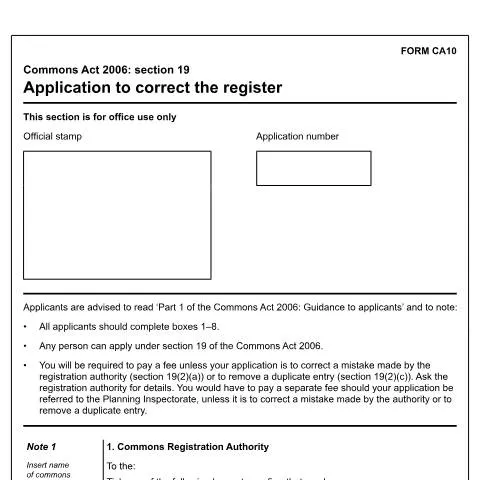
Unraveling the CA10 Form: Your Gateway to Correcting Common Land Entries
The complexities of land registration can confuse even the most seasoned individuals. The Common Land and Greens: Correcting a Mistake in the Register (CA10) form plays a pivotal role in ensuring that the public register accurately reflects the rights and responsibilities surrounding common land and greens in England. As part of the process established by the Commons Act 2006, this form empowers applicants to rectify errors, ensuring that property records are both accurate and transparent.
Understanding the Underlying Legal Framework
At the core of the CA10 form lies the Commons Act 2006, specifically section 19. This Act provides a framework that enables individuals and organizations to challenge inaccuracies in the commons registration process. Understanding this legal backdrop is crucial for applicants, as it outlines the conditions and procedures for making corrections.
Section 19 of the Act allows any individual to apply for corrections. This means that not only landowners but also local residents and community members can participate in the process, ensuring a democratic approach to land management. The CA10 form facilitates this by detailing the necessary steps for applicants to follow when submitting their requests.
Who Needs to Submit the CA10 Form?
The CA10 form is designed for a wide array of stakeholders, which includes:
- Landowners: Individuals or entities that own common land or greens who have identified inaccuracies.
- Community Groups: Local organizations that represent community interests regarding common land.
- Individuals: Any person who believes that there are mistakes in the register that affect their rights or responsibilities.
Additionally, specific cases such as ownership disputes or changes in land use may also warrant the submission of this form. For instance, if a land parcel previously registered as common land is no longer being used as such, it’s important to rectify the records to avoid future legal complications.
The Detailed Sections of the CA10 Form
The CA10 form comprises several critical sections, each requiring careful attention. Below, we explore each section and highlight common pitfalls that applicants should be aware of.
1. Commons Registration Authority
In this section, applicants must identify the commons registration authority relevant to their application. Failure to correctly specify this authority can lead to significant delays in processing.
2. Applicant Information
Providing accurate contact details is essential. This section should include the applicant’s full name, postal address, and any relevant contact numbers.
Be cautious of the following:
- Ensure that all names are spelled correctly.
- Double-check that the postal address is complete and accurate.
3. Representative Information (if applicable)
If an applicant is represented by a solicitor or another third party, this section must be filled out. It’s vital to include their contact information, as this is where all correspondence will be directed.
4. Basis for Application
This section requires the applicant to specify the register unit number and the rights number associated with their application. Additionally, the applicant must indicate the purpose of their request, such as:
- Correcting a mistake made by the commons registration authority.
- Removing a duplicate entry from the register.
Failure to indicate the correct purpose can lead to misunderstandings and may result in the rejection of the application.
5. Purpose for Applying
This open-ended section allows the applicant to provide a detailed explanation of the required corrections. It’s essential to articulate clearly and concisely why the register should be amended. In particular, provide any evidence or supporting documentation if available.
Filing Deadlines and Processing Times
Understanding the timeline for submitting the CA10 form is crucial. The process is not only about filling out the form but also about being aware of the deadlines for submission based on specific circumstances.
- Application Submission: There are no strict deadlines for submission; however, the sooner discrepancies are reported, the quicker they can be resolved.
- Processing Times: Once submitted, the commons registration authority will typically process applications within a specified timeframe, usually around 12 weeks. However, this can vary depending on the complexity of the application and any possible objections.
Submitting the CA10 Form: Routes and Methods
Applicants can submit the CA10 form through various methods. Understanding these options can streamline the process and ensure that the application is received promptly.
1. Online Submission
For those preferring a digital approach, many commons registration authorities now offer the option to submit applications online. This method often results in faster processing times and immediate confirmation of receipt.
2. Postal Submission
Submitting the CA10 form via post is another viable method. Ensure that you send the form via recorded delivery to confirm receipt. This is particularly important if the application is time-sensitive.
3. In-Person Submission
Some applicants may choose to deliver the form in person to their local commons registration authority. This approach allows for immediate clarifications if needed and can provide peace of mind regarding the submission process.
Potential Outcomes of Your Application
Once the CA10 form has been submitted, several outcomes may arise:
| Outcome | Details |
|---|---|
| Application Approved | The commons registration authority will amend the register accordingly. |
| Application Rejected | Reasons will be provided; applicants may have the opportunity to appeal the decision. |
| Request for Further Information | The authority may seek additional documentation or clarification before making a decision. |
Special Cases and Considerations
While the CA10 form is designed for a broad audience, specific cases may require additional considerations. This could include applications from:
Non-Residents
Individuals living outside the UK may also submit the CA10 form. However, they should ensure that they are fully aware of UK land laws and the implications of their applications.
Minors
If a minor wishes to submit an application, they must have a legal guardian or representative complete the process on their behalf. This requirement protects the rights and responsibilities of minors in legal matters.
Urgent Corrections
In cases where significant errors could lead to legal disputes or loss of rights, applicants may request expedited processing. Justifications for urgency should be documented clearly within the form submission.
The Bigger Picture: CA10 Within the Commons Registration Framework
The CA10 form is just one component within a more extensive framework of land management in the UK. Understanding its role can help applicants navigate their responsibilities and rights:
- Integration with Other Applications: The CA10 may often accompany other forms, such as applications for new registrations or appeals against previous decisions.
- Community Engagement: The process fosters community involvement, allowing local stakeholders to voice concerns and ensure the integrity of public land records.
Final Notes for Successful Applications
Filling out the CA10 form requires attention to detail and an understanding of legal nuances. Here are some final thoughts:
- Always keep copies of submitted forms and any correspondence.
- Be proactive in following up with the commons registration authority to track the status of your application.
- Consider consulting legal advice if complications arise or if you're unsure about any aspects of the application process.
By approaching the CA10 form with thorough preparation and understanding, applicants can navigate the complexities of common land registrations with confidence.
Understanding Common Land and Greens in the UK
Common land and greens are unique facets of the UK's land management system, rooted in historical usage patterns that date back centuries. Under the Commons Act 2006, common land refers to land where rights of common, such as grazing livestock or harvesting materials, are historically exercised. In contrast, greens are typically less extensive areas that serve a communal purpose, providing open space for recreation and community gatherings.
When it comes to common land, certain rights are attached not just to the land itself but also to individuals or groups who hold rights of common, which can include farmers and local residents. These rights can be complex, varying significantly by locality, and are often subject to various restrictions and regulations. Understanding the distinction between common land and greens is essential for anyone looking to engage with the registration process or to correct any mistakes within the land register.
The importance of accurately registering common land and greens cannot be understated. Incorrect registrations can lead to disputes over land use, affect property values, and jeopardise the rights of individuals and groups who rely on these areas for their livelihoods and leisure activities. When mistakes arise, the process for correction might involve engaging with local authorities and understanding the necessary legal frameworks that govern these lands.
Fill in your form directly online
No printing: type your details into the boxes of the official form, tick, then download the PDF ready to send.
- 1Type into the form boxes
- 2Tick in one click
- 3Save and download the PDF
Steps to Correcting Errors in the Register
If you believe there is a mistake in the register concerning common land or greens, it is crucial first to gather all relevant documentation that supports your claim. This might include historical maps, previous land registrations, or even testimonies from local residents regarding the use of the land in question. Once you have assembled this evidence, follow these steps to initiate the correction process:
Identify the Appropriate Authority: Depending on where the land is situated, you will need to contact the Land Registry or the relevant local authority. It’s important to determine whether the land is registered under the Commons Act 2006 or another regulatory framework, such as the Local Government Act.
Complete the CA10 Form: The CA10 form specifically addresses errors in the register for common land and greens. It is important to fill this form accurately, providing detailed information about the nature of the error and any supporting evidence. Make sure to reference any sections of the Commons Act that are relevant to your case.
Submit Your Application: Once the CA10 form is filled out and accompanied by supporting documentation, submit your application to the land registry. Ensure you keep copies for your records, as they may assist in any subsequent discussions or appeals.
Await Decision and Follow Up: After submission, the relevant authority will assess your application. They may reach out for additional information or clarification. If approved, corrections to the register will be made; however, if your request is denied, you have the right to appeal the decision.
Engage with Local Stakeholders: Throughout this process, it is beneficial to remain engaged with local stakeholders, such as community groups or other land users. Their support may strengthen your case or provide additional insights into the historical usage of the land.
The Role of Community Engagement in Land Management
Community involvement is a vital component of effective land management, especially regarding common land and greens. Local communities often have a deep-rooted connection with these spaces, from historical uses to recreational activities. Engaging with residents can enhance the understanding of land use and the importance of maintaining accurate records.
Community engagement can take various forms:
Public Forums and Consultations: Hosting public meetings allows local residents to express their views and concerns regarding common land and greens. These forums can also serve as a platform to educate the community about the rights and responsibilities associated with common land use, fostering a sense of collective ownership.
Partnerships with Local Authorities: Collaborating with local councils and land management organizations can facilitate access to resources and expertise. These partnerships can help address misunderstandings about land use and promote a cohesive approach to land management that respects both individual rights and community needs.
Awareness Campaigns: Local groups can organize campaigns to raise awareness about the significance of common land and greens. By educating the public about the historical context and current regulations, these campaigns can empower individuals to take an active role in managing and protecting their local environment.
The integration of community insights and historical knowledge can be invaluable in the correction process. Long-standing residents may provide evidence that can support your case when disputing errors in the register or asserting specific land rights.
As the UK continues to evolve in terms of land management, understanding the intricacies of common land and greens, along with the process to correct register mistakes, is essential for stakeholders at every level. By taking an informed and proactive approach, individuals can work towards more effective and equitable management of these vital communal resources.