Navigating the REC4: Essential Insights for Administrative Receivership
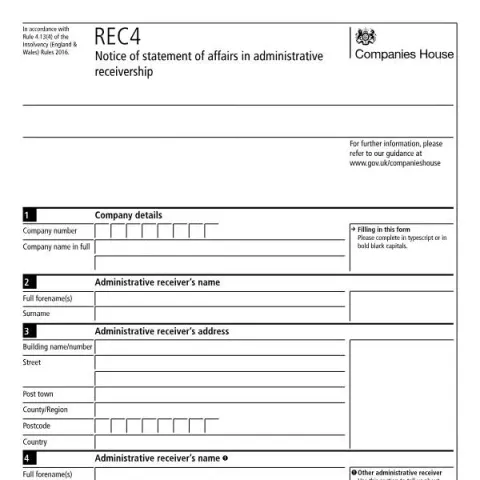
When dealing with the complexities of administrative receivership, the Notice of Statement of Affairs in Administrative Receivership (REC4) document plays a crucial role. This notice is not just a bureaucratic requirement; it serves as a fundamental declaration that encapsulates the financial status and obligations of a company undergoing this process. Understanding how to effectively utilise this document is essential for administrators and stakeholders alike.
Understanding the Context of Administrative Receivership
Before delving into the specifics of the REC4 notice, it's important to grasp what administrative receivership entails. This process often arises when a company is unable to meet its financial obligations. An administrative receiver is appointed, frequently by a secured creditor, to manage the company’s assets with the primary goal of recovering debts.
- Key Stakeholders Involved: These include the administrative receiver, creditors, and the company itself. Each has a vested interest in the outcome.
- Legal Framework: The process is governed by the Insolvency (England & Wales) Rules 2016, specifically Rule 4.13(4), which outlines the requirements for notifying Companies House.
Components of the REC4 Document
The REC4 notice consists of several key sections that require careful attention:
- Company Details: This includes the full company name and its registration number, both of which must match the public register at Companies House.
- Administrative Receiver Information: Details about the appointed administrative receiver, including their name and address. If multiple receivers are appointed, the details for each must be provided.
- Attachments: The notice must be accompanied by a statement of affairs and a statement of concurrence, which are critical documents detailing the company's financial position.
- Signature: A signature is required from the administrative receiver, confirming the accuracy of the information provided.
Step-by-Step Process for Submitting the REC4
To ensure the successful submission of the REC4, follow these procedural steps:
- Gather Required Information: Collect all necessary details about the company and the administrative receiver. Double-check that the company name and number are correct.
- Complete the Notice: Fill in the REC4 using typescript or bold black capitals, ensuring clarity and legibility.
- Compile Attachments: Ensure that the statement of affairs and statement of concurrence are completed and attached to the notice.
- Sign and Date: The administrative receiver must sign the notice, indicating that all information is accurate.
- Submit to Companies House: Send the completed REC4 and attachments to any address of Companies House, although it’s advised to use the Cardiff address for expediency.
Important Considerations and Common Pitfalls
While submitting the REC4, there are some crucial considerations to keep in mind:
- Accuracy is Key: Any discrepancies in the company name or number can lead to delays or rejection of the submission.
- Public Record: All information provided will be publicly accessible, which can have implications for the company and its stakeholders.
- Timeliness: Adhere to the timelines set forth by the Insolvency Service to avoid penalties or complications in the administrative process.
Linking the REC4 with Other Key Documents
The REC4 does not exist in isolation; it is interconnected with various documents that form part of the administrative receivership process. These include:
| Document | Purpose | Relationship to REC4 |
|---|---|---|
| Statement of Affairs | Details the company’s financial position, assets, and liabilities. | Mandatory attachment for the REC4 notice. |
| Statement of Concurrence | Confirms consent from creditors regarding the administrative receiver’s actions. | Also a required attachment for the REC4 notice. |
| Notice of Appointment of Administrative Receiver | Formal notification of the receiver's appointment. | Should be submitted concurrently or referenced in the REC4. |
Identifying the Audience: Who Needs the REC4?
The REC4 document is primarily aimed at:
- Administrative Receivers: Who must comply with legal obligations to notify Companies House promptly.
- Company Directors: Who are required to understand the implications of the receivership process for their business.
- Creditors: Interested parties who need insight into the company’s financial situation and recovery efforts.
Understanding the audience helps tailor the communication and ensures that the right information is conveyed in an accessible manner.
Practical Implications of the REC4 Submission
The act of submitting the REC4 is not merely a formality; it holds significant implications for all parties involved. The transparency it creates can influence investor confidence, creditor negotiations, and overall company reputation.
For creditors, the information presented in the REC4 can serve as a basis for further action, whether that be negotiations for repayment or more drastic measures if the financial situation does not improve. For the administrative receiver, the REC4 is a tool that can facilitate the recovery process, providing a clear snapshot of the company’s financial health.
Conclusion: The Importance of the REC4 in Administrative Receivership
The Notice of Statement of Affairs in Administrative Receivership (REC4) is a critical document that encapsulates the financial reality of a company in distress. Properly understanding and navigating the intricacies of this notice can significantly affect the outcomes for all stakeholders involved. Given its public nature and the legal implications of the information it contains, attention to detail and adherence to legal obligations are paramount.
By following the outlined steps and being mindful of the common challenges associated with the REC4, administrative receivers can ensure a smoother process, leading to better recovery outcomes for all parties involved. This document not only serves as a formal notification but also as a pivotal point in the journey towards financial recovery.
Understanding Administrative Receivership and the REC4 Form
Administrative receivership is a process that occurs when a company is in financial distress and has appointed an administrative receiver to manage its affairs, often due to a secured creditor's intervention. The primary responsibility of the administrative receiver is to recover money owed to the creditor by realizing the company's assets. The REC4 form is pivotal in this context, as it allows for the formal notification of the company's statement of affairs, a document detailing the financial position of the business at the time of receivership.
The statement of affairs provides a snapshot of the company's liabilities and assets, offering a transparent view of its financial health. This document is crucial not only for the receiver but also for creditors and other stakeholders who may need to assess their positions. Completing the REC4 form involves disclosing various financial details, including the names and addresses of creditors, amounts owed, and the estimated value of assets. Understanding the nuances of the REC4 form is essential for anyone involved in the process, as inaccuracies or omissions can lead to complications in the receivership proceedings.
Fill in your form directly online
No printing: type your details into the boxes of the official form, tick, then download the PDF ready to send.
- 1Type into the form boxes
- 2Tick in one click
- 3Save and download the PDF
Key Considerations When Completing the REC4 Form
Completing the REC4 form requires meticulous attention to detail, given the significant implications that the information disclosed has for all parties involved. Here are some key considerations to bear in mind:
- Accuracy of Information: Ensure that all figures are accurate and up to date. Inaccuracies can lead to disputes and may undermine the integrity of the receivership process.
- Complete Disclosure: All known creditors must be listed, regardless of whether they are secured, preferential, or unsecured. This promotes transparency and ensures that all parties are adequately informed about the company's financial status.
- Valuation of Assets: Take the time to accurately estimate the value of the company's assets. This includes tangible assets such as property and equipment, as well as intangible assets like intellectual property. Engaging a professional evaluator may be beneficial to avoid undervaluation or overvaluation.
- Legal Obligations: Familiarise yourself with the legal obligations surrounding the completion and submission of the REC4 form. This includes the timelines for submission and any legislative requirements that may affect the disclosures made.
- Consult with Professionals: Given the complexities involved in receivership, consulting with legal and financial professionals can provide valuable guidance. They can help ensure compliance with the relevant regulations and best practices.
The Implications of Filing the REC4 Form
The submission of the REC4 form has several significant implications for both the company in receivership and its stakeholders. Understanding these implications is crucial for navigating the process effectively.
First and foremost, filing the REC4 form initiates formal proceedings under the administrative receivership framework. This means that the administrative receiver is now legally empowered to manage the company’s assets and affairs in an effort to maximize returns for creditors. Depending on the complexity of the company’s financial situation, this process might involve selling off assets, renegotiating debts, or even restructuring operations.
For creditors, the REC4 filing provides essential insights into the financial health of the company. It outlines the total liabilities and the estimated recovery amounts, which can inform their decisions regarding future dealings with the entity. Secured creditors, in particular, will closely monitor the proceedings to ensure their interests are protected throughout the process.
Moreover, once the REC4 form is filed, it becomes a matter of public record. This means that anyone with an interest in the company, including potential investors or future creditors, can access the information disclosed. As a result, the accuracy and thoroughness of the REC4 form can impact the company’s reputation and its ability to recover and engage in future business transactions.
Finally, failure to file the REC4 form correctly or on time may lead to legal repercussions, including potential claims of mismanagement against directors or the administrative receiver. It is crucial to adhere to the prescribed timelines and ensure that every aspect of the filing process is handled with precision.