Navigating the Complexities of the Statement of Affairs Notice
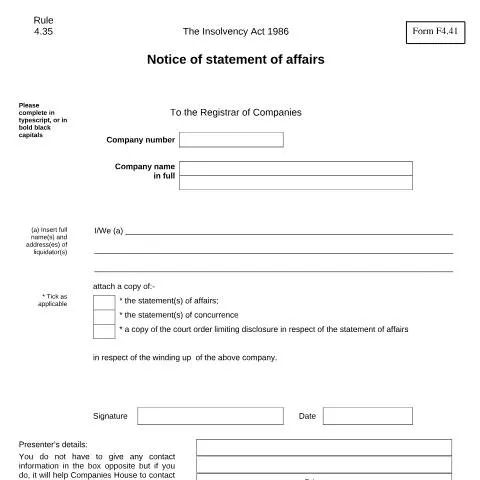
The notice of the statement of affairs, identified by Form F4.41, stands as a pivotal component in corporate insolvency proceedings within the UK. This document is not merely a procedural form; it plays a crucial role in transparent financial reporting during the winding-up processes of a company. Understanding its content and usage is essential for insolvency practitioners and company directors navigating challenging financial landscapes.
Key Features of the Statement of Affairs Notice
The statement of affairs serves as a detailed financial snapshot of a company at the time of its winding up. It includes critical information regarding the company's assets, liabilities, and the interests of various stakeholders. Here are the key components:
- Company Information: Key details such as the company number and registered name.
- Liquidator Details: Names and addresses of the appointed liquidator(s) who will oversee the winding-up process.
- Financial Statements: A comprehensive overview of assets and liabilities, drafted in accordance with the Insolvency Act 1986.
- Disclosure Notices: Any court orders relevant to the disclosure of the statement of affairs, highlighting confidentiality aspects.
The Purpose of the Statement of Affairs
This document aims to provide transparency and accountability in the liquidation process. Particularly, it serves to:
- Inform creditors about the financial position of the company.
- Facilitate the distribution of assets among creditors based on priority.
- Assist the liquidator in managing the winding-up procedures effectively.
A Deep Dive into Procedure FAQs
Understanding the procedural intricacies surrounding the submission of Form F4.41 can significantly simplify the winding-up process. Here are frequently encountered procedural queries:
When is F4.41 Required?
The notice must be submitted promptly upon initiation of the winding up process. It serves as part of the initial filing with the Registrar of Companies and is crucial for maintaining compliance with the legal obligations outlined in the Insolvency Act.
How to Ensure Compliance?
Adhering to specifics laid out in the Insolvency Act ensures legal compliance. This entails:
- Completing the form in typescript or bold black capitals, ensuring clarity and legibility.
- Ensuring all necessary documents, such as the statement of affairs and any court orders, are accurately attached.
Who Needs to Be Aware of the Statement of Affairs?
The audience for this notice extends beyond insolvency practitioners. Key stakeholders include:
- Company Directors: Responsible for initiating the winding-up process and ensuring proper documentation.
- Creditors: Those with financial claims against the company will rely on this notice for information about their potential recoveries.
- Liquidators: Appointed to manage the winding up and must prepare the statement of affairs accurately to fulfil their duties.
Interplay with Other Related Documents
The statement of affairs is not an isolated document; it works in conjunction with several other documents in the insolvency process. Understanding this interplay is vital:
- Liquidator’s Report: Provides a detailed analysis of the financial situation and the steps taken by the liquidator.
- Creditor’s Agreement: May arise from the information disclosed in the statement, influencing how debts are structured.
- Court Orders: Any court directives regarding the handling of the statement of affairs need to be appended to ensure legal integrity.
Understanding the Financial Information Required
One of the most crucial aspects of the statement of affairs is the financial data it necessitates. This information must be accurate to reflect the true state of the company's finances:
| Asset Type | Description | Valuation Method |
|---|---|---|
| Current Assets | Cash, stocks, and receivables expected to be converted into cash within a year. | Market value or book value. |
| Fixed Assets | Property, plant, and equipment owned by the company. | Depreciated value or market value. |
| Liabilities | Outstanding loans, debts, and obligations owed to creditors. | Nominal value or estimated settlement value. |
Common Mistakes in Financial Reporting
Errors in financial reporting can lead to significant repercussions during the liquidation process. Here are common pitfalls:
- Omitting liabilities that could affect the distribution of assets.
- Inflating asset values which could mislead creditors.
- Failure to disclose court orders related to the statement of affairs.
The Importance of Timeliness and Accuracy
When dealing with the winding-up of a company, timeliness and accuracy cannot be overstated. Delays in submitting the F4.41 can lead to complications in the winding-up process. It is advisable to:
- File the notice promptly within the required timelines, usually dictated by the commencement of the winding up.
- Review all attached documents for accuracy to avoid potential legal challenges.
Best Practices for Navigating the Winding-Up Process
To ensure the smooth processing of the statement of affairs, consider the following best practices:
- Maintain meticulous financial records prior to winding up to facilitate accurate reporting.
- Engage with a qualified insolvency practitioner who can provide guidance through the complexities.
- Be transparent with creditors regarding the financial situation to foster trust and cooperation.
Resources for Further Assistance
To further understand the context and implications of the statement of affairs, various resources can assist:
- Guidance documents published by Companies House that elaborate on the responsibilities of liquidators.
- Legal resources outlining the Insolvency Act 1986, offering clarity on obligations and rights.
- Professional bodies for insolvency practitioners that provide training and updates on best practices.
Understanding the Statement of Affairs
The Statement of Affairs is a critical document in the context of bankruptcy proceedings or individual voluntary arrangements (IVAs) in the UK. It provides a comprehensive overview of an individual's financial situation, including assets, liabilities, income, and expenditure. This document is essential for creditors and the Insolvency Service when assessing the viability of the proposed repayment plan or the individual's ability to clear their debts. Understanding each component of the Statement of Affairs can greatly affect one's financial outcome during the insolvency process.
Key elements of the Statement of Affairs include:
- Assets: This section lists all your possessions that have monetary value. It encompasses real estate, vehicles, savings, investments, and any other valuable items. Accurately valuing these assets is essential, as it can significantly influence the amount creditors may recover.
- Liabilities: This part outlines all debts owed, including credit cards, personal loans, mortgages, and any outstanding bills. It’s crucial to detail each debt accurately, along with the amounts owed and the name of each creditor.
- Income: Here, you need to provide details of your current income, including salary, benefits, and any additional streams of income. This helps in establishing a realistic repayment capacity.
- Expenditure: This section requires an analysis of your monthly expenditures, such as rent, utilities, food, transportation, and other necessary costs. Maintaining transparency and accuracy here ensures that the repayment proposals are grounded in reality.
Providing a well-structured and detailed Statement of Affairs can aid in smoother negotiations with creditors and might potentially lead to more favourable terms. It is advisable to seek advice from a debt advisor or insolvency practitioner to ensure the document reflects your true financial position.
Fill in your form directly online
No printing: type your details into the boxes of the official form, tick, then download the PDF ready to send.
- 1Type into the form boxes
- 2Tick in one click
- 3Save and download the PDF
Filing Requirements and Procedures for the Statement of Affairs
Filing a Statement of Affairs (F4.41) is a process governed by specific regulations under the Insolvency Act 1986. When dealing with bankruptcy or proposing an Individual Voluntary Arrangement (IVA), it is imperative to follow the correct procedures to ensure compliance and prevent any legal challenges.
Here are the key steps involved in filing the Statement of Affairs:
- Preparation: Prior to completing the F4.41 form, gather all necessary financial documentation, including bank statements, pay slips, bills, loan agreements, and any other pertinent financial records. This will assist in creating an accurate representation of your financial status.
- Completing the Form: The F4.41 form can be downloaded from the Insolvency Service’s official website. It must be filled out clearly and accurately, ensuring that all fields are completed. Double-check all figures and information for accuracy, as discrepancies may result in delays or complications.
- Submission: Once completed, the Statement of Affairs should be submitted as part of the bankruptcy petition or IVA proposal. Ensure it is sent to the appropriate office, which may vary depending on your location. Keep a copy for your records.
- Notification of Creditors: After filing, it’s essential to notify all creditors regarding the filing of your Statement of Affairs. This can usually be done in conjunction with submitting your bankruptcy petition or IVA proposal.
- Follow Up: Be prepared to respond to any inquiries from the Insolvency Service or creditors regarding your Statement of Affairs. This may involve providing additional documentation or clarifying information on your financial status.
It is important to adhere to deadlines, particularly if you’re in a bankruptcy situation, as failing to file the Statement of Affairs promptly can lead to complications such as court proceedings against you. Seeking assistance from a qualified insolvency practitioner can be beneficial in navigating these processes effectively.
Common Mistakes to Avoid When Submitting the Statement of Affairs
The process of completing and submitting the Statement of Affairs (F4.41) can be daunting, and many individuals make common mistakes that can hinder their financial resolutions. Awareness of these pitfalls can help ensure that your filing is accurate and comprehensive.
Here are some common mistakes to avoid:
- Inaccurate Valuation of Assets: One of the most frequent errors is failing to accurately value assets. Underestimating or overestimating an asset’s worth can lead to improper assessments by creditors, which may affect negotiations. It is advisable to obtain professional valuations where necessary.
- Omitting Debts: Some individuals may forget to include certain debts, thinking they are trivial or insignificant. However, every debt listed in the Statement of Affairs is crucial for creditors to assess the overall financial situation. Ensure you include all debts, regardless of size.
- Insufficient Documentation: Providing insufficient or unclear documentation can delay the process. It is advisable to supply copies of relevant financial documents alongside the Statement of Affairs to substantiate your claims.
- Failure to Update Information: Changes in financial circumstances should be reflected immediately. If your financial situation changes significantly after submitting the Statement of Affairs, it is essential to notify the Insolvency Service and any creditors affected by this change.
- Neglecting to Seek Professional Advice: Navigating the intricacies of insolvency can be overwhelming. Many individuals make the mistake of attempting to deal with the process alone. Consulting with an insolvency practitioner or a debt advisor can provide valuable insights and guidance, ensuring a smooth filing process.
By being aware of these common pitfalls and seeking assistance when needed, individuals can enhance their chances of a successful resolution to their bankruptcy or debt management situation, ultimately leading to a fresh financial start.