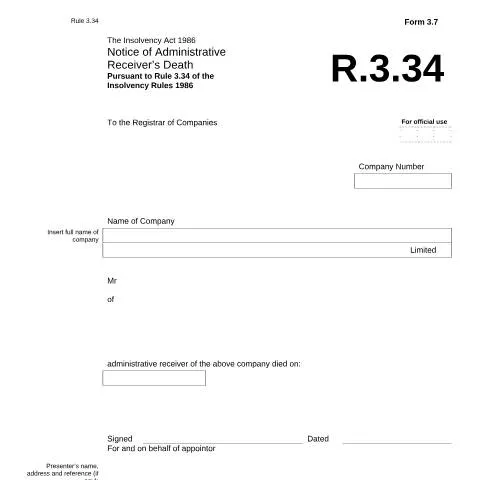
Understanding the Notice of Administrative Receiver's Death
The Notice of Administrative Receiver's Death is a crucial document within the framework of corporate insolvency in the UK, specifically governed by the Insolvency Act 1986 and Rule 3.34 of the Insolvency Rules 1986. It serves as an official notification to Companies House regarding the unfortunate event of an administrative receiver's passing. This notification is essential for maintaining accurate records and ensuring proper management of the company's affairs.
Scope and Purpose: What This Document Covers
This official notice is not just a formality; it has legal implications for the management of a company's insolvency proceedings. When an administrative receiver dies, there's a ripple effect on the company's operations and creditors. The following points explain what this notice encompasses:
- Official Acknowledgment: The notice informs Companies House about the death of the appointed administrative receiver.
- Continuity of Proceedings: It ensures that insolvency proceedings can continue smoothly without disruption due to the absence of the appointed receiver.
- Legal Compliance: Filing this notice complies with legal obligations under the Insolvency Act, reducing the risk of complications or legal scrutiny later on.
However, it is important to note that the notice alone does not impact the status of the company nor does it change the appointment of a new receiver automatically. Further steps must be taken to ensure continuity.
The Process Uncovered: Steps Following the Notification
Upon the death of an administrative receiver, the company must take immediate action to ensure that the insolvency process continues without delay. Here are the steps involved:
- Preparation of the Notice: The company should prepare the Notice of Administrative Receiver's Death detailing the receiver's name, the date of death, and relevant company information.
- Submission to Companies House: The prepared notice must be signed and submitted to the Registrar of Companies. This is a formal requirement that must be adhered to.
- Appointment of a New Receiver: Following the death, an appointor (usually a creditor or shareholder) should appoint a new administrative receiver. It is crucial that this appointment is made promptly to avoid lapses in management.
- Notification of Stakeholders: Notify all stakeholders, including creditors and shareholders, regarding the change in receiver to maintain transparency and trust.
- Update Internal Records: Ensure that internal documents and records reflect the change in administrative receiver to prevent confusion in future transactions.
Each of these steps is integral to ensuring that the company remains compliant and that the administration of its affairs continues seamlessly.
Key Terminology to Navigate This Process
Understanding key terms is vital for anyone involved in this process. Here’s a breakdown of some essential terms:
| Term | Definition |
|---|---|
| Administrative Receiver | A person appointed to manage the affairs of a company when it is in financial distress; typically acts on behalf of creditors. |
| Insolvency | A state wherein a company cannot pay its debts as they fall due. |
| Appointor | The individual or entity that appoints the administrative receiver, often a major creditor. |
| Companies House | The UK government's official register of companies, responsible for incorporating and dissolving companies and storing company information. |
Familiarizing oneself with these terms helps avoid misunderstandings and ensures all parties are on the same page during this sensitive time.
When Is This Notice Essential?
Understanding the scenarios that necessitate the Notice of Administrative Receiver's Death is crucial for any stakeholder involved in corporate governance or financial administration. You should consider this notice in the following situations:
- Insolvency Proceedings: When a company enters into insolvency, it is critical to keep Companies House informed of any changes, including the death of an administrative receiver.
- Changes in Management: If there is a need for a new administrative receiver post-death to ensure continued management of company affairs, this notice must be filed.
- Legal Compliance: Companies have a legal duty to file accurate and timely information with Companies House, making this notice indispensable for compliance.
Failure to submit this notice can lead to complications in the administration of the company and potential legal repercussions.
Common Misinterpretations: Avoiding Pitfalls
The legal framework surrounding insolvency can be complex, leading to common misinterpretations of the notice's purpose and implications. Here are some frequent misconceptions:
- This notice closes the insolvency proceedings: Incorrect. The notice simply informs Companies House of the death and does not terminate any ongoing proceedings or alter the company’s liability status.
- Failure to file has no repercussions: Filing this notice is mandatory; neglecting it could lead to investigations and penalties from Companies House.
- All information is automatically updated: Companies must take proactive steps to appoint a new receiver and notify relevant parties; this won't happen automatically.
Clarifying these points can help navigate the complexities involved and ensure that the proper procedures are followed diligently.
Real-life Implications: The Importance of Timely Filing
The implications of timely filing the Notice of Administrative Receiver's Death can be significant. Consider the following scenarios:
- Impact on Creditors: Delaying the filing may lead to confusion among creditors, who may be unsure about who is managing the company’s affairs.
- Potential Legal Action: Companies that fail to comply with their filing obligations may face legal action from creditors or regulatory bodies.
- Effect on Company Value: Continuous mismanagement due to lapses in administration can diminish the company’s value, impacting shareholder interests.
Highlighting the importance of this notice can serve as a cautionary tale for other companies facing potential insolvency.
Maintaining Accurate Records: The Role of Companies House
Companies House plays a pivotal role in ensuring corporate transparency and legal compliance. Here’s how it interlinks with the Notice of Administrative Receiver's Death:
- Central Repository: Companies House acts as a central repository for all company-related information, which includes details about administrative receivers and their statuses.
- Public Access: The information filed at Companies House is publicly accessible, providing creditors and other stakeholders with necessary insights into a company’s solvency status.
- Regulatory Oversight: Companies House monitors filings and compliance, offering a layer of oversight that helps maintain the integrity of corporate governance.
Ensuring that all filings, including the Notice of Administrative Receiver's Death, are accurate and timely is essential for maintaining trust and regulatory compliance.
Understanding the Role of an Administrative Receiver
An administrative receiver is appointed in circumstances where a company has defaulted on its obligations, especially concerning secured debts. This individual holds a critical role, primarily tasked with managing the company's assets to repay creditors. Their functions include assessing the company’s financial health, conducting negotiations with creditors, and deciding whether to continue or liquidate the business operations. The appointment of an administrative receiver is typically initiated by a secured creditor, following a default clause in the loan agreement.
Fill in your form directly online
No printing: type your details into the boxes of the official form, tick, then download the PDF ready to send.
- 1Type into the form boxes
- 2Tick in one click
- 3Save and download the PDF
It's essential to understand that the role of an administrative receiver is distinct from that of an administrator, who operates under the Insolvency Act 1986. While both aim to salvage the company’s assets and protect creditors’ interests, an administrator acts under court supervision and has a broader mandate to find a solution that could allow the company to continue operating.
In situations where an administrative receiver passes away, it is crucial for the creditors and stakeholders to understand the implications. The death of an administrative receiver does not automatically dissolve their responsibilities or the appointment. Instead, the secured creditor who appointed the receiver must take immediate steps to appoint a new administrative receiver to ensure continuity in managing the company's assets.
Steps to Notify Stakeholders of the Administrative Receiver's Death
When an administrative receiver dies, it is vital to ensure that all relevant parties are promptly notified. This includes creditors, employees, and any other stakeholders involved in the company. Here’s a structured approach to effectively manage this notification process:
- Confirm Legal Standing: Before notifying stakeholders, it’s crucial to confirm the legal status of the administrative receiver's appointment. The secured creditor should consult any legal documents or agreements related to the appointment to understand the implications of the receiver's death.
- Draft a Formal Notification: A formal notification should be drafted to inform stakeholders of the administrative receiver's passing. This correspondence should include details such as the date of death, the name of the deceased receiver, and a brief summary of their role. Ensure that the notification is clear and conveys the next steps regarding the appointment of a new administrative receiver.
- Notify the Companies House: If applicable, the death of the administrative receiver should be reported to Companies House. This is necessary for any updates to the official records regarding the administration of the company.
- Inform Creditors: Contact all known creditors and inform them of the administrative receiver's death. This is crucial as it directly affects the management of the company's assets and liabilities.
- Communicate with Employees: If the company has employees, it is essential to inform them of the change in management. Transparency is key to maintaining trust and stability within the workforce during this transitional period.
- Appoint a New Administrative Receiver: The next step is to appoint a new administrative receiver promptly. The secured creditor is responsible for this appointment, and it should be done in accordance with the provisions outlined in the original loan agreement and relevant insolvency laws.
By taking these steps, stakeholders can ensure that they remain informed and that the administrative process continues smoothly, minimizing disruptions to the company’s operations during this challenging time.
Legal Considerations Following the Death of an Administrative Receiver
The death of an administrative receiver introduces various legal considerations that must be navigated carefully. Here are some of the key factors to bear in mind:
- Continuation of Duties: The administrative receiver’s responsibilities do not cease upon their death. Instead, the secured creditor must ensure that these duties are managed by appointing a successor. Failure to do so can lead to complications in asset management and creditor relations.
- Rights of Creditors: Creditors retain their rights to claim against the assets of the company, even if there is a transition in management due to the administrative receiver's death. It is the secured creditor’s responsibility to inform them of any changes in the administration process.
- Compliance with the Insolvency Act 1986: The secured creditor must ensure that any new appointment of an administrative receiver complies with the Insolvency Act 1986 and relevant guidelines set forth by the Insolvency Service. This includes providing the necessary documentation and following proper procedures to ensure legality and protect the interests of all parties involved.
- Remuneration and Expenses: The costs associated with the appointment of a new administrative receiver, as well as any ongoing management costs, must be managed carefully. Creditors may question how these costs are handled, particularly if they impact the distribution of assets.
Navigating these legal considerations effectively requires clear communication and a thorough understanding of the implications of the administrative receiver's death. Engaging legal counsel may be advisable to ensure compliance and to protect the interests of all stakeholders involved.