Navigating the Waters of the Administrative Receiver’s Report
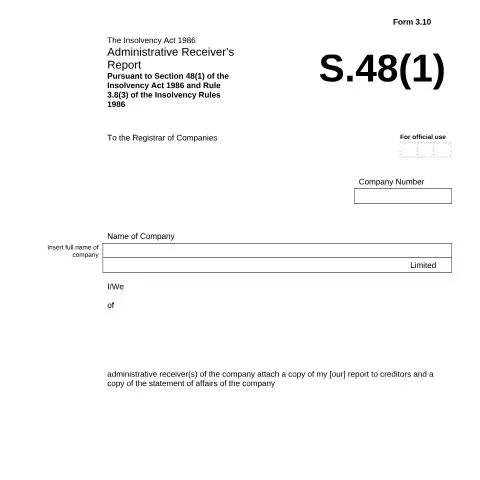
In the realm of corporate insolvency in the UK, understanding the nuances of various documents is crucial for stakeholders involved in the process. One such key document is the Administrative Receiver’s Report, detailed in Form 3.10 under the Insolvency Act 1986. This report plays an essential role in informing creditors and the Registrar of Companies about the financial status of a company facing insolvency. This guide delves into the contents, uses, and significance of this critical document.
Decoding the Administrative Receiver’s Role
Before delving into the specifics of the report, it's essential to clarify who the administrative receiver is. An administrative receiver is appointed when a company enters into a receivership arrangement, typically to manage and realise assets for creditors. The administrative receiver acts in the best interests of creditors and is charged with various responsibilities, including:
- Asset Management: Overseeing and managing the assets of the company.
- Financial Reporting: Preparing detailed reports regarding the financial situation of the company.
- Creditor Liaison: Communicating with creditors to keep them informed of developments and strategies.
The Content Breakdown: What’s Inside the Report?
The Administrative Receiver's Report encompasses several vital pieces of information that contribute to a comprehensive understanding of the company’s financial health. The following elements are typically included:
- Company Details: This includes the company number and full name, ensuring clarity on which entity the report pertains to.
- Statement of Affairs: A snapshot of the company's financial standing, including assets, liabilities, and an overview of the operational status.
- Report to Creditors: Detailed insights into how assets are being managed and the administrative receiver’s strategy moving forward.
- Signatures and Dates: Confirming the authenticity and time-stamping the report for official records.
Key Considerations and Common Misinterpretations
When dealing with the Administrative Receiver's Report, several misconceptions may arise, often leading to confusion among stakeholders. Recognising these can help mitigate misunderstandings:
- Timing of Submission: It’s crucial to submit the report within the specified timeframe after the appointment of the receiver to comply with legal requirements.
- Expectation of Complete Recovery: Stakeholders must understand that the report does not guarantee the recovery of all debts; its primary function is to provide a transparent view of the financial situation.
- Impact on Company Reputation: The issuance of this report does not solely reflect mismanagement; it can result from various market dynamics that affect even well-managed companies.
Integrating the Report with Other Documentation
The Administrative Receiver’s Report does not function in isolation. It interacts with various other documents in the insolvency framework. Understanding these relationships is critical for a cohesive approach. Key related documents include:
| Document | Description |
|---|---|
| Statement of Affairs | A summary of the company's financial position that provides necessary context for the report. |
| Creditor Summaries | Lists of creditors who are owed money, which helps in understanding the impact of the insolvency. |
| Insolvency Practitioner's Reports | Reports prepared by insolvency practitioners detailing the processes involved in managing the insolvency. |
How to Leverage the Report in Practical Scenarios
For creditors, investors, or even employees, the Administrative Receiver's Report can serve several purposes. Here’s how different stakeholders can utilise the report efficiently:
- Creditors: Review the report to gauge the likelihood of recovering owed debts and to understand the rationale behind the administrative receiver's actions.
- Investors: Assess the report to determine potential investment risks linked to the company’s stability and future prospects.
- Employees: Use the report to understand their job security and the company's operational continuity.
Who Should Be Attuned to This Document?
The Administrative Receiver’s Report is not just a bureaucratic formality; it is an essential document for various stakeholders involved in the corporate ecosystem. Identifying who should pay attention to this document includes:
- Company Directors: Directors must be aware of the implications of the report on their responsibilities and potential liabilities.
- Shareholders: Shareholders need insights into the company's operational status to make informed decisions regarding their investments.
- Legal Advisors: Legal professionals advising companies in distress must consider this document in their strategic recommendations.
Conclusion: The Importance of Transparency in the Insolvency Process
The Administrative Receiver’s Report stands as a testament to the necessity of transparency in insolvency proceedings. By providing comprehensive insights into a company’s financial status, it helps various stakeholders make informed decisions during a critical period. Understanding the report's contents and implications can significantly influence strategic choices and outcomes. Navigating the complexities of corporate insolvency requires diligence, comprehension, and a proactive approach to ensure that all parties are adequately informed and prepared to act.
Understanding the Role of an Administrative Receiver
An administrative receiver is appointed in situations where a company is in financial distress and has secured creditors. Typically, this process is initiated when a floating charge is created over the company's assets. These receivers play a critical role in managing the assets of the company, aiming to recover debts owed to creditors while ensuring compliance with relevant statutory obligations.
The legal framework governing administrative receivership is embedded within the Insolvency Act 1986, specifically under Chapter 2 of Part II. An administrative receiver's primary duty is to realise the company's assets to satisfy the debts owed to secured creditors. This involves the oversight of the company's operations, and they may also have the authority to negotiate with unsecured creditors, depending on the circumstances. Understanding the powers and limitations of an administrative receiver is vital for any stakeholder involved in a company's financial restructuring process.
The Process of Giving Notice of the Administrative Receiver's Report
When an administrative receiver is appointed, they are required by law to prepare and submit a comprehensive report outlining the company's financial situation and the actions taken during their appointment. This report must be filed with the Registrar of Companies and distributed to all relevant stakeholders, including creditors and shareholders. The content of the report typically includes:
Fill in your form directly online
No printing: type your details into the boxes of the official form, tick, then download the PDF ready to send.
- 1Type into the form boxes
- 2Tick in one click
- 3Save and download the PDF
- An overview of the company's financial status, including assets and liabilities.
- Details on the actions taken by the administrative receiver to manage the company's affairs.
- Any significant developments or challenges encountered during the receivership process.
- Recommendations on the potential future of the company, including possible restructuring or liquidation.
Once the report is prepared, it must be filed within 28 days of the administrative receiver's appointment. Failure to comply with this timeline can have serious repercussions, including potential penalties for the administrative receiver. Moreover, the notice of the report must also be given in a manner that ensures all interested parties are informed and have the opportunity to respond or raise concerns regarding the report's contents. This step is crucial, as it maintains transparency throughout the receivership process.
Implications of the Administrative Receiver's Findings
The findings outlined in an administrative receiver's report can have significant implications for the company, its directors, and its creditors. For instance, the report may reveal that the company's financial difficulties are due to mismanagement or fraud, which can lead to further investigations and potential legal action against the directors involved. On the other hand, if the report indicates that the financial struggles were primarily due to external market conditions, this may provide some protection for the directors when it comes to liability issues.
Additionally, the findings can influence the decisions of unsecured creditors regarding their claims. If the report suggests that there may be a viable path to recovery for the company, unsecured creditors may be more inclined to engage in negotiations or support restructuring efforts. Conversely, if the report highlights a bleak outlook, creditors may push for immediate liquidation to recover whatever they can from the remaining assets. The administrative receiver thus plays a pivotal role in shaping the future direction of the company post-appointment.
In conclusion, the administrative receiver's report is a crucial document that not only sheds light on the company's current financial state but also sets the stage for future discussions among stakeholders. Understanding the nuances of this process can empower directors, creditors, and stakeholders to navigate the complexities of corporate financial distress with greater insight and preparedness.