Navigating the Complexities of the Statement of Affairs in Administrative Receivership
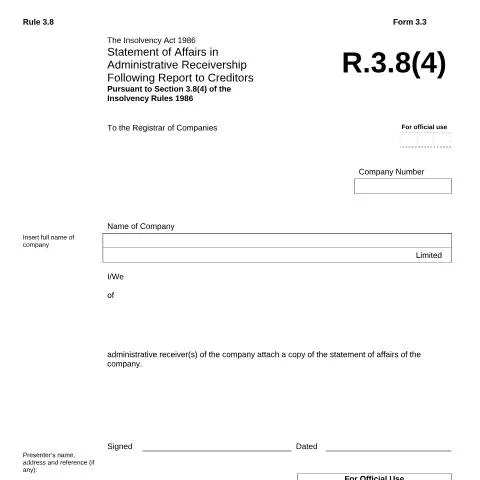
The Statement of Affairs in Administrative Receivership form, officially known as form 3.3, is a crucial document within the UK insolvency framework. When a company enters administrative receivership, this form serves as a detailed account of its financial status, which is fundamental for creditors assessing the company's viability and potential recovery.
Who Must Submit This Statement?
The responsibility for filing the Statement of Affairs typically falls upon the administrative receiver(s) appointed to manage the company during its financial distress. In essence, these professionals are tasked with safeguarding the interests of creditors while attempting to alleviate the company's financial burdens. It is imperative to understand the nuances involved:
- Administrative Receivers: These individuals or entities are appointed by a secured lender to manage the company’s assets and affairs. The administrative receiver will compile the financial information required for the form.
- Company Directors: In certain cases, directors may assist in the preparation of the document, providing necessary information regarding assets, liabilities, and financial history.
- Creditors: While not responsible for filing the form, creditors will heavily rely on the information within it to make informed decisions about their claims and potential recovery.
Understanding the Legal Framework
The inception of the Statement of Affairs is rooted in the Insolvency Act 1986 and subsequent amendments. Specifically, Rule 3.8 delineates the requirements for this statement, emphasizing transparency and accountability during the administrative receivership process. The form must accompany a report to creditors, which outlines the company’s financial predicament and proposed course of action.
The rationale behind such stringent requirements is to protect the interests of all parties involved, ensuring that there is a clear and accurate portrayal of the company's financial situation. Under the Insolvency Rules 1986, the statement must be a true reflection of the company’s assets and liabilities as of the date of administrative receivership.
Filling Out Form 3.3: A Step-by-Step Guide
Completing the Statement of Affairs requires meticulous attention to detail. Each section of the form must be filled in accurately to ensure compliance and transparency. Here’s a breakdown of how to tackle this undertaking:
- Company Information: Start by entering the full legal name of the company along with its registered company number. This information is crucial for identification purposes.
- Details of the Administrative Receiver(s): Clearly state the names and addresses of the administrative receiver(s) managing the company. This section ensures accountability and provides a point of contact for creditors.
- Financial Summary: This section will often include:
- Total assets – a comprehensive list of all assets owned by the company, categorized appropriately.
- Total liabilities – a detailed enumeration of all outstanding debts and obligations.
- Net worth – this calculation will determine the company’s financial health and the potential for recovery.
- Signatures: The form must be signed and dated by the administrative receiver(s). This is a formal declaration of the accuracy of the information provided.
Submission Channels: Where and How to Deliver the Form
Once the Statement of Affairs has been duly completed, the next step is to submit it to Companies House. Understanding the various channels available for submission is key to ensuring compliance:
- Electronic Submission: Companies House allows for online submissions through their official portal. This method is generally faster and provides immediate confirmation of receipt.
- Postal Submission: If opting for postal delivery, ensure that the form is sent to the appropriate address for the Insolvency Section at Companies House. Using recorded delivery can provide proof of submission.
- In-Person Submission: Although less common, individuals can also deliver the form in person at the Companies House offices. This can be beneficial if there are time-sensitive issues.
Distinguishing the Statement of Affairs from Related Forms
It is essential to distinguish the Statement of Affairs in Administrative Receivership from other related forms, particularly to avoid confusion during the insolvency process. Key differences include:
| Form | Purpose | Applicable Situations |
|---|---|---|
| Form 3.3 | Statement of Affairs in Administrative Receivership | Used when a company is under administrative receivership. |
| Form 6.4 | Statement of Affairs in Bankruptcy | Applicable to individuals declaring bankruptcy. |
| Form 10.1 | Company Administration Application | Used to apply for administration, rather than receivership. |
Preparing Supporting Documents
Alongside the Statement of Affairs, it is often necessary to prepare additional documentation to support the information provided. These may vary based on the company's unique circumstances:
- Financial Statements: Recent balance sheets or profit and loss statements can substantiate asset and liability claims.
- Contracts and Agreements: Any legal contracts that may affect the company’s valuation should be included.
- Tax Returns: Previous tax returns can offer further validation regarding the financial status of the company.
Implications of Inaccurate Information
Accuracy in completing the Statement of Affairs is not merely a bureaucratic necessity; it holds significant legal ramifications. Providing false information can lead to severe consequences, including:
- Legal Action: Creditor claims might be disputed if the information is deemed misleading.
- Personal Liability: Administrative receivers who fail to provide accurate information may face personal liability for mismanagement.
- Impact on Creditor Relationships: A lack of transparency can erode trust and complicate negotiations with creditors.
After Submission: What to Expect Next?
Once the Statement of Affairs has been submitted, the next phase involves scrutiny by Companies House and possibly by creditors. Here’s what to anticipate:
- Review Period: Companies House will review the submitted document for compliance with legal standards.
- Creditors Meeting: Creditors may convene to discuss the report and the statement. This meeting is an opportunity to address concerns and seek clarifications.
- Ongoing Obligations: The administrative receiver must continue to monitor the company's finances and report back to creditors as required by law.
Final Thoughts on the Importance of the Statement of Affairs
In conclusion, the Statement of Affairs in Administrative Receivership is more than just a form; it is a foundational document that encapsulates the financial realities of a company in distress. Its proper completion and submission are essential for navigating the complexities of insolvency while maintaining legal compliance and fostering transparency among affected parties. Understanding this process can significantly influence the outcomes for a distressed company and its stakeholders.
Understanding Administrative Receivership: Key Concepts and Implications
Administrative receivership is a complex area that can significantly impact both individuals and businesses. To fully grasp the implications of making a statement of affairs in this context, it's vital to understand the underlying principles of administrative receivership itself. In essence, administrative receivership occurs when a secured creditor appoints an administrative receiver to manage the assets of a company in financial distress. This process is often triggered by the company's inability to meet its financial obligations, leading to a series of steps aimed at recovering debts.
The role of the administrative receiver is crucial; they work to realise the company's assets and pay off debts to creditors. The receiver must act in the interests of the secured creditor while also adhering to legal and ethical standards. This dual responsibility can create tension, particularly if unsecured creditors or employees feel that their interests are being overlooked. Understanding this balance is essential for anyone involved in the process, as the decisions made at this stage can have far-reaching consequences for all parties involved.
Moreover, the statement of affairs itself is not just a financial document; it's a detailed representation of the company's financial position at the time of receivership. This document should outline assets, liabilities, creditors, and any other financial obligations. It serves as a foundational piece of evidence that can guide the administrative receiver in their decisions and actions, as well as inform stakeholders about the company's fiscal health. Thus, being meticulous in preparing the statement of affairs is paramount, as inaccuracies or omissions can lead to significant legal ramifications.
The Process of Creating a Statement of Affairs in Administrative Receivership
Creating a statement of affairs during administrative receivership involves several key steps that must be undertaken with precision and care. Initially, the appointed administrative receiver will gather all relevant financial information, which includes financial statements, asset valuations, and details of existing liabilities. This comprehensive data collection is fundamental to producing an accurate statement that reflects the true financial standing of the company.
One must categorize assets carefully; they may include tangible assets such as property and equipment, as well as intangible assets like trademarks and patents. Each asset should be valued at its current market rate to ensure that the statement of affairs accurately represents the company's worth. Additionally, the receiver must list all liabilities, which include secured and unsecured debts. Understanding the distinction between these two categories is critical, as secured debts take precedence in the repayment hierarchy.
Fill in your form directly online
No printing: type your details into the boxes of the official form, tick, then download the PDF ready to send.
- 1Type into the form boxes
- 2Tick in one click
- 3Save and download the PDF
Once the assets and liabilities are catalogued, the receiver will compile them into a structured format, typically following a prescribed template that meets statutory requirements. It is essential that the statement includes details such as the names of creditors, contact information, and the amount owed. The final document must be signed and dated by the receiver, confirming its accuracy and completeness.
Beyond simply listing financial figures, the statement of affairs should also provide context for the company's financial situation. This might include explanations for why the company entered receivership and any contributing factors that led to its financial difficulties. A well-prepared statement can not only aid in the recovery process but also help to maintain transparency with creditors and stakeholders.
Common Challenges and Pitfalls in Statement of Affairs Preparation
Preparing a statement of affairs is fraught with challenges, and understanding these potential pitfalls can greatly enhance the process's effectiveness. One of the most common issues arises from incomplete or inaccurate data collection. A failure to include all relevant assets or liabilities can lead to significant legal consequences, including potential claims of misrepresentation or fraud. It is imperative that the administrative receiver conducts thorough due diligence to ensure that no asset is overlooked and that all liabilities are accurately reported.
Another challenge lies in valuing assets appropriately. The market value of assets can fluctuate significantly, and relying on outdated valuations may misrepresent a company's financial standing. Administrative receivers must engage with professionals, such as chartered surveyors or accountants, to obtain accurate valuations, particularly for complex assets that require specialized knowledge.
Additionally, communication with stakeholders is vital throughout the process. Failure to keep creditors and interested parties informed can lead to suspicion and distrust, potentially complicating the receivership process. Transparency can mitigate these concerns, and regular updates or stakeholder meetings can foster better relationships.
Furthermore, understanding the legal implications of the statement of affairs is essential. The Data Protection Act 2018 and UK GDPR govern how personal and sensitive data is handled within these documents. Therefore, administrative receivers must ensure compliance with these regulations when compiling the statement, particularly when dealing with employee data or sensitive financial information.
In conclusion, while the creation of a statement of affairs during administrative receivership presents unique challenges, a structured approach that emphasizes accuracy, transparency, and compliance can significantly enhance the process. By navigating these challenges effectively, administrative receivers can ensure a smoother path towards financial recovery for the distressed company.