Navigating the Agricultural Charges Register: A Detailed Look at the AC6 Application
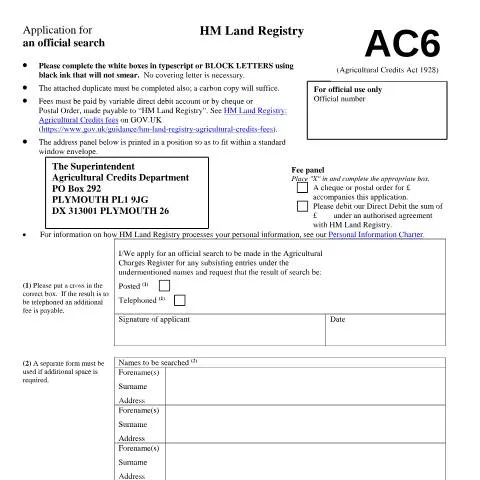
When it comes to understanding the intricacies of agricultural property rights in the UK, the Official Search: Application (AC6) form plays a pivotal role. This document allows individuals or entities to request an official search in the Agricultural Charges Register, which is essential for anyone looking to ascertain the status of agricultural charges on specific properties. The importance of this document cannot be overstated, especially for farmers, lenders, and prospective buyers who require clarity regarding existing financial claims on agricultural land.
Who Should Consider Submitting the AC6 Application?
The AC6 application is primarily beneficial for various stakeholders in the agricultural sector. Understanding the profiles of those who commonly utilise this form can provide clarity on its practical applications:
- Farmers: Individuals operating agricultural businesses seeking to verify any charges against their property.
- Lenders and Financial Institutions: Banks and credit providers want to ensure there are no existing encumbrances on properties they are financing.
- Legal Practitioners: Solicitors involved in property transactions need definitive checks on agricultural charges as part of due diligence.
- Potential Buyers: Individuals or entities considering purchasing agricultural land must be aware of any financial obligations tied to the property.
Each of these groups may have specific circumstances that necessitate an official search, emphasising the form’s importance in providing transparency and ensuring informed decisions.
The Application Process: Steps to Completing the AC6 Form
Completing the AC6 form requires attention to detail to avoid delays or complications. Here are the key steps to follow:
- Gather Required Information: Prepare the names and addresses of the individuals for whom you are searching charges. You can include multiple entries, but ensure accuracy.
- Complete the Form: Fill out the form using block letters and black ink. The white boxes should be filled in clearly, without any stains or smudges.
- Choose Result Delivery Method: Indicate whether you prefer the results to be posted or communicated via telephone. Note that opting for telephone results incurs an additional fee.
- Payment: Ensure the form is accompanied by the appropriate fee, which can be paid via cheque, postal order, or direct debit authority.
- Submit Your Application: The completed form can be sent to the Superintendent Agricultural Credits Department at HM Land Registry, Plymouth.
Submitting an incomplete or improperly filled form can lead to a rejection. Thus, it is critical to double-check the information before mailing the application.
Understanding Payment Options and Costs
When submitting the AC6 application, understanding the payment methods available is crucial:
| Payment Method | Details |
|---|---|
| Cheque | Make payable to 'HM Land Registry' and include it with your application. |
| Postal Order | Similar to a cheque, ensure it is addressed correctly. |
| Direct Debit | Complete the section on the form, allowing HM Land Registry to debit the fee directly from your account. |
Choosing the right payment method can affect the processing time and may offer convenience depending on your circumstances.
Following Up on Your Application: What to Expect
Once your AC6 application has been submitted, it is important to understand the processing timeline and how to follow up effectively.
Normally, if the application is received before noon, certificates of official search are issued on the same day. If you submitted the application after this time, expect a slight delay. However, if there are any complications or if additional information is required, you may receive communication from HM Land Registry requesting further details.
Potential Outcomes and Next Steps
Upon receiving your official search results, you might encounter different scenarios:
- No Entries Found: Indicates that there are no subsisting charges against the individuals searched.
- Entries Found: If your search reveals existing charges, you may want to obtain further information through Form AC5 to get a certified copy of the relevant memoranda.
Being aware of these potential outcomes allows stakeholders to prepare appropriately for the next steps in their property dealings.
Addressing Errors: What To Do If Your Application Is Rejected
In any administrative process, mistakes can occur. If your AC6 application is rejected or if you encounter errors in the search results, addressing these issues promptly is essential.
Common reasons for rejection may include:
- Incomplete information on the application form.
- Insufficient fees submitted with the application.
- Issues with the signatures or the specified delivery method.
If your application is rejected, review the feedback provided by HM Land Registry and take corrective steps:
- Carefully read the rejection notice to understand the reasons cited.
- Gather any additional documentation or information required.
- Resubmit the corrected form along with the necessary fee.
Proactive communication with HM Land Registry can also help resolve issues and clarify concerns regarding your application.
The AC6 and Its Role in Wider Property Transactions
The AC6 application is not merely a standalone document; it is part of a broader context of agricultural property transactions. Understanding its significance within this framework is crucial for all stakeholders involved. Here’s how the AC6 integrates into various processes:
- Property Sales: Buyers need to know the status of any charges before finalising a purchase to avoid unexpected liabilities.
- Mortgages: Lenders require assurance that the property is free from encumbrances to secure their interests adequately.
- Legal Disputes: In cases of legal contention over property rights, the AC6 can serve as a critical piece of evidence regarding registered charges.
By recognising the AC6 form's role in these processes, participants can better navigate the complexities of agricultural property dealings.
Tips for a Successful Search: Best Practices
To enhance your experience with the AC6 application process, consider the following best practices:
- Double-Check All Information: Accuracy is key to avoiding rejections and ensuring timely processing.
- Keep Copies: Always retain copies of the completed application and any correspondence with HM Land Registry for your records.
- Use Clear Communication: If you need to follow up, be clear and concise in your queries to expedite responses from HM Land Registry staff.
Implementing these practices can lead to a smoother application experience and help mitigate any issues that might arise.
Final Thoughts: Empowering Your Agricultural Property Transactions
The AC6 application for an official search in the Agricultural Charges Register is a vital tool for anyone involved in agricultural property in the UK. By understanding the process, being aware of the stakeholders involved, and knowing what to do in case of errors or complications, you can empower yourself in your property transactions. Whether you are a farmer securing the future of your land, a lender protecting your investment, or a potential buyer ensuring peace of mind, the AC6 is an indispensable component of the agricultural landscape.
Being informed is the first step towards making sound decisions in property management and acquisitions. Make sure to leverage the AC6 properly to secure the insights you need in your agricultural dealings.