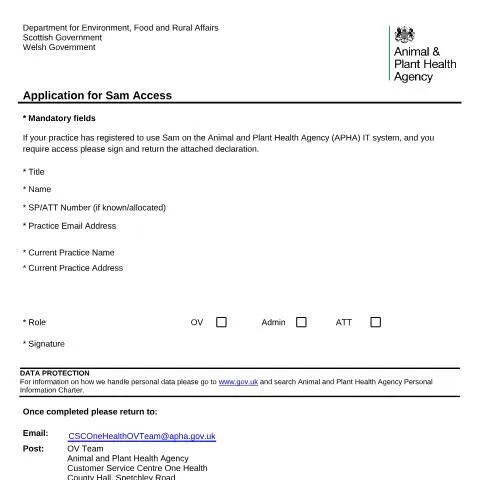
A Comprehensive Guide to the OV59: Application for Sam Access
In the realm of veterinary practice, the efficient management of data is crucial. Practitioners rely on various systems to facilitate their work, and the Animal and Plant Health Agency (APHA) offers a vital IT system known as Sam. The OV59 form is a specific application for practitioners seeking access to this system. Understanding how to navigate this form correctly can ensure a seamless integration into this digital environment.
Navigating the Process: From Initiation to Access
The journey of obtaining access to Sam begins with understanding the initial requirements. If your practice is already registered with APHA to use the system, you must fill out the OV59 form accurately.
- Assess Your Eligibility: Ensure that your practice is registered with APHA. Only registered entities can apply for access through the OV59.
- Gather Necessary Information: Information such as your practice’s email address, current name, and address is essential.
- Complete the Form: Fill in each mandatory field. Missing information may lead to processing delays.
- Submission: Once completed, submit the form via email or postal service.
Understanding Mandatory Fields
The OV59 form contains several fields that are mandatory for successful submission. Let’s break these down:
- Title: Represents your professional title.
- Name: Your full name as it appears on official documents.
- SP/ATT Number: This number is crucial if allocated; it identifies your practice within the system.
- Email Address: An active practice email for correspondence.
- Current Practice Name and Address: Essential for identity verification.
- Role Selection: Indicate your role—OV, Admin, or ATT.
- Signature: Your signature signifies agreement to the terms and conditions of access.
A Step-by-Step Breakdown: Pitfalls and Best Practices
Completing the OV59 form may seem straightforward, but there are common pitfalls that applicants should avoid.
Common Errors to Avoid
- Omitting Mandatory Fields: Failing to fill out mandatory fields will result in immediate rejection.
- Incorrect Information: Double-check all entered information for accuracy to prevent delays.
- Inadequate Signature: Ensure your signature is clear and matches your name as stated in the form.
- Ignoring Submission Guidelines: Pay close attention to how and where to submit your application.
What Happens After Submission?
Upon successful submission of the OV59 form, the next steps unfold as follows:
Processing Timeline
The processing time can vary. Typically, applicants can expect a response within two to four weeks. During this period, the agency will verify the details provided.
Receiving Access Credentials
If your application is approved, you will receive your unique username and password to access the Sam system. It’s essential to keep these credentials secure and not share them with others.
Handling Refusals or Missing Information
Should your application be declined or if any information is found to be missing, you will be notified via the email address provided in your application. In such cases, consider the following actions:
- Review Notification: Carefully read the rejection notice to understand the reason.
- Amend and Resubmit: If the issue was a minor error or omission, correct it promptly and resubmit.
- Contact APHA: For clarification or further inquiries, reach out to the contact details provided in the notification.
Understanding Your Rights and Obligations
As an applicant, it's crucial to be aware of your rights and obligations once granted access to Sam. Here are key points to consider:
- Data Protection: Your personal information is protected under the Data Protection Act 2018. Ensure you understand how your data will be used.
- Usage Policy: Utilize your access solely for professional purposes; unauthorized use can lead to revocation of access.
- Security Measures: Maintain the confidentiality of your credentials to prevent unauthorized access.
Comparative Analysis: OV59 vs. Other Related Forms
It's essential to distinguish the OV59 form from other similar documents to avoid confusion.
| Form Name | Purpose | Who Should Apply |
|---|---|---|
| OV59 | Application for Sam Access | Registered veterinary practices needing system access. |
| OV60 | Data Update Request | Practices wishing to amend their details on APHA records. |
| OV61 | Access Revocation Form | Practices wanting to terminate access to the Sam system. |
Unique Cases: Special Considerations for Diverse Users
Every applicant's situation may differ. Here are specific scenarios that may warrant special attention:
International Applicants
If you are applying from outside the UK, additional verification might be required. Ensure that you have provided all relevant details for international practices.
Minors and Special Circumstances
For practices involving minors, ensure parental consent is obtained if necessary. Additionally, involve legal representatives if the situation is particularly complex.
Conclusion: Ensuring a Smooth Application Process
The OV59 form serves as a gateway for veterinary practices to access critical data management tools provided by the APHA. By understanding the requirements and processes involved, practitioners can navigate the application landscape effectively. Whether it’s through meticulous attention to detail or being proactive in handling potential issues, preparation is key to a successful application.
Understanding the OV59 Form: Key Details for Applicants
The OV59 form is a crucial document for individuals seeking access to information concerning a deceased person's estate or for those in need of certain legal rights in relation to their affairs. Understanding the OV59 process involves knowing who is eligible to apply, what information is required, and the potential outcomes of your application.
Eligibility to apply for an OV59 generally encompasses family members, legal representatives, or individuals who have been granted a right through legal proceedings. It’s important to be aware that the deceased must have passed away within the jurisdiction that governs this application. Moreover, applicants should be prepared to provide evidence such as a death certificate and proof of their relationship to the deceased.
When filling out the OV59 form, you'll need to provide key personal information, including the deceased person's full name, date of birth, and National Insurance number if known. Additionally, applicants should state their own details, including their National Insurance number and any relevant court documents that may support their application.
Once submitted, the processing of the OV59 application may vary depending on the complexity of the case and the volume of requests being handled by the relevant authority. Applicants should track their application status through the government portal or by contacting the appropriate department directly for updates. Delays can occur, especially if additional documentation is required or if the case needs further verification.
Common Challenges and Solutions when Submitting OV59
Applying for access using the OV59 form can present various challenges, which can be daunting for applicants unfamiliar with legal processes. One common issue is the gathering of necessary documentation. Often, applicants may find it difficult to obtain certain documents, such as a death certificate or proof of relationship, especially if family dynamics are strained or if the death occurred abroad.
In such cases, it is advisable to reach out to the registrar's office where the death was recorded. They can provide information on obtaining official copies of the death certificate. If you are not listed as the next of kin, you may need to obtain permission from them or seek legal advice regarding your rights to apply for the OV59 form.
Another challenge involves the correct completion of the form. Applicants must ensure that all sections are filled out accurately. Missing or incorrect information can lead to delays or outright rejection of the application. To mitigate this risk, it's recommended to review the form carefully and, if necessary, seek assistance from a legal professional or an advocacy service that specializes in estate matters.
Lastly, it's important to understand the timeframe in which you can expect a response. While general guidelines may suggest a specific period, processing times can vary. Applicants should remain patient and proactive, following up on their application status if they haven’t received communication within the expected timeframe.
Legal Implications of OV59 Access: What You Need to Know
Understanding the legal implications of an OV59 application is vital. The information accessed through this form can significantly impact estate settlements, inheritances, and the fulfillment of the deceased's wishes. Therefore, applicants should be aware of the potential consequences of their request.
Firstly, if you gain access to sensitive information regarding the deceased’s estate, you may also uncover debts or disputes that could complicate the settlement process. It’s crucial to consult with a legal expert to understand your position and responsibilities once you have this information, especially if you are named as an executor or administrator of the estate.
Moreover, there are privacy concerns to keep in mind. The Data Protection Act 2018 and UK GDPR govern how personal data should be handled, even posthumously. While you may have legal rights to access certain information, you must ensure that you adhere to regulations surrounding the processing and sharing of this data. Misuse of this information can lead to legal repercussions.
Finally, understanding your rights as an applicant is key. If your application for an OV59 is denied, you have the right to appeal the decision or request a review. It’s advisable to do so promptly and provide any additional documentation or clarification needed to support your case.