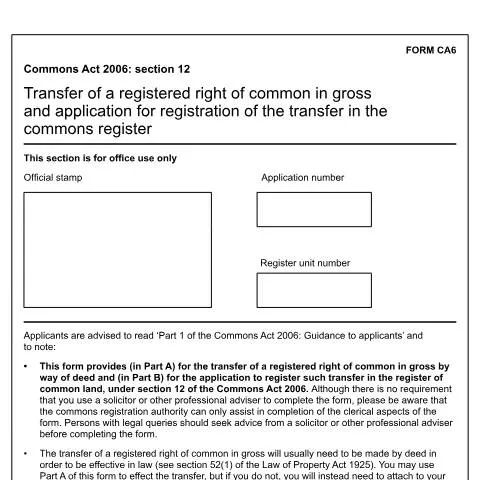
Understanding the Transfer of a Right of Common in Gross: A Detailed Guide to Form CA6
When it comes to land ownership and common rights in the UK, navigating the complexities of official documentation can often feel overwhelming. One such document, central to the transfer of common rights, is Form CA6, officially termed as the "Transfer of a registered right of common in gross." This form, issued by the Department for Environment, Food & Rural Affairs (DEFRA), is crucial for individuals and organizations looking to transfer their rights of common to another party. Understanding the ins and outs of this form is essential for a smooth transaction.
The Legal Framework Surrounding Common Rights
The significance of Form CA6 cannot be overstated, especially within the context of the Commons Act 2006. This legislation was enacted to simplify the legal processes surrounding common land and rights, providing a structured framework for the registration and transfer of these rights.
The Role of the Commons Act 2006
Under section 12 of the Commons Act 2006, the transfer of a right of common in gross is legally documented, requiring adherence to specific procedures. The Act addresses the complexities associated with common land, ensuring that rights are properly recorded and protected.
- Protection of Rights: The Commons Act safeguards existing rights while allowing for the transfer of these rights between parties.
- Transparency: The statutory framework ensures that all transfers are transparent and registered, minimizing disputes and ambiguities.
Who Needs to File Form CA6?
Understanding who is eligible to submit Form CA6 is critical. The form is specifically designed for individuals or entities that hold a registered right of common in gross and wish to transfer that right to another party.
Eligible Participants
Only certain individuals can apply to register the transfer of a right of common in gross, which includes:
- The registered owner of the right of common (the Transferor).
- The person to whom the right is being transferred (the Transferee).
It is important to note that if the Transferor is unable to complete the form for any reason, they must provide a significant explanation as to why, which can include the need for legal representation or other special circumstances.
The Structure of Form CA6: What to Expect
Form CA6 is divided into two primary parts: the Transfer Deed (Part A) and the Registration Application (Part B). Each section has specific fields and requirements that must be meticulously completed to ensure a successful transfer.
Part A: The Transfer Deed
This section focuses on the actual transfer of the right of common. Key elements include:
- Transferor Information: Full name and address, including any relevant organization details.
- Transferee Information: Identification of the individual or entity receiving the right.
- Details of the Right of Common: Description of the right being transferred, including register unit numbers and rights section entry numbers.
Part B: Application for Registration
Part B serves as the formal request to register the transfer. It is essential to ensure that all information is accurate and complete, as any discrepancies may lead to delays or rejections.
Collecting Necessary Documentation
Before initiating the application process, it is crucial to gather all required documentation. This preparation will not only facilitate a smoother submission but also help address potential issues that may arise during the review process.
Types of Documentation Required
Depending on individual circumstances, the following documents may be needed:
- Proof of Identity: For both the Transferor and Transferee.
- Title Deeds: Any existing deeds that prove the right of common ownership.
- Legal Representation: If applicable, a letter from a solicitor confirming they are acting on behalf of the Transferor or Transferee.
Submission Channels: How to File Your Application
Once you have completed Form CA6 and gathered the necessary documentation, the next step is to submit your application. Understanding the available submission channels is essential for ensuring your application is processed efficiently.
Available Submission Methods
There are typically three methods for submitting Form CA6:
- Online Submission: Many applicants prefer this method as it is often faster and allows for immediate confirmation of receipt.
- Postal Submission: Applications can be sent via post, although this may increase processing times. Ensure that you send your application using tracked delivery for proof of receipt.
- In-Person Submission: Depending on the local authority's guidelines, you may have the option to submit your application in person. This can be beneficial if you have questions that need answering at the moment.
Processing and Follow-Up
After submitting Form CA6, it is essential to understand how the Department for Environment, Food & Rural Affairs processes your application and what steps to take if you need to follow up.
What Happens Next?
Once your application is received, it will undergo a review process to ensure all information is complete and accurate. The time it takes to process the application varies based on the complexity of the transfer and the workload of the registration authority.
- Notification of Outcome: You will receive confirmation once your application is processed, along with any necessary documentation.
- Potential Queries: If there are any issues with your application, the registration authority may contact you for clarification or additional information.
How to Follow Up
If you have not heard back within the expected timeframe, reaching out to the relevant department can clarify your application status:
- Have your application number ready for reference.
- Be prepared to provide any additional information if required.
Special Cases: Unique Situations and Considerations
While many applications may follow a standard process, there are unique situations that may complicate the transfer of rights of common. Understanding these nuances can help applicants navigate potential challenges.
Complex Situations
Some scenarios may require additional considerations:
- Joint Ownership: In cases where multiple parties own the right of common, a consensus must be reached, and all owners must sign the transfer deed.
- Involuntary Transfers: If a transfer is initiated due to the death of the Transferor, legal representatives must ensure that the application adheres to specific regulations governing inheritance.
- International Considerations: Foreign parties wishing to acquire rights may face additional legal requirements, including the need for legal advice from professionals familiar with UK land law.
The Importance of Seeking Legal Advice
Given the complexities involved in land rights and the consequences of incorrect documentation, seeking legal advice is highly recommended.
When to Consult a Legal Professional
Consider consulting a solicitor or a legal expert in the following situations:
- You are unsure about the legal implications of transferring the right of common.
- Your application involves multiple parties or complex ownership situations.
- You have received queries or requests for additional information from the registration authority.
Legal professionals can provide tailored advice, ensuring that your application is processed smoothly and in compliance with all relevant regulations.
Final Thoughts on Navigating Form CA6
Form CA6 serves a critical function in the transfer of rights of common in gross within the UK, acting as a bridge between parties while ensuring that legal processes are followed. By understanding its structure, knowing what to prepare, and following the correct submission protocols, applicants can navigate this essential process with confidence.
For anyone considering a transfer of rights, it is paramount to approach the process with diligence and a clear understanding of the necessary steps. With careful preparation and possibly legal assistance, completing Form CA6 can be a straightforward process that facilitates the transfer of valuable land rights.
Understanding Common Land in the UK
Common land refers to areas of land where certain rights, such as grazing or collecting firewood, are shared among a community or group of people. These rights can be remarkably complex and can vary significantly depending on local customs and historical agreements. In the UK, common land is generally governed by the Commons Act 2006, which provides a framework for the management and regulation of these lands. It’s crucial for landowners and potential rights holders to understand what constitutes common land and the implications of such designations.
Common land is typically found in rural areas, and its use is often linked to traditional practices. Rights associated with common land may include pasturing livestock, cutting turf, or gathering wild plants. However, the rights attached to common land do not always extend to everyone; they are usually tied to specific individuals or properties. This means that understanding your rights or the rights of others in relation to a particular piece of common land is essential for any transactions involving these rights.
Transfer of Rights in Common Land: Steps and Considerations
The transfer of rights over common land, particularly rights of common in gross, involves several critical steps and considerations. A right of common in gross refers to a right that is not attached to a parcel of land owned by the right holder; instead, it is an independent right, which can be sold or transferred. To embark on this process, it is important to follow the proper procedures outlined by the Commons Act 2006.
Before initiating a transfer, potential buyers and sellers should conduct thorough due diligence. This includes:
- Verifying Existing Rights: Ensure that the right of common in gross is clearly documented and established. This might involve reviewing historical records and land registers to confirm that the rights can be lawfully transferred.
- Recognising Limitations: It’s important to understand any limitations or conditions associated with the right. For instance, some rights may be restricted to certain types of activities or may only apply during specific times of the year.
- Consulting with Local Authorities: Engaging with local authorities, such as the relevant council or the Land Registry, can provide clarity on the transfer process and any regulations that must be adhered to.
Once the due diligence has been conducted, the next step involves formally documenting the transfer. This may involve creating a written agreement that outlines the terms of the transfer, including any financial considerations, responsibilities, and the duration of the transferred rights. It may also require registration with the appropriate land registry to ensure that the transfer is legally recognised.
Another critical aspect to consider is the potential need for public consultation or notification, especially if the common land is part of a larger community resource. This ensures that all stakeholders are informed and have the opportunity to voice any concerns or objections regarding the transfer.
Legal Implications of Transferring Rights of Common
When transferring rights of common, understanding the legal implications is paramount. The Commons Act 2006 provides the framework for these rights, but it also imposes specific obligations on both the transferor and the transferee. Failure to comply with these legal requirements can lead to disputes or complications in the future.
One significant legal consideration involves the potential impact of the transfer on existing common land. If the transfer alters the rights or the manner in which the common land is used, it may necessitate a modification of the land’s registration. This could also trigger a need for consent from regulatory bodies, particularly if the change affects the ecological or community value of the common land.
Additionally, there may be tax implications associated with the transfer of rights. Depending on the nature of the transaction, it may be subject to Capital Gains Tax or other liabilities. Consulting with a tax advisor who understands land use regulations can help clarify these potential costs.
Lastly, all parties involved should be aware of the possibility of disputes arising from the transfer. It’s advisable to include provisions in the transfer agreement that address dispute resolution mechanisms, whether through mediation, arbitration, or legal proceedings, should any disagreements occur post-transfer.