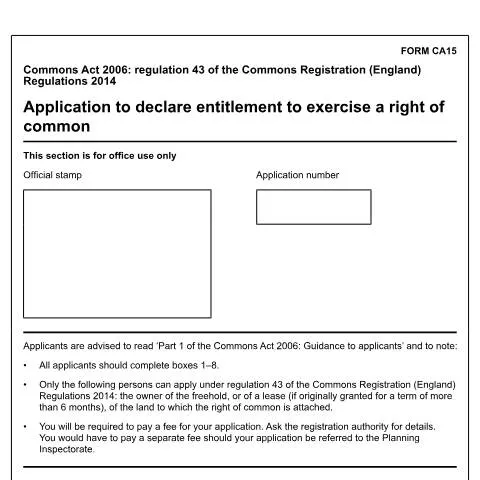
The Importance of Common Land Rights: Understanding Form CA15
Imagine residing near a picturesque stretch of land, rich in biodiversity and historical significance, where you have the right to roam or graze livestock. Such rights are governed by legal frameworks, particularly in England, where the Commons Act 2006 plays a crucial role. The Common Land and Greens: Declaring Your Entitlement to a Right of Common (CA15) form enables eligible landowners or leaseholders to declare their entitlement to exercise such rights. This article delves deep into the significance, processing, and implications of this essential document.
Navigating the Landscape: Who Needs to Complete Form CA15?
Form CA15 is not a document that just anyone can fill out. Only specific individuals are qualified to submit this application, which includes:
- Owners of the freehold of the land.
- Leaseholders, provided the lease was originally granted for more than six months.
This exclusivity emphasizes the importance of clearly establishing land rights. If you own a property adjacent to common land or are considering acquiring such a right, understanding your eligibility is crucial.
The Legal Framework Behind Your Rights
The CA15 form is rooted in the Commons Act 2006, particularly regulation 43 of the Commons Registration (England) Regulations 2014. This legal framework ensures that common land is managed properly, allowing communities to benefit from shared resources while protecting the environment. The act has its roots in England's feudal land tenure system, evolving through various legal precedents to address modern concerns over land use and sustainability.
Step-by-Step: Completing Form CA15
Completing the CA15 form is a critical step in declaring your rights. Here’s how to go about it:
- Gather Required Information: Before starting, ensure you have all necessary details, including ownership details, land titles, and any previous registration numbers related to the land.
- Fill Out the Applicant Section: This includes your name, postal address, and contact information. If you’re representing a corporation, include the full name of the organisation.
- Specify Your Basis for Application: Clearly indicate whether you are applying as a freeholder or leaseholder, and provide the corresponding land registration numbers.
- Detail Your Common Land Rights: If your declaration pertains to only part of a right, explain how you calculated the extent of that right.
- Review and Attach Payment: Ensure you enclose the appropriate fee, as specified by the registration authority.
Common Pitfalls: Errors to Avoid
Errors in your application can lead to delays or even rejection. Here are a few common pitfalls:
- Incomplete sections: Ensure all boxes are filled in, including contact information.
- Incorrect fee payment: Double-check the fee with the registration authority to avoid complications.
- Failure to specify rights clearly: Ambiguities can lead to challenges later.
Submission Channels: How to Send Your Application
Once you’ve completed the form, it’s time to submit it. You have several options:
| Method | Description |
|---|---|
| Online Submission | Check if your registration authority allows online applications; this can expedite your submission. |
| Postal Submission | Send the signed form and payment by post to your local commons registration authority. |
| In-Person Submission | Visit the registration authority’s office to submit the form directly; this allows for immediate feedback on your submission. |
Where to Send Your Application
Your application should be sent to the appropriate commons registration authority. Each locality may have different offices managing these applications. Ensure you check local guidelines for exact addresses and any additional instructions specific to your area.
What Happens Next? The Review Process
After submitting your application, it will undergo a review process. This includes:
- Verification of Information: The authorities will review the details to ensure all information is correct and complete.
- Consultation Phase: During this phase, the public may be invited to comment, particularly if there are any objections to your application.
Approval times may vary based on the complexity of the application and the specific registration authority’s workload. It is advisable to remain proactive and follow up if you do not receive a response in a reasonable timeframe.
Potential Outcomes of Your Application
Once the review process is complete, you will receive one of the following outcomes:
- Application Approved: You will receive confirmation of your rights, enabling you to exercise your right of common as declared.
- Application Refused: If rejected, you will be provided with reasons, along with guidance on how to appeal the decision.
Addressing Errors: What to Do if Your Application is Returned
It is not uncommon for applications to be returned due to errors or missing information. In such cases:
- Read the Feedback Carefully: Understand the reasons for the return thoroughly.
- Correct the Issues: Address the specific concerns raised in the feedback.
- Resubmit Promptly: Ensure to submit the corrected application quickly to avoid any potential loss of rights.
Appealing a Refusal
If your application is denied, you have the right to appeal. The appeal process may involve:
- Submitting a formal request outlining your grounds for appeal.
- Providing additional evidence or documentation to support your case.
- Engaging in a hearing if necessary, where you might present your situation before a panel.
Being meticulous in your initial submission can often prevent the need for appeals, but understanding your rights and the appeal process is equally essential.
Conclusion: Securing Your Common Rights
Completing Form CA15 is a fundamental step in legally asserting your rights over common land. The ability to declare and secure these rights impacts personal, community, and environmental outcomes significantly. Each part of the process, from gathering information to submission, requires attention to detail and awareness of local regulations. By understanding and following the necessary steps, you can navigate the complexities of common land rights with confidence.
Understanding Common Land: Definitions and Types
Common land refers to land which is owned collectively or by one person, but over which other people have rights to access or use. In the UK, the rights associated with common land can vary widely, encompassing a range of traditional usages such as grazing, wood cutting, and even recreational activities. There are several types of common land, including:
Fill in your form directly online
No printing: type your details into the boxes of the official form, tick, then download the PDF ready to send.
- 1Type into the form boxes
- 2Tick in one click
- 3Save and download the PDF
- Town Greens: These are areas of land in towns or villages that are used by the local community for recreation and leisure. Town greens have specific legal protections under the Commons Act 2006.
- Common Pasture: This type of land is designated for grazing animals, where designated rights are held by landowners or residents within a community.
- Waste Land: Typically uncultivated land, waste land can include areas like moors or heath and is often used for various public rights.
Understanding the specific classification of common land is crucial for individuals considering their entitlement to a right of common. Each type of common land is governed by its own legal framework, which will dictate the type of rights that exist and how they can be exercised.
Eligibility for Declaring a Right of Common
To declare your entitlement to a right of common, specific eligibility criteria must be met. These conditions can vary based on the nature of the common land and the particular rights being claimed. Generally, eligibility hinges on:
- Ownership: You must either own land that is adjacent to the common land or hold a specific right to use the common land. This could include rights acquired through long-term customary use or formal rights established by historical agreements.
- Evidence of Use: You may need to provide evidence that you have exercised your right over a period of time, which could include testimonies, documents, or historical records showing your consistent use of the land.
- Local Authority Procedures: Your application must align with specific local authority regulations, which may require you to engage with certain processes, such as submitting declarations or attending consultations.
It is essential to compile relevant documentation and conduct thorough research to confirm your eligibility before proceeding with your application. Local records or even consultations with local common land associations can be beneficial in establishing your claim.
Potential Disputes and How to Resolve Them
Disputes regarding common land and rights of common are not uncommon, especially in areas where traditional practices have come into conflict with modern land use developments. Potential sources of conflict may include:
- Encroachment: This occurs when private landowners may inadvertently or deliberately restrict access to common land or assert ownership over areas traditionally used by the community.
- Changes in Land Use: Developments such as construction projects can lead to disputes as they may block access to common land or alter its use.
- Conflicting Claims: Different individuals or groups may assert competing claims to the same right of common, leading to potential legal disputes.
In the event of a dispute, affected parties should first attempt to resolve the matter amicably through direct communication or mediation. If this fails, the next steps may include:
- Engaging with Local Authorities: Contact your local council or authority that oversees common land matters. They can provide guidance on the process for resolving disputes.
- Formal Complaint or Inquiry: If informal resolution is unsuccessful, a formal complaint may be lodged or an inquiry requested under the Commons Act 2006.
- Legal Action: As a last resort, parties involved may seek legal counsel to explore options for litigation, though this can be time-consuming and costly.
Understanding the landscape of disputes surrounding common land is vital for anyone looking to assert or defend their rights. Keeping thorough records and being proactive in maintaining relationships with neighbours and community groups can significantly alleviate tensions and foster a more cooperative environment.