Understanding GBHC300 Model Health Certificates for International Bovine Meat Trade
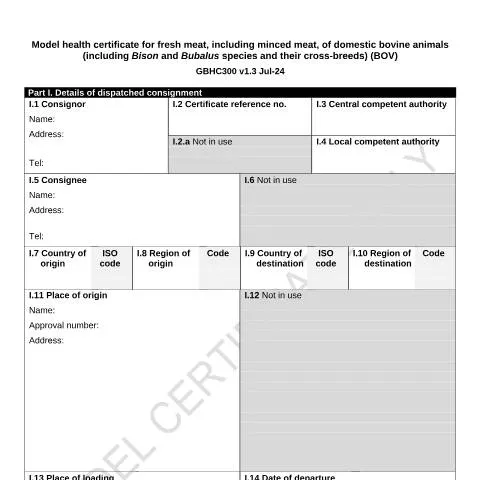
When British meat exporters prepare to ship fresh bovine products across international borders, they must navigate a complex web of veterinary certification requirements. The GBHC300 model health certificate, administered by the Animal and Plant Health Agency (APHA) under Defra, serves as the cornerstone document that validates the health status and safety of fresh meat from domestic bovine animals, including specialised species like Bison and Bubalus.
This certification system represents more than administrative compliance—it underpins £2.8 billion worth of annual UK meat exports and ensures British producers can access premium international markets. The certificate's rigorous veterinary standards protect both animal health globally and the reputation of British beef products abroad.
Comprehensive Coverage: What the Certificate Actually Attests
The GBHC300 certificate provides detailed attestation across multiple critical areas of bovine meat safety and traceability. Unlike generic export documentation, this certificate specifically validates the complete chain of custody from farm to processing facility.
Territory and Disease Status Verification
The certificate confirms that meat originates from territories meeting strict disease-free requirements. Specifically, it attests that the source territory has maintained 12 months of freedom from rinderpest and meets one of several foot-and-mouth disease status categories, ranging from complete freedom to controlled vaccination programmes under official supervision.
These territorial requirements vary significantly depending on the destination country's risk assessment. Some importing nations accept meat from territories with supplementary guarantee codes A, H, J, E, or F, each representing different levels of disease control measures and vaccination protocols.
Establishment and Processing Validation
Beyond territorial status, the certificate validates that processing establishments meet rigorous operational standards. This includes confirmation that within a 10-kilometre radius of the slaughterhouse, no disease outbreaks have occurred during the 30 days preceding processing.
The documentation also certifies that animals underwent proper ante-mortem inspection within 24 hours of slaughter and that all processing occurred without contact with non-compliant meat products.
Eligibility Criteria and Application Pathways
Obtaining a GBHC300 certificate requires meeting specific eligibility thresholds that extend well beyond basic food safety compliance. The application process involves multiple stakeholders and rigorous verification procedures.
Qualifying Establishments and Operators
Only approved slaughterhouses and cutting plants with current APHA establishment numbers can initiate the certification process. These facilities must maintain continuous compliance with EU-retained legislation on animal health and food safety standards.
| Facility Type | Required Approval | Key Responsibilities |
|---|---|---|
| Slaughterhouse | APHA establishment number | Ante-mortem inspection, disease monitoring |
| Cutting Plant | Separate approval number | Maintaining product separation, traceability |
| Cold Storage | Approved facility status | Temperature control, contamination prevention |
| Minced Meat Plant | Specialised approval | Additional microbiological controls |
Animal Source Requirements
Animals must demonstrate clear residency patterns, having either remained in the certifying territory since birth or for at least three months before slaughter. Alternative pathways exist for animals introduced from territories already authorised for Great Britain imports, but these require additional documentation of the transfer date and origin territory status.
The Official Veterinarian's Central Role
The GBHC300 certificate derives its legal authority from the signature and attestation of an official veterinarian appointed by APHA. This role carries significant professional and legal responsibilities that extend beyond routine inspection duties.
Verification Responsibilities
The official veterinarian must personally verify multiple components before signing the certificate. This includes reviewing territorial disease status reports, confirming establishment compliance records, and validating that all animals underwent proper health inspection procedures.
The veterinarian's attestation specifically covers the 24-hour ante-mortem inspection period, during which animals must show no evidence of diseases specified in the territorial requirements section. This inspection cannot be delegated and must be documented with precise timing records.
Liability and Professional Standards
Official veterinarians signing GBHC300 certificates assume legal liability for the accuracy of their attestations. False certification can result in professional sanctions, criminal charges, and significant financial penalties for both the veterinarian and the exporting establishment.
Certificate Validity Periods and Renewal Protocols
Unlike permanent licenses, GBHC300 certificates have limited validity periods tied to the specific consignment they accompany. Understanding these temporal restrictions is crucial for exporters managing complex shipping schedules.
Consignment-Specific Validity
Each certificate applies exclusively to the consignment described in Part I of the document. The validity begins from the date of departure specified in section I.14 and typically expires within predetermined timeframes that vary by destination country and transport method.
For chilled products, certificates generally remain valid for shorter periods due to shelf-life considerations, while frozen products may have extended validity periods. Ambient temperature products face the strictest time limitations due to food safety concerns.
Renewal and Amendment Procedures
Certificates cannot be renewed or extended once issued. Any changes to consignment details, transport arrangements, or destination requirements necessitate applying for a completely new certificate. This includes modifications to package numbers, net weights, or processing establishment details.
International Trade Applications and Border Control
The GBHC300 certificate serves multiple functions within international trade frameworks, each requiring specific presentation and validation procedures at various control points.
Border Control Point Requirements
At the designated Border Control Post (BCP) specified in section I.16, importing country officials conduct detailed verification of certificate authenticity and completeness. This process typically involves cross-referencing the certificate reference number with APHA databases and validating the official veterinarian's credentials.
The seal and container numbers recorded in section I.23 must match physical seals applied at the place of loading, creating an unbroken chain of custody from processing facility to destination.
Documentation Integration
The certificate must accompany other required documentation, including commercial invoices, packing lists, and transport documentation referenced in section I.15. Discrepancies between these documents can result in consignment rejection or extended border delays.
Managing Certificate Discrepancies and Corrections
When errors occur in GBHC300 certificates, exporters face time-sensitive correction procedures that can significantly impact shipping schedules and commercial relationships.
Pre-Departure Error Resolution
Errors discovered before consignment departure allow for certificate cancellation and reissue, provided the official veterinarian can verify that all underlying conditions remain valid. This process requires returning the original certificate to APHA and may involve additional inspection fees.
Common errors include incorrect establishment numbers, inaccurate net weights, or missing supplementary guarantee codes. The official veterinarian must verify that corrections don't affect the fundamental health attestations before authorising reissue.
Post-Departure Complications
Errors discovered after departure create more complex resolution scenarios. While minor clerical errors might be addressed through official correspondence between competent authorities, substantive errors typically require consignment return or destruction at the importer's expense.
In cases where territorial disease status changes after certificate issuance but before consignment arrival, APHA may need to communicate directly with destination country authorities to determine whether the certificate remains acceptable.
Supplementary Guarantee Codes and Territory Classifications
The GBHC300 certificate incorporates a sophisticated system of supplementary guarantee codes that reflect different risk management approaches for various territories and disease control scenarios.
Code Classifications and Implications
Supplementary guarantee codes A, E, F, H, and J represent different combinations of vaccination policies, surveillance systems, and disease control measures. Code A territories, for example, may implement official vaccination programmes while maintaining export eligibility under specific conditions.
These codes directly impact market access, as importing countries often specify which codes they will accept. Territories with multiple applicable codes provide exporters with greater flexibility in meeting diverse market requirements.
Understanding these classifications enables producers to make strategic decisions about facility locations, supply chain partnerships, and market development priorities. The codes also influence insurance requirements and commercial contract terms for international sales.
The GBHC300 certificate system exemplifies the intricate balance between facilitating international trade and maintaining rigorous animal health standards. For British meat exporters, mastering these certification requirements represents both a regulatory obligation and a competitive advantage in accessing premium international markets where health certification standards continue to evolve.
Digital Submission Requirements and Technical Specifications
The digitalisation of health certificate processes has introduced specific technical requirements that exporters must carefully observe. When submitting model health certificates electronically through TRACES NT (Trade Control and Expert System - New Technology), documents must comply with strict formatting protocols to ensure seamless processing by both UK and destination country authorities.
PDF submissions require specific metadata preservation, including embedded fonts and non-editable text fields where pre-populated data appears. The system automatically validates certain data points against existing databases, particularly establishment numbers and veterinary practice registrations. Any discrepancies trigger immediate rejection, potentially delaying shipments by several days whilst corrections are processed.
File size limitations apply across different certificate types, with standard bovine meat certificates capped at 10MB per submission. This constraint becomes particularly relevant when including supplementary laboratory reports or photographic evidence of packaging compliance. Exporters frequently encounter issues when scanning certificates at excessive resolution - whilst clarity remains important for official verification, files exceeding size limits require compression that may compromise readability of critical details.
The digital signature process involves multiple authentication layers, beginning with the certifying veterinarian's qualified electronic signature, followed by establishment operator confirmation, and concluding with automated system verification against the UK's national database of authorised signatories. Each signature must be applied within specific timeframes relative to the inspection date, typically within 24 hours for fresh meat products and 72 hours for processed items.
Backup submission protocols exist for system outages or technical failures. Emergency paper-based submissions remain acceptable under exceptional circumstances, but require immediate notification to the relevant port health authority and subsequent digital upload within five working days of system restoration. These contingency measures have proven essential during periods of high system demand, particularly around major trading periods when submission volumes peak significantly.
Common Compliance Pitfalls and Preventive Measures
Understanding frequent compliance failures helps exporters implement robust quality assurance procedures before certificate submission. Temperature recording discrepancies represent the most common cause of certificate rejection, particularly where continuous monitoring data shows gaps or unexplained variations during transport preparation phases.
Establishment registration mismatches frequently occur when businesses operate from multiple sites but fail to specify the correct premises code on certificates. This becomes particularly problematic for companies with separate slaughter, processing, and storage facilities, each requiring distinct establishment numbers. The APHA maintains strict protocols requiring certificates to reference the specific premises where final processing occurred, not merely the company's registered office address.
Veterinary signature timing violations constitute another frequent compliance issue. Official veterinarians must physically inspect products within prescribed timeframes before signing certificates, typically no more than 24 hours prior to dispatch for fresh products. Weekend and holiday scheduling often creates logistical challenges, as emergency call-out procedures may involve different veterinarians unfamiliar with specific establishment protocols or product specifications.
Laboratory testing result integration presents ongoing challenges, particularly where multiple testing laboratories provide different report formats or use varying reference standards. Certificates must clearly reference specific test batch numbers and methodologies, with particular attention to BSE testing protocols which require standardised reporting formats aligned with EU scientific committee recommendations.
Product description accuracy demands meticulous attention to detail, as generic terms like "beef products" insufficient for international trade purposes. Certificates must specify exact anatomical origins, processing methods, packaging specifications, and any treatments applied during production. Common errors include failing to distinguish between mechanically separated meat and standard cuts, or omitting details about marination, seasoning, or preservation processes that affect import classification in destination countries.
Cross-contamination documentation requires comprehensive facility mapping and process flow verification. Establishments processing both bovine and other species must demonstrate effective segregation measures, with certificates reflecting specific production line allocations and cleaning protocol compliance. This becomes particularly complex in facilities handling both conventional and organic products, where separate certification streams may apply.
Post-Brexit Regulatory Adaptations and Ongoing Changes
The UK's departure from European Union frameworks has necessitated substantial modifications to bovine meat certification processes, creating a dynamic regulatory environment that continues evolving through bilateral trade negotiations and unilateral policy adjustments. These changes particularly affect establishments previously operating under EU-wide approval systems, now requiring UK-specific authorisations and modified certificate formats.
Northern Ireland presents unique complexities under the Northern Ireland Protocol arrangements, where establishments may require dual certification systems depending on final destination markets. Products destined for Republic of Ireland or broader EU markets through Northern Ireland must comply with EU health certificate requirements, whilst those remaining within UK markets follow domestic protocols. This dual system creates operational challenges for businesses serving both markets simultaneously.
Third country recognition agreements represent ongoing negotiation priorities, with certification requirements subject to change as new bilateral arrangements are finalised. Recent agreements with countries including Japan, Australia, and New Zealand have introduced modified certificate templates and revised veterinary attestation requirements. Exporters must monitor APHA communications regularly, as changes often implement with minimal transition periods.
Mutual recognition of inspection systems varies significantly between trading partners, affecting the level of documentation required for different destinations. Some countries accept UK establishment approvals and inspection protocols at face value, whilst others demand additional verification procedures or supplementary testing beyond standard UK requirements. These variations create complex compliance matrices that exporters must navigate carefully to avoid costly delays or rejections.
The phased implementation of new UK border control systems continues affecting import-export procedures, with the Border Target Operating Model introducing enhanced risk assessment protocols that may influence certificate requirements. These changes particularly impact businesses importing raw materials or semi-processed products for further processing before export, as traceability documentation requirements have intensified considerably.
Regulatory guidance interpretation sometimes differs between UK constituent countries, with Scotland, Wales, and Northern Ireland maintaining some distinct approaches to implementation despite overarching UK-wide frameworks. These variations most commonly affect organic certification requirements, animal welfare attestations, and environmental compliance documentation that may accompany health certificates for certain premium market segments.
Future regulatory developments remain subject to international trade negotiations and evolving scientific understanding of food safety risks. The UK government has indicated intentions to streamline certain certification processes through increased automation and risk-based approaches, potentially reducing administrative burdens for established, compliant operators whilst maintaining robust safety standards for consumer protection.