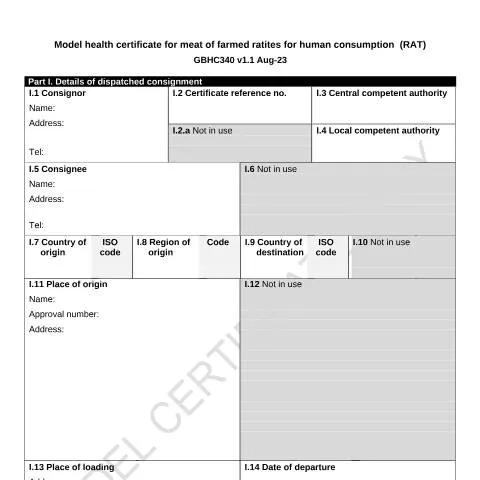
Understanding the Importance of Ratite Meat Health Certificates in the UK
As global trade in food products continues to expand, the importance of health certificates cannot be overstated, particularly when it comes to animal products. Ratite meat, derived from large flightless birds such as ostriches and emus, requires specific health certification to ensure that it is safe for human consumption. The Model Health Certificate for Ratite Meat (GBHC340) serves as a vital document for exporters, importers, and food safety authorities, ensuring that the meat complies with the stringent health standards set forth by the UK.
The Acquisition Process of the Ratite Meat Health Certificate
Obtaining a health certificate for ratite meat involves several steps that must be meticulously followed to ensure compliance with regulations. Below is a detailed breakdown of the acquisition process:
- Contact the Appropriate Authority: The first step involves reaching out to the relevant local competent authority (LCA), which falls under the Department for Environment, Food & Rural Affairs (DEFRA) or the Animal and Plant Health Agency (APHA).
- Prepare Necessary Documentation: You must gather all required documentation related to the production and handling of the ratite meat. This includes details about the origin of the meat, transport means, and the establishment where the slaughter took place.
- Application Submission: Fill out the application form for the health certificate, including all required fields related to the meat consignment such as consignor details, country of origin, and health status of the animals.
- Veterinary Inspection: An official veterinarian will need to inspect the meat product to ensure it meets the necessary health standards. This inspection includes verifying the absence of diseases like Newcastle disease and Highly Pathogenic Avian Influenza.
- Issuance of Health Certificate: Upon successful inspection and compliance with all criteria, the health certificate (GBHC340) will be issued. This document must accompany the meat during transport to its destination.
Legal Implications and Certification Value
The Model Health Certificate for Ratite Meat is more than just a piece of paper; it holds substantial legal weight. This certificate confirms that the meat has been inspected and adheres to the UK's strict food safety regulations. Here are some critical considerations regarding its legal implications:
- Food Safety Compliance: The certificate acts as proof that the product is safe for human consumption, complying with the UK's food safety laws.
- Export and Import Regulations: Without this certificate, the ratite meat cannot be legally exported to or imported into Great Britain, as mandated by trade agreements and food safety protocols.
- Liability Issues: Should a health issue arise related to the consumption of ratite meat, the presence of this certificate can protect the suppliers and ensure accountability.
Eligibility Criteria for Obtaining the Certificate
Various stakeholders can apply for the Ratite Meat Health Certificate, subject to specific eligibility criteria:
- Producers and Exporters: Individuals or companies involved in the farming and processing of ratites for meat production can apply for the certificate, provided they meet the health and safety standards established by the UK authorities.
- Transporters: Entities responsible for transporting ratite meat must ensure that the consignments are accompanied by a valid health certificate to comply with import regulations.
- Veterinary Establishments: Only certified veterinarians can perform the necessary inspections and authorize the issuance of the health certificate. This necessitates maintaining their accredited status with the relevant authorities.
Real-World Applications of the Ratite Meat Health Certificate
The Ratite Meat Health Certificate is utilized in multiple scenarios, serving as an essential tool for various stakeholders within the meat supply chain:
- Import Compliance: Importers of ratite meat into Great Britain must present this certificate to customs officials to ensure compliance with local health regulations.
- Food Industry Standards: Restaurants, stores, and distributors using ratite meat must keep this certificate on file as part of their food safety documentation.
- Traceability: The health certificate aids in tracing the origin of the meat, which is crucial during food safety inspections or in case of a health crisis.
Validity and Renewal of the Health Certificate
The health certificate for ratite meat has specific validity periods that must be adhered to:
| Aspect | Details |
|---|---|
| Validity Duration | Typically, the health certificate is valid for a limited period, often until the product's arrival at its destination. |
| Renewal Process | If the meat is not transported within the validity period, a new health certificate will be required. This involves repeating the veterinary inspection. |
| Replacement Procedures | In case of loss or damage, a replacement can be applied for through the local competent authority. |
Addressing Errors and Disputes Related to the Health Certificate
Errors and discrepancies in the health certificate can occur, leading to potential disputes or delays in the trade of ratite meat. Here’s how to deal with such issues:
- Identifying Errors: Review the health certificate thoroughly upon receipt to check for any inaccuracies in consignor details, product identification, or health status declarations.
- Notification: If any discrepancies are found, notify the issuing authority immediately. This can help in expediting the resolution process.
- Dispute Resolution: Should a dispute arise, stakeholders may need to provide supporting evidence and documentation to clarify the situation, such as proof of health inspections or compliance records.
Conclusion: The Significance of Health Certification in Animal Product Trade
The Model Health Certificate for Ratite Meat is a critical component in ensuring safe and compliant trade within the UK's food industry. For producers, exporters, importers, and consumers alike, this document not only safeguards public health but also fosters trust in food supply chains. As the marketplace continues to evolve, understanding the nuances of health certification will be essential for all parties involved in the trade of animal products.
Understanding the Health Certificate Requirements for Ratite Meat
The export and import of ratite meat, particularly from the UK, demand stringent compliance with health certificate regulations set by the Food Standards Agency (FSA) and relevant trade bodies. Ratites, which include ostriches, emus, and rheas, have gained popularity in the meat industry due to their lean quality and sustainability.
Before exporting ratite meat, producers must ensure that they are familiar with the specific health certificate requirements. These certificates serve as official documentation confirming that the meat has been inspected and meets health standards, particularly regarding safety, quality, and traceability.
For instance, the health certificate typically needs to include the following information:
- Description of the product: This includes details such as the species, type of product (e.g., fresh, frozen, or processed), and quantity.
- Origin of the product: The certificate must indicate the establishment number and the country of origin of the product.
- Health and safety compliance: It must confirm that the animals were reared under conditions that meet UK health standards, including vaccination and disease control measures.
- Traceability: Details on how the meat can be traced back to its source, which is crucial for food safety protocols.
It is important to note that the health certificate requirements may vary depending on the destination country. Exporters should consult the specific regulations of the importing country, as some may have additional requirements or accept alternative documentation. The FSA provides guidelines on how to obtain and complete these health certificates, ensuring compliance with both UK and international standards.
The Role of Veterinary Inspections in Ratite Meat Certification
Veterinary inspections play a pivotal role in the certification process for ratite meat. These inspections are essential to ensure that the meat produced meets all necessary health standards before it can be exported or sold in the domestic market. The inspections are conducted by official veterinarians who are well-versed in both UK and EU regulations.
During the inspection, the veterinary officer assesses various factors, including:
- Animal Welfare Standards: Ensuring that the farming practices adhere to humane treatment and welfare standards for ratites.
- Hygiene Conditions: Inspection of the processing facilities where the meat is handled, stored, and packaged to confirm that they meet hygiene standards.
- Disease Control: Verification that the animals are free from prevalent diseases, which is crucial for consumer safety.
Additionally, the officer will typically consider records related to vaccinations, feeding practices, and any other health measures taken during the ratites' lifecycle. After a successful inspection, the veterinarian will issue a health certificate, which will be a prerequisite for exporting the meat.
It’s crucial for producers to maintain comprehensive records and documentation of all veterinary inspections, as these can be requested by importers or authorities during audits or inspections. Failure to comply with veterinary health standards can result in rejected shipments, financial losses, and reputational damage in the market.
Challenges and Solutions in Navigating Export Markets for Ratite Meat
While the ratite meat market presents lucrative opportunities for UK producers, it is not without its challenges. Navigating the complexities of export markets requires a thorough understanding of various regulations, market demands, and logistical challenges.
One major challenge is the variability in health certificate requirements across different countries. For example, while some nations may have stringent import regulations that require additional testing and certifications, others might have more lenient requirements. To mitigate this challenge, businesses should:
- Conduct Market Research: Understanding the specific regulations and consumer preferences in target markets can help businesses tailor their export strategies effectively.
- Establish Relationships with Local Authorities: Building connections with local import authorities can facilitate smoother communication and provide insights into regulatory changes.
- Leverage Trade Associations: Joining industry groups can provide access to valuable resources, training, and support in understanding and complying with export regulations.
Another challenge is the logistics of transporting ratite meat, which must remain within specific temperature controls to maintain freshness and safety. Ensuring that meat is adequately refrigerated during transit is critical to prevent spoilage and maintain quality. Producers might consider investing in reliable cold chain logistics solutions or partnering with experienced logistics providers who specialize in meat transport.
Lastly, keeping abreast of changing regulations, both domestically and internationally, is crucial. The landscape of food regulations can change rapidly, and failure to comply can result in significant penalties. Regular training and updates from regulatory bodies, as well as compliance audits, can help businesses stay informed and avoid potential pitfalls.