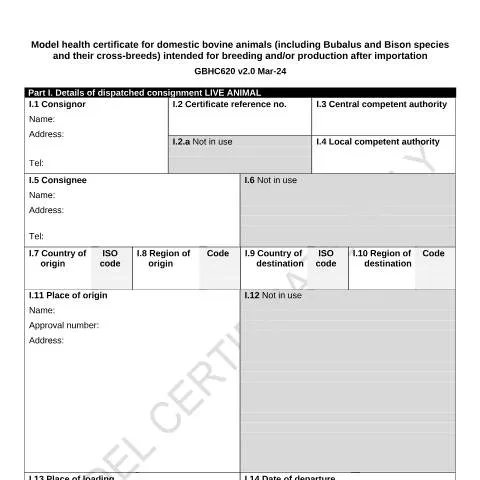
The Importance of the Bovine Model Health Certificate
Imagine a bustling farm in the UK where healthy cattle roam freely. The smooth operation of such an establishment depends significantly on ensuring that every bovine animal is free from disease and meets stringent health requirements, especially when it comes to international trade. The Bovine Model Health Certificate serves as a critical document that validates this health status, particularly for livestock intended for breeding or production.
Issued by the Animal and Plant Health Agency (APHA), a component of the Department for Environment, Food & Rural Affairs (DEFRA), this certificate plays a fundamental role in maintaining biosecurity and ensuring that animals imported into Great Britain meet strict health criteria. The document not only reflects the health status of the animals but also facilitates their movement across borders, helping to prevent the introduction of diseases into the UK.
Steps to Obtain the Bovine Model Health Certificate
Acquiring the Bovine Model Health Certificate involves several systematic steps. Here’s a detailed look at the process:
- Consultation with an Official Veterinarian: Before applying for the health certificate, consult with an official veterinarian who is authorized to carry out health inspections. They will assess the animals' health and guide you through the necessary requirements.
- Health Inspection: The animals must undergo a thorough health inspection. The veterinarian will ensure that they meet the specific health standards required for certification, which includes checking for diseases like foot-and-mouth disease, bluetongue, and others.
- Documentation Preparation: Gather required documents, including proof of vaccination, previous health records, and any other relevant information the veterinarian may need to complete the certificate.
- Issuance of Certificate: Upon successful inspection and verification of health status, the official veterinarian will issue the Bovine Model Health Certificate. Ensure all details are accurate to avoid future disputes.
- Transport Arrangements: Once the certificate is issued, you can arrange for transportation. The certificate will need to accompany the animals during transit to ensure compliance with customs regulations upon arrival in Great Britain.
What This Certificate Attests
The Bovine Model Health Certificate serves multiple functions and holds significant legal weight. It attests that the bovine animals:
- Are free from specific diseases as outlined by health regulations.
- Meet the veterinary standards set forth by UK authorities.
- Have been vaccinated against certain diseases, where applicable, and are not subject to any restrictions based on their health status.
The certificate includes detailed information about the animals, such as species, age, and health check details, ensuring traceability and compliance with health regulations. Its legal value cannot be overstated; it is a prerequisite for importing bovines into the UK and is often required by customs officials upon entry.
Validity and Renewal of the Bovine Model Health Certificate
The validity of the Bovine Model Health Certificate is time-sensitive, and understanding these limits is crucial for successful importation:
| Condition | Validity Period | Renewal Process |
|---|---|---|
| Standard Health Inspection | Typically valid for 30 days from the date of issue | Undergo a new health inspection |
| Vaccination Certification | Varies based on the vaccine used | Must provide updated vaccination records |
| Special Cases (E.g., Disease Outbreaks) | May be revoked if new health concerns arise | Re-assessment by an official veterinarian |
It’s essential to monitor the validity of the certificate closely. If the certificate expires before the animals are imported, a new health inspection and certificate issuance will be necessary.
Who Can Obtain the Bovine Model Health Certificate?
The issuance of the Bovine Model Health Certificate is strictly regulated. Eligibility primarily includes:
- Animal Owners: Individuals or businesses that own the bovines intended for importation.
- Registered Breeders: Those officially recognized and registered under UK regulations.
- Import Agents: Authorized agents can apply on behalf of the owners, provided they have proper documentation and authority.
It’s crucial that only healthy animals are presented for certification. The application should be made well in advance of any planned imports to ensure all health assessments are completed in a timely manner.
Handling Errors, Loss, or Disputes Concerning the Certificate
In the event of a mistake, loss, or dispute related to the Bovine Model Health Certificate, immediate action is advised:
- Identifying the Issue: Determine if the problem lies in documentation errors, loss of the certificate, or disagreements regarding the health status of the animals.
- Contacting the Official Veterinarian: Reach out to the veterinarian who issued the certificate for clarification or to address any discrepancies.
- Documentation Resubmission: If the certificate is lost, apply for a duplicate. This process typically involves providing proof of the original certificate and may require a new inspection.
- Appeal Process: In cases of disputes over health statuses, an appeal may be lodged with the relevant animal health authority, accompanied by all supporting documentation.
Being proactive and maintaining thorough records can significantly minimize issues regarding the certificate.
Practical Uses of the Bovine Model Health Certificate
The practical applications of the Bovine Model Health Certificate extend beyond mere legal requirements. They include:
- Facilitating International Trade: The certificate is essential for importing bovine animals into Great Britain, helping to ensure that only healthy animals enter the country.
- Ensuring Biosecurity: By confirming that imported animals meet health standards, the certificate aids in safeguarding domestic herds from potential disease outbreaks.
- Supporting Market Access: Livestock exporters benefit from possessing a valid certificate, as it enhances their credibility and can improve market access in international trade.
- Regulatory Compliance: Compliance with UK animal health legislation is critical for any livestock business. The certificate serves as proof of adherence to these standards, facilitating smooth operations.
These applications highlight the certificate’s value not just as a document, but as a cornerstone of animal health management within the UK’s agricultural framework.
Conclusion: The Role of the Bovine Model Health Certificate in Animal Welfare
The Bovine Model Health Certificate represents more than a bureaucratic formality; it embodies a commitment to animal welfare, public health, and agricultural integrity. As an essential tool for ensuring the safety and health of livestock, this certificate allows farmers and traders to participate in a global marketplace while protecting the health of the nation's bovine population. Understanding the nuances surrounding its acquisition, validity, and practical applications empowers stakeholders in the agricultural sector to operate efficiently and responsibly.
Understanding Bovine Health Certificates in the UK
Bovine health certificates are essential documents required for the movement of live cattle within the UK and for export to other countries. These certificates ensure that the animals meet specific health criteria necessary for preventing the spread of diseases. The primary authority overseeing these certificates is the Animal and Plant Health Agency (APHA), which operates under the Department for Environment, Food & Rural Affairs (DEFRA).
To obtain a health certificate, farmers or cattle owners must ensure that their animals are registered with the appropriate health and identification systems. This includes having a valid Cattle Passport, which records essential information about the animal, including its breed, age, and health status. The process involves a thorough veterinary examination, where a veterinarian must confirm the health of the bovines and check for any signs of diseases such as Bovine Tuberculosis (TB) or Brucellosis, conditions that could disqualify the animals from being certified.
Once the veterinary inspection is complete, the veterinarian will fill out the health certificate detailing the findings and confirming that the cattle meet national and international health standards. It’s crucial to ensure that this procedure is completed well in advance of any planned movement or export to avoid delays, as issues arising during the inspection process can be time-consuming and costly.
Key Diseases and Vaccinations
When it comes to bovine health certifications, certain diseases are heavily monitored, and vaccinations play an important role in ensuring compliance. In the UK, Bovine Tuberculosis (TB) is a significant concern, and herds must undergo regular testing to maintain their TB-free status. The APHA mandates that herds must have a valid TB test certificate prior to movement. Furthermore, the testing frequency may vary depending on the area; higher risk regions have stricter testing regimes.
Another disease that requires attention is Bovine Viral Diarrhea (BVD), which can severely impact cattle health and productivity. Vaccination against BVD is not mandatory but is highly recommended and is often part of a herd health plan. Owners may need to demonstrate that their cattle have been vaccinated against certain diseases, as part of the health certification process, especially when exporting to other nations with stringent import regulations.
Additionally, the APHA issues guidelines for vaccinations and health management practices specific to the region and the type of cattle being raised. Farmers should stay informed about the latest recommendations and requirements to reduce the risk of disease outbreaks within their herds and ensure compliance with health certification requirements.
Implications of Non-compliance with Health Certificate Regulations
Failure to comply with bovine health certificate regulations can have significant repercussions for farmers and cattle owners. Non-compliance may lead to the inability to move cattle across borders, impose heavy fines, or even result in the culling of affected animals. Furthermore, a breach of the Animal Health Act 1981 can lead to enforcement actions by DEFRA or local authorities, which may include quarantine of the herd, leading to further financial losses.
In addition, the reputation of the farm may suffer considerably. Buyers often look for assured health status before purchasing cattle, and any non-compliance can deter interested buyers, impacting sales and profit margins. It is, therefore, essential for farmers to maintain accurate records of vaccinations, health checks, and inspections, as this documentation is key to ensuring compliance and proving the health status of their cattle.
Moreover, in the context of international trade, non-compliance can lead to wider implications for market access. Countries that import cattle require strict adherence to health regulations, and any failure can jeopardize trade relationships. Staying updated on changes in regulations and ensuring that all required health certifications are in place before any movement of cattle is vital for maintaining trade opportunities.