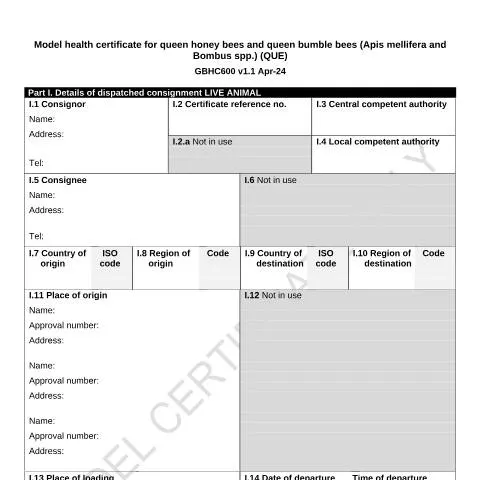
Queen Bee Health Certificates: A Vital Gateway for Apiary Trade
The movement of queen honey bees and bumble bees across international borders requires meticulous health documentation to prevent the spread of devastating diseases that could decimate entire bee populations. The GBHC600 model health certificate serves as Great Britain's standardised framework for certifying the health status of queen bees (Apis mellifera and Bombus spp.) and their accompanying attendants during commercial or breeding transactions.
This specialised certificate, managed through the Department for Environment, Food & Rural Affairs and the Animal and Plant Health Agency, represents far more than administrative paperwork. It functions as a critical biosecurity barrier against American foulbrood, small hive beetle infestations, and Tropilaelaps mite contamination—threats that could devastate Britain's £200 million honey industry and compromise pollination services essential to agriculture.
The certificate's three-part structure encompasses consignment details, official certification requirements, and comprehensive completion notes that guide veterinary authorities through complex verification processes. Each document must bear the signature of an Official Veterinarian or Official Inspector, creating a traceable chain of accountability from origin to destination.
Understanding the Certification Framework for Bee Importation
The GBHC600 certificate operates within a sophisticated regulatory framework that balances international trade facilitation with stringent biosecurity measures. Part I captures essential consignment information including consignor details, transportation methods, and commodity specifications, whilst Part II contains the critical certification statements that veterinary officials must verify before signing.
Territory requirements under code AH/T119 mandate that queen bees originate from regions where American foulbrood, small hive beetle, and Tropilaelaps mites are classified as notifiable diseases or pests. This ensures that exporting countries maintain active surveillance systems capable of detecting and reporting these threats to their competent authorities.
The establishment requirements (AH/E500) offer two certification pathways: breeding apiaries under continuous supervision by competent authorities, or those subject to enhanced oversight specifically when disease reports emerge. Both options require compliance with Great Britain's specific requirements, detailed extensively in the certificate's completion notes.
| Certification Component | Primary Focus | Key Requirements |
|---|---|---|
| Territory Requirements (AH/T119) | Disease surveillance systems | Notifiable disease status for key bee pathogens |
| Establishment Requirements (AH/E500) | Apiary supervision | Competent authority oversight and disease monitoring |
| Product Requirements (AH/P018A) | Contamination prevention | New packaging materials and biosecurity protocols |
Navigating the Application Process Through Competent Authorities
Obtaining a GBHC600 certificate requires coordination between multiple stakeholders, beginning with the exporting country's competent veterinary authority. The process typically initiates when bee breeders or commercial suppliers identify potential export opportunities to Great Britain, triggering a comprehensive evaluation of their apiary's health status and compliance with British requirements.
The central competent authority listed in section I.3 represents the national-level veterinary service responsible for overall certification oversight, whilst the local competent authority (I.4) handles on-ground inspections and sample collection. This dual-layer approach ensures both strategic oversight and practical implementation of health standards.
Applicants must provide detailed information about their breeding operations, including approval numbers for registered apiaries and comprehensive address details for places of origin. The certificate accommodates multiple source locations, recognising that commercial bee breeding often involves consolidated shipments from several approved facilities within a territory.
Transportation logistics play a crucial role in the certification process, with section I.15 requiring specification of transport methods—whether by aeroplane, ship, railway wagon, or road vehicle. Each mode carries distinct biosecurity implications, particularly regarding transit times and potential exposure to contamination sources during journey breaks.
Documentation Requirements and Supporting Evidence
The certification process demands extensive supporting documentation beyond the basic certificate form. Veterinary authorities must maintain records demonstrating compliance with the 30-day testing requirements for American foulbrood, utilising diagnostic protocols specified in the OIE Manual of Diagnostic Tests and Vaccines for Terrestrial Animals.
Comb sampling represents a particularly critical component, requiring laboratory analysis within 30 days of certificate issuance. These samples must yield negative results for American foulbrood spores, providing scientific evidence of colony health status rather than relying solely on visual inspections.
Geographic restrictions add another layer of complexity, particularly the requirement for a 100-kilometre radius verification around the source apiary. This extensive buffer zone reflects the potential for disease transmission through bee movement patterns and environmental factors that could compromise colony health.
Special Considerations for Isle of Man Shipments
The GBHC600 certificate includes specific provisions for shipments destined for the Isle of Man, reflecting that territory's enhanced biosecurity measures regarding Varroa mite prevention. Section I.27 notes explicitly state that queen bee introduction to the Isle of Man requires origin from countries or territories recognised as varroa-free by local veterinary authorities.
This restriction acknowledges the Isle of Man's unique status as one of the few territories worldwide that maintains varroa-free bee populations. The devastating impact of Varroa destructor mites on honey bee colonies makes this protection measure essential for preserving the island's valuable bee genetic resources and honey production capabilities.
Exporters targeting Isle of Man markets must engage directly with local veterinary authorities to confirm their territory's varroa-free recognition status before initiating certificate applications. This additional verification step can extend processing timelines but ensures compliance with the island's stringent biosecurity requirements.
Attendant Bee Regulations and Quantity Limitations
Queen bee shipments typically include accompanying worker bees that provide care and protection during transit. The GBHC600 certificate establishes clear parameters for these attendant bees, limiting each queen to a maximum of 20 accompanying workers as specified in completion note I.20.
This numerical restriction balances practical shipping needs with biosecurity concerns. Excessive attendant populations increase the risk of disease transmission whilst insufficient numbers compromise queen survival during extended transport periods. The 20-bee limit represents established best practice based on decades of international bee trade experience.
Attendant bee health status receives equal scrutiny to queen bee certification, requiring the same territorial and establishment compliance standards. These workers must originate from identical health-certified colonies and undergo the same pre-shipment evaluation processes as their queens.
Packaging and Contamination Prevention Protocols
Product requirements under code AH/P018A mandate that all packaging materials, queen cages, and accompanying products must be entirely new and free from previous contact with diseased bees or contaminated brood-combs. This stringent standard prevents inadvertent disease transmission through reused equipment that might harbour pathogenic organisms.
The requirement extends beyond primary packaging to encompass food supplies provided during transit. Honey, sugar syrup, or other nutritional supplements must meet the same contamination-free standards, often necessitating sealed, sterile preparations rather than materials drawn from existing hive stores.
Precautionary measures must demonstrate active contamination prevention rather than passive absence of known contamination sources. This proactive approach requires documented protocols showing how packaging materials are sourced, handled, and maintained in sterile conditions throughout the preparation process.
Certificate Validity Periods and Renewal Protocols
The GBHC600 certificate operates under time-sensitive validity parameters that reflect the dynamic nature of bee health status and disease emergence patterns. Laboratory testing requirements specify that comb samples must be analysed within 30 days of certificate issuance, establishing a practical validity window for health certifications.
American foulbrood screening results lose their relevance rapidly due to the disease's potential for sudden emergence and rapid spread within affected colonies. The 30-day testing window ensures that certified health status reflects current conditions rather than historical assessments that might no longer accurately represent colony wellness.
Geographic restriction verifications, particularly the 100-kilometre radius clearance requirements, must similarly reflect recent surveillance data. Competent authorities cannot rely on outdated area assessments when certifying compliance with territorial health standards, necessitating current verification of disease-free status within specified buffer zones.
Renewal Procedures for Extended Export Campaigns
Commercial bee breeders conducting extended export campaigns must navigate renewal procedures when initial certificates expire before completing planned shipments. The process requires fresh laboratory testing, updated territorial assessments, and renewed veterinary inspections rather than simple administrative extensions.
Seasonal considerations significantly impact renewal timing, particularly for regions where American foulbrood monitoring intensity varies with bee activity patterns. Winter periods might limit sampling opportunities whilst spring expansion phases could reveal previously undetected infections requiring immediate attention.
Renewal applications must demonstrate continuity of health management practices between certificate periods, showing that apiaries maintained consistent biosecurity standards throughout the validity gap. This documentation requirement prevents exploitation of renewal processes to circumvent ongoing health monitoring obligations.
Addressing Certificate Discrepancies and Compliance Failures
Certificate discrepancies discovered during import processing can trigger immediate consignment detention and comprehensive re-evaluation procedures. Border Control Posts specified in section I.16 conduct detailed verification of certificate accuracy against physical consignment characteristics, identifying potential falsification or documentation errors.
Laboratory result inconsistencies represent particularly serious compliance failures, often indicating either testing protocol violations or deliberate misrepresentation of health status. Such discoveries typically result in consignment rejection and potential suspension of certification privileges for involved parties.
Transportation documentation mismatches between certificate declarations and actual shipping methods can compromise traceability and biosecurity verification. These discrepancies might indicate unauthorised route changes that exposed consignments to contamination risks not addressed in original certifications.
Corrective Actions and Appeal Procedures
Minor administrative errors in certificate completion might permit correction through amended documentation procedures, provided core health certifications remain accurate and verifiable. However, substantive errors affecting health status declarations typically require complete re-certification rather than simple amendments.
Appeals against certificate rejections must address underlying compliance failures rather than challenging administrative decisions. Successful appeals demonstrate either initial assessment errors or subsequent remedial actions that restore compliance with certification requirements.
Repeat compliance failures can result in enhanced scrutiny for future certificate applications, including mandatory third-party verification or extended monitoring periods before restoration of standard certification procedures. These measures protect Great Britain's bee populations whilst providing pathways for demonstrable compliance improvement.
Integration with Broader Biosecurity and Trade Frameworks
The GBHC600 certificate operates within Great Britain's comprehensive approach to agricultural biosecurity, complementing plant health certifications, livestock movement controls, and food safety protocols. This integrated framework ensures that bee trade regulations align with broader policy objectives whilst maintaining sector-specific technical requirements.
Post-Brexit regulatory adjustments have enhanced Great Britain's autonomy in establishing bee health standards, allowing for more responsive adaptation to emerging disease threats and scientific developments in bee pathology. The certificate's reference to retained EU law provides continuity whilst enabling future regulatory evolution.
International coordination through organisations like the World Organisation for Animal Health (OIE) ensures that Great Britain's certification requirements remain aligned with global best practices whilst protecting legitimate trade interests. This balance supports the country's role as both an exporter and importer within international bee breeding networks.
The certificate's electronic compatibility provisions facilitate integration with digital trade platforms whilst maintaining paper-based backup systems for regions lacking advanced technological infrastructure. This flexibility supports trade relationships across diverse technological environments without compromising certification integrity or verification capabilities.
Regional Variations and Devolved Authority Requirements
The complexity of bee health certification in the UK extends beyond standard model certificates due to the devolved nature of agricultural and veterinary responsibilities across England, Scotland, Wales, and Northern Ireland. Each nation maintains distinct regulatory frameworks that can significantly impact certification requirements, particularly for commercial beekeepers operating across borders or those engaged in queen bee breeding programmes.
In Scotland, the Animal and Plant Health Agency (APHA) Scotland works closely with the Scottish Government's Rural and Environment Science and Analytical Services (RESAS) division to implement additional monitoring protocols. Scottish beekeepers may encounter supplementary certification requirements when moving colonies between different climatic zones, particularly when transferring stock from lowland areas to highland apiaries above 300 metres elevation. The Scottish certification process often requires additional documentation regarding varroa mite treatment histories, with particular emphasis on organic-approved treatments in areas designated under the Less Favoured Area Support Scheme.
Welsh regulations, administered through the Welsh Government's Department for Environment and Rural Affairs, incorporate specific provisions for Welsh-language documentation alongside English versions of health certificates. The bilingual requirement extends to inspection records and treatment logs, which must be maintained in the language preference of the beekeeper. Welsh apiaries operating within Environmentally Sensitive Areas face additional scrutiny regarding chemical treatment applications, with certificates requiring explicit confirmation that all treatments comply with both organic farming standards and traditional landscape preservation requirements.
Northern Ireland presents unique challenges due to its land border with the Republic of Ireland and the ongoing implications of the Northern Ireland Protocol. Beekeepers in border counties must navigate both UK and EU certification requirements when colonies are moved within a 25-kilometre radius of the international boundary. The Department of Agriculture, Environment and Rural Affairs (DAERA) Northern Ireland maintains separate certification protocols that often require additional veterinary endorsements, particularly for colonies intended for cross-border pollination services in agricultural sectors such as apple orchards spanning both jurisdictions.
Commercial operations frequently encounter complications when standard model certificates fail to accommodate these regional variations. A queen bee breeding facility in the Scottish Highlands, for instance, may require different certification protocols for stock destined for lowland English apiaries compared to colonies remaining within Scotland. The certification must reflect not only health status but also genetic provenance documentation required under Scottish biodiversity conservation programmes.
Cross-border movements between devolved nations trigger additional administrative requirements that extend beyond basic health certification. Movement notifications must be submitted to receiving authorities at least 48 hours prior to transport, with specific attention to seasonal restrictions that vary between nations. Wales implements summer movement restrictions between June and August to protect native bee populations during critical foraging periods, while Scotland maintains winter transport limitations in designated conservation areas.
The electronic submission systems also vary significantly between nations. England utilises the APHA online portal system, while Scotland operates through the ScotEID livestock identification database, which has been adapted to include bee colony registrations. Wales maintains its own Cymru online system, and Northern Ireland continues to use paper-based submissions for certain certificate categories, particularly those involving cross-border implications.
Emergency Certification Procedures and Disease Outbreak Protocols
Emergency certification procedures represent a critical aspect of bee health management that extends far beyond routine model certificates. When disease outbreaks occur, particularly exotic notifiable diseases such as Tropilaelaps mites or Small Hive Beetle, the standard certification framework transforms into an emergency response protocol requiring immediate veterinary intervention and specialised documentation.
The emergency certification process begins with immediate notification requirements that supersede normal administrative timelines. Beekeepers discovering suspicious symptoms must contact the APHA Emergency Disease Hotline within 24 hours, triggering a cascade of certification requirements that can affect entire regional populations. Emergency certificates issued during outbreak investigations carry temporary validity periods, often restricted to 72-hour windows, requiring constant renewal until health status can be definitively established.
During confirmed disease outbreaks, movement restrictions implemented through emergency legislation can render standard model certificates temporarily invalid. The Bee Health Programme maintains standby protocols for issuing emergency movement licences, but these require enhanced veterinary oversight and often mandate escort provisions for any approved movements. Emergency certificates must include detailed pathogen testing results, treatment application records, and confirmation of compliance with enhanced biosecurity measures.
The emergency protocol extends to neighbouring apiaries within designated surveillance zones, typically ranging from 3 to 10 kilometres depending on the specific pathogen involved. Apiaries within these zones require modified certification that confirms enhanced monitoring status, even if no disease symptoms are present. These enhanced certificates mandate more frequent veterinary inspections, detailed record-keeping of colony behaviour patterns, and immediate reporting of any mortality events exceeding normal seasonal expectations.
Veterinary emergency response teams maintain pre-positioned certification materials specifically designed for rapid deployment during disease investigations. These emergency certificate templates include pre-approved sections for common pathogen confirmations, standardised treatment protocols, and rapid-testing result documentation. However, the certificates require on-site veterinary completion and cannot be submitted through normal electronic channels during active outbreak investigations.
The economic implications of emergency certification create additional complexity for commercial operations. Emergency certificates often carry movement restrictions that can prevent access to contracted pollination services, particularly critical during fruit tree flowering periods. Insurance considerations require specific emergency certificate documentation to validate claims related to movement restrictions or mandated colony destruction orders.
Recovery certification following emergency situations involves a graduated return to normal protocols. Apiaries previously under emergency restrictions require clearance certificates confirming disease-free status through multiple inspection cycles. These clearance certificates must demonstrate sustained negative testing results over periods typically ranging from 6 to 12 weeks, depending on the pathogen lifecycle and environmental persistence factors.
The emergency certification database maintains permanent records of all outbreak-related documentation, creating historical tracking capabilities that influence future certification requirements. Apiaries with previous emergency certification histories may face enhanced scrutiny during routine inspections, with certificates requiring additional veterinary confirmations even years after initial outbreak resolution.
International Export Certification and Third Country Requirements
International export certification for bee products and live colonies represents one of the most complex aspects of UK bee health documentation, requiring navigation of multiple regulatory frameworks that extend well beyond domestic model certificates. Export health certificates must satisfy both UK departure requirements and destination country import standards, creating a multi-layered certification process that demands extensive veterinary oversight and detailed product traceability.
The export certification process begins with destination country research through the APHA Export Health Certificate Online system, where specific requirements vary dramatically between trading partners. European Union destinations maintain detailed import requirements under Commission Regulation (EU) 2016/429, while non-EU countries often implement their own unique standards. For example, honey exports to Japan require specific certification regarding radioactivity levels following the Fukushima incident, while Australian imports demand comprehensive documentation regarding Small Hive Beetle absence.
Live bee exports present particularly complex certification challenges due to the living nature of the commodity and associated disease transmission risks. Queen bee exports to Canada require individual queen certificates documenting genetic lineage, health status, and confirmation of mite treatment protocols approved by the Canadian Food Inspection Agency. The certification must include laboratory results from approved testing facilities, with specific attention to Nosema spore counts and viral load assessments using PCR testing methodologies.
Honey export certification involves detailed product traceability from hive to packaging facility, requiring certificates that document floral source verification, processing temperature records, and confirmation of absence from restricted chemical residues. Export certificates must include laboratory analysis results for antibiotics, pesticides, and heavy metals, with testing conducted by laboratories accredited under ISO/IEC 17025 standards. The certification timeline for honey exports typically requires 4-6 weeks advance planning to accommodate laboratory testing and veterinary review processes.
Beeswax export certification presents unique challenges regarding purity standards and potential disease vector elimination. Many importing countries require heat treatment certification confirming that beeswax has been processed at temperatures exceeding 80°C for minimum periods of 24 hours to eliminate potential pathogen contamination. The certificates must document the heat treatment process through calibrated temperature monitoring systems and include confirmation of post-treatment quality assessments.
Third country export requirements often necessitate additional endorsements from importing country representatives based in the UK. The United States requires USDA-APHIS endorsement of UK export certificates through their London office, adding additional processing time and documentation requirements. These endorsements must be scheduled in advance and often require physical presentation of products for inspection prior to certificate validation.
The Brexit transition has created additional complexity for export certification, particularly regarding Northern Ireland protocols and European Union recognition of UK certification standards. Export certificates destined for EU countries now require enhanced documentation confirming compliance with retained EU legislation, while maintaining UK domestic standards that may differ in specific technical requirements.
Commercial exporters must maintain comprehensive traceability systems that support export certification requirements across multiple product categories simultaneously. Large-scale honey exporters often manage certification for dozens of different honey types, each requiring specific floral source documentation, harvest date confirmation, and processing facility compliance certificates. The administrative burden requires dedicated certification management systems and often full-time compliance personnel.
Transit country requirements add another layer of complexity when exports pass through intermediate destinations. Honey shipments transiting through European ports may require additional documentation confirming sealed container status and temperature maintenance throughout the journey, even when the final destination lies outside EU jurisdiction. These transit certificates must accompany the primary export documentation and often require coordination with multiple regulatory authorities.