Navigating the Liquidation Landscape: The Role of Form 4.48
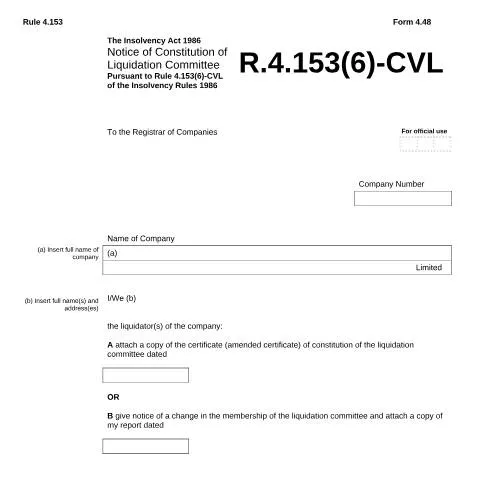
In the world of corporate insolvency, the Notice of Constitution of Liquidation Committee (Form 4.48) plays a pivotal role. When a company faces liquidation, the establishment of a liquidation committee becomes essential for overseeing the process and ensuring that the interests of creditors are protected. Understanding how to effectively utilise this form is crucial for liquidators and stakeholders alike.
Understanding the Liquidation Committee Framework
The liquidation committee, as stipulated under the Insolvency Act 1986, serves as a body that represents the interests of the creditors during the liquidation process. This committee typically comprises members appointed from among the creditors, and their main function is to act on behalf of all creditors in matters concerning the liquidation.
What many may not understand is the nuances of establishing this committee. The liquidator must provide formal notice to Companies House using Form 4.48 to either indicate the constitution of this committee or to report changes in its membership.
The Importance of Form 4.48
Form 4.48 is not merely a procedural step; it is a document that solidifies the framework within which the liquidation committee operates. By submitting this form, the liquidator notifies the Registrar of Companies about the committee's constitution or changes in its membership. This is essential for maintaining transparency and accountability during the liquidation process.
Step-by-Step: Implementing Form 4.48 in Liquidation Proceedings
For liquidators, effectively using Form 4.48 involves several clear steps:
- Assessment of Need: Determine if a liquidation committee is necessary based on the complexity of the case and the number of creditors involved.
- Constituting the Committee: Identify and invite creditor representatives to form the committee. Ensure that their interests align with the larger body of creditors.
- Gathering Documentation: Prepare and attach the necessary documents, including the amended certificate of constitution, if applicable.
- Completion of Form 4.48: Accurately fill out the form, providing all required information, including the company's name and number, details of the committee members, and the date of the certificate.
- Submission to Companies House: Send the completed form to Companies House for registration. This step is critical as it formally acknowledges the committee's establishment in the public record.
Common Queries: Insights into Liquidation Procedures
As liquidators navigate the formalities of insolvency, several questions often arise regarding the process. Here are some of the most frequently asked questions:
- When is Form 4.48 required? It is required when a liquidation committee is constituted or when there are changes to the committee's membership.
- What happens if the form is not submitted? Failure to submit the notice can lead to a lack of transparency and accountability, potentially undermining the liquidation process.
- Is there a deadline for submitting Form 4.48? While there is no strict deadline, prompt submission is advisable to ensure that creditor representation is established without delay.
Crucial Concepts for Liquidators: Key Terminology
To effectively utilise Form 4.48, understanding the following terms is essential:
- Liquidator: An individual appointed to conduct the liquidation process, representing the interests of creditors.
- Committee of Creditors: A group formed from the creditor body that aids the liquidator in decision-making regarding the liquidation.
- Insolvency Act 1986: The legislation that governs insolvency procedures in the UK, outlining the legal framework for liquidations.
- Certificate of Constitution: A formal document that confirms the establishment of the liquidation committee.
Avoiding Misinterpretations: Common Pitfalls
Liquidators must be wary of certain pitfalls when dealing with Form 4.48:
- Incomplete Information: Providing incomplete or inaccurate details can delay the process and create complications in the committee's establishment.
- Neglecting Changes: Failing to update Companies House regarding changes in committee membership can lead to legal challenges.
- Ignoring Timeliness: Delaying the submission of the form may hinder the effectiveness of the committee and affect creditor confidence.
Who Needs to Take Action? Understanding the Audience
Form 4.48 is primarily geared towards liquidators and insolvency practitioners; however, it is also of interest to:
- Creditors: Understanding the formation of the committee can help creditors advocate for their interests during the liquidation process.
- Legal Advisors: Lawyers advising clients on insolvency matters need to be familiar with the obligations and rights concerning the liquidation committee.
The Scope of Form 4.48: Coverage and Limitations
While Form 4.48 is instrumental in establishing a liquidation committee, it does have its limitations:
- Scope of Authority: The committee does not have the authority to make final decisions but rather acts as an advisory body to the liquidator.
- Membership Dynamics: Changes in the creditor landscape may affect committee composition, necessitating ongoing updates to Companies House.
- Geographical Restrictions: The form and its regulations apply within the context of UK insolvency law, which may differ from other jurisdictions.
The Final Word: Best Practices for Liquidators
To ensure the effectiveness of the liquidation committee and the smooth running of the liquidation process, liquidators should adhere to the following best practices:
- Maintain Open Communication: Keeping all stakeholders informed can enhance transparency and trust among creditors.
- Regular Updates: Regularly update committee members on progress and changes to keep engagement high and aligned with creditor interests.
- Documentation Rigor: Develop a robust system for document tracking and submission to ensure compliance with all legal requirements.
In summary, understanding and effectively using Form 4.48 is critical in the context of corporate liquidation. By being aware of the procedural requirements, common pitfalls, and best practices, liquidators can navigate the complexities of insolvency with confidence.
Understanding the Role of the Liquidation Committee
The liquidation committee plays a crucial role in the process of winding up a company. Comprised of creditors and stakeholders, the committee is charged with overseeing the actions of the liquidator. Its primary responsibility is to ensure transparency and protect the interests of all parties involved. The committee can also provide guidance to the liquidator and authorize certain actions that may affect the company’s remaining assets.
In the UK, the formation of a liquidation committee becomes particularly relevant under specific circumstances. For instance, when a company enters voluntary liquidation, creditors may seek to establish a committee to actively participate in the liquidation process. The members of this committee are typically chosen from the ranks of creditors who are willing to engage in the proceedings and provide oversight. It is important to note that the committee's authority is limited to the powers granted under the Insolvency Act 1986, ensuring that the liquidator retains primary control over the process.
Fill in your form directly online
No printing: type your details into the boxes of the official form, tick, then download the PDF ready to send.
- 1Type into the form boxes
- 2Tick in one click
- 3Save and download the PDF
Eligibility Criteria for Committee Membership
Not everyone can become a member of the liquidation committee. There are specific eligibility criteria laid down by the Insolvency Act 1986 and subsequent regulations. Generally, only creditors who are owed a certain amount by the company can be considered for membership. This threshold often requires that a creditor holds at least a minimum amount of the company’s total debts. Additionally, the creditor must not be an employee of the company or otherwise disqualified from serving due to conflicts of interest.
Upon establishment, the committee must also maintain certain standards of conduct. Members are expected to act in good faith and in the best interests of all creditors. Should a member act contrary to this obligation, there could be implications for their continued membership and potential legal action against them. Furthermore, the committee must meet regularly, and a record of its meetings should be maintained for transparency and accountability.
The Process of Notifying the Constitution of a Liquidation Committee
Once the decision has been made to establish a liquidation committee, the next step is to officially notify the relevant authorities and concerned parties. This process is governed by specific procedural guidelines designed to ensure that all stakeholders are informed and can participate appropriately.
The liquidator is usually responsible for this notification. They must send a notice of the constitution of the committee to HMRC, as well as to all known creditors. This notice typically includes details about the composition of the committee, including the names and addresses of the members, as well as the liquidator's contact information. The notice should also specify the date on which the committee was constituted.
Importantly, the notification must be done promptly, aligning with the timelines outlined in the relevant insolvency legislation. Failure to notify the committee's constitution in a timely manner could lead to potential challenges during the liquidation process, as creditors may argue that they were not given the opportunity to participate or voice their concerns.