Navigating the COM3 Document: A Guide to Continuation of Creditors’ Committee
When a company enters a winding-up process after administration, it is crucial for the creditors to stay informed and involved. The COM3 notice plays a vital role in maintaining the continuity of the creditors’ committee, ensuring that creditors can continue to collaborate and make decisions regarding the winding-up process. This guide will delve into the intricacies of the COM3 notice, exploring how to effectively utilize it, common pitfalls to avoid, and key considerations for stakeholders.
Understanding the Significance of the COM3 Notice
The COM3 notice is not just a procedural form; it serves as a formal communication to Companies House regarding the continuation of the creditors' committee during a company’s winding-up process. This continuation is crucial because it allows creditors to remain engaged in the decision-making process and oversee the actions taken by the liquidator.
Why is the Creditors’ Committee Important?
- Representation: The committee represents the interests of all creditors, ensuring that their voices are heard during the liquidation process.
- Oversight: Members have the responsibility to oversee the liquidator’s actions, offering a layer of accountability.
- Decision-Making: The committee can make critical decisions concerning the administration and winding-up, from approving the liquidator’s actions to discussing potential recoveries.
Who Needs to File the COM3 Notice?
Identifying the parties responsible for filing the COM3 notice can help streamline the process. It is typically the liquidator who must submit this notice, but understanding who is involved is vital. The main actors in this process include:
Liquidators
The liquidator is appointed to manage the liquidation process. They are responsible for compiling the COM3 notice, ensuring that all relevant information is accurately included.
Members of the Creditors' Committee
Members of the creditors' committee, whether individuals or corporate entities, must be aware of the notice's implications. Their participation is essential to uphold the committee's continuity and effectiveness.
Step-by-Step Process of Utilizing the COM3 Notice
Effectively leveraging the COM3 notice involves several key steps that ensure compliance with legal requirements and facilitate the continuity of the committee. Here’s how to navigate this process:
Step 1: Gather Necessary Information
Before filing the COM3 notice, the liquidator must collect comprehensive details, including:
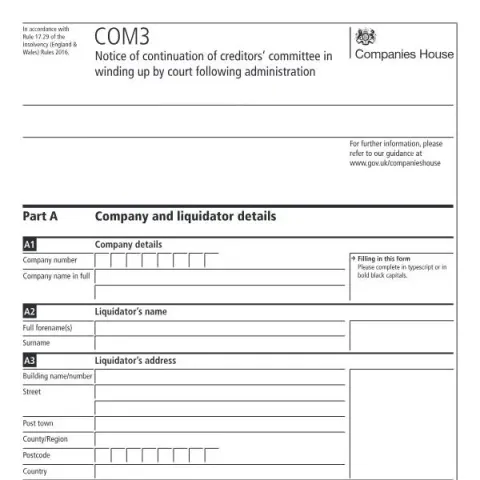
- Company Information: Full company name and registration number.
- Liquidator Details: Full name and address of the liquidator, ensuring accuracy and completeness.
- Committee Members: Names and addresses of all committee members, both individuals and corporates.
Step 2: Complete the COM3 Notice
Once the required information is gathered, the liquidator should complete the COM3 form. It is crucial to:
- Use typescript or bold black capitals for clarity.
- Ensure that the details of the creditors' committee are accurately reflected.
- Include a declaration indicating the continuation of the committee.
Step 3: Submit the COM3 Notice
The completed notice must be submitted to Companies House. While the form can be sent to any Companies House address, it is recommended to dispatch it to the following:
The Registrar of Companies, Companies House, Crown Way, Cardiff, Wales, CF14 3UZ. DX 33050 Cardiff.
Common Misinterpretations Surrounding the COM3 Notice
Despite the clarity of the COM3 notice's purpose, there are several misinterpretations that can lead to complications:
Misunderstanding the Role of the Creditors’ Committee
Some stakeholders may mistakenly believe that the creditors' committee has no power or influence during the liquidation process. This misconception can undermine the committee's effectiveness. In reality, the committee plays a crucial role in ensuring that the liquidator acts in the interests of all creditors.
Assuming Automatic Continuity
There is a common belief that the creditors' committee continues automatically without the need for a formal COM3 notice. This assumption could lead to disruptions in the decision-making process if the notice is not submitted promptly after administration.
Key Considerations for Filing the COM3 Notice
When preparing to file the COM3 notice, it’s essential to keep several considerations in mind to ensure compliance and efficiency:
Accuracy is Paramount
All information entered on the COM3 notice must be correct. Errors in the company name, registration number, or liquidator details can lead to delays or rejections from Companies House.
Timing of Submission
It’s crucial to file the COM3 notice promptly after the appointment of the liquidator to ensure that the creditors' committee is recognized as a continuing entity in the winding-up process.
Essential Terminology in the COM3 Notice
To fully grasp the implications of the COM3 notice, understanding key terms associated with it is beneficial:
| Term | Definition |
|---|---|
| Liquidator | An appointed individual responsible for managing the liquidation process of a company. |
| Creditors’ Committee | A group of creditors formed to oversee the actions of the liquidator and represent the interests of all creditors. |
| Winding Up | The process of closing a company, involving the sale of assets and settlement of debts. |
| Administration | A process where a company is protected from creditors while a plan to rescue it or manage its debts is arranged. |
Real-World Implications of the COM3 Notice
Filing the COM3 notice can have several real-world implications for both the liquidator and the creditors:
For Liquidators
By filing the COM3 notice, liquidators maintain the legitimacy of the creditors' committee, which can aid in the efficient resolution of outstanding debts. This ensures that they are acting in accordance with the law and upholding their obligations to creditors.
For Creditors
The continuation of the creditors' committee means that creditors are more likely to be informed and engaged in the winding-up process. This engagement can lead to better recovery outcomes and increased transparency regarding the liquidator's actions.
Final Thoughts on the COM3 Notice
Understanding the significance and implications of the COM3 notice is crucial for anyone involved in the winding-up process of a company. By acknowledging the importance of the creditors' committee and ensuring prompt, accurate filing of the notice, stakeholders can actively participate in safeguarding their interests during what can often be a complex and challenging process.
As a key component of corporate insolvency proceedings, the COM3 notice catalyzes ongoing communication and collaboration among creditors, ultimately fostering a more organized and transparent liquidation process.
Understanding the Role of Creditors' Committees in Insolvency
The composition and functioning of a creditors' committee are crucial in insolvency processes. These committees are established to provide oversight and guidance to the appointed insolvency practitioner. Typically, a creditors' committee is formed when a company's financial troubles lead to an insolvency procedure, such as administration or liquidation.
A creditors' committee consists of creditors who have a vested interest in the outcome of the insolvency. Their primary role is to represent the collective interests of all creditors and to communicate these interests to the insolvency practitioner. This communication is vital, as it aligns the actions of the practitioner with the expectations of those owed money by the insolvent entity.
Each member of the creditors' committee usually holds a significant claim against the insolvent company, founded on their own financial stakes. This ensures that the committee’s decisions are informed by a spectrum of experiences and insights from different creditors, particularly when it comes to assessing the viability of various recovery options.
Furthermore, creditors’ committees have the authority to approve or reject significant decisions made by the insolvency practitioner. For instance, they may weigh in on matters such as asset sales, distribution of funds, and the viability of proposed plans for the restructuring of the company. This oversight is intended to protect the interests of creditors while simultaneously ensuring that the insolvency process is conducted transparently and efficiently.
Fill in your form directly online
No printing: type your details into the boxes of the official form, tick, then download the PDF ready to send.
- 1Type into the form boxes
- 2Tick in one click
- 3Save and download the PDF
Understanding the dynamics of a creditors' committee is essential for any creditor involved in an insolvency proceeding. It empowers them to actively participate in the process and to ensure that their rights and interests are adequately represented during proceedings.
Notification Process and Best Practices for Giving Notice
When it comes to the formalities of notifying interested parties regarding the continuation of a creditors' committee, adherence to specific guidelines is paramount. The insolvency practitioner must ensure that notifications are dispatched in a timely and compliant manner. This not only fulfills the legal obligations but also fosters trust and transparency within the insolvency process.
The notice of continuation must typically include essential details about the creditors' committee, including the names of committee members, the purpose of the committee, and the expected outcomes of its continuation. It is advisable to include clear instructions on how creditors can express their views or concerns regarding the continuation of the committee.
Best practices for notification include: ensuring clarity in the language used; providing multiple channels for creditors to respond; and allowing sufficient time for creditors to review the continuation notice and prepare their feedback. Creditors should be encouraged to communicate their concerns or support for the continuation, which can be pivotal during discussions within the committee.
Moreover, it is crucial to format the notice appropriately, adhering to any statutory requirements regarding font size, style, and layout as per the guidelines laid out by the Insolvency Service. This not only enhances readability but ensures that all necessary information is easily accessible to all stakeholders involved.
Finally, consider the potential challenges that may arise when notifying creditors. There may be instances where creditors are uncontactable due to outdated addresses or lack of current information. In such cases, the insolvency practitioner should document all efforts made to reach these creditors, as this can be vital in demonstrating compliance with the notification requirements.
Common Issues and Resolutions Related to Creditors' Committees
Engaging in the creditors' committee can present a variety of challenges for creditors. Understanding these common issues, alongside potential resolutions, can greatly aid in navigating the complexities of the insolvency process.
One common issue is the lack of engagement from creditors. Many creditors may feel distanced from the proceedings, leading to minimal participation. To counter this, the insolvency practitioner should actively reach out to creditors, encouraging them to attend meetings and voice their opinions. Hosting informative sessions that explain the role and responsibilities of the creditors' committee can significantly enhance engagement.
Another potential problem involves disagreements among committee members. Diverse interests can lead to conflicts, which may delay decision-making processes. Establishing clear communication channels and a structured decision-making protocol can help mitigate this issue. If conflicts persist, it may be beneficial to involve an independent mediator to facilitate discussions and foster collaborative solutions.
Additionally, creditors may have differing expectations regarding outcomes, particularly concerning asset recovery. To manage these differing expectations, the committee should create a transparent framework for discussing potential recovery scenarios. Regular updates should be provided to all creditors, detailing the progress made and any adjustments to strategies being employed. This proactive approach can build a sense of trust and collaboration among committee members.
Finally, there may be legal challenges arising from the actions taken by the creditors' committee. If a creditor believes that the committee has made a decision that adversely affects their interests, they may seek to challenge this through legal avenues. It is essential for the committee to document all decisions and the rationale behind them meticulously. This documentation can serve as a defense if any disputes arise and can help demonstrate that the committee acted in the best interests of all creditors.