Understanding the Constitution of Creditors' or Liquidation Committee: The Essentials
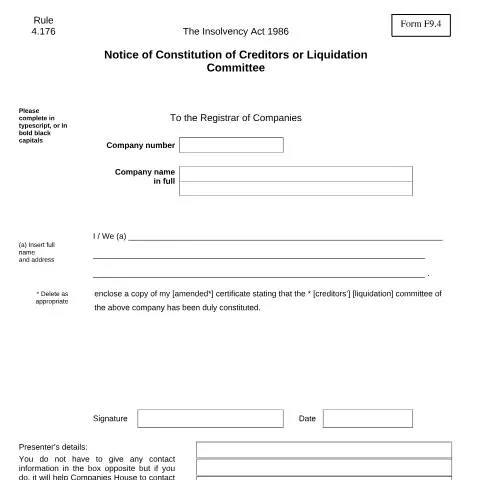
The process surrounding the constitution of a creditors' or liquidation committee is a crucial part of company insolvency proceedings in the UK. The Notice of Constitution of Creditors’ or Liquidation Committee (Form F9.4) serves as an official document that must be submitted to Companies House, signalling the establishment of such committees. This committee plays a significant role in overseeing the insolvency process, and understanding this document is vital for ensuring compliance with legislative requirements.
The Purpose and Scope of Form F9.4
Form F9.4 is specifically designed to notify Companies House that a creditors' or liquidation committee has been formed. When a company enters into insolvency proceedings, the relevant stakeholders, including creditors, gather to form a committee which acts on behalf of all creditors. This committee's existence helps streamline decision-making during the insolvency process.
While the form itself is straightforward, its importance cannot be overstated. It not only provides official recognition of the committee's constitution but also ensures that all proceedings comply with the Insolvency Act 1986. In submitting this document, the parties involved demonstrate adherence to legal requirements and transparency.
Key Components of Form F9.4
- Company Details: The form requires the full name and registered company number, ensuring that the notification pertains to the correct entity.
- Committee Information: The document must include details of the committee members, reinforcing the collective representation of creditors.
- Submission Details: The form needs to be signed and dated, and a copy of the amended certificate confirming the committee's constitution should be enclosed.
Navigating Related Documents and Procedures
Understanding Form F9.4 requires knowledge of other related documents in the insolvency framework. For instance, the Notice of Appointment of Administrator and the Statement of Affairs are also critical components of the insolvency process.
The interaction between these documents showcases a comprehensive picture of how insolvency is managed. For example, once an administrator has been appointed, a creditors’ committee may be formed to review the administrator's proposals. The relationship between these documents is governed by statutory timelines and procedural rules, creating a complex structure that must be navigated carefully.
The Role of the Insolvency Practitioner
Typically, an insolvency practitioner will facilitate the formation of the creditors’ committee and guide the company through these legal requirements. Their expertise is invaluable in ensuring that all filings, including Form F9.4, are completed correctly and on time, thus avoiding potential legal complications.
Practical Steps for Submitting Form F9.4
Submitting Form F9.4 can be broken down into clear steps to ensure compliance with Companies House requirements:
- Gather Required Information: Ensure you have the company name, registered number, and details of committee members.
- Prepare the Amended Certificate: This document should be prepared and amended as necessary, verifying the constitution of the committee.
- Complete Form F9.4: Fill out the form using bold black capitals, making sure all required fields are completed.
- Signature and Date: The form must be signed by the relevant officer and dated.
- Submission to Companies House: Send the completed form and enclosed certificate to the address specified: Companies House, Crown Way, Cardiff, CF14 3UZ.
Common Challenges and Misinterpretations
Despite the straightforward nature of Form F9.4, there are common pitfalls that filers encounter. A frequent concern is ensuring all committee members understand their roles and responsibilities, which may not always be clearly outlined in the submitted documents.
Additionally, there might be confusion around the distinctions between creditors’ committees and liquidation committees. While both serve to represent creditor interests, they function in slightly different contexts within the insolvency framework.
Specific Situations Requiring Attention
There are scenarios where the necessity for Form F9.4 becomes paramount. For instance, if a company is undergoing a voluntary arrangement, the formation of a creditors’ committee is essential for the approval of the arrangement’s terms. In cases where a company is being wound up, a liquidation committee may be formed to oversee the process.
- Voluntary Arrangements: Many companies opt for voluntary arrangements as a means of avoiding liquidation. The creditors’ committee plays a key role in negotiating terms that are beneficial to all parties involved.
- Winding Up Procedures: In cases of liquidation, the committee’s existence is vital for ensuring all creditors have a voice in the proceedings, thereby safeguarding their interests.
Final Considerations and Best Practices
When dealing with Form F9.4, there are several best practices to keep in mind:
- Timeliness: Ensure that the form is submitted within the required timeframes to avoid complications in the insolvency process.
- Clarity and Accuracy: Double-check all details on the form for accuracy. Errors can lead to delays or even rejection of the submission by Companies House.
- Maintain Communication: Stay in contact with all committee members to ensure they are informed and aware of their roles, thus promoting transparency and cooperation.
Conclusion: The Path Forward
Form F9.4 is not just a bureaucratic document; it is a cornerstone of the formal insolvency process, ensuring that creditors have a structured means of representation during challenging times. Understanding its nuances and the broader procedural context can make a significant difference in the outcome of insolvency proceedings. As stakeholders navigate these challenging waters, the careful management of Form F9.4 and related documents becomes an essential part of their strategy for recovery and resolution.
Understanding the Role of the Creditors' Committee in Liquidation
When a company enters liquidation, the creditors' committee plays a crucial role in representing the interests of the creditors. This committee is typically formed from the creditors who are owed money by the company in question. The main function of the committee is to oversee the actions of the liquidator and ensure that the liquidation process is conducted fairly and efficiently.
Creditors are encouraged to participate in the formation of the committee as it allows them a voice in the proceedings. The committee's responsibilities include examining the conduct of the liquidator, approving the liquidator's actions, and deciding on the distribution of the assets of the company. The committee can also request additional information from the liquidator and challenge any decisions that may adversely affect the creditors' interests.
It is important to note that not all creditors may have the same level of influence on the committee, primarily depending on the amount they are owed. Secured creditors usually have priority over unsecured creditors, which can affect the decision-making process within the committee.
Steps to Forming a Creditors' Committee
Forming a creditors' committee following the constitution of creditors or liquidation committee involves a defined set of steps. Initially, the liquidator will call a meeting of creditors. This meeting is necessary for determining who will be elected to serve on the committee.
Fill in your form directly online
No printing: type your details into the boxes of the official form, tick, then download the PDF ready to send.
- 1Type into the form boxes
- 2Tick in one click
- 3Save and download the PDF
The liquidator will send out notices to all known creditors detailing the time, date, and location of the meeting. During this meeting, creditors can nominate candidates to serve on the committee. It is essential for creditors to review the nominations carefully, as the selected individuals will hold significant sway over decisions regarding the liquidation process.
Once the committee is formed, it will typically consist of three to five members, although this can vary depending on the level of creditor interest and the specifics of the case. Following the formation, the committee meets regularly – often at the invitation of the liquidator – to discuss the progress of the liquidation and address any concerns or challenges that may arise.
In some cases, creditors may also need to consider the financial standing of the nominees, as having members with a good understanding of financial matters can enhance the committee's effectiveness in overseeing the liquidation process.
The Legal Obligations of the Liquidator Towards the Creditors' Committee
The liquidator has several legal obligations to the creditors' committee throughout the liquidation process. According to the Insolvency Act 1986, the liquidator must provide regular updates to the committee regarding the process and any significant developments. This ensures that the committee members are well informed about the status of the company’s assets and liabilities.
The liquidator is also obligated to consult the committee regarding major decisions, which can include the sale of significant assets or the distribution of funds. This consultation process is designed to enhance the transparency of the liquidation and allow creditors to voice their opinions on how the liquidation is being handled.
In addition, the liquidator must maintain records of all transactions and decisions made during the liquidation. These records should be made available to the committee upon request, fostering an environment of accountability. Failure to meet these legal obligations can lead to significant repercussions for the liquidator, including potential legal action from the creditors.
Creditors who feel that their interests are not being adequately represented have the right to raise these concerns with the liquidator or seek legal recourse to protect their rights in the liquidation process. This is where the importance of an active and engaged creditors' committee becomes evident.