Navigating the Notice of Vacation by a Voluntary Liquidator
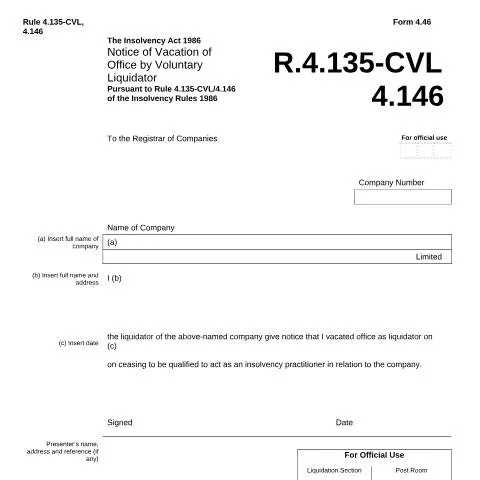
The process of winding up a company can seem daunting, especially when it comes to understanding the legal obligations and documentation involved. One crucial element in this journey is the Notice of Vacation of Office by Voluntary Liquidator, also known as Form 4.46. This notice is the formal communication that a voluntary liquidator submits to Companies House to indicate that they are stepping down from their role. Understanding this document, its purpose, and its impact is vital for liquidators and stakeholders alike.
Understanding the Context of Liquidation
Liquidation is a significant process that occurs when a company can no longer meet its financial obligations. Within the framework of UK law, particularly the Insolvency Act 1986, voluntary liquidation is a method initiated by the company's shareholders. It is essential to grasp the broader context of liquidation to appreciate the role of the Notice of Vacation.
- Types of Liquidation: Voluntary liquidation is divided into members' voluntary liquidation (MVL) where the company is solvent, and creditors' voluntary liquidation (CVL) where insolvency is declared.
- The Role of the Liquidator: Appointed to oversee the process, the liquidator is responsible for settling the company's debts and distributing any remaining assets.
- Legal Framework: Governed by the Insolvency Rules 1986, the liquidator must adhere to various regulations throughout the winding-up process.
Key Components of Form 4.46
Form 4.46 itself has specific components that must be understood for effective communication with Companies House. Each part serves a distinct purpose, and any omission or error can lead to delays or complications.
Mandatory Information Required
- Company Number: This is the unique identifier assigned by Companies House to the specific company.
- Company Name: The full name of the company as registered must be provided to avoid any confusion.
- Liquidator's Details: The notice must include the liquidator's name and address, establishing their identity in the process.
- Date of Vacation: The exact date on which the liquidator vacated their office must be clearly stated.
- Qualification Statement: A declaration indicating the reason for the liquidator's departure, such as ceasing to be qualified to act in relation to the company.
Interplay with Other Documentation
Understanding the Notice of Vacation in isolation can be limiting. It interacts closely with several other important documents during the liquidation process.
Related Documents in Liquidation
| Document Name | Purpose | Timing |
|---|---|---|
| Statement of Affairs | Outlines the company’s financial position at the time of liquidation. | Must be prepared prior to the appointment of a liquidator. |
| Liquidation Report | Details the liquidator's actions and the outcome of the liquidation. | Submitted after the liquidation process is completed. |
| Final Account | Summarises the financial dealings and distributions made during the liquidation. | Presented at the end of the liquidation period. |
Common Misunderstandings about the Notice
With any official documentation, misunderstandings can arise, leading to unnecessary complications during the liquidation process. Recognizing and addressing these can save considerable time and effort.
Misinterpretations to Avoid
- Assuming Irrelevance: Some may think the notice is a mere formality; however, it is a legally binding document that must be filed to comply with regulations.
- Filing After Deadline: The notice must be submitted promptly after the liquidator vacates their office to prevent penalties.
- Inaccurate Information: Providing incorrect details, such as the wrong company name or number, can lead to delays in the process and additional scrutiny from Companies House.
Step-by-Step: Effectively Using the Notice of Vacation
Filing the Notice of Vacation can seem straightforward, but it requires careful attention to detail. Here is a step-by-step approach to using this document effectively.
Process Outline
- Preparation: Gather all necessary information about the company, including its registered name and number, as well as your details as the liquidator.
- Document Completion: Fill out Form 4.46 accurately, ensuring that all fields are completed and the information is correct.
- Submission: Submit the completed notice to Companies House, either electronically or by mail. Ensure it is sent to the appropriate office to avoid delays.
- Confirmation of Receipt: After submission, monitor for an official acknowledgment from Companies House to confirm that the notice has been duly received and processed.
Addressing Procedural Queries
As you navigate the complexities of providing notice of vacation, various procedural questions may arise. Being prepared to address these inquiries can facilitate a smoother process.
Common Queries and Their Solutions
- What if there are changes to the information after submission? You should promptly inform Companies House of any changes, as inaccuracies can lead to complications.
- Can multiple liquidators submit notices simultaneously? Yes, if multiple liquidators are involved, each must submit their own notice separately to ensure clarity.
- What are the consequences of late submission? Late submissions can result in penalties or additional scrutiny from Companies House, which may delay the liquidation process.
Exploring the Limits of Form 4.46
While Form 4.46 plays an essential role in the liquidation process, it is crucial to recognize its limitations and scope. This understanding can help liquidators manage expectations effectively.
Scope and Limitations
- Limited to Liquidator's Departure: This notice only pertains to the liquidator stepping down and does not address any other aspects of the liquidation process.
- Does Not Conclude Liquidation: Filing Form 4.46 does not terminate the liquidation; it merely indicates a change in management responsibility.
- Not a Final Report: It is not a report on the proceedings or outcomes of the liquidation; such reports must be filed separately.
Conclusion: A Vital Step in Liquidation
Completing and filing the Notice of Vacation of Office by Voluntary Liquidator is a crucial step in the process of winding up a company. By understanding its components, related documentation, common pitfalls, and procedural queries, liquidators can navigate the complexities of this legal requirement with confidence.
In summary, maintaining clear communication with Companies House and ensuring that all filings are accurate will facilitate a smooth transition during the liquidation process. The Notice of Vacation is not merely a formality; it signifies a significant change in the management of the company’s assets and liabilities, and thus warrants careful attention.
Understanding the Role of a Voluntary Liquidator
In the context of company insolvency in the UK, a voluntary liquidator plays a pivotal role in the orderly winding down of a company’s affairs. This individual is often appointed when a company becomes insolvent and shareholders decide to dissolve the entity voluntarily. It is essential for stakeholders, including creditors and employees, to understand the liquidator's responsibilities. These typically include managing the company's assets, settling debts, and ensuring compliance with relevant legal frameworks.
Notably, the voluntary liquidator must also adhere to the guidelines set forth by the Insolvency Act 1986 and follow the procedures established by the Insolvency Service. They are responsible for filing necessary reports with Companies House and ensuring that the company complies with applicable regulations during this winding-up phase.
Furthermore, the liquidator must maintain transparent communication with creditors and shareholders during the liquidation process. This involves providing regular updates on the status of the liquidation and informing relevant parties about any potential recoveries or distributions that may occur as a result of asset sales. A clear understanding of this role helps stakeholders navigate the complexities of the liquidation process.
Procedures for Notifying Stakeholders of Liquidation
When a voluntary liquidator decides to vacate their office, it is crucial to follow formal procedures for notifying all stakeholders involved in the liquidation process. The liquidator must prepare a notice of their intention to vacate, which should include specific details such as the reasons for leaving, the date of the intended vacating, and any implications for the ongoing liquidation process.
Fill in your form directly online
No printing: type your details into the boxes of the official form, tick, then download the PDF ready to send.
- 1Type into the form boxes
- 2Tick in one click
- 3Save and download the PDF
This notice must be disseminated to all known creditors, shareholders, and relevant regulatory bodies, including Companies House. Failure to properly notify stakeholders can result in legal repercussions and undermine the integrity of the liquidation process. It's also important for the liquidator to provide information about who will be assuming their responsibilities, if applicable, ensuring a smooth transition of duties to avoid disruption in the liquidation process.
Additionally, the liquidator may be required to publish the notice in local newspapers or on official platforms to reach any stakeholders who may not be directly contacted. This step is crucial for maintaining transparency and upholding the principles of good governance in the liquidation process.
Implications of Liquidator's Notice on Creditors and Stakeholders
The notice given by a voluntary liquidator regarding their vacation of office has significant implications for creditors and other stakeholders. Once the notice is issued, there may be changes in the management of the liquidation process, which could affect the priority of claims and distribution of assets. Creditors must stay informed about any updates from the liquidator to understand how their claims will be handled moving forward.
For example, if the vacating liquidator has not fully resolved outstanding creditor claims, this could delay or complicate the distribution process. Creditors should be proactive in following up with the new liquidator or any appointed representative to ensure their claims are acknowledged and processed promptly. The legal framework surrounding liquidations mandates that creditors have certain rights and protections, and it is in their best interest to stay engaged throughout this transition.
Moreover, stakeholders, including employees and shareholders, may have concerns about the direction of the liquidation process after the liquidator has vacated their office. It's beneficial for these parties to seek clarity regarding the new arrangements, including whether the incoming liquidator has the same strategies and goals as the previous one. By fostering an open dialogue, all parties can better navigate the complexities and potential challenges that arise during a company's liquidation.