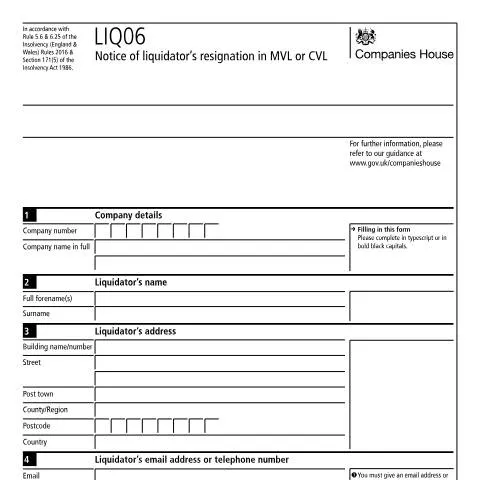
Navigating the Liquidation Process: The Importance of Form LIQ06
In the intricate realm of corporate insolvency, the resignation of a liquidator is a significant event that must be handled with precision and clarity. Form LIQ06, also known as the Notice of Liquidator's Resignation, plays a crucial role in this process, ensuring that all stakeholders are duly informed and the company's records are accurately updated. This guide delves into the essential components of LIQ06, highlighting its application, procedural nuances, and the implications of liquidator resignations.
Understanding the Role of a Liquidator
A liquidator is appointed in various insolvency scenarios, primarily to manage the winding-up process of a company. They are responsible for settling debts and distributing any remaining assets among shareholders. The appointment can arise in two main contexts:
- Members' Voluntary Liquidation (MVL): Initiated when a company is solvent but wishes to wind up its affairs.
- Creditors' Voluntary Liquidation (CVL): Initiated when a company is insolvent and unable to pay its debts.
When a liquidator resigns, it is vital to formally notify Companies House using LIQ06. The resignation may stem from various reasons, including health issues, conflicts of interest, or personal circumstances that hinder the liquidator's ability to fulfill their duties.
The Necessity of LIQ06 in the Liquidation Process
The LIQ06 form is not merely a bureaucratic requirement; it serves several essential functions:
- Transparency: By notifying Companies House of the liquidator's resignation, the transition process is made transparent to all stakeholders, including creditors, shareholders, and regulatory bodies.
- Compliance: It ensures compliance with the Insolvency (England & Wales) Rules 2016 and the Insolvency Act 1986, which governs the conduct of insolvency practitioners.
- Maintaining Public Records: The information provided in LIQ06 is entered into the public register, allowing for easy accessibility for any interested parties.
The Structure of Form LIQ06: What You Need to Know
Form LIQ06 consists of several key sections that must be completed carefully to ensure accuracy and compliance. Here's a breakdown of the main components:
- Company Details: This section requires the full company name and registration number. It's essential that these details match the records held at Companies House.
- Liquidator's Information: The liquidator's name and contact details, including email and telephone number, must be provided. This ensures that Companies House can reach them if there are any queries regarding the resignation.
- Resignation Date: Liquidators must specify the date of resignation, formatted as day/month/year.
- Reason for Resignation: The form must include the reason for the liquidator's resignation, which can range from health issues to conflicts of interest.
- Signature: The liquidator must sign and date the form to validate their resignation.
Common Procedural Questions About LIQ06
As with any official document, questions frequently arise regarding the use of LIQ06. Below are some of the most common inquiries:
- How soon should LIQ06 be submitted after resignation? It is advised to submit the form promptly after the resignation to avoid delays in the liquidation process.
- Where should LIQ06 be sent? While LIQ06 can be sent to any Companies House address, it is recommended to send it to the Cardiff office for expediency.
- What happens if LIQ06 is submitted incorrectly? Companies House may return incorrectly completed forms, highlighting the importance of double-checking all entries before submission.
Potential Pitfalls When Resigning as a Liquidator
Understanding the common pitfalls associated with submitting LIQ06 is crucial for a smooth resignation process. Here are some key issues to watch out for:
- Incorrect Company Information: Ensure that the company name and number are accurate and align with the public register; discrepancies can lead to delays.
- Omitting Contact Information: While providing contact information is not mandatory, including it can facilitate communication with Companies House.
- Failure to Sign: A missing signature will result in the form being rejected, so it's essential to double-check this before sending.
Step-by-Step Guide to Completing LIQ06
Completing LIQ06 might seem daunting, but by following a systematic approach, you can ensure that all necessary information is accurately captured. Here’s a step-by-step guide:
- Gather Company Information: Have the company name and registration number ready. Check against the Companies House public register.
- Enter Liquidator's Details: Fill in the full name, address, email, and telephone number of the liquidator. Ensure that this information is current.
- Specify the Resignation Date: Clearly indicate the date on which the resignation takes effect.
- State the Reason for Resignation: Choose from the options provided or write a brief explanation if necessary.
- Sign and Date the Form: The liquidator must add their signature and the date of signing to validate the submission.
- Submit the Form: Send LIQ06 to the recommended Companies House address, ensuring it is completed in typescript or bold black capitals.
Documenting the Resignation: An Administrative Perspective
The resignation of a liquidator is not just a procedural formality; it has significant ramifications for the administrative handling of a company's liquidation. Here’s how LIQ06 fits into the broader context:
- Impact on Stakeholders: Shareholders and creditors must be informed of the resignation to ensure that all parties are aware of who is managing the liquidation process.
- Transition to New Liquidator: If a new liquidator is appointed, the transition must be smooth; LIQ06 helps in formalising the resignation and paving the way for a new appointment.
- Regulatory Compliance: Accurate documentation fosters trust in the insolvency process, ensuring compliance with the relevant laws and regulations.
The Future of Liquidation: Evolving Practices in the UK
As insolvency practices evolve, so too will the documentation and procedures surrounding liquidator resignations. Keeping abreast of changes in regulations and practices is vital for insolvency practitioners. Companies House continuously updates its guidance to reflect best practices and legislative changes, encouraging liquidators to remain vigilant and informed.
For liquidators, understanding the nuances of LIQ06 and the implications of their resignation is paramount to ensuring a legally sound and efficient liquidation process.
Understanding the Role of a Liquidator in the UK
Before delving into the specifics of notifying the resignation of a liquidator via the LIQ06 form, it is essential to clarify the role of a liquidator in the UK insolvency framework. A liquidator is an appointed professional who manages the process of liquidation, which involves winding up a company’s affairs, settling debts, and distributing any remaining assets. The process often emerges when a company's directors recognise that the company cannot pay its debts or when creditors have petitioned for the company's winding-up.
Liquidators can be either voluntary or appointed by the court, and their responsibilities include investigating the company’s financial affairs, realising assets, and ensuring compliance with the Insolvency Act 1986. Understanding this context is crucial for any business owner or stakeholder, as the resignation of a liquidator can significantly impact the ongoing liquidation process and the company's creditors.
Another vital aspect to consider is that a liquidator must prepare and submit detailed reports at various stages of the process to the creditors and Companies House. These reports, including the liquidator's interim and final reports, provide transparency into the liquidation proceedings, outlining the financial status of the company and the steps taken by the liquidator. Therefore, the resignation must be handled with care to ensure that all obligations are met and that creditors are kept informed throughout the transition.
Common Scenarios Leading to Liquidator Resignation
Liquidators may resign for various reasons, and understanding these scenarios is vital for businesses and creditors alike. Below are some common situations that may lead to a liquidator's resignation:
- Conflict of Interest: A liquidator may encounter a conflict of interest that prevents them from acting in the best interest of the creditors. For instance, if the liquidator has a personal relationship with a creditor or is involved in multiple cases that could compromise their impartiality, they may choose to resign.
- Health Issues: The demanding nature of liquidation can take a toll on liquidators' health. If a liquidator faces significant health challenges that impede their ability to carry out the responsibilities effectively, they may opt to resign to ensure the process continues smoothly with a qualified replacement.
- Inadequate Resources: Liquidators require adequate resources and support to conduct their duties efficiently. If a liquidator finds themselves in a situation where they cannot perform their role due to a lack of necessary resources, such as expert advisers or financial backing, they may resign to allow for a more capable liquidator to take over.
- Completion of Duties: In some cases, a liquidator may resign upon completing their duties or when the liquidation process reaches a significant milestone, such as settling most of the debts or distributing assets. This can also occur when a company has been dissolved, and there are no further responsibilities for the liquidator.
Each of these scenarios underscores the importance of having a clear understanding of the liquidation process and the liquidator's responsibilities, not only for the liquidators themselves but also for directors and stakeholders involved in the company. By being aware of potential issues that could lead to resignation, companies can better prepare for a smooth transition should such a situation arise.
Addressing Creditor Concerns Post-Liquidator Resignation
The resignation of a liquidator can trigger various concerns among creditors, as the liquidation process directly impacts their ability to recover debts. It is essential to address these concerns proactively to maintain trust and transparency throughout the process. Here are some strategies that could be employed:
- Clear Communication: Upon a liquidator’s resignation, communication is key. It is crucial for the company’s directors or the remaining liquidators to inform creditors as soon as possible about the resignation and the reasons behind it. Clear and timely communication helps reduce uncertainty and builds confidence among creditors that their interests are being safeguarded.
- Establishing a Timeline: After a liquidator resigns, creditors should be informed about the anticipated timeline for appointing a new liquidator. Providing a clear timeline helps manage expectations and allows creditors to understand the next steps in the liquidation process.
- Continued Reporting: The new liquidator should be required to continue providing regular updates and reports to creditors. This ensures that stakeholders are fully informed of the progress of the liquidation process, including the status of asset realisation and debt recovery.
- Engagement Opportunities: Creditor meetings can be an effective way to engage creditors following the resignation of a liquidator. These meetings can provide an opportunity for creditors to voice their concerns, ask questions, and receive reassurance about the ongoing management of the liquidation process.
In conclusion, the resignation of a liquidator can create a ripple effect that impacts not just the liquidator and the company, but also its creditors and stakeholders. Proactively addressing concerns and maintaining open lines of communication can help ease the transition and ultimately lead to a more effective liquidation process.